

Two children want their parents back together for Christmas. A miracle makes a family fall in love again.
A Chance of Snow (1998)
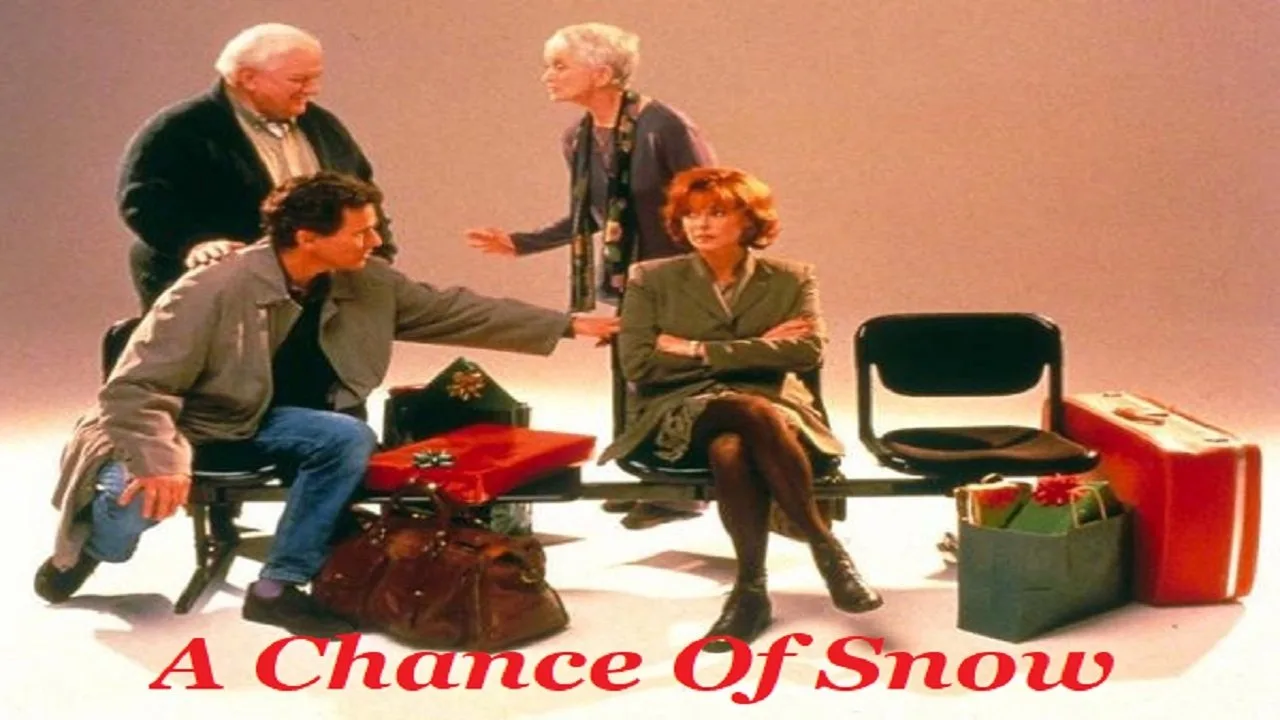
After signing her divorce papers, a woman heads out to her Minnesota airport with her sister and daughters for a flight to her mother's home. At the airport, her sportswriter husband shows up to catch a flight to Miami to visit his father. When a blizzard hits, the two suddenly find they have time to re-evaluate their relationship with assistance from an older couple.
 rating 6/10 User rating 10 votes 56%
 ❄ Christmas Connection
The entire film takes place on Christmas Eve, with the Denver airport snowstorm acting as both literal setting and narrative engine. The holiday forces two estranged people to stop running from each other and actually talk, which is the oldest Christmas-movie premise there is. A secondary subplot follows a soldier desperately trying to reach his family in time for Christmas morning, reinforcing the film's central idea that the holiday exposes what we've been avoiding.
Where to Watch


Our Review
A Chance of Snow (1998) does not pretend to be anything other than what it is: a TV movie about two people who couldn't make their marriage work, stuck together in an airport on Christmas Eve with nowhere to go. That premise is either going to work for you or it isn't. If you find airport settings claustrophobic and relationship drama exhausting, move on. If you think the forced intimacy of a snowstorm stranding is the ideal pressure cooker for long-overdue honesty, this one delivers.
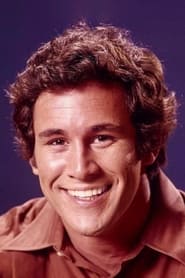
JoBeth Williams plays Margaret and Michael Ontkean plays Daniel, a divorced couple who run into each other at Denver International Airport while heading to separate holiday destinations. A blizzard closes the runways. The terminal fills up. And suddenly the two people who spent years successfully avoiding each other have no exit.
What the Airport Actually Does to This Story
Director Tony Bill understood that the airport isn't just a backdrop. It's a social space where everyone is already stripped of their ordinary life, their routines, their excuses. Nobody at an airport is "busy." The delays do the work that no confrontation scene could manufacture on its own.
Williams and Ontkean are both doing careful, unhurried character work here. This isn't the kind of TV movie where someone delivers a big speech that resolves 28 years of marital collapse in 90 seconds. The film earns its emotional beats because it takes time to establish what these two people actually mean to each other, underneath the resentment. That's harder than it sounds in a format with commercial breaks built in.
The secondary plot follows a soldier trying to get home for Christmas. It could easily feel grafted on, a device to pad the runtime. Bill uses it smartly instead, as a counterweight. The soldier's situation is uncomplicated, his need clear, his stakes simple. Every cut back to him reminds you what pure longing looks like, which makes Margaret and Daniel's complicated emotions land differently when you return to them.
JoBeth Williams Carries the Film
Williams was 44 when this aired and she brings a specific kind of weariness to Margaret that younger actors can't fake. This isn't a character who is sad about a divorce. This is a woman who has already processed the grief, rebuilt her life, and now has to reckon with what she still feels despite all that processing. It's a more sophisticated emotional position than most TV movies bother to write.
Ontkean is solid without being spectacular. His Daniel is more guarded, more defensive, the kind of man who expresses his regret sideways rather than directly. The dynamic between them is recognizable: two people who know each other too well to lie, but who have spent years lying anyway through avoidance.
What It Gets Right About Holiday Drama
The best Christmas movies understand that the holiday is a deadline. Christmas Day is coming whether you're ready or not, and that deadline forces decisions that ordinary time would let people postpone indefinitely. A Chance of Snow uses this correctly. The airport doesn't strand our couple for a week. It strands them for Christmas Eve, which means by Christmas morning they'll either have said what needs saying or lost the chance again.
The film doesn't wrap everything up with a bow, which is its most honest quality. Reconciliation here doesn't mean the marriage is fixed or that history is rewritten. It means two people managing to look at each other clearly, maybe for the first time in years. That's a modest but real achievement, and the movie knows it.
By 1998, the TV movie format had already calcified into predictability. A Chance of Snow doesn't transcend the format. It just does it better than average, which on a Tuesday night in December is worth something.
Fun Facts
A Chance of Snow premiered on ABC on December 13, 1998, as part of the network's holiday movie programming block, competing directly with other seasonal fare from CBS and NBC that same year.
Director Tony Bill won an Academy Award as a producer on "The Sting" (1973), making him one of the few Oscar-winning filmmakers to work extensively in TV movies throughout the 1990s.
JoBeth Williams had previously played a lead in "Poltergeist" (1982) and "The Big Chill" (1983) before pivoting significantly toward television work, including several holiday TV movies, in the latter half of her career.
Michael Ontkean is best known as Sheriff Harry S. Truman in David Lynch's "Twin Peaks" (1990-1991), a role he reprised in the 2017 Showtime revival "Twin Peaks: The Return."
Denver International Airport, where the film is set, opened in February 1995 and was already notorious for weather-related delays due to Colorado's unpredictable winter weather. It handles more than 60 million passengers annually.
The "stranded at the airport on Christmas Eve" premise has been used in multiple TV movies, but A Chance of Snow is notable for being centered entirely on adult romantic drama rather than family comedy, a less common choice for the format.
Television movies in the late 1990s were typically shot in 15 to 20 days on budgets well under $5 million, compared to the months-long schedules of theatrical releases. The tight schedule required the cast to be fully prepared before cameras rolled.
Cast