
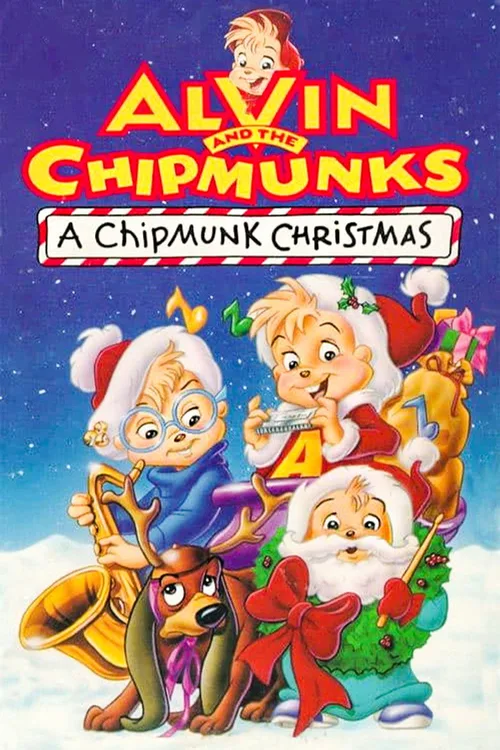
A Chipmunk Christmas (1981)
Alvin learns the true meaning of Christmas.
 rating 6/10 User rating 41 votes 69%
 ❄ Christmas Connection
A Chipmunk Christmas is built entirely around Christmas generosity and a holiday performance. Alvin sacrifices his prized harmonica for a sick child, and the climax is a Christmas Eve concert at Carnegie Hall featuring "Christmas Don't Be Late." The whole story runs on seasonal spirit.
Our Review
A Chipmunk Christmas aired on NBC on December 14, 1981, and for a generation of kids, it was the definitive version of Alvin, Simon, and Theodore. Not the 1958 novelty record. Not the Saturday morning cartoon that came after. This 30-minute animated special, tucked between holiday reruns and network promos, gave the Chipmunks something they had never really had before: a story with actual emotional stakes.
The plot is simple. Alvin has a golden harmonica, a gift from Dave Seville. He loves it. A sick boy named Tommy admires it. Alvin gives it away, then has to figure out how to perform at a Carnegie Hall Christmas concert without his instrument. That's the whole engine. It runs on guilt, generosity, and a ticking clock.
Alvin's Harmonica and the Heart of the Story
The central conflict works because the special never tells you Alvin is doing the right thing. It just shows him doing it. Tommy is in a wheelchair at a department store, clearly unwell, and Alvin hands over the harmonica without a speech or a moral lesson. He just does it. For a character defined by selfishness and chaos, this moment of quiet sacrifice is surprisingly effective.
Dave, predictably, doesn't know about the gift. He thinks Alvin lost the harmonica or broke it. The tension between Alvin wanting credit for his good deed and not wanting to make a big deal of it gives the middle act more depth than you'd expect from a show about singing chipmunks.
The resolution, where a new harmonica appears just in time for the concert, is pure Christmas-special logic. A mysterious woman delivers it, implying some kind of holiday miracle. The special doesn't dwell on it. One moment the problem exists, the next it doesn't. For young viewers in 1981, that was enough.
The Chipmunk Christmas Song and Carnegie Hall
The special builds toward a performance of "Christmas Don't Be Late," the song that started it all. Ross Bagdasarian Sr. created the Chipmunks in 1958 by recording his own voice at half speed, then speeding the tape up to create the high-pitched effect. The song sold 4.5 million copies in five weeks and won three Grammy Awards, including Record of the Year.
By 1981, Ross Bagdasarian Jr. and his wife Janice Karman had taken over the franchise. They produced A Chipmunk Christmas as a way to reintroduce the characters to a new audience. The Carnegie Hall setting for the concert gives the finale a sense of occasion that the story earns, even if the animation doesn't quite match the ambition.
The performance scene works on nostalgia. Parents in 1981 remembered "Christmas Don't Be Late" from their own childhoods. Their kids were hearing it for the first time. That double-audience appeal is exactly what made the special successful enough to spawn the follow-up series Alvin and the Chipmunks in 1983.
Animation, Limitations, and Charm
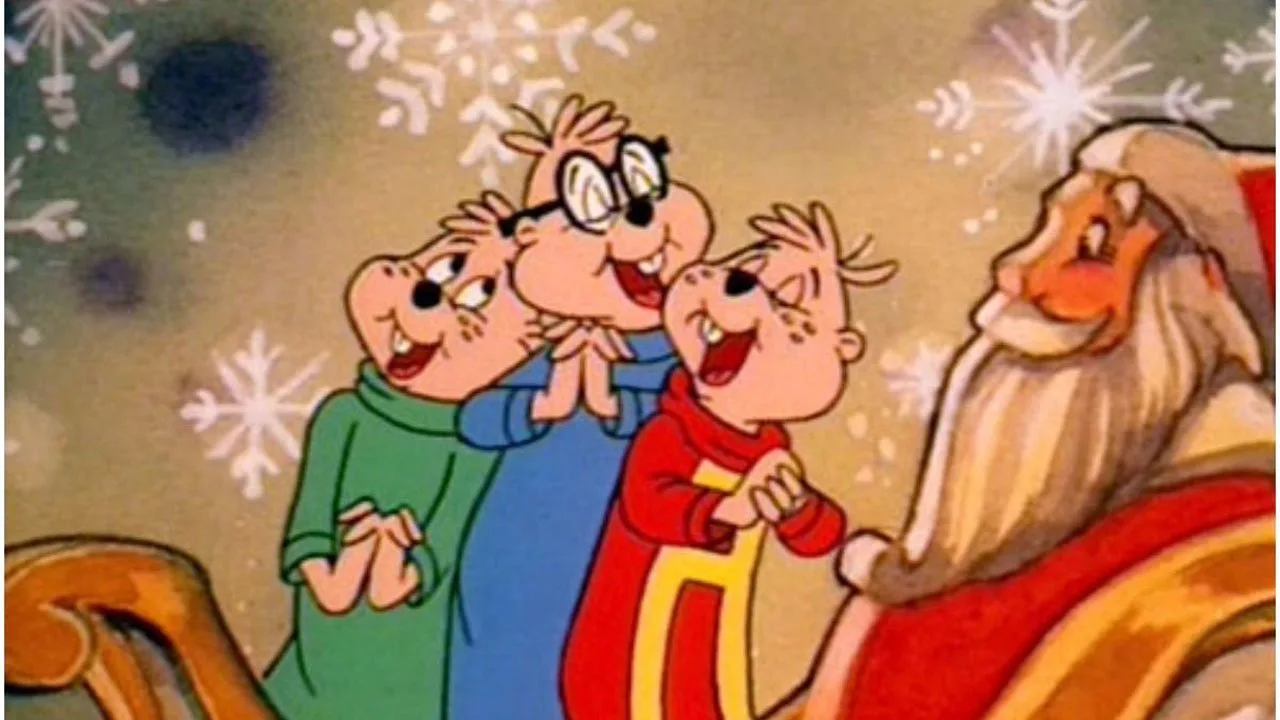
The animation quality sits squarely in early-1980s TV-special territory. Backgrounds are simple watercolor washes. Character movements are limited. There are visible shortcuts, like repeated walk cycles and static crowd scenes. None of this is unusual for the era, but it's worth noting for anyone coming to this after the glossy CGI Chipmunk films of the 2000s.
What the special lacks in production value, it compensates for with pacing. At 30 minutes (roughly 24 without commercials), it never drags. The story hits its beats cleanly: setup, sacrifice, complication, resolution, concert. There's no subplot padding or filler musical numbers beyond the ones the plot requires.
Where A Chipmunk Christmas Fits
This is not a masterpiece. The dialogue is functional rather than witty. The supporting characters are thin. Dave's exasperation follows a formula that was already well-worn by 1981. But the core idea, a selfish kid giving away something he loves because someone else needs it more, is a Christmas story in the most direct sense.
The special also captures something about the Chipmunks that the later films largely abandoned. Alvin, Simon, and Theodore are kids. Not pop stars. Not action heroes. Just kids navigating a holiday season where doing the right thing means losing something you care about. That registers differently than a CGI chipmunk doing a Beyonce impression.
If you grew up with this special, you already own it emotionally. If you didn't, it's a brief, honest, occasionally clumsy piece of 1980s holiday television that respects its audience enough to let a good deed speak for itself. The final Carnegie Hall rendition of "Christmas Don't Be Late" still sounds exactly like it should: three chipmunks, slightly off-key, having the time of their lives.
Fun Facts
Ross Bagdasarian Sr. created the Chipmunks' voices in 1958 by recording at half speed and playing back at double speed. The original "Christmas Don't Be Late" sold over 4.5 million copies in its first five weeks.
The 1981 special was produced by Ross Bagdasarian Jr. and Janice Karman, who revived the franchise after the elder Bagdasarian's death in 1972. It was the Chipmunks' first new animated production in over a decade.
"Christmas Don't Be Late" won three Grammy Awards in 1959, including Best Comedy Performance, Best Children's Recording, and the coveted Record of the Year.
The special's success directly led NBC to greenlight the Saturday morning cartoon series Alvin and the Chipmunks, which debuted in 1983 and ran for eight seasons.
The character of Tommy, the sick boy who receives Alvin's harmonica, was created specifically for this special and never appeared in any subsequent Chipmunks production.
Janice Karman voiced all three Chipmunks in the 1981 special, taking over from Ross Bagdasarian Sr., who had originally voiced all the characters himself.
The Chipmunks' Christmas album, released alongside the special, went on to become one of the best-selling holiday albums of the early 1980s and helped re-establish the franchise commercially.
Cast