
You Better Watch Out
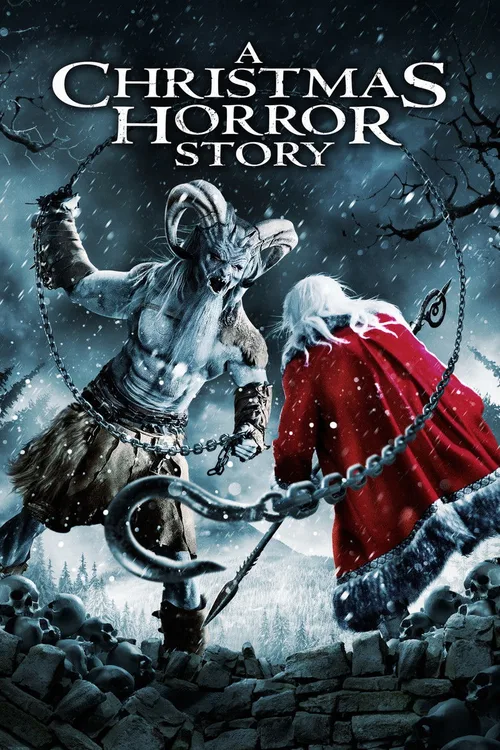
A Christmas Horror Story (2015)
Christmas is supposed to be a time of joy, peace and goodwill. But for some folks in the small town of Bailey Downs, it turns into something much less festive.
 rating 6/10 User rating 370 votes 58%
 ❄ Christmas Connection
Every segment takes place on Christmas Eve, and the film's entire structure hinges on the holiday. Santa battles zombie elves in his workshop, Krampus punishes a family, and a radio DJ counts down to midnight. Christmas mythology is not just the setting; it is the source of every threat.
Where to Watch


Our Review
A Christmas Horror Story is a 2015 Canadian horror anthology that weaves four separate tales into a single chaotic Christmas Eve. One story sends Santa Claus into battle against zombie elves in his own workshop. Another drags Krampus into a suburban family's living room. A third follows teenagers investigating a double murder at their high school. And the fourth brings a family home from the woods with something that is definitely not their child. Holding all of it together is William Shatner, playing a boozy radio DJ narrating the night from his broadcast booth.
The film was directed by three people. Grant Harvey, Steven Hoban, and Brett Sullivan each took separate segments. That sounds like a recipe for tonal chaos, and honestly, it sometimes is. But the structure works more often than it doesn't, and the Santa segment alone is worth the price of admission.
The A Christmas Horror Story Cast
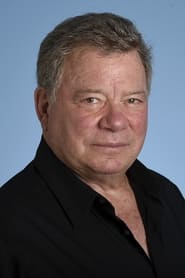
William Shatner is the marquee name, and his casting is inspired. He plays Dangerous Dan, a local radio host working the Christmas Eve shift, dropping sardonic commentary between Christmas songs and spiking his eggnog on air. Shatner plays it with exactly the right amount of self-awareness. He's having fun, and the film is smart enough to let him.
George Buza plays Santa Claus in the workshop segment, bringing a gruff physicality to a version of Santa who has to fight for his life. The cast for the other segments includes Zoe De Grand Maison as a teenager investigating the school murder, Rob Fai and Oluniké Adeliyi as the parents who encounter Krampus, and Adrian Holmes and Orion John in the changeling storyline. None of these are household names, but the performances are solid across the board.
The relatively unknown cast actually helps. You can't predict who will survive based on star billing, which gives each segment genuine tension.
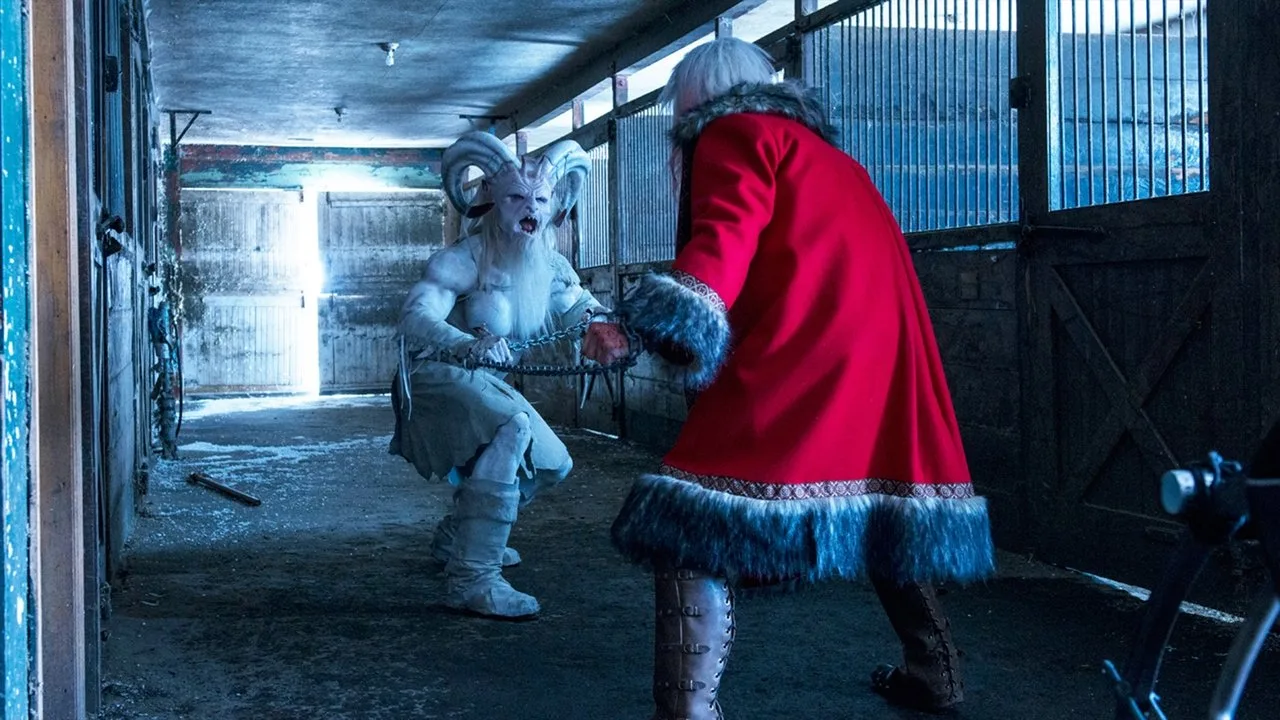
Santa vs. Zombie Elves
The strongest segment by a wide margin. Santa arrives at his workshop on Christmas Eve to find his elves infected by some kind of demonic plague. They're feral, violent, and multiplying. What follows is essentially a zombie survival film set in the North Pole, with Santa wielding whatever tools and toys he can grab to fend off waves of snarling elf-zombies.
George Buza commits fully to the bit. His Santa is no soft-spoken grandfather. He's a working man pushed to his limit, and when he starts swinging, there's real weight behind it. The segment has strong practical effects, decent creature makeup on the elves, and a twist ending that genuinely recontextualizes everything you've just watched. Of the four stories, this one could have sustained a feature-length film on its own.
Krampus Comes to Suburbia
The Krampus segment takes a more traditional approach. A dysfunctional family visits a relative's home in the woods, and on the drive back, their young son starts acting strangely. Things escalate from there. The segment draws on Alpine Krampus folklore without over-explaining it, trusting the audience to understand that something ancient and punishing has latched onto this family.
This is the most atmospheric of the four stories. The forest setting is effectively used, and the Krampus design is practical and imposing. The problem is pacing. The segment takes too long to get where it's going, and the payoff, while satisfying, doesn't match the slow build. Still, for anyone fascinated by the Krampus tradition, this is one of the better screen depictions outside of Michael Dougherty's 2015 Krampus, which released the same year.
The Weaker Halves
The high school investigation segment follows three teens who sneak into their former school on Christmas Eve to film a documentary about a murder-suicide that happened there the previous year. If that sounds like every found-footage premise from 2005 to 2015, you're not wrong. The segment hits its expected beats: creepy corridors, flickering lights, possession, screaming. It's competent but forgettable.
The changeling story fares slightly better. A family goes into the woods to cut down their Christmas tree, and their young son wanders off briefly. When they find him, something has changed. The slow reveal of what's wrong with the child produces a few genuinely creepy moments, particularly a dinner scene where the boy's behavior becomes impossible to ignore. But the resolution is rushed, and the emotional impact gets lost in the anthology's rapid cutting between storylines.
The film's biggest structural weakness is this constant intercutting. Just as one segment builds momentum, the film cuts to another. Horror depends on sustained tension, and the anthology format works against that by design.
How the Christmas Horror Anthology Format Holds Together
The three directors reportedly planned the intercutting from the start, scripting the segments so that their emotional peaks would alternate. In theory, one story's climax leads into another's setup. In practice, it's uneven. The Santa segment always gets you back on board. The teen investigation always stalls things out.
Shatner's DJ sequences function as the connective tissue, and they serve that purpose well. His sardonic narration provides tonal reset points between the darker segments. There's something genuinely funny about hearing Shatner read a Christmas Eve weather report while, in another storyline, Santa is caving in a zombie elf's skull.
The film was shot in and around Toronto and Barrie, Ontario, with a budget that looks modest but stretches further than you'd expect. The practical creature effects, particularly the elf makeup and the Krampus suit, hold up better than CGI would have on this budget. Credit the production team for knowing their limitations and working within them.
Is A Christmas Horror Story Worth Watching?
If you're looking for a polished, cohesive horror film, this isn't it. Two of the four segments range from mediocre to merely adequate. But the Santa workshop storyline is genuinely excellent genre filmmaking, and the Krampus segment has enough atmosphere to justify its runtime. Shatner clearly enjoyed himself, and his performance holds the patchwork structure together better than it has any right to.
For a Christmas horror anthology, that batting average is respectable. The film runs 99 minutes and never drags, even when the weaker segments test your patience. It's the kind of movie that works best on Christmas Eve with a group, something seasonal and gory to cleanse the palate after one too many Hallmark specials. Just don't expect all four stories to stick the landing.
Fun Facts
The film was shot primarily in Barrie, Ontario, and various locations around Toronto. The wintry small-town Canadian setting gave the production authentic snow and cold without needing artificial effects.
William Shatner's radio DJ segments were filmed separately from the rest of the production. His scenes were shot over just a few days, with Shatner improvising several of his on-air quips.
George Buza, who plays Santa in the zombie elf segment, also voiced the character of Beast in the 1990s X-Men animated series, giving him experience playing large, physically imposing characters.
The film released the same year as Michael Dougherty's Krampus (2015), making it one of two major Christmas horror films featuring the Alpine demon in a single calendar year.
The three directors, Grant Harvey, Steven Hoban, and Brett Sullivan, had all previously worked together on Canadian horror projects. Hoban produced the Ginger Snaps trilogy, a cult classic series of Canadian werewolf films.
The elf zombie makeup effects were achieved almost entirely with practical prosthetics rather than CGI, with the makeup team processing up to 15 elf actors per shooting day.
The twist ending of the Santa segment was kept secret from most of the cast during filming, with only the directors and George Buza knowing how the storyline would resolve.
Cast