
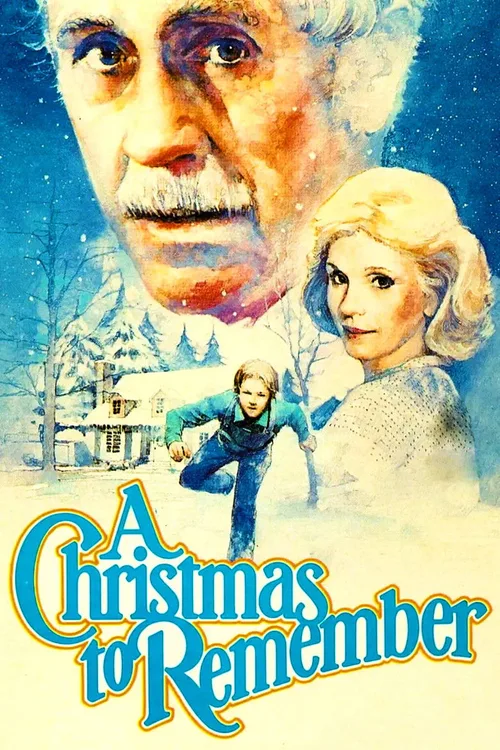
A Christmas to Remember (1978)
A city-bred grandson moves to his grandparents' farm during the Great Depression and grows up enough under their tough care to help his grandfather deliver a surprise gift on Christmas Eve to their community church with the help of a phantom stranger.
 rating 7/10 User rating 1 votes 60%
 ❄ Christmas Connection
The entire film builds toward a Christmas Eve delivery in a blizzard, with grandfather and grandson hauling a heavy melodeon organ through snow to give it as a gift to their local church. Christmas functions here not as backdrop decoration but as the actual engine of the plot and the moment of emotional resolution between two people who have been unable to reach each other.
Our Review
Most Christmas TV movies from 1978 have not survived the decades in any meaningful sense. They played once, maybe twice, and faded. A Christmas to Remember has held on, and the reason is simpler than you might expect: it cast three Academy Award winners in a serious story and then trusted them to do their work. The result is quieter and tougher than holiday television usually allows itself to be.
The film aired on CBS on December 20, 1978. It was adapted from Glendon Swarthout's 1977 novel The Melodeon by screenwriter Stewart Stern, who had already written Rebel Without a Cause (1955) and Rachel, Rachel (1968). Swarthout was born in Pinckney, Michigan in 1918, and his source material draws directly from the rural Great Depression landscape he grew up in. Stern won the WGA TV Award for Anthology Adaptation for his script. The title was changed from The Melodeon to A Christmas to Remember at the network's insistence, and by most accounts Swarthout hated the alteration enough to remove his name from the credits.
The Plot and What It Is Really About
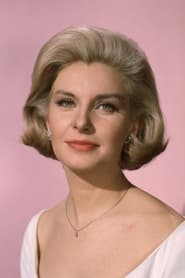
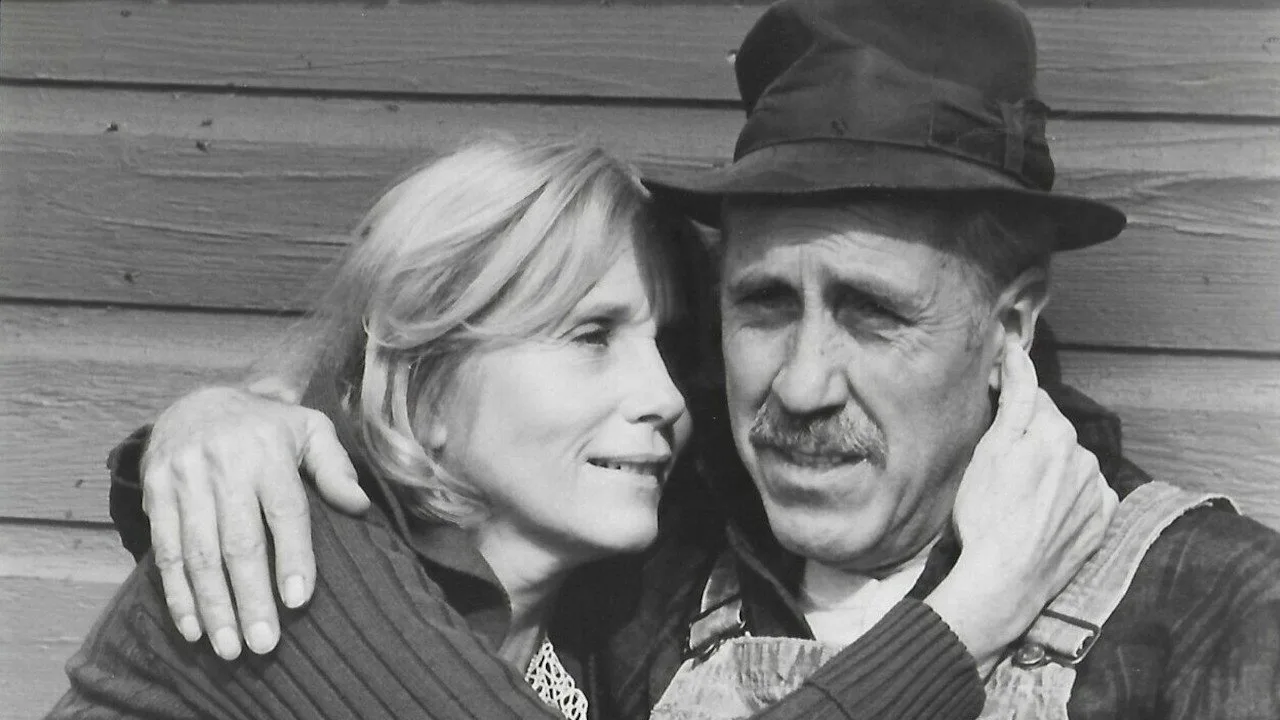
Rusty McCloud (played by George Parry) is a city kid whose mother, played by Joanne Woodward, sends him to live on his grandparents' Minnesota farm during the Depression because she can no longer afford to keep him. The grandparents, Daniel and Emma Larson, are played by Jason Robards and Eva Marie Saint. Daniel is not a warm man. He lost his son in World War I, and Rusty carries the look and the irritating youth of someone who reminds him of that loss at every turn.
The farm sequences are genuinely hard. Rusty does not adapt easily or charmingly. The grandfather does not soften on cue. The film is patient with their mutual resentment in a way that television rarely is. Robards, who two years earlier had won back-to-back Oscars for Best Supporting Actor for All the President's Men (1976) and Julia (1977), plays Daniel as a man sealed shut by grief. He doesn't melt so much as he gradually thaws, and the pacing of that thaw is what saves the film from becoming a simple reconciliation story.
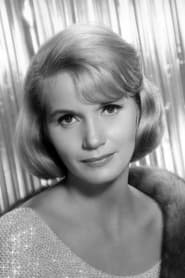
Eva Marie Saint, who won Best Supporting Actress for her debut in On the Waterfront (1954), plays Emma with the kind of practical warmth that has to work around a difficult husband and an equally difficult grandson. She is the bridge between the two, and Saint plays the role without sentimentality. She is a woman who has been managing things for a long time.
The Melodeon and What It Carries
The family's melodeon, a small pump organ that would have been a common fixture in rural American homes from the 1840s onward, becomes the film's central object. Millions of these instruments were manufactured in the United States and Canada between the 1850s and the 1920s. They were affordable, portable enough for farmhouses, and required no electricity. By the Depression era, a melodeon in a household was an heirloom rather than a practical instrument. It carried weight in both senses.
Daniel decides to donate the family's melodeon to their local church as a Christmas gift. The problem is physical: the instrument is heavy, the weather is brutal, and the distance is real. The Christmas Eve delivery through a blizzard is not a metaphor layered on top of the story. It is the story. Two people who have failed to reach each other all season are forced into the same effort at the worst possible time.
The film was shot on location in Rush City, Minnesota, which gives the exterior sequences a cold authenticity that studio productions from the same era rarely managed.
Three Oscars in One TV Movie
It is worth pausing on what the casting of this film represents. By December 1978, Jason Robards held two consecutive Oscars. Eva Marie Saint's career stretched back to the earliest days of television drama, where she earned an Emmy nomination in 1955 before her film debut made her a star. Joanne Woodward won Best Actress for The Three Faces of Eve in 1958 and had been one of the most respected dramatic actresses in American film and television ever since.
All three of them appear in a CBS holiday movie filmed in Rush City, Minnesota, with a child actor in the lead role. That combination would be unusual in any era. In 1978, with the television film format still fighting for credibility as a medium for serious drama, it was a genuine statement of intent from everyone involved.
The script gave them material worth the effort. Stern's screenplay doesn't soften the economic desperation at the edges of the story. Joanne Woodward's mother is not a warm presence who makes a hard decision with grace. She is a woman in a difficult position doing the best she can, and her brief screen time communicates that without editorial comment.
What Works and What Doesn't
The film is not without its weaknesses. At 96 minutes, the middle section stretches the patience of viewers who came expecting holiday warmth. The mysterious "cavalryman" figure who assists in the blizzard delivery is handled with a heavy hand in terms of supernatural suggestion, and it's the one place where the film tips toward the kind of cozy Christmas miracle the rest of the story is working against.
But Robards carries the weight of the film's final third on pure craft. The scene where Daniel begins to acknowledge his grandson without explicitly saying anything is the kind of work that doesn't require dialogue or explanation. It simply lands.
The film holds a 6.4 rating on IMDb, which is perhaps slightly low for something this well-made. It is not a joyful Christmas movie. It is a film about how grief closes people off, and how sometimes the act of carrying something heavy through bad weather together is the only thing that reopens them.
Fun Facts
The film was adapted from Glendon Swarthout's 1977 novel The Melodeon. Swarthout and his son Miles, who co-wrote the novel, were so unhappy with the changes made by the production that they removed their names from the credits. The network had insisted on renaming the story to include the word "Christmas."
Screenwriter Stewart Stern won the 1979 WGA TV Award for Anthology Adaptation for his script, tying with Lonne Elder III for A Woman Called Moses. Stern had previously won an Oscar nomination for Rachel, Rachel (1968), which also starred Joanne Woodward.
Jason Robards remains, as of this writing, the only actor in Oscar history to win Best Supporting Actor in two consecutive years, for All the President's Men in 1977 and Julia in 1978. He appeared in A Christmas to Remember the same year as his second win.
Eva Marie Saint was nine months pregnant when she won her Academy Award for Best Supporting Actress for On the Waterfront at the 1955 ceremony. She was 55 years old when she filmed A Christmas to Remember.
The film was shot on location in Rush City, Minnesota, a small city in Chisago County roughly 50 miles north of Minneapolis. Minnesota's actual winters provided the blizzard sequences with conditions the story required.
Glendon Swarthout was born in Pinckney, Michigan in 1918, and his family relocated to Lowell, Michigan, a small town where his father managed a local bank during the Depression. The economic and rural atmosphere of The Melodeon draws directly from that period of his childhood.
The melodeon, the keyboard instrument at the center of the story, was a type of small pump organ manufactured widely in North America from the 1840s through the early 1870s. Several million reed organs and melodeons were built in the United States and Canada between the 1850s and the 1920s, making them among the most common household instruments of the rural American interior.
Director George Englund had previously directed The Ugly American (1963), also written by Stewart Stern, which starred Marlon Brando. The two collaborators reunited fifteen years later for this CBS production.
Cast