
The best thing about Christmas is Family...
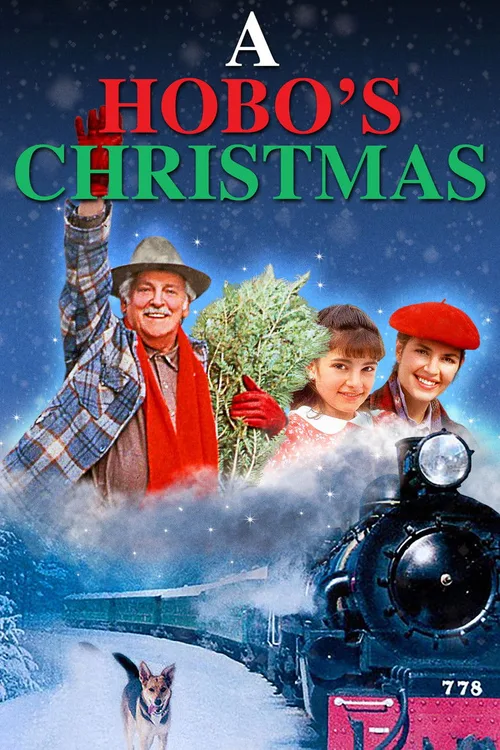
A Hobo's Christmas (1987)
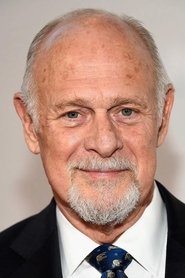
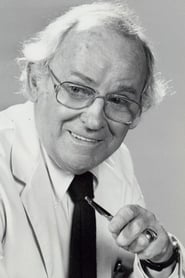
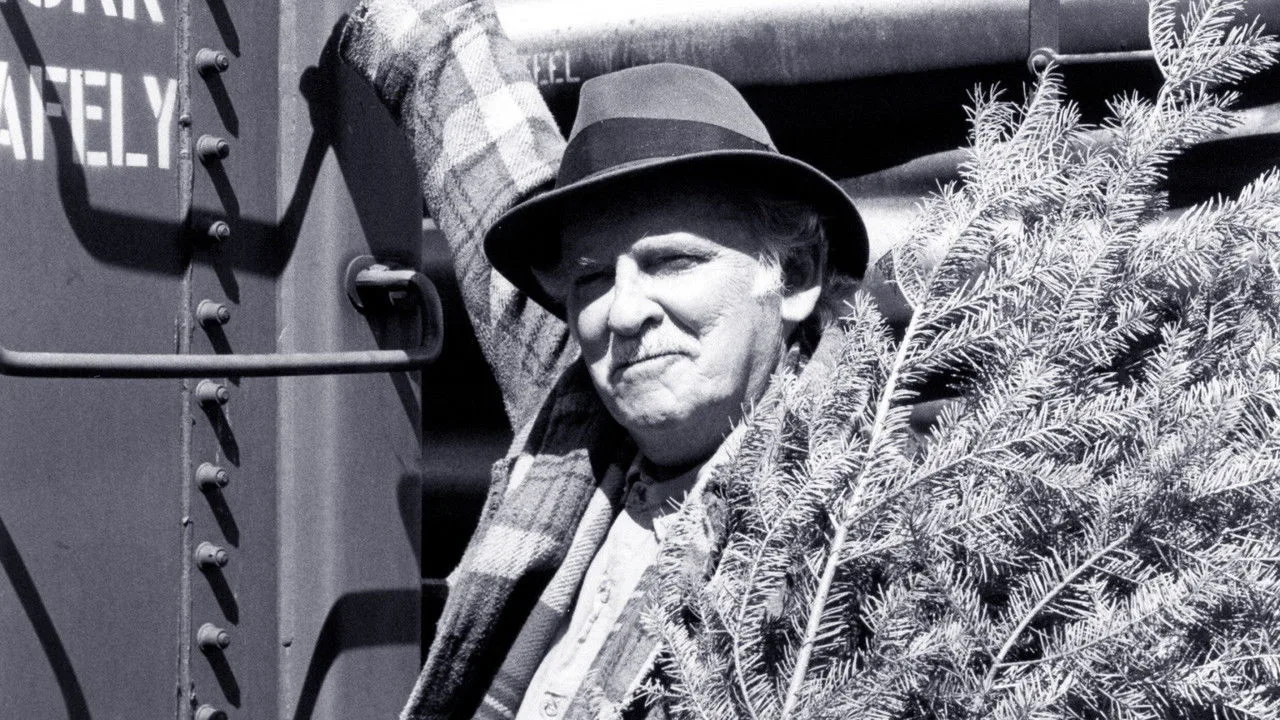
A hobo played by Barnard Hughes decides it's time to go home. Drifting from place to place, Hughes finds himself in his hometown of Salt Lake City at Christmas time. Here he hopes to close old wounds and be reunited with his unforgiving son played by Gerald McRaney, and get to know the grandchildren he has never met. McRaney, still resenting the fact that Hughes ran out on his family 25 years earlier, gives his father only one day with his grandkids; after that, he's expected to leave and never come back. All the while Hughes' friends warn him that his son and the past are memories that are best left alone, and should leave, but he has to find out for himself.
 rating 6/10 User rating 5 votes 52%
 ❄ Christmas Connection
The entire film takes place over the Christmas holiday period, with the season serving as the catalyst for family reconciliation. Christmas is not mere backdrop here; it's the emotional engine that makes a drifter's return feel plausible and his estranged son's eventual forgiveness feel earned. The snowy small-town setting, tree-trimming scenes, and holiday dinner sequences are central to the story rather than incidental.
Where to Watch


Our Review
There's a specific kind of 1980s TV movie that exists almost nowhere else in the cultural record: the sentimental holiday drama built around a single aging character actor having the performance of his life. A Hobo's Christmas, broadcast on CBS in December 1987, is exactly that kind of movie. It stars Barnard Hughes as Charlie, a career drifter who turns up unannounced at his adult son's suburban front door, and it works because Hughes makes you believe every word out of his mouth even when the script gives him ones you've heard before.
Gerald McRaney plays Lester, the son, a man who built a stable life precisely to spite the father who never stayed put. Wendy Crewson plays his wife, Ellen, who becomes the film's moral center almost by accident. She's the one who decides to let the old man in, literally and then gradually figuratively, and Crewson plays that decision with enough ambivalence that it never becomes a Hallmark sentiment delivery system.
What Makes a Hobo Movie Work
The premise sounds easy to dismiss. A lovable old wanderer shows up at Christmas, wins over skeptical family members, imparts folksy wisdom, and softens the hardened son. That is essentially what happens. But director Will Mackenzie, who spent most of his career in television comedy including work on shows like Family Ties and Newhart, knows how to pace a story and how to keep actors from over-explaining their emotional states.
Hughes was 64 when this film aired. He spent decades doing respectable supporting work in theater and film before landing the role of Dr. Mark Craig's cantankerous father on St. Elsewhere in 1983. By 1987 he was the go-to network choice for a certain kind of gruff, warm, unsentimentalized older man. Charlie is a role built for exactly that mode. He's not a saint masquerading as a vagrant. He left his family. He kept leaving. The film doesn't let him fully off the hook for that, which is the source of its limited but real integrity.
The Christmas setting does specific work here that it wouldn't do in July. The holiday enforces a temporary ceasefire. Lester can't quite throw his father out on Christmas Eve, even though he wants to. The grandchildren complicate the calculation further, because children have no history with Charlie and therefore no grievance. They just see a funny old man who knows things about living rough. The movie uses the structural sentimentality of Christmas to put the adults in a situation they'd never voluntarily enter, and that's honest enough use of the season.
Barnard Hughes Carries the Weight
There's a scene midway through the film where Charlie sits with one of the grandchildren and talks about life on the road. Hughes plays it without a single trace of performance. No wistful pauses calculated for the camera, no nostalgic glaze over the eyes. He sounds like a man describing something he actually did, and the specificity he brings to mundane details about sleeping in rail yards and reading maps is what separates a genuine actor from a competent one.
McRaney was coming off his peak fame from Simon and Simon and Major Dad wasn't far ahead. He's good in an unshowy way. Lester's anger has to be sympathetic without making him the villain of his own movie, and McRaney threads that without calling attention to the threading.
The film runs 96 minutes, which for a network TV movie of this era is about right. It doesn't overstay its welcome, it doesn't rush to resolution, and it has enough quiet scenes between the plot machinery to feel like it trusts the audience.
The 1980s TV Christmas Movie as Its Own Genre
Between roughly 1978 and 1993, the American broadcast networks produced Christmas TV movies at a rate that now seems extraordinary. CBS alone aired dozens. Many were formulaic and forgotten within a season. A Hobo's Christmas occupies the upper tier of that now largely ignored catalog, not because it broke any conventions but because it executed them with care and cast them with the right lead.
The film was produced by Mort Fallick and Arnold Orgolini for Telecom Entertainment, the same company responsible for a number of CBS holiday specials during this period. It was shot on location and on sets with the modest production values typical of the era, but the exterior winter scenes have an authentic chill that location shooting provides and that studio backlots cannot fake.
A Hobo's Christmas doesn't pretend to be more than it is. It's a character study with a Christmas frame, built around an actor who understood that underplaying the emotion was more moving than performing it. That's not a small achievement in a genre where overplaying was the default setting.
Fun Facts
Barnard Hughes won a Tony Award in 1978 for his performance in Da on Broadway, a one-man-show-adjacent play about an Irish father returning as a ghost to haunt his son. The role of Charlie in A Hobo's Christmas echoes that same theatrical territory of the emotionally absent father confronted at last.
Gerald McRaney filmed A Hobo's Christmas while also in the final seasons of Simon and Simon, which ran from 1981 to 1989, making 1987 one of his busiest years on screen.
Director Will Mackenzie directed over 200 episodes of television across his career, including episodes of Family Ties, Just the Ten of Us, and later Brooklyn Nine-Nine. He was one of the most prolific TV directors of the network era.
Wendy Crewson went on to appear in several major theatrical Christmas films, most notably as Neal Page's wife in Planes, Trains and Automobiles (1987) and later in The Santa Clause (1994) as Scott Calvin's ex-wife Laura. A Hobo's Christmas predates both of those by a matter of months in the case of the former.
CBS aired this film in the December 1987 Sunday night slot, where it competed directly with ABC's holiday programming. Network Christmas specials and TV movies regularly drew tens of millions of viewers in the pre-cable-fragmentation era.
The film's title was occasionally listed in TV Guide and program schedules as "A Hobo's Christmas" without the apostrophe, leading to minor confusion in archival records. The correct title includes the apostrophe in the possessive form.
Telecom Entertainment, the production company behind the film, was notable for producing a string of well-regarded CBS TV movies in the 1980s and was acquired and restructured multiple times before eventually dissolving. Many of the company's productions are difficult to find in official distribution today.
Cast