Starring in Her First Movie!
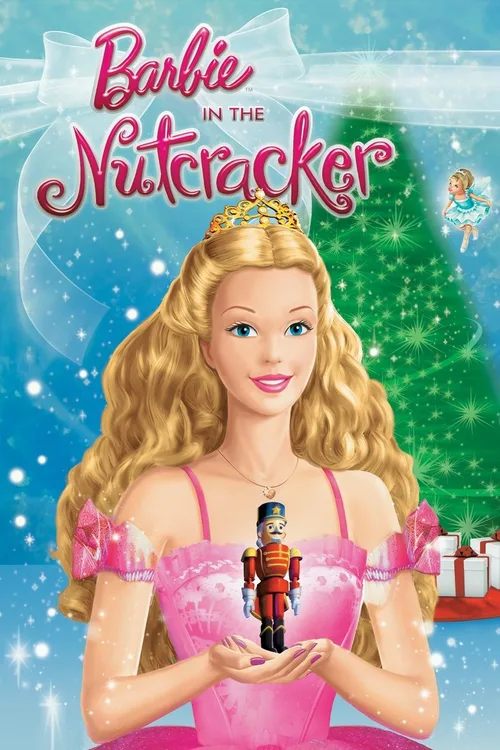
Barbie in the Nutcracker (2001)
The Mouse King casts an evil spell over Clara that causes her to shrink. Clara and the Nutcracker set out on an adventurous journey to find Sugarplum Princess, who has the power to undo the spell.
 rating 7/10 User rating 1,098 votes 69%
 ❄ Christmas Connection
Barbie in the Nutcracker adapts Tchaikovsky's 1892 Christmas ballet, which has been a holiday tradition in theatres worldwide since the mid-20th century. The story unfolds on Christmas Eve when Clara receives the Nutcracker as a gift, directly connecting it to the gift-giving heart of the holiday. Sugarplum fairies, snowflakes, and a battle with the Mouse King make this as Christmas-coded as it gets.
Where to Watch


Our Review
In October 2001, Mattel released a 84-minute direct-to-video CGI film with a $15 million budget, produced by Mainframe Entertainment in Vancouver. Nobody could have predicted it would sell 3.5 million units in its first year, gross $150 million including merchandise, and launch a franchise that eventually ran to more than 40 films. Barbie in the Nutcracker was, by any reasonable measure, a massive gamble that paid off spectacularly. It was also the moment Barbie became a movie star.
The Nutcracker was smart IP to start with. Tchaikovsky's 1892 ballet is already a Christmas institution. Families who'd never buy their kids a ballet ticket would happily drop a VHS in the player on Christmas Eve. Mattel knew exactly what they were doing.
What "Barbie in the Nutcracker" Is Actually About
The film keeps the bones of E.T.A. Hoffmann's 1816 story and Tchaikovsky's score, then rewrites everything else. Clara is now an orphan. Fritz is renamed Tommy. The eccentric godfather Drosselmeyer is split into two characters, a stuffy old man and his warm-hearted niece who actually gives Clara the Nutcracker. Most significantly, Clara turns out to be the Sugar Plum Princess all along, a twist the ballet never imagined.
The Mouse King gets the most interesting makeover. He was once the Royal Advisor to Prince Eric's father, entrusted with a magic scepter until the young prince was ready to rule. He liked power too much, took over the kingdom, and turned the Prince into a wooden nutcracker. Tim Curry voices him. This is not a neutral piece of casting. Curry brings exactly the right combination of theatrical menace and comedic self-awareness that the role demands.
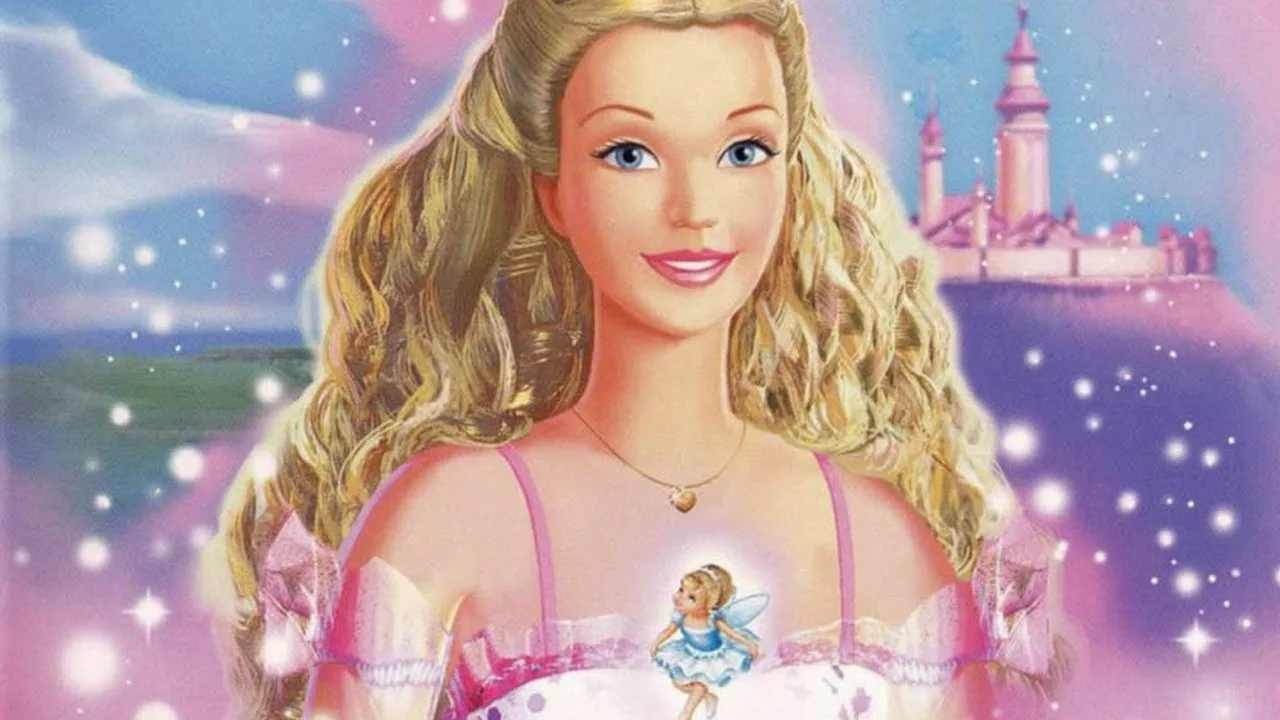
Kelly Sheridan voices both Barbie, who narrates the framing story, and Clara inside it. She held that role through 2010, then again from 2012 to 2015, becoming the definitive voice of animated Barbie across nearly two decades of films.
The Animation: Impressive for 2001, Surreal Now
Twenty-two artists at Mainframe Entertainment animated the film over four months using Softimage. The result was state-of-the-art for direct-to-video in 2001. Characters move with some stiffness, backgrounds have the flat-lit quality typical of early CGI, and the human faces sit somewhere in the uncanny valley by today's standards.
One animator's sole job was Barbie's hair. Just the hair. The production brief from Mattel specified a "very soft and stylized look" for the character, and apparently getting hair to cascade properly in early CGI required dedicated resources. This is either endearing commitment to craft or a strange corporate priority, depending on your perspective.
The ballet sequences are the film's strongest visual moments. Peter Martins of the New York City Ballet choreographed them, and the London Symphony Orchestra recorded Tchaikovsky's score. Even filtered through 2001 CGI limitations, the "Waltz of the Snowflakes" has genuine grace. The music carries sequences the animation alone couldn't sustain.
Why It Works as a Christmas Movie
The Nutcracker is Christmas. Not marginally, not arguably. Clara receives the Nutcracker as a Christmas Eve gift, the adventure begins that night, and every visual hallmark of the story, snowflakes, toy soldiers, a magical transformation, maps directly onto the holiday's mythology of childhood wonder and gifts that are more than they appear.
This version strips away some of the ballet's more abstract, dreamlike qualities and replaces them with a more conventional quest narrative. Clara isn't a passive figure carried from wonder to wonder; she actively helps defeat the Mouse King. That's a reasonable trade for a children's film. The Sugar Plum Princess twist, while not in Hoffmann's original, gives Clara genuine agency and a payoff that actually makes narrative sense.
It's a Christmas movie for children who aren't ready for the ballet but whose parents want them to know the story. That's a legitimate thing to be.
The Franchise It Built
Before Barbie in the Nutcracker, Barbie existed in commercials, on packaging, and in cultural shorthand. After it, Barbie was a narrative character with a voice, a personality, and a story. The film's success was immediate and decisive. Mattel and Mainframe went straight into production on Barbie as Rapunzel, which came out in 2002. A new film followed almost every year after that.
The 2023 live-action Barbie, directed by Greta Gerwig and grossing over $1.4 billion worldwide, didn't emerge from a vacuum. It inherited an audience that had grown up with two decades of Barbie films. The animated movie franchise was the infrastructure Gerwig's film ran on.
That infrastructure began here, with a 22-person CGI team in Vancouver and Tim Curry hamming it up as a power-hungry mouse.
Fun Facts
Barbie in the Nutcracker was the second most popular children's video in the United States in 2001, selling 3.5 million units and generating $150 million in total sales including merchandise.
Tim Curry, best known for playing Pennywise in the 1990 TV adaptation of Stephen King's It, voiced the Mouse King. He reportedly brought the role from the original script breakdown into something considerably more theatrical.
The entire film was animated by just 22 artists at Mainframe Entertainment in Vancouver over four months, using Softimage 3D software.
Peter Martins, who served as Ballet Master in Chief of the New York City Ballet from 1990 to 2018, choreographed the ballet sequences. The London Symphony Orchestra recorded Tchaikovsky's score specifically for the film.
Kelly Sheridan, who voiced both Barbie and Clara, went on to voice Barbie across the entire animated film series from 2001 to 2010 and again from 2012 to 2015, appearing in more than 25 films in the role.
One animator at Mainframe was assigned exclusively to animating Barbie's hair. Mattel's creative brief required the hair to move with a specific "soft and stylized" quality that demanded dedicated attention.
The film won the Video Premiere Award for Best Animated Video Premiere Movie, a category that recognized the growing market for direct-to-video animated features in the early 2000s.
The film was produced on a budget of $15 million, a significant investment for a direct-to-video title at the time. Its commercial success convinced Mattel to greenlight an annual release schedule that continued for more than 15 years.
Cast