
Experience the Holiday Classic as You've Never Seen it Before
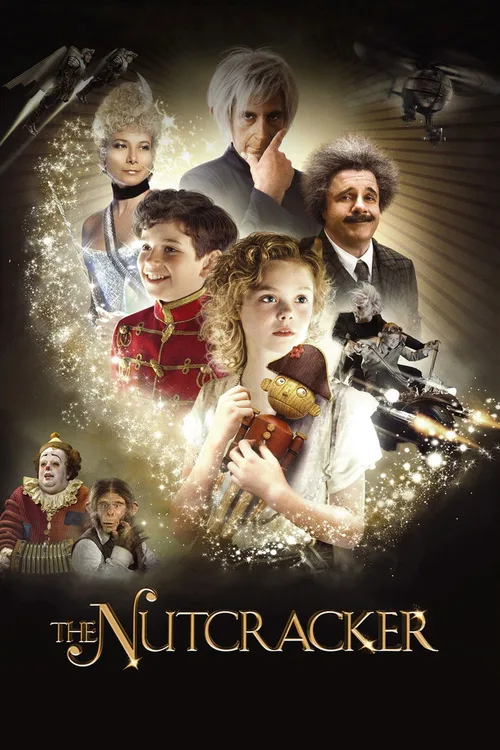
The Nutcracker (2010)
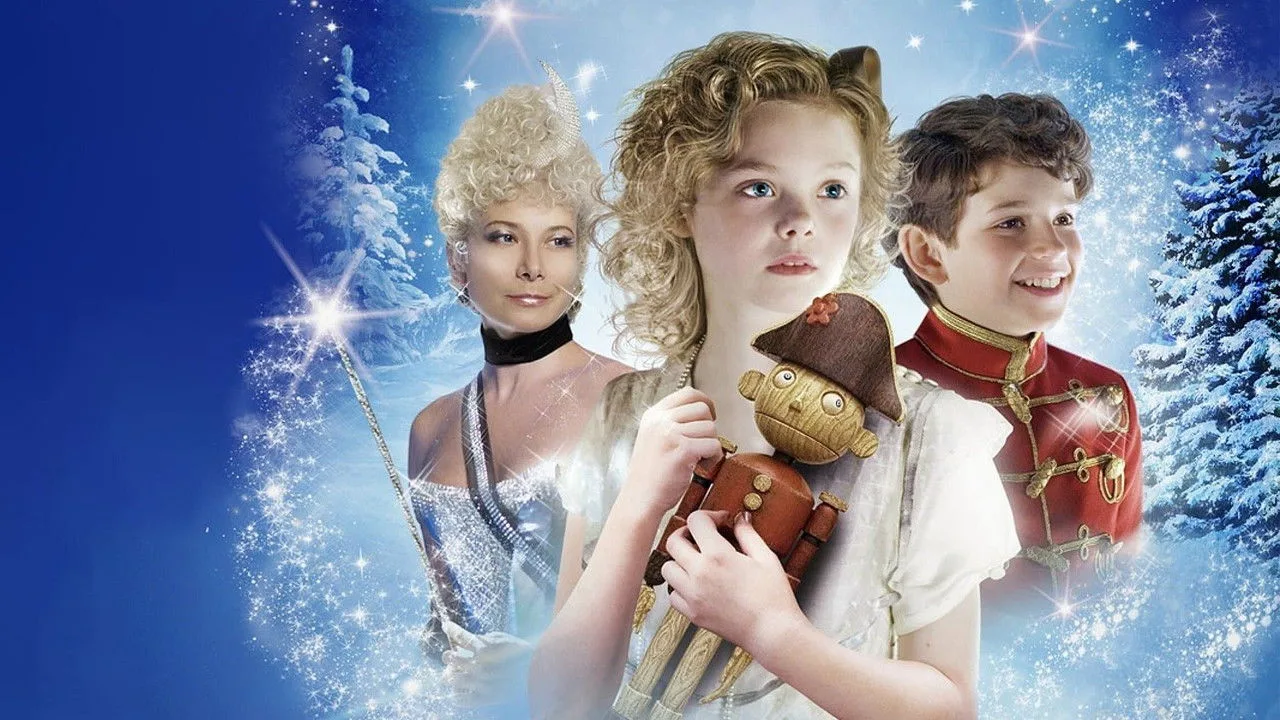
In 1920s Vienna, a young girl receives a magical doll on Christmas Eve.
 rating 2/10 User rating 203 votes 50%
 ❄ Christmas Connection
The film is a direct adaptation of Tchaikovsky's 1892 Nutcracker ballet, one of the most iconic Christmas-season productions in the world. Set on Christmas Eve with the gifting of the nutcracker doll as the inciting event, it leans fully into the holiday's traditions and iconography. Christmas is not backdrop here. It is the entire premise.
Where to Watch

Our Review
There are bad movies, and then there is The Nutcracker in 3D. Released in November 2010 and directed by Russian filmmaker Andrei Konchalovsky, this $90 million adaptation of Tchaikovsky's beloved holiday ballet ran for roughly a week in American cinemas before audiences fled. It earned a 0% rating on Rotten Tomatoes across more than 32 reviews. Roger Ebert gave it one star and titled his review "Heil, Nutcracker." The film lost an estimated $73 million. It is, by almost any measure, one of the most catastrophic Christmas movies ever made. It is also one of the strangest films you will ever see, and that makes it genuinely worth talking about.
What Konchalovsky Was Actually Trying to Do
Konchalovsky is not a hack. His 1985 film Runaway Train, based on a script originally written by Akira Kurosawa, earned two Academy Award nominations. His career stretches across Soviet art cinema, Hollywood blockbusters including Tango and Cash, and European prestige productions. He is the brother of Nikita Mikhalkov and grew up in one of Russia's most distinguished cultural families. He spent ten years training as a concert pianist before turning to film.
He had wanted to make this Nutcracker for more than twenty years. That is the detail that makes the disaster genuinely poignant. This was not a quick cash-in on a recognizable title. This was a personal project, something he cared about deeply.
His concept: set the story in 1920s Vienna, replace the Drosselmeyer character with a fictionalized Albert Einstein, drop all the ballet, and use the Nazi occupation of Europe as an allegory running under the surface of a children's fantasy. The Rat King's army would dress in fascist uniforms. Rats would snatch toys from children's hands and burn them in furnaces, with the smoke rising from high chimneys to blot out the sun. The metaphor was not subtle. It was the entire point.
Whether Tchaikovsky's famous Sugar Plum Fairy music was the right vehicle for this idea is a question the box office answered decisively.
The Cast and What They Were Asked to Do
Elle Fanning plays Mary, the girl at the center of the story, and she was eleven years old during production. She is perfectly fine. The film offers her very little to work with.
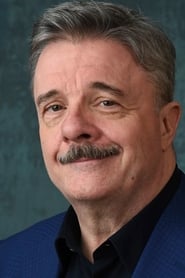
Nathan Lane plays Albert Einstein, because Konchalovsky looked at Lane and decided he resembled Einstein. This is the actual explanation given in interviews. Lane wears the wild white hair and the mustache and delivers his lines with the commitment of a man who has signed a contract and intends to honor it.
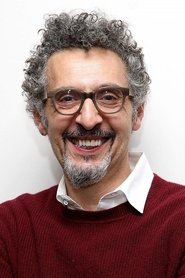
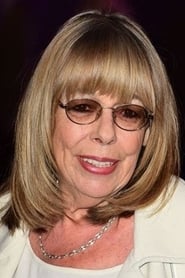
John Turturro plays the Rat King with a performance that can only be described as full-throated operatic villainy. He snarls, preens, and chews through the scenery with such enthusiasm that he is, ironically, the most watchable thing in the film. Frances de la Tour plays his rat mother with equal gusto. Richard E. Grant appears. Shirley Henderson voices the Nutcracker Prince.
Tim Rice, the lyricist who wrote the words for Jesus Christ Superstar and The Lion King, contributed lyrics to eight original songs built on Tchaikovsky's compositions, including adaptations of his Symphony No. 5 and Symphony No. 6. The songs are not the problem. The problem is that the film cannot decide if it is a children's musical, a war allegory, or an art house provocation, and in trying to be all three, it achieves none of them.
The Money and Where It Came From
The production was financed primarily by Vneshekonombank, a Russian state development bank chaired at the time by Vladimir Putin. The bank initially invested $50 million in 2007, then added another $11 million specifically to convert the film to 3D. Principal photography took place in Budapest at the Stern Film Studio in Pomaz, Hungary, where the production built elaborate sets to realize Konchalovsky's vision of wartime Vienna.
The 3D conversion turned out not to help. Against a $90 million budget, the film grossed just over $20 million worldwide, with more than half of that coming from Russia. In the United States, it was gone from theaters within days. As a piece of financial engineering, it stands as the most expensive Russian film produced up to that point, and one of the steepest losses in holiday movie history.
Is It a Christmas Movie?
Completely, structurally, and undeniably yes. The Nutcracker ballet has been a Christmas institution since the San Francisco Ballet performed the first full American production in 1944, and before that in Russia since the 1890s. This film starts on Christmas Eve. The gift is a nutcracker. The magic begins at midnight. Snow falls. The holiday is baked into the source material at the cellular level.
The problem is not that it fails to be a Christmas movie. The problem is that the Christmas framework gets crushed under the weight of the film's other ambitions. Watching children in 1920s Vienna costumes flee from rat soldiers in fascist uniforms while Tchaikovsky's "Dance of the Sugar Plum Fairy" plays is a genuinely disorienting experience. The holiday trappings never feel cozy. They feel like decoration on top of something much darker and much stranger.
The Verdict
Konchalovsky made the film he wanted to make. That much is clear. It is not a cynical movie. It has genuine visual imagination and moments of real ambition buried under the mess. The production design, built in those Budapest studios with $90 million worth of construction, is elaborate and occasionally striking.
But a Christmas movie for children that asks those children to understand Holocaust allegory is not a miscalculation. It is a fundamental misunderstanding of the audience. Children encountering their first Nutcracker story do not need the Rat King's chimneys to evoke anything. They need the wonder of the ballet to translate to the screen. Konchalovsky specifically removed all the ballet because, as he stated in interviews, "ballet cannot work in cinema very well." He replaced it with war imagery and fascist rats. The critics disagreed with his assessment. So did the children.
The movie exists now as a peculiar artifact of what happens when a filmmaker's personal obsession meets a beloved public property, a Russian state bank, and a 3D conversion. There is something almost admirable about the sheer wrongheadedness of it.
Fun Facts
The film received a 0% rating on Rotten Tomatoes from more than 32 critics, placing it among a small group of films in that category. Metacritic gave it a score of 18 out of 100, indicating "overwhelming dislike."
Most of the film's $90 million budget came from Vneshekonombank, a Russian state development corporation. The bank invested $50 million in 2007 and then provided an additional $11 million specifically for the 3D conversion. The film grossed roughly $20 million worldwide, resulting in losses of approximately $73 million.
Director Andrei Konchalovsky had wanted to make this film for more than twenty years before production finally began. He co-wrote the screenplay himself and served as producer in addition to directing.
Lyricist Tim Rice, who wrote lyrics for Jesus Christ Superstar, Evita, and The Lion King, contributed original song lyrics to eight numbers built on Tchaikovsky's compositions, including arrangements based on his Symphony No. 5 and Symphony No. 6.
Konchalovsky deliberately removed all ballet sequences from the adaptation, explaining that he believed "ballet cannot work in cinema very well." This decision drew criticism from reviewers who noted that previous screen adaptations of The Nutcracker had managed ballet successfully.
Principal photography took place in Budapest, Hungary at the Stern Film Studio in Pomaz. Hungary's tax incentives for film production made it an attractive location for the production's large-scale set construction.
Andrei Konchalovsky studied at the Moscow Conservatory for ten years with the goal of becoming a concert pianist before switching to filmmaking. He co-wrote the screenplay for Andrei Tarkovsky's Andrei Rublev (1966) early in his career and later directed the Oscar-nominated Runaway Train (1985) in Hollywood.
The decision to cast Nathan Lane as a fictionalized Albert Einstein was made, according to Konchalovsky, because he looked at Lane and thought he resembled Einstein. Lane wore the full white hair and mustache for the role.
Cast