
The Musical Event of the Holiday Season
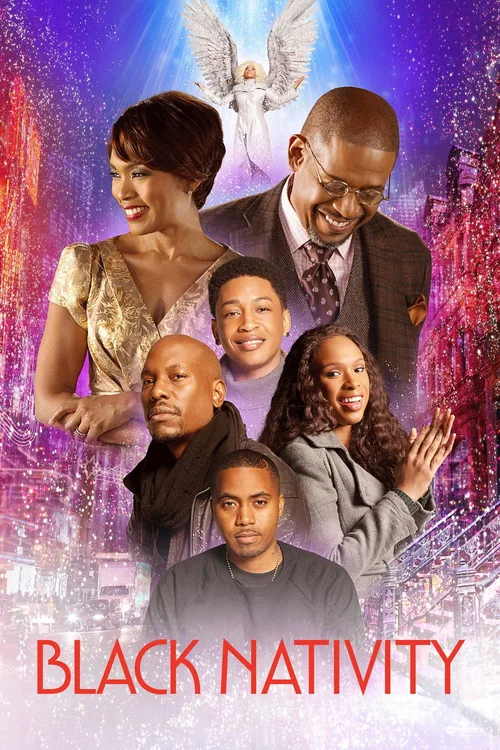
Black Nativity (2013)
A street-wise teen from Baltimore who has been raised by a single mother travels to New York City to spend the Christmas holiday with his estranged relatives, where he embarks on a surprising and inspirational journey.
 rating 6/10 User rating 62 votes 51%
 ❄ Christmas Connection
Black Nativity is set entirely during the Christmas season, with Langston's journey to Harlem framed around Christmas Eve and the nativity story itself. The film opens on December 24th and builds toward a Christmas morning reconciliation. The source material is Langston Hughes' 1961 gospel musical retelling of the birth of Christ.
Where to Watch


Our Review
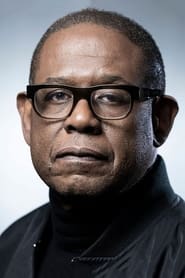
Black Nativity opens on a Baltimore apartment that's about to become someone else's problem. Langston, seventeen and furious, watches his mother Naima get evicted three days before Christmas. His solution: survive. Her solution: send him to Harlem to stay with grandparents he's never met, a reverend grandfather (Forest Whitaker) and his wife (Angela Bassett), who carry decades of secrets between them. It's a setup that could belong to a dozen different films. What makes this one different is what it's built on.
The 2013 film is directed by Kasi Lemmons, who wrote an original screenplay drawing from Langston Hughes' 1961 gospel play of the same name. Hughes' play had no conventional plot. It was a pure gospel celebration of the nativity, staged with an all-Black cast at a time when that alone was a political act. Lemmons understood that a straight adaptation wouldn't work on screen, so she invented a framing story and let the gospel sequences erupt from within it, dream-logic and all.
The result is a film that lives in two registers. In the realistic scenes, it's a family drama about estrangement, poverty, and the particular shame of needing help. In the musical sequences, it's something closer to a vision or a prayer. Those two modes don't always fit together cleanly, and the film takes real damage from the seams.
The Cast Earns Its Gospel Credentials
Forest Whitaker plays Reverend Cornell Cobbs with the weight of a man holding something he can't put down. He's stern where he should probably be warm, distant where he should be present, and Whitaker plays it without softening the edges. Angela Bassett matches him with a quiet authority that costs her something. These are not simple characters, and the actors don't treat them simply.
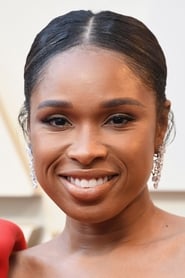
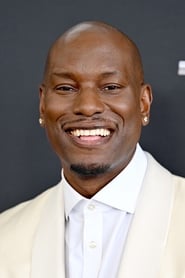
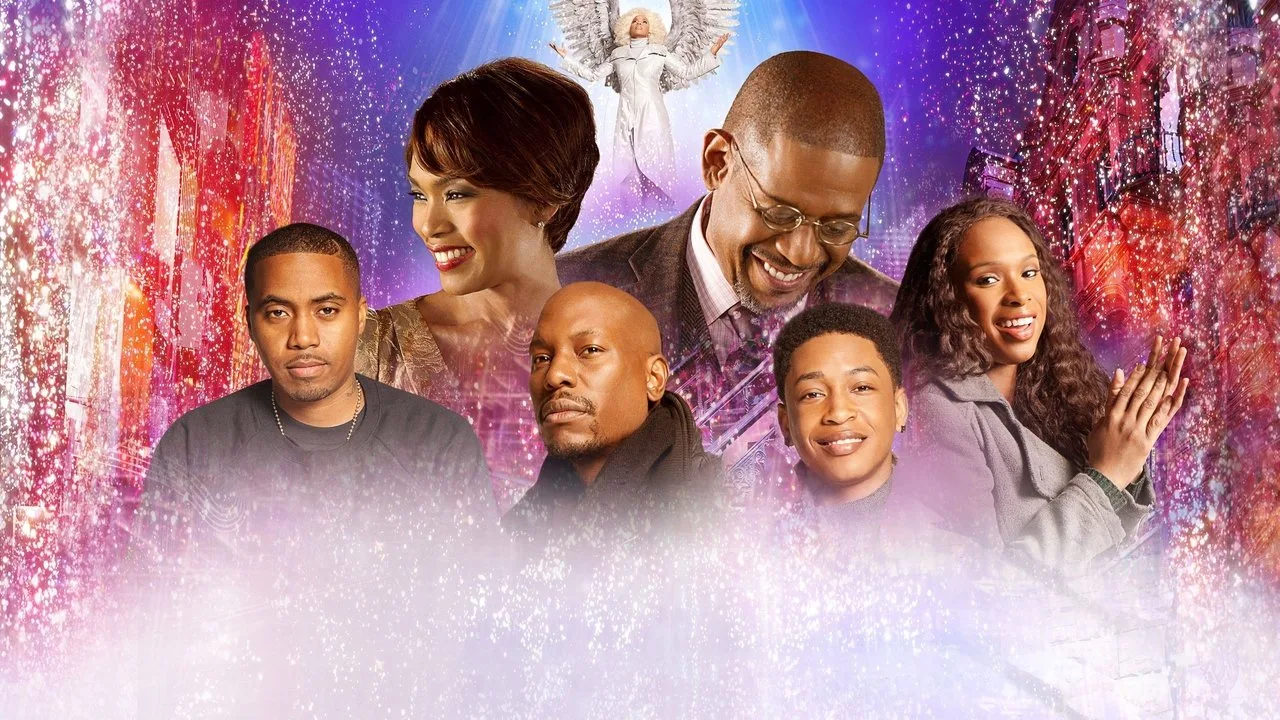
Jennifer Hudson plays Naima, Langston's mother, in what amounts to an extended cameo. She appears mostly to sing, and when she sings, the film becomes briefly unstoppable. Hudson performing "Holy Ghost" is the kind of moment that makes you wonder what a version of this film built entirely around her character might have looked like. Tyrese Gibson turns up as Langston's absent father with a number of his own, and Nas, in an unexpected piece of casting, plays a street preacher named Three Wise Men who dispenses wisdom in Harlem's winter cold.
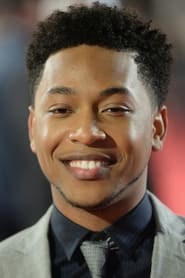
Jacob Latimore, who carries most of the film as young Langston, holds his own against this company. He was 17 during production, and he has to anchor scenes with Forest Whitaker and Angela Bassett without being flattened. He mostly manages it.
What Raphael Saadiq Built
The soundtrack is where the film makes its most convincing argument for existing. R&B musician and producer Raphael Saadiq served as executive music director, and his influence is felt in how contemporary gospel and classic soul get woven together. The score, composed by Saadiq and Laura Karpman, doesn't treat Black church music as a backdrop. It treats it as a language.
Mary J. Blige appears in the musical sequences as an angel named Motownmecca, which is the kind of casting decision that either works for you or doesn't. It works. Her voice belongs in this material, and Lemmons shoots the gospel sequences with enough visual ambition that they feel genuinely other-worldly, lit and staged more like stage theater than film realism.
The soundtrack album was released through Fox Music and features performances by Hudson, Blige, and Latimore alongside Saadiq originals. It holds up better as a listening experience than the film does as a narrative one.
Where It Gets Heavy-Handed
Critics in 2013 mostly agreed on one problem: Lemmons over-explains. The connections between Langston's story and the nativity are real and worth drawing, but the film draws them slowly and loudly, in case anyone missed them. Langston's name is not subtle. The parallel structure between his journey and the Holy Family's displacement is not subtle. The film could trust its audience more.
The realistic sequences also suffer from underdevelopment. The central conflict, Langston's anger at his grandparents for abandoning his mother years ago, carries real dramatic weight. But the film resolves it faster than it earned, in a Christmas morning reconciliation that happens before the audience has fully understood what the estrangement cost everyone involved.
At 93 minutes, the film is not too long. It might benefit from being longer, at least in the family drama sequences, where the characters deserve more time to be complicated before they're redeemed.
What Hughes' Original Play Actually Was
Langston Hughes first staged Black Nativity in December 1961, not technically on Broadway but close enough to matter. The production then toured Europe, landing at the Festival of Two Worlds in Spoleto, Italy, and later performing in London, Oslo, Brussels, Copenhagen, and Rotterdam before returning to New York. For a gospel musical built around a specifically Black American religious tradition, its European reception was a genuine surprise to the producers.
Hughes originally wanted to call it "Wasn't That a Mighty Day?" but changed the title before the 1961 premiere. The original production featured the Stars of Faith gospel group and was one of the first plays by a Black American writer to reach that platform. The Lemmons film is the most prominent screen adaptation it has ever received.
Black Nativity earned $7 million at the worldwide box office against a $17.5 million budget. By Hollywood's math, it underperformed. By the standard of what it's trying to do, it's more complicated than that. As a Christmas film, it offers something most holiday releases don't: a story about poverty, family failure, and reconciliation that doesn't pretend those things are easy. The gospel sequences suggest what a bolder, stranger version of this film might have been. The family drama suggests it needed more time to develop. What's on screen is imperfect and sometimes genuinely moving.
Fun Facts
Langston Hughes' Black Nativity premiered in December 1961 and was originally titled "Wasn't That a Mighty Day?" Hughes changed the title just before opening night, less than a week before the production launched.
The original 1961 production toured Europe after its U.S. premiere, performing in London, Oslo, Brussels, Copenhagen, and Rotterdam before returning to New York and Lincoln Center. For a gospel play rooted in African American church tradition, its European reception was considered remarkable by theater observers at the time.
Director Kasi Lemmons is best known as the actress who played FBI trainee Ardelia Mapp in The Silence of the Lambs (1991). She pivoted to directing with Eve's Bayou (1997), which Roger Ebert placed on his list of the best films of that year.
Rapper Nas plays a street preacher character named Three Wise Men. His casting was Lemmons' decision, and he performs in the film's gospel sequences alongside the professional vocalists in the cast.
The film's budget was approximately $17.5 million. It earned around $7 million worldwide during its theatrical run, opening on Thanksgiving weekend 2013 against stiff competition including The Hunger Games: Catching Fire.
Raphael Saadiq, the R&B musician known for his work with Tony! Toni! Tone! and later solo albums, served as the film's executive music director. He composed the score alongside orchestral composer Laura Karpman, blending contemporary R&B production with traditional gospel arrangements.
Jacob Latimore, who plays the lead character Langston, was 17 years old during production. He had previously appeared in the 2012 comedy Like Mike 2: Streetball and went on to star in the TV series The Chi.
The original 1961 cast recording, titled "Black Nativity, Gospel On Broadway!" featured Marion Williams and the Stars of Faith. It was released by Vee-Jay Records in 1963 and sold close to 75,000 copies by June of that year, a significant number for a gospel theater album at the time.
Cast