
Charlie Brown's Christmas Tales (2002)
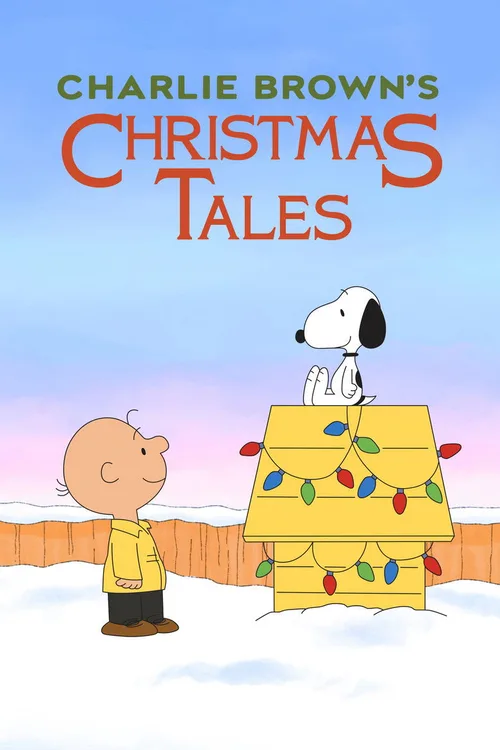
Tis the season for the cheer and charm of the Peanuts kids - and this delight special offers five segments full of unforgettable moments. Snoopy works as a bell-ringer to raise money and tries making peace with the ferocious cat next door. Linus strives to strike the right tone in his letter to Santa - and his friendship with an indecisive girl at school. Sally's idea about gift giving and the identity of Santa may be unusual - but her strange notion about how to obtain a Christmas tree surprisingly does the job. Lucy tries awfully hard to be nice...and still coax everyone around her to buy her presents. Charlie Brown and Sally wait up for Santa (a surprisingly short man), who spreads Christmas gift cheer further than they had thought. Make merry!
 rating 6/10 User rating 48 votes 65%
 ❄ Christmas Connection
The entire special takes place in the days leading up to Christmas, with every vignette built around the Peanuts gang navigating holiday rituals: bell-ringing, letter-writing to Santa, Christmas card composing, and tree-hunting. There is no subplot that strays from the season. Christmas is not the backdrop; it is the subject.
Where to Watch


Our Review
Charlie Brown's Christmas Tales exists because of a scheduling problem. When ABC acquired the broadcast rights to A Charlie Brown Christmas in 2001, the network slotted the 1965 classic into a full one-hour block. That left 18 minutes of dead air to fill. Producer Lee Mendelson and director Larry Leichliter went into the comic strip archives, pulled five Christmas-themed Peanuts strips, and animated them. The result aired on December 8, 2002, and has run annually ever since. That it works at all, given these origins, is a minor achievement.
Five Vignettes, One Consistent Sensibility
The special is structured as an anthology: five short segments, each starring a different member of the gang. Snoopy tries to make peace with the hostile cat next door while working as a charity bell-ringer. Linus writes a Christmas card to a girl from school who gave him a fake address. Sally attempts to get a tree by staring at one and willing it to fall, then claims the result is a Christmas miracle. Lucy manipulates scripture to guilt Linus into buying her a present. Charlie Brown drafts a Christmas card to the Little Red-Haired Girl and accidentally signs it "your sweet babboo," which is Sally's term for Linus.
That last one lands. The confusion over "sweet babboo" is the kind of gag that feels genuinely Schulz: small, a little melancholy, and relying entirely on the reader knowing the characters well enough for the tangled affections to sting.
The Sally segment is the strangest, and by some margin the funniest. Her conviction that Santa is a woman named Samantha Claus, her humiliation at school when the other kids correct her, and then the tree actually falling on its own are the kind of absurdist non-sequiturs Schulz built his entire career on. The joke has no moral. It just happens, and Sally calls it a miracle, and you believe her, because her logic is internally consistent even when it makes no sense.
What It Is and Is Not
This is not A Charlie Brown Christmas. That 1965 special is one of the most carefully constructed 25 minutes in the history of American television, with Vince Guaraldi's jazz score, Linus's recitation of the Gospel of Luke, and a genuine emotional argument about commercialism and meaning. Forty-five million viewers watched its premiere, it won an Emmy, and Guaraldi's album became one of the bestselling jazz records of all time.
Christmas Tales makes no such argument. It is a collection of jokes. The best of them are very good jokes, faithful to the comic strip's tone, and the worst of them simply don't overstay their welcome because each segment is only a few minutes long.
The animation is pleasant but noticeably cheaper than the classic specials. Leichliter, who had worked as an animator on Peanuts productions since 1975's You're a Good Sport, Charlie Brown, keeps things moving efficiently. The real value is in the source material. Schulz's strip gags are tight, and the writers trusted them enough not to inflate them.
The Last Time Schulz Got Credit
Charles M. Schulz died on February 12, 2000, the night before his final Sunday strip ran in newspapers. Christmas Tales is the only Peanuts TV special to credit him posthumously as writer. Subsequent productions moved to other writers. That makes this 18-minute collection something of a footnote in the franchise's history: the last animated work directly tied to Schulz's own words on the page.
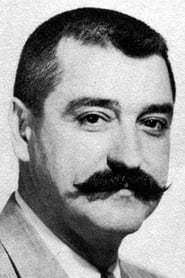
Bill Melendez, the Mexican-American animator who had been the only artist Schulz ever authorized to animate his characters, returned to produce and voice Snoopy and Woodstock. Melendez had been voicing Snoopy since 1965, recording gibberish in the studio and speeding it up mechanically. He said it was a happy accident, that he was testing sounds under deadline pressure and the recordings stuck. He did it until his death in 2008, and archive recordings of his work were used for The Peanuts Movie in 2015.
Lee Mendelson, who had produced every major Peanuts special since the beginning, curated the strip selections and oversaw the adaptation. The trio of Schulz, Mendelson, and Melendez had held together for four decades. Christmas Tales was close to the end of that arrangement.
Who Actually Watches This
Anyone who watches A Charlie Brown Christmas annually on ABC and stays for the back half of the hour has seen this special without necessarily knowing it has its own title. From 2010 to 2012, ABC cut a portion of it to insert Prep and Landing: Operation Secret Santa, a seven-minute Disney short. That tells you everything about how the network regarded it: useful padding, interchangeable with other useful padding.
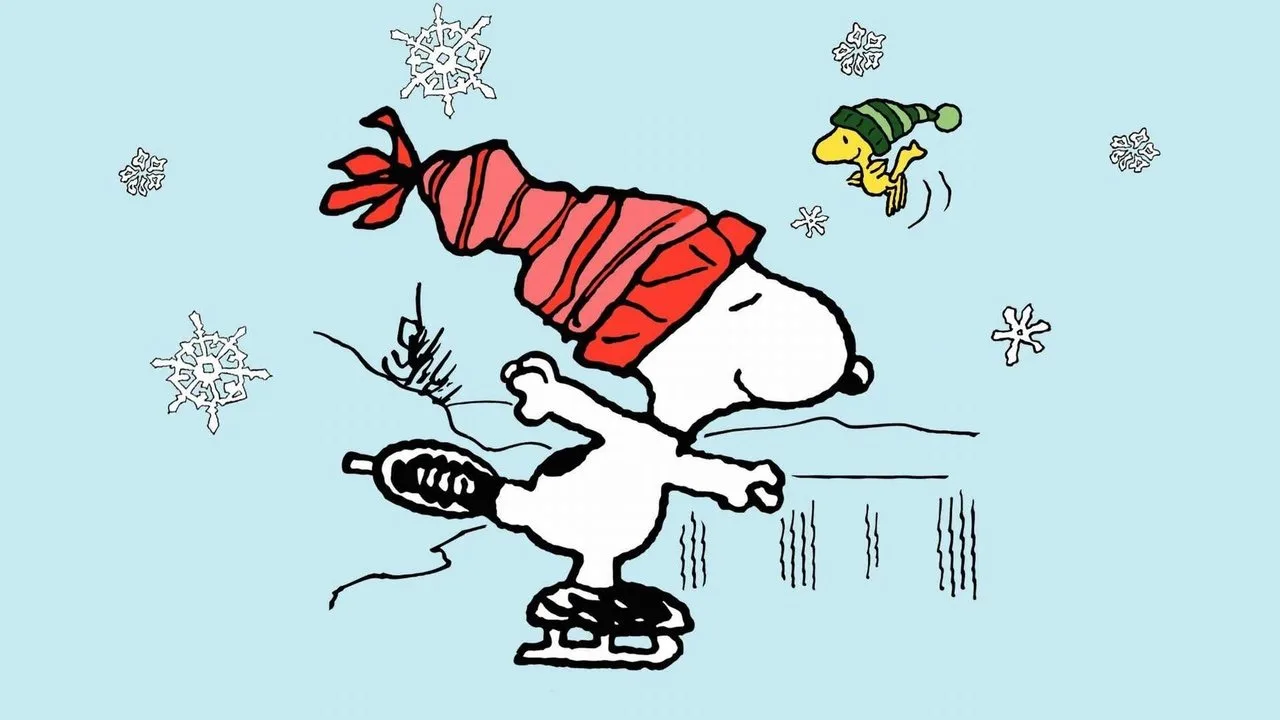
That framing is a little unfair. Christmas Tales earns its runtime. The Lucy segment captures her particular brand of theological bad faith better than most full-length Peanuts productions. The Snoopy segment has a physical comedy sequence on the ice that the strip could never fully achieve on a static page. And the ending, with Charlie Brown and Sally looking up at the sky wondering if they saw Santa, is quiet in the way the best Peanuts moments always are.
It is not essential. It is not trying to be. But it's honest about what it is, which puts it ahead of most holiday programming made to fill a slot.
Fun Facts
Charlie Brown's Christmas Tales was created specifically to fill 18 minutes of airtime after ABC acquired the broadcast rights to A Charlie Brown Christmas and scheduled it in a full one-hour slot.
It is the only Peanuts TV special to credit Charles M. Schulz posthumously as writer. Schulz died on February 12, 2000, and all subsequent specials were written by other hands.
Bill Melendez, who voiced Snoopy and Woodstock, was born Jose Cuauhtemoc Melendez in Hermosillo, Mexico, in 1916. He created the characters' distinctive sounds by recording himself making gibberish noises and then speeding the recordings up mechanically at different rates for each character.
Melendez was the only animator Charles Schulz ever authorized to adapt his Peanuts characters. Their collaboration began in 1959, when Melendez animated Peanuts characters for Ford Motor Company television commercials.
From 2010 to 2012, ABC cut portions of Christmas Tales to insert Prep and Landing: Operation Secret Santa, a seven-minute animated short produced by Walt Disney Animation Studios, into the same hour-long block.
Director Larry Leichliter first worked on a Peanuts production in 1975 as an animator on You're a Good Sport, Charlie Brown. By the time he directed Christmas Tales in 2002, he had been part of the franchise for 27 years.
The A Charlie Brown Christmas soundtrack by the Vince Guaraldi Trio, which plays in the main special that Christmas Tales was built around, had 45 million viewers watch its premiere broadcast on CBS on December 9, 1965. It went on to become one of the bestselling jazz albums of all time.
Archive voice recordings of Bill Melendez as Snoopy and Woodstock, made during his lifetime, were used in The Peanuts Movie (2015), seven years after his death in September 2008.
Cast