
It's not paranoia if they're really after you.
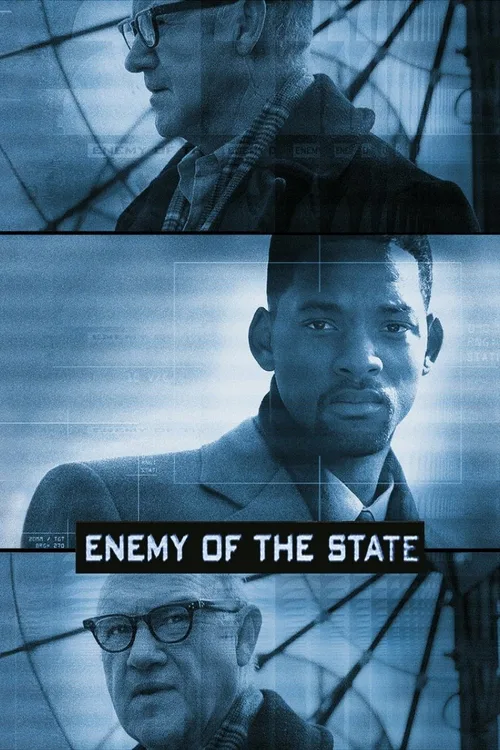
Enemy of the State (1998)
When the videotape of the murder of a congressman unknowingly ends up in the hands of labor lawyer and dedicated family man Robert Clayton Dean, he is framed for the murder. With the help of the mysterious Brill, Dean attempts to throw the NSA off his trail and prove his innocence.
 rating 8/10 User rating 4,163 votes 71%
 ❄ Christmas Connection
Enemy of the State opens in the frantic days before Christmas, and the film's inciting incident unfolds in the middle of a crowded mall during the holiday shopping rush. Key scenes play out at Christmas parties where surveillance cameras and festive decorations share the frame. The holiday setting isn't just backdrop — it uses the anonymity and noise of the season as cover for both hunters and hunted.
Where to Watch


Our Review
Enemy of the State came out in November 1998, made a lot of money, got decent reviews, and then sort of settled into the background of late-90s action cinema. It was never quite a classic, never quite a curiosity. Then September 11 happened, the PATRIOT Act passed, and suddenly a movie about the NSA conducting warrantless mass surveillance on an ordinary American citizen looked less like a thriller premise and more like a news story. The film aged into something Tony Scott never intended: a document of what people weren't yet worried about.
That's the strange arc of Enemy of the State. It's a Christmas movie by accident, a surveillance thriller by design, and a prophecy by coincidence.
The Christmas Shopping Mall That Started Everything
The setup is clean and efficient. Robert Clayton Dean, played by Will Smith, is a Washington labor lawyer. He's buying a gift at a Georgetown lingerie shop when a wildlife researcher he barely knows stuffs a video disc into his shopping bag. That disc contains footage of a sitting congressman being murdered on the orders of NSA official Thomas Brian Reynolds, played by Jon Voight. Within hours, Dean's life is being systematically dismantled: credit cards frozen, employer poisoned against him, wife convinced he's having an affair.
The holiday shopping scenes aren't incidental. They establish Dean as a recognizable civilian, a man buying Christmas presents and complaining about the price of things, before the apparatus of the surveillance state lands on him. Scott shoots the mall with the same restless energy he'd use for a car chase. Shoppers, decorations, noise, crowds. The mundane Christmas crush of people that makes one more person with a bag easy to miss.
A Christmas party at Dean's law firm is where the NSA operatives first make contact in person. Reynolds's agents look like everyone else at the party. That's the point. The holiday setting isn't mood dressing — it's a practical observation about how surveillance works. People let their guard down at Christmas.
Gene Hackman Doing Gene Hackman Things
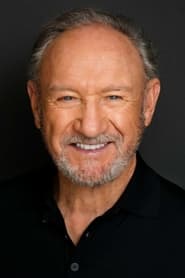
The film's best decision was casting Gene Hackman as Edward "Brill" Lyle, a former NSA operative living off the grid who reluctantly helps Dean figure out who's hunting him and why. Hackman had played a similar role in The Conversation in 1974, Francis Ford Coppola's film about a surveillance expert undone by his own work. That's not a coincidence the filmmakers ignored — they leaned into it, making Brill a kind of ghost of that earlier character, someone who understood surveillance because he'd built it.
Hackman brings something Smith can't carry alone: weight. Dean is reactive, scared, and increasingly desperate, and Smith plays that well. But Brill has lived with the knowledge of what the surveillance state can do, and Hackman makes that knowledge feel like a physical burden. His scenes in the safe house, explaining to Dean exactly how thoroughly he's been mapped and exposed, are the film's best.
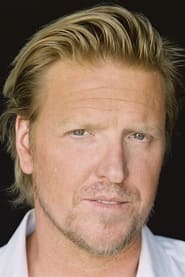
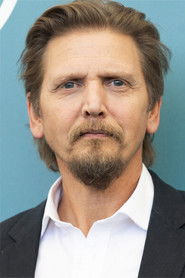
Jon Voight as the villain Reynolds is cold and bureaucratic in the right ways. He's not a raving ideologue; he's a man who believes the ends justify the means and is genuinely confused when people don't agree. The supporting cast, including Jack Black, Seth Green, Jake Busey, and Barry Pepper as the tech operatives, and Regina King and Lisa Bonet in smaller roles, fills out the world without wasted screen time.
What Tony Scott Got Right About Surveillance
Scott and screenwriter David Marconi made a specific creative choice that looks obvious now but wasn't in 1998: they showed the machinery. The film lingers on satellite feeds, cell phone intercepts, credit card transactions, employment records. The NSA team tracking Dean has access to essentially every database that matters, and the film explains in plain language what that means. When Dean buys something, they know. When he calls someone, they know. When he moves, they know.
This was largely science fiction in 1998. It was documented government practice by 2013, when Edward Snowden released the NSA files. The film's premise, that a powerful government agency could turn its full surveillance infrastructure against a private citizen with no legal oversight, was treated as thriller paranoia at the time. The Senate Intelligence Committee reports published after 9/11 made it look like reporting.
Scott shoots the surveillance sequences with split screens and overlapping feeds, which was a stylistic choice that happened to be accurate. Actual intelligence analysis looks like that: multiple data streams processed simultaneously. The film wasn't trying to be a documentary. It ended up being one anyway.
Where It Loses Its Nerve
The third act is where Enemy of the State turns back into a conventional action movie. The sharp, suffocating tension of watching Dean's life collapse gives way to shootouts, explosions, and a mob-assisted confrontation that resolves things neatly. The surveillance thriller gives way to a Jerry Bruckheimer production, which is what it was all along.
That's not a fatal flaw. The first two acts earn enough credit to survive the ending. But the film could have been something genuinely unsettling if it had trusted the premise further. The mechanics of how ordinary life can be made to collapse under sustained institutional pressure, that's the scary thing. The climax trades that for spectacle.
Still, at 132 minutes, it moves. Scott never lets the pace drop long enough for the procedural elements to become tedious. The film knows its audience came for a thriller, and it delivers one.
A Prescient Paranoia You Can Watch at Christmas
Enemy of the State isn't a Christmas movie in the way Die Hard is. Nobody puts it on a list between Home Alone and It's a Wonderful Life. But it begins in the Christmas shopping season, builds through holiday events, and puts its protagonist through his worst days during the weeks when everyone else is buying gifts and going to parties. There's something grimly appropriate about that. The holiday season, with its normalizing rituals and collective good cheer, makes the worst backdrop imaginable for a man being erased by his own government.
Will Smith was at peak commercial popularity in 1998, fresh off Men in Black and still a year away from Wild Wild West. Enemy of the State is a reminder that he was genuinely good at playing panic and desperation before he mostly stopped getting roles that required it. The scene where he realizes his wife has been shown fabricated evidence of an affair, and he can't prove it isn't real because the surveillance state has made fakery indistinguishable from fact, is as good as anything he did in that decade.
The film ends with Dean watching himself on television, his ordeal now public and presumably resolved. Brill is gone, off the grid again. The last shot is of satellite imagery, pulling back from a house, becoming just one data point among billions. Tony Scott couldn't have known how that image would look twenty years later. It's not comforting.
Fun Facts
Gene Hackman had played a surveillance expert in Francis Ford Coppola's The Conversation (1974), and the Enemy of the State script explicitly acknowledges this — Hackman's character Brill is written as a possible older version of that film's protagonist, Harry Caul.
The film was produced by Jerry Bruckheimer and cost approximately $90 million to make. It grossed around $250 million worldwide, making it one of the highest-grossing films of 1998.
Tony Scott used real NSA satellite and surveillance technology consultants during production. Some of the equipment shown in the film was classified or not yet publicly known at the time of release.
Jack Black, Seth Green, and Barry Pepper all appeared in the film as NSA technical operatives before any of them were major stars. Jack Black had only appeared in a handful of films before this role.
The film correctly depicted cell phone location tracking, financial record access, and real-time satellite surveillance as tools available to intelligence agencies in 1998 — capabilities that were officially confirmed to exist more than a decade later through the Snowden disclosures.
Will Smith spent time with real lawyers preparing for the role, and the film's legal details, including how Dean's professional licenses and client relationships are used against him, were reviewed for accuracy.
Director Tony Scott was known for his kinetic, multi-camera shooting style. Enemy of the State used over 50 cameras across various sequences, particularly in the surveillance monitoring scenes, to create the split-screen data-feed aesthetic.
Regina King, who plays Dean's wife Carla, had been best known for sitcom work before this film. She later won an Academy Award for Best Supporting Actress for If Beale Street Could Talk (2018).
Cast