
A family comedy without the family.
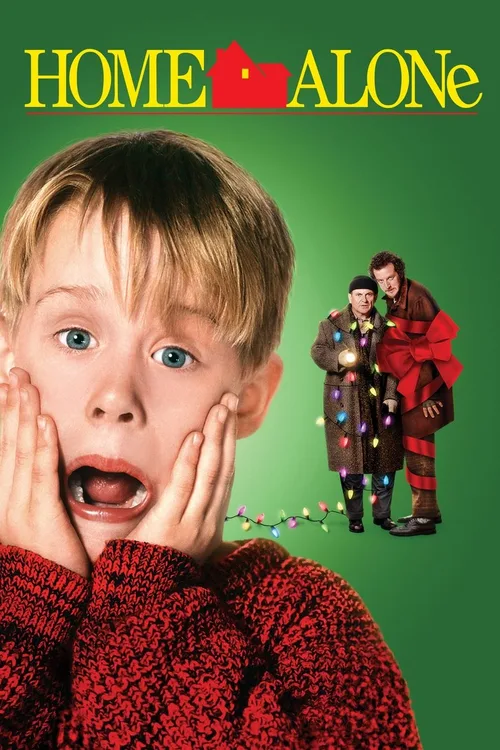
Home Alone (1990)
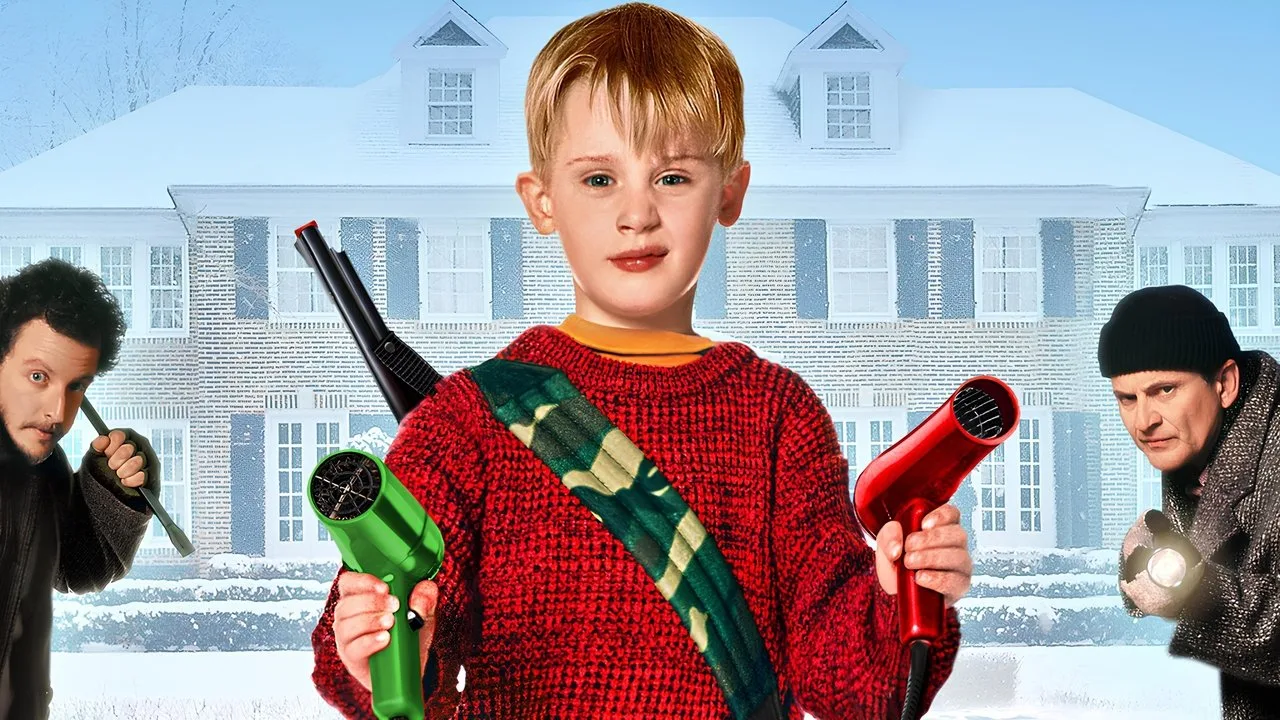
Eight-year-old Kevin McCallister makes the most of the situation after his family unwittingly leaves him behind when they go on Christmas vacation. When thieves try to break into his home, he puts up a fight like no other.
 rating 9/10 User rating 12,309 votes 75%
 ❄ Christmas Connection
Home Alone is set entirely during the Christmas holiday, with the McCallister family's trip creating the premise. Christmas decorations, snow, a church nativity pageant, and the themes of family reunion are woven into every scene.
Where to Watch


Our Review
In 1990, a scrappy comedy about a kid left behind by his enormous family during Christmas vacation grossed $476 million worldwide and turned Macaulay Culkin into the biggest child star since Shirley Temple. Three decades later, Home Alone remains the highest-grossing live-action comedy in the United States when adjusted for inflation. No sequel, reboot, or imitator has come close to replicating its formula.
The premise is absurdly simple. Eight-year-old Kevin McCallister gets accidentally left behind when his family of fifteen rushes to the airport for a Paris vacation. Two bumbling burglars target the house. Kevin fights back. That's it. What makes it work is the precision of John Hughes' screenplay and the physical comedy chops of everyone involved.
Why Kevin McCallister Works
Macaulay Culkin was ten years old during filming and carried every scene with the timing of a performer twice his age. His face does the heavy lifting, shifting between genuine terror when the burglars first arrive and calculated glee when the traps start firing. Director Chris Columbus later said the film wouldn't have existed without Culkin's audition, where he ad-libbed the aftershave scream on the spot.
Kevin is not a sweet kid. He's selfish, bratty, and says horrible things to his mother before the trip. That's what makes his arc satisfying. His loneliness is earned, not manufactured, and when he finally appreciates his family, the audience buys it because he started from a genuinely unpleasant place.
The Slapstick That Holds Up
The trap sequences in the third act are essentially a live-action Road Runner cartoon. Joe Pesci and Daniel Stern commit fully to being Wile E. Coyote, absorbing paint cans to the face, blowtorches to the scalp, and ornaments underfoot with increasingly absurd resilience. Stern reportedly agreed to have a real tarantula placed on his face for the basement scene, and his silent scream was the result of Columbus telling him that any sound would scare the spider.
The violence escalates in a way that remains funny because the film never pretends to be realistic. Harry and Marv should be dead multiple times over, and the movie knows it. It's cartoon physics applied to live actors, and the contrast is what generates the laughs.
John Hughes' Christmas Machine
Hughes wrote the Home Alone screenplay in just nine days, reportedly inspired by packing for a family vacation and making a checklist of things he might forget. He had already proven himself as the definitive voice of suburban Americana with The Breakfast Club and Ferris Bueller's Day Off, and Home Alone applied that same observational sharpness to the chaos of a large family at Christmas.
The film's Christmas setting isn't decorative. It's structural. The church scene where Kevin meets Old Man Marley is the emotional centerpiece, and it works because both characters are isolated from their families during a season that makes loneliness feel sharper. Marley's reconciliation with his son at the end mirrors Kevin's reunion with his mother, giving the slapstick comedy a genuine emotional payoff.
The Cultural Footprint
Home Alone's afterlife is staggering. In Poland, it airs on national television every Christmas Eve and draws millions of viewers annually. The house at 671 Lincoln Avenue in Winnetka, Illinois sold for $5.25 million in 2012. The film spawned five sequels, none involving Hughes or Culkin (except the second), and all widely considered diminishing returns.
John Williams composed the score, weaving "Somewhere in My Memory" into a film that could have gotten away with stock holiday music. That track earned an Academy Award nomination and has since become a Christmas standard performed by orchestras worldwide.
The real genius of Home Alone is its rewatchability. Every Christmas, families return to it not because they've forgotten how it ends, but because the specific pleasures of watching Kevin outsmart two grown men never get old. The traps are still funny. The church scene still lands. The reunion at the end still works, even when you know it's coming.
Fun Facts
John Hughes wrote the screenplay in nine days while preparing for a family vacation, reportedly making a list of things he was afraid to forget.
Joe Pesci deliberately avoided Macaulay Culkin on set to maintain a genuine sense of menace between them. He also accidentally bit Culkin's finger during a rehearsal, leaving a scar.
Daniel Stern had a real tarantula placed on his face for the basement scene. His screaming had to be mimed silently so the spider wouldn't be startled.
The film grossed $476 million worldwide on a $18 million budget, making it the highest-grossing film of 1990.
In Poland, Home Alone (titled "Kevin sam w domu") airs every Christmas Eve on TV Polsat and consistently ranks among the most-watched broadcasts of the year.
The iconic McCallister house in Winnetka, Illinois was a real residence. It sold for $5.25 million in 2012 and was extensively renovated by its new owners.
John Williams' score for the film was nominated for an Academy Award for Best Original Score. "Somewhere in My Memory" has become a Christmas concert staple.
Cast