Special Christmas magic!
Frosty the Snowman (1969)
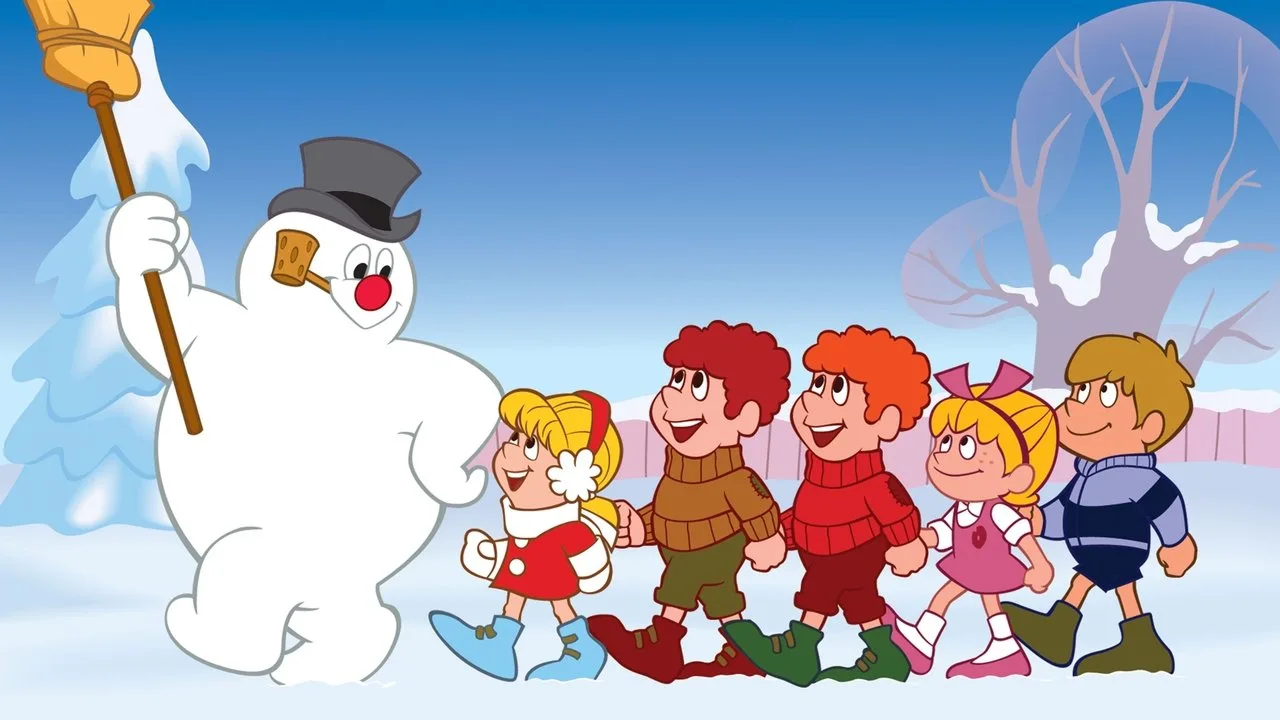
A discarded silk top-hat becomes the focus of a struggle between a washed-up stage magician and a group of schoolchildren, after it magically brings a snowman to life. Realizing that newly-living Frosty will melt in spring unless he takes refuge in a colder climate, the magic snowman and Karen, a young girl whom he befriends, stow away on a freight train headed for the North Pole. Little do they know that the magician is following them, and he wants his hat back!
 rating 7/10 User rating 377 votes 69%
 ❄ Christmas Connection
Frosty the Snowman is set on a snowy Christmas Eve. The entire plot revolves around a magical snowman brought to life by a hat, parading through town with children, and ultimately being saved by Santa Claus himself. Christmas is baked into every frame.
Where to Watch

Our Review
Frosty the Snowman first aired on CBS on December 7, 1969, and it became the number one television program in America that week, pulling a 30.5 Nielsen rating and a 45 share. Not bad for a 25-minute cartoon about a snowman who melts. Rankin/Bass, fresh off the success of their stop-motion Rudolph special five years earlier, took a novelty song from 1950 and turned it into something genuinely affecting. The trick was simple: they made you care about a character who, by the laws of thermodynamics, was never going to make it.
From Novelty Song to TV Special
The song "Frosty the Snowman" was written by Jack Rollins and Steve Nelson in 1950, one year after Gene Autry's "Rudolph the Red-Nosed Reindeer" had become a massive hit. Rollins and Nelson spent months deciding which Christmas icon to build a song around before settling on a living snowman. Autry recorded it, and it became another seasonal standard.
But the song is paper-thin as a story. A snowman comes alive, leads kids through town, and says he'll be back someday. That's it. Romeo Muller, who had written the Rudolph screenplay, was brought in to expand those three verses into a full narrative. He added everything that makes the special memorable: the magic hat, the greedy magician Professor Hinkle, the little girl Karen, the greenhouse, and the melting scene. Muller took a jingle and gave it stakes.
The Frosty the Snowman Cast
Jackie Vernon, a stand-up comedian known as "The King of Deadpan," voiced Frosty. Vernon was a regular on The Ed Sullivan Show and The Tonight Show, and his gentle, slightly bewildered delivery was perfect for a snowman experiencing the world for the first time. There's a genuine innocence in his performance that never tips into saccharine. When Frosty says "Happy Birthday," it sounds like he really means it, even though he has no idea what a birthday is.
Jimmy Durante narrated the special in what turned out to be his final screen performance. He was 76 years old. Durante had actually recorded a version of the "Frosty the Snowman" song back in 1950, so there was a pleasing symmetry in him bookending the character's cultural life. His raspy, warm voice gives the special a vaudeville charm that anchors the sillier moments.
Billy De Wolfe voiced Professor Hinkle, the bumbling magician who wants his magic hat back. De Wolfe was a veteran character actor who had worked with Bing Crosby and Betty Hutton, and he played Hinkle with a wonderful pettiness. This is a grown man chasing children through traffic to retrieve a hat. De Wolfe makes you believe he would absolutely do that.
The voice cast has a hidden layer of history. June Foray, one of the greatest voice actresses in animation history (Rocky the Flying Squirrel, Granny in Looney Tunes), originally voiced Karen and several children. Before the first broadcast, the children's lines were redubbed by Suzanne Davidson and Greg Thomas to make them sound younger. Foray's performance became lost media, though a few of her vocal effects, like Karen's sneezes, survived in the final cut.
A Christmas Card Come to Life
Frosty the Snowman was the first Rankin/Bass special to use traditional cel animation instead of their signature "Animagic" stop-motion. The animation was produced by Mushi Production in Tokyo, the studio founded by Osamu Tezuka. Osamu Dezaki, who would later become one of anime's most influential directors, worked on the animation staff, though he went uncredited.
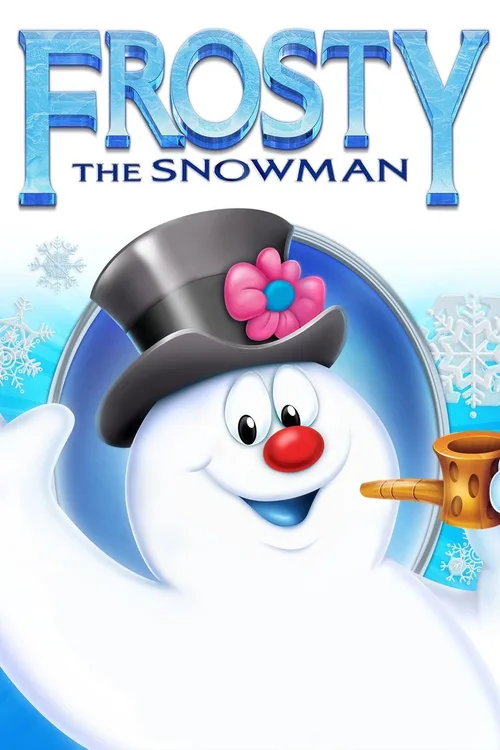
Rankin and Bass wanted the special to look like a Christmas card. They hired Paul Coker Jr. to design the characters and backgrounds. Coker was a Mad magazine illustrator who had drawn over 375 articles for the magazine, and his greeting-card sensibility gave the special its distinctive rounded, warm look. Everything is soft edges and pastel snow. The character designs are deceptively simple but immediately recognizable.
Coker went on to design characters for over a dozen Rankin/Bass specials, including Santa Claus Is Comin' to Town and The Year Without a Santa Claus. But Frosty was his first, and the visual template he established here defined the look of Rankin/Bass cel animation for years.
The Melting Scene That Scarred a Generation
Professor Hinkle locks Frosty in a greenhouse. The heat is too much. Frosty melts while Karen watches, unable to help. For millions of children, this was their first encounter with death in a story. It was not abstract or metaphorical. A character they liked dissolved into a puddle on the floor while a little girl cried.
Santa arrives, brings Frosty back, and threatens Hinkle with a lifetime on the naughty list. Everything is resolved. But the damage is done. The special earns its emotional payoff because it was willing to go to that dark place. Frosty's resurrection only lands because his death felt real.
The whole special runs just 25 minutes. There's no filler. The pacing is brisk, the story is clear, and the emotional arc is complete. Modern holiday specials could learn from that economy. Say what you need to say and get out.
Why Frosty Still Works
The special has limitations. The animation is basic even by 1969 standards. Some of the musical numbers feel like padding in a show that barely cracks 25 minutes. And the logic of the magic hat is never explained in any satisfying way, which is fine because it doesn't need to be.
What holds up is the central relationship between Frosty and Karen. She's the only character who treats him as a person rather than a curiosity. When she stays with him in the freezing cold rather than go home, that's a choice with consequences. When he melts, her grief is the emotional center of the entire special. The Rankin/Bass team understood that a story about a magical snowman only works if the human character is worth caring about too.
CBS aired Frosty the Snowman every December for 55 years before NBCUniversal picked it up. Jimmy Durante's closing rendition of the title song, recorded in a studio when he was in his mid-seventies, still plays over the final credits. It was the last recording session of his career. He sounds like a man who has seen enough Christmases to know what they're worth.
Fun Facts
The special debuted on December 7, 1969, on CBS, airing immediately after the fifth broadcast of A Charlie Brown Christmas. It was the number one rated program that week with a 30.5 Nielsen rating and a 45 share.
Jackie Vernon, who voiced Frosty, was born Ralph Verrone and was a stand-up comedian known for his deadpan delivery. He reprised the role in two more Rankin/Bass specials: Frosty's Winter Wonderland (1976) and Rudolph and Frosty's Christmas in July (1979).
The animation was produced by Mushi Production in Tokyo, the studio founded by manga legend Osamu Tezuka. Future anime directing giant Osamu Dezaki worked on the special but received no screen credit.
Paul Coker Jr., who designed all the characters, was a Mad magazine illustrator who contributed over 375 articles to the publication. He was hired specifically because Rankin and Bass wanted the special to look like a Christmas card.
June Foray originally voiced Karen and the other children, but her dialogue was redubbed before broadcast by Suzanne Davidson and Greg Thomas to make the characters sound younger. The original Foray recordings were considered lost media until a Rhino Records release preserved them.
The song "Frosty the Snowman" was written by Jack Rollins and Steve Nelson in 1950 as a deliberate attempt to replicate the success of "Rudolph the Red-Nosed Reindeer," which Gene Autry had recorded in 1949. Autry recorded "Frosty" too, and it became another hit.
Jimmy Durante's narration was his final screen performance. He had recorded his own version of the "Frosty" song back in 1950, making him one of the few people connected to both the song's original release and its TV adaptation nineteen years later.
Cast