

Rudolph the Red-Nosed Reindeer (1964)
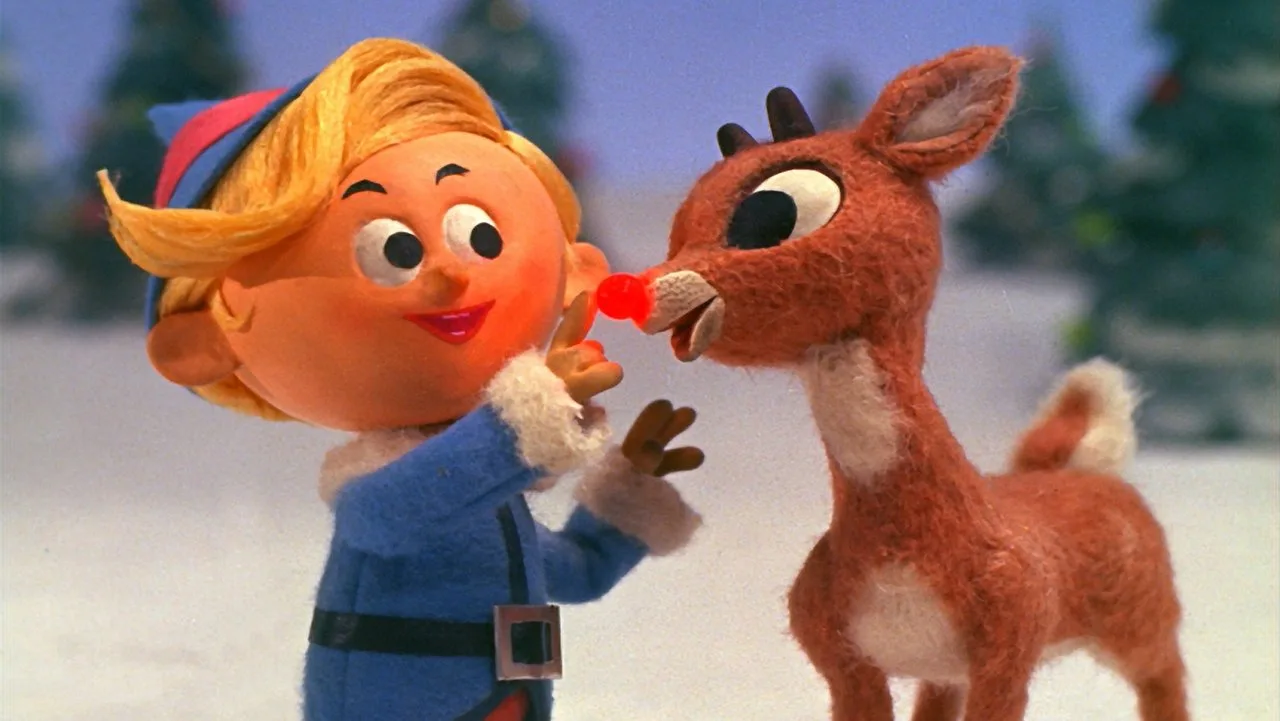
Sam the snowman tells us the story of a young red-nosed reindeer who, after being ousted from the reindeer games because of his glowing nose, teams up with Hermey, an aspiring dentist elf, and Yukon Cornelius, a prospector, as they search for the Island of Misfit Toys.
 rating 8/10
 ❄ Christmas Connection
The 1964 Rankin/Bass special is built entirely around Christmas Eve. Rudolph's journey leads him back to save Christmas by guiding Santa's sleigh through a storm, and every scene is steeped in North Pole lore, holiday songs, and the anticipation of Christmas night.
Our Review
Rudolph the Red-Nosed Reindeer first aired on NBC on December 6, 1964, and American television hasn't had a single Christmas season without it since. The Rankin/Bass stop-motion special, adapted from the Johnny Marks song that was itself adapted from a 1939 Montgomery Ward promotional booklet, has become the longest-running Christmas TV special in history. It's a strange little artifact: 47 minutes of puppet animation held together by Burl Ives narrating as a snowman, a love story between two teenage reindeer, and a genuinely unsettling depiction of Santa Claus as a thin-skinned bully.
Why This 1964 Special Still Holds Up
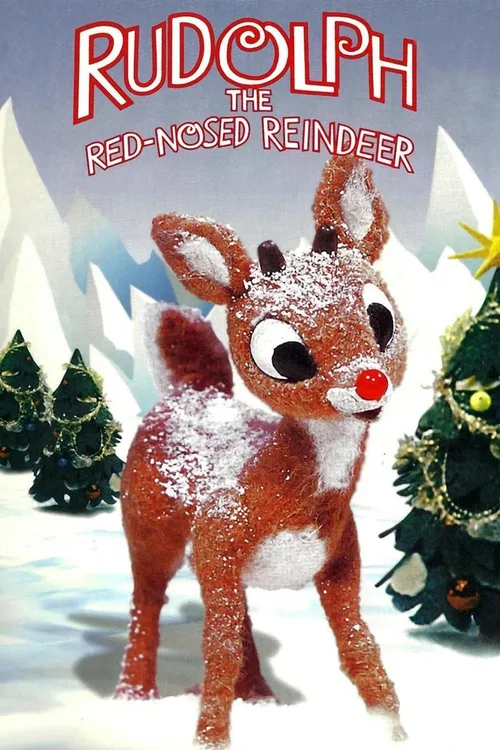
The animation technique Rankin/Bass used was called "Animagic," their branded term for stop-motion puppet animation produced at MOM Production in Tokyo. Tadahito Mochinaga and his team built each character from wood and fabric, moving them frame by frame against miniature sets dusted with actual mica flakes for the snow. The result has a tactile warmth that CGI can't replicate. You can practically feel the texture of Rudolph's fur.
The pacing is ruthless by modern standards. Within the first ten minutes, Rudolph is born, mocked for his glowing nose, rejected by his father Donner, humiliated at the Reindeer Games, and driven into exile. There's no second-act padding. The story just keeps moving.
What makes the special rewatchable for adults is how dark it actually is. Donner tries to cover Rudolph's nose with mud because he's ashamed. Coach Comet bans Rudolph from all reindeer games. Santa himself sees Rudolph's nose and tells Donner he should be ashamed. This is not a gentle fable. Christmastown runs on conformity, and the authority figures are the worst offenders.
The Cast and Voices Behind Rudolph the Red-Nosed Reindeer
Burl Ives, already a folk music legend and Academy Award winner for The Big Country (1958), voices Sam the Snowman, the narrator and musical anchor. His warm baritone holds the whole production together. Billie Mae Richards, a Canadian actress, voiced Rudolph with a vulnerable sincerity that hasn't dated. She was 43 at the time.
Larry Mann played Yukon Cornelius, the prospector who licks his pickaxe and keeps searching for silver and gold. Mann improvised several of his lines, and his performance is the loosest and funniest in the special. Paul Soles, who also voiced Spider-Man in the 1967 cartoon series, played Hermey, the elf who wants to be a dentist.
The voice cast was almost entirely Canadian, recorded at RCA Studios in Toronto. This was partly a cost decision and partly because Rankin/Bass had a strong working relationship with Canadian talent pools.
Christmas Songs from Rudolph the Red-Nosed Reindeer
Johnny Marks wrote every song in the special, and the soundtrack produced multiple standards. "Rudolph the Red-Nosed Reindeer" was already a hit before the special existed, recorded by Gene Autry in 1949. But the special added "A Holly Jolly Christmas," "Silver and Gold," and "There's Always Tomorrow" to the Christmas canon.
"A Holly Jolly Christmas," performed by Burl Ives, has been covered hundreds of times and appears on virtually every Christmas compilation album released since the 1960s. Ives' version alone has been streamed over a billion times on Spotify.
The less celebrated songs are worth attention too. "We're a Couple of Misfits," sung by Hermey and Rudolph, was actually replaced in some later broadcasts with a different song called "Fame and Fortune" before being restored. The original version is better. It has a genuine loneliness to it that "Fame and Fortune" smoothed away.
The Island of Misfit Toys
The Island of Misfit Toys remains the most memorable sequence. A spotted elephant. A Charlie-in-the-Box. A bird that swims instead of flies. A cowboy who rides an ostrich. King Moonracer, a winged lion who rules the island, asks Rudolph to tell Santa about his subjects so they can find homes with children who want them.
In the original 1964 broadcast, Santa never actually returns for the toys. Viewers noticed. Parents wrote letters to Rankin/Bass and to NBC. The following year, a closing scene was added showing Santa delivering the misfit toys to children on Christmas Eve. It's one of the earliest examples of audience feedback changing a TV special's ending.
The misfit toys resonate because the metaphor is unsubtle and correct. These are things that work perfectly fine but don't match what's expected. The whole special is about that: Rudolph's nose isn't broken. It's just different. Christmastown's problem is that it can't tolerate difference until that difference becomes useful.
A Complicated Moral
The ending has always been the sticking point. Rudolph is accepted only because his glowing nose can solve a practical problem for Santa. The reindeer who mocked him, the coach who excluded him, the father who tried to hide his difference: none of them apologize or change their views. They just need him now.
This isn't necessarily a flaw in the storytelling. It's an honest depiction of how social acceptance often works. People don't stop being prejudiced because they have a change of heart. They stop when the thing they were prejudiced against turns out to be useful to them. For a 1964 children's special, that's a remarkably cynical observation, even if it wasn't intentional.
Rankin/Bass produced dozens of Christmas specials over the next two decades. None of them matched Rudolph's staying power. The original still airs annually on CBS, pulling around 7 million viewers per broadcast even in the streaming age. Sixty years after a wooden puppet with a battery-powered nose first wobbled across a miniature snowfield in a Tokyo studio, Rudolph is still the one leading the sleigh.
Fun Facts
The original 1964 broadcast ran 52 minutes. When General Electric reduced its sponsorship, about 5 minutes were cut, including most of the "We're a Couple of Misfits" sequence, which wasn't fully restored until 1998.
Burl Ives recorded "A Holly Jolly Christmas" in a single take at the Decca Records studio in New York. The song didn't become a mainstream Christmas standard until the special popularized it.
The stop-motion puppets were believed lost for decades until a few original figures surfaced at auction. A Rudolph and Santa puppet pair sold at auction in 2005 for $368,000.
Billie Mae Richards, who voiced Rudolph, was a veteran radio actress in Canada. She continued to voice Rudolph in Rankin/Bass productions for over 30 years.
Tadahito Mochinaga's animation team at MOM Production in Tokyo produced the Animagic sequences. The same studio also animated other Rankin/Bass specials including "The Little Drummer Boy."
The character of Hermey the elf who wants to be a dentist was inspired by Arthur Rankin Jr.'s own childhood dentist, who had told him that dentistry was his dream job.
Rudolph the Red-Nosed Reindeer is the longest-running Christmas special in television history, airing every year since 1964 without interruption.