
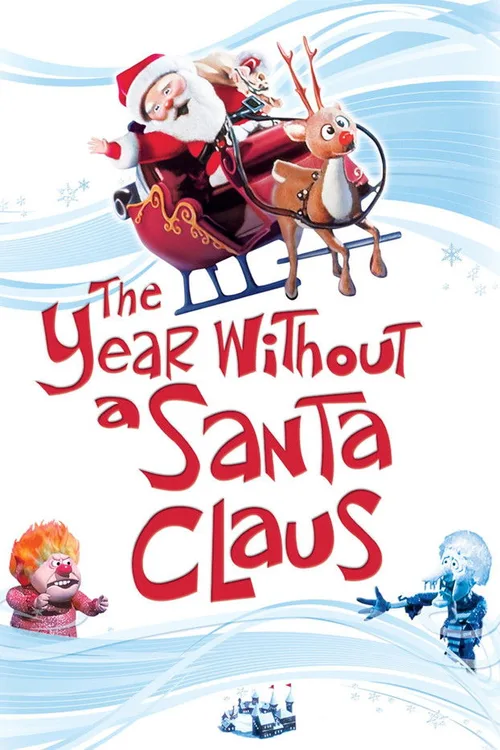
The Year Without a Santa Claus (1974)
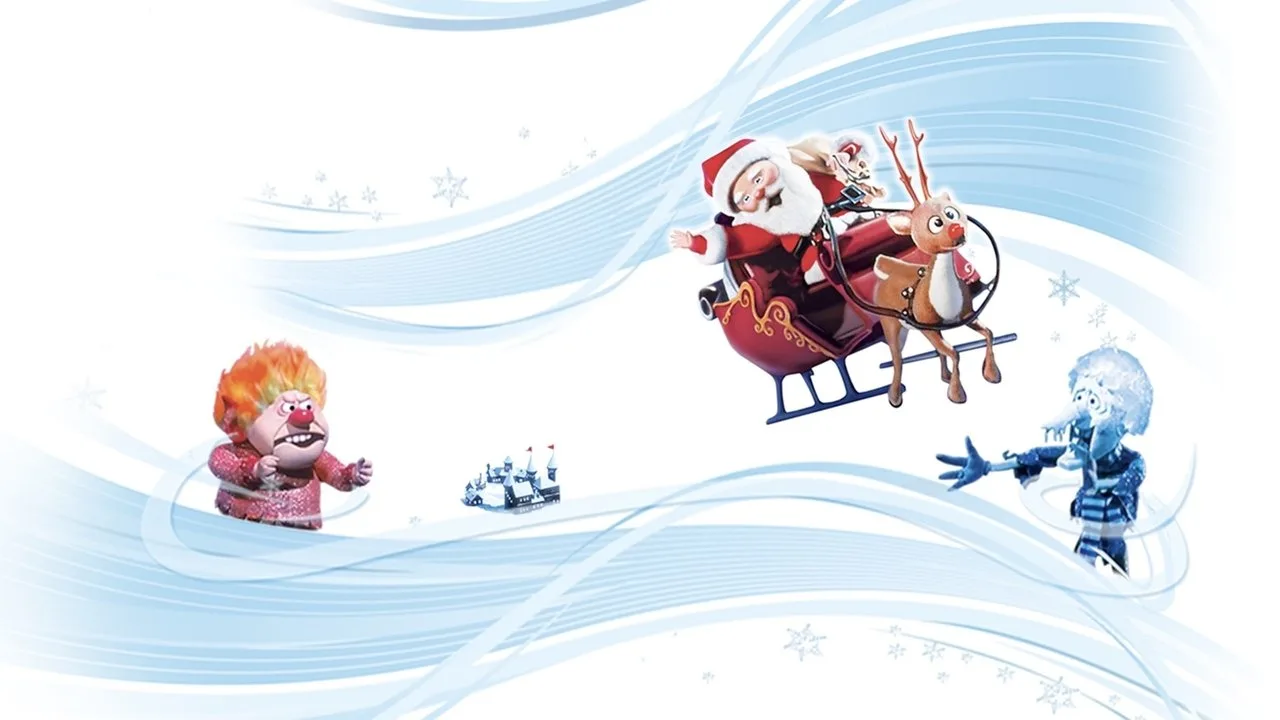
Feeling forgotten by the children of the world, old St. Nick decides to skip his gift-giving journey and take a vacation. Mrs. Claus and two spunky little elves, Jingle and Jangle, set out to see to where all the season's cheer has disappeared. Aided by a magical snowfall, they reawaken the spirit of Christmas in children's hearts and put Santa back in action.
 rating 8/10 User rating 197 votes 71%
 ❄ Christmas Connection
The entire plot revolves around Santa Claus deciding to skip Christmas, and his wife and elves racing to prove the holiday still matters to people. It doesn't get more Christmassy than a story built on the question of whether Christmas itself should exist.
Our Review
The Year Without a Santa Claus aired on ABC on December 10, 1974, and it should have been just another Rankin/Bass holiday special. The plot is simple enough: Santa feels unappreciated, catches a cold, and decides to take Christmas off. Mrs. Claus sends two elves to prove people still care. But somewhere in the middle of all that, two elemental brothers walked on screen, sang about their respective weather preferences, and accidentally became the most iconic characters in the entire Rankin/Bass catalog.
Heat Miser and Snow Miser Stole the Whole Movie
Let's be honest about what people actually remember from this special. It's not Santa's cold. It's not the elves' quest. It's not even Mrs. Claus taking charge, though that's genuinely ahead of its time. It's Heat Miser and Snow Miser, full stop.
The two brothers control warm and cold weather respectively, and they hate each other with the pettiness of siblings who've been feuding for millennia. Heat Miser, with his flame-shaped hair and sunburn complexion, belts out "I'm Mr. Heat Miser, I'm Mr. Sun" with the swagger of a Vegas lounge act. Snow Miser, blue-skinned and pointy-nosed, responds with an almost identical tune about how he's "too much." Each one gets a chorus line of mini-me backup dancers.
The songs, written by Maury Laws and Jules Bass, are absurdly catchy. They lodge in your brain and refuse to leave. Decades of internet memes, TV references, and cover versions exist because of roughly four minutes of screen time. The brothers appear in just two scenes, yet they define the entire special.
Mrs. Claus Runs the Show
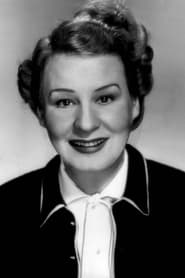
Shirley Booth voices Mrs. Claus, and the performance is quietly remarkable. Booth was already a Tony and Oscar winner by this point, having taken the Best Actress Academy Award for Come Back, Little Sheba in 1953. She brings a warmth and authority to Mrs. Claus that goes well beyond the typical "supportive wife" role.
When Santa (Mickey Rooney, raspy and endearing) decides he's done, Mrs. Claus doesn't wring her hands. She devises the plan, dispatches the elves, and personally negotiates with Mother Nature to resolve the Heat Miser/Snow Miser standoff. She's the protagonist. Santa is basically a patient in bed for most of the runtime.
This was 1974. Having the wife be the competent problem-solver while the husband sulks in his pajamas was a bolder choice than it might seem today.
The Rankin/Bass Stop-Motion Style
Rankin/Bass called their stop-motion technique "Animagic," and the animation was produced by Topcraft in Japan. The puppets have that unmistakable handmade texture: slightly stiff movements, visible fabric on the costumes, faces with limited but expressive articulation. It looks nothing like modern animation, and that's entirely the point.
The special runs just 51 minutes, including commercials in its original broadcast slot. Without ads, it's closer to 48 minutes of actual content. Every Rankin/Bass special operated under tight time and budget constraints, which forced an economy of storytelling. Scenes don't linger. Characters get established fast. The Heat Miser and Snow Miser sequences work partly because they're so concentrated: each brother gets one song, one visual gag, and that's it.
The South Town sequences, where the elves try to find Christmas spirit in a warm-weather city, are the weakest part. A subplot about a boy named Ignatius Thistlewhite and his pet baby reindeer named Vixen fills time without leaving much of an impression. But again, people don't rewatch this for the plot mechanics.
Mickey Rooney's Santa
Mickey Rooney voiced Santa Claus for Rankin/Bass multiple times, including the later Santa Claus Is Comin' to Town and Rudolph and Frosty's Christmas in July. His Santa in The Year Without a Santa Claus is grumpier and more vulnerable than the typical jolly version. He's tired, sick, and genuinely hurt that people seem to have forgotten about him.
It's a small emotional hook, but it works. The resolution, where Santa sees that people do care after all, earns its sentiment because Rooney plays the doubt convincingly. He doesn't just sound disappointed. He sounds old and worn down.
Why It Lasts
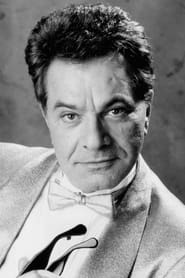
The special has aired nearly every December since 1974, moving from ABC to Fox Family to Freeform (now part of the annual "25 Days of Christmas" programming block). A 2006 live-action remake on NBC, starring John Goodman as Santa and Harvey Fierstein as Heat Miser, proved that the material doesn't translate well outside its original medium. The remake is mostly forgotten. The 1974 version keeps showing up.
Heat Miser became a reliable internet meme during heat waves. Snow Miser gets his moment during blizzards. The songs have been covered, remixed, and parodied across every platform imaginable. For a pair of characters with about seven combined minutes of screen time in a 1974 TV special, that's a remarkable cultural footprint.
The last line of dialogue Mrs. Claus delivers is practical, not sentimental. She tells Santa to bundle up. After saving Christmas, she's still making sure the man puts on a scarf.
Fun Facts
Shirley Booth came out of retirement to voice Mrs. Claus. It was one of her final professional roles before she fully withdrew from acting in the late 1970s.
The Heat Miser and Snow Miser songs were composed by Maury Laws with lyrics by Jules Bass. The melodies are intentionally near-identical, reinforcing that the brothers are more alike than either would admit.
Rankin/Bass produced over a dozen holiday specials between the 1960s and 1980s, but The Year Without a Santa Claus consistently ranks among the top three most-watched alongside Rudolph the Red-Nosed Reindeer and Frosty the Snowman.
The animation was produced by Topcraft, a Japanese studio that later had many of its staff absorbed into Studio Ghibli when Topcraft dissolved in 1985.
Mickey Rooney voiced Santa Claus in multiple Rankin/Bass productions spanning from 1970 to 1982, making him arguably the definitive animated Santa voice of that era.
The 2006 live-action NBC remake cast Harvey Fierstein as Heat Miser and Michael McKean as Snow Miser. Despite the casting, the remake drew mixed reviews and has not been re-aired with the same regularity as the original.
Mother Nature appears as the mother of both Heat Miser and Snow Miser, making her the ultimate authority figure. She resolves their dispute instantly, something no one else in the special manages to do.
Cast