
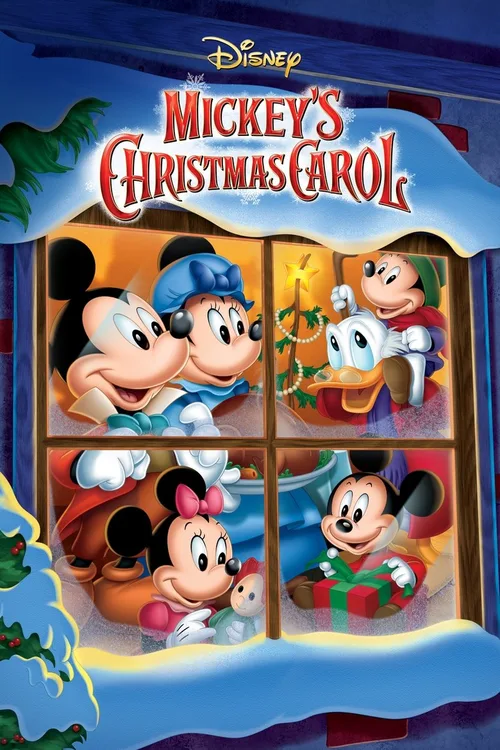
All your Disney pals star in this retelling of a Dickens Christmas classic.
Mickey's Christmas Carol (1983)
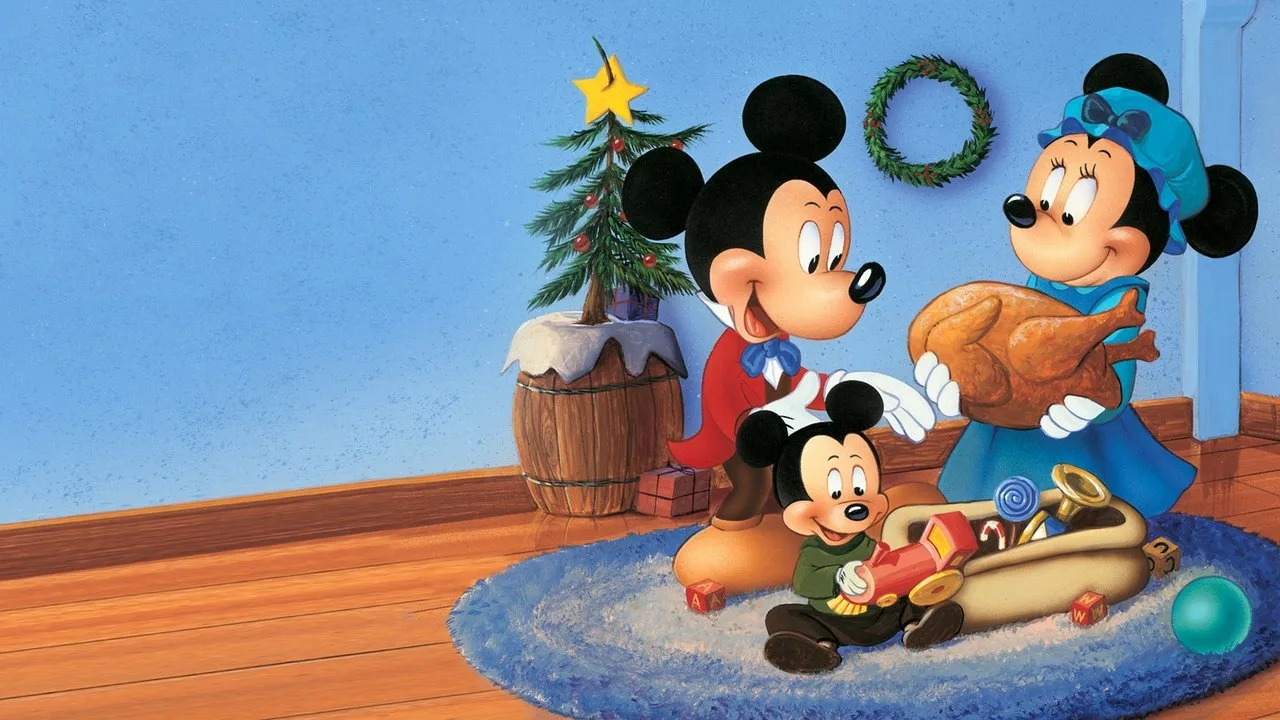
Ebenezer Scrooge is far too greedy to understand that Christmas is a time for kindness and generosity. But with the guidance of some new found friends, Scrooge learns to embrace the spirit of the season. A retelling of the classic Dickens tale with Disney's classic characters.
 rating 8/10 User rating 972 votes 77%
 ❄ Christmas Connection
A faithful retelling of Dickens' A Christmas Carol using Disney's most iconic characters. The entire plot revolves around Christmas Eve redemption, Victorian holiday traditions, and the spirit of generosity.
Where to Watch


Our Review
Mickey's Christmas Carol runs 26 minutes. That's shorter than most sitcom episodes. And yet this 1983 animated short does something that dozens of longer, more expensive Dickens adaptations fail to accomplish: it makes you feel the story instead of just watching it.
The Mickey Christmas Carol movie was a landmark for Disney. It marked Mickey Mouse's first theatrical appearance in 30 years, since 1953's The Simple Things. The studio didn't bring him back for a vanity project or a merchandise tie-in. They brought him back for Dickens.
Why Scrooge McDuck as Ebenezer Scrooge Works So Well
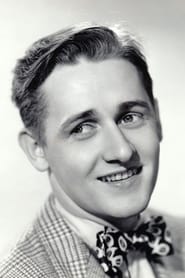
The casting is so obvious it borders on predestined. Scrooge McDuck, a character literally named after Dickens' miser, finally gets to play the role his creator Carl Barks built him around in 1947. Alan Young, who voiced Scrooge McDuck for decades, gives a performance that balances genuine menace with enough warmth to make the redemption believable. He doesn't play Scrooge as a cartoon villain. He plays him as a lonely man who chose money over people and got exactly what he asked for.
Mickey Mouse as Bob Cratchit is the quieter stroke of genius. Mickey's natural decency and optimism don't have to be acted; they're baked into the character. When he asks Scrooge for a lump of coal, there's no bitterness in it. Just quiet endurance. That contrast does more dramatic work than ten pages of dialogue could.
The Disney Character Casting Is Half the Fun
Director Burny Mattinson and his team treated the entire Disney roster as a casting pool, and the results are consistently smart. Goofy as Jacob Marley's Ghost is comedy gold. He trips over his own chains. He can't quite manage to be terrifying. It shouldn't work in a story about death and regret, but it does, because Goofy's earnestness sells the warning underneath the slapstick.
Jiminy Cricket as the Ghost of Christmas Past is a natural fit. He's already Disney's designated conscience figure from Pinocchio. Willie the Giant from Mickey and the Beanstalk plays the Ghost of Christmas Yet to Come, and his sheer physical size turns the final act into something genuinely unsettling for younger viewers. The shadow looming over Scrooge's grave is not played for laughs.
Donald Duck as Scrooge's nephew Fred brings exactly the right amount of exasperation. Pete as the undertaker selling Scrooge's belongings radiates menace. Even Rat and Mole from The Wind in the Willows show up collecting for charity. Every role feels considered, not random.
26 Minutes Is Exactly Enough for Mickey Mouse Christmas Films
The runtime forces discipline. There's no bloat, no subplot about a romantic interest, no comic relief character who overstays their welcome. Every scene advances the story or deepens the emotion. The Fezziwig party lasts about 40 seconds and still manages to capture the warmth of what Scrooge lost.
This is where many full-length Mickey Mouse Christmas films and specials struggle. They pad. They add modern references. They try to "update" Dickens for contemporary audiences. Mattinson's approach was the opposite: trust the source material, trust the characters, get out of the way.
The animation itself holds up remarkably well. The backgrounds have a painterly quality, with snow-dusted London streets that feel genuinely Victorian rather than generically old-timey. The color palette shifts from cold blues and grays in Scrooge's counting house to warm golds and oranges at the Cratchit home. Basic visual storytelling, but executed with care.
The Emotional Core Still Lands
Tiny Tim's death scene is handled with restraint. There's no melodramatic speech. Mickey simply places Tim's crutch by the window, and the camera holds. That single image does what Dickens spent paragraphs doing. It's devastating precisely because it's so quiet.
The final transformation feels earned too. When Scrooge wakes up on Christmas morning and starts hurling money out the window, it reads as genuine relief rather than a plot checkbox. Alan Young's voice cracks with something that sounds like real emotion. For a 26-minute cartoon featuring a duck in a top hat, that's no small achievement.
The short was nominated for the Academy Award for Best Animated Short Film in 1984, losing to Sundae in New York. It has since outlasted that winner in cultural memory by several decades. Disney still airs it every holiday season, and it regularly appears on lists of the best Christmas specials ever made.
Scrooge McDuck waited 36 years for this role. He nailed it in under half an hour.
Fun Facts
Mickey's Christmas Carol was Mickey Mouse's first theatrical short since The Simple Things in 1953, a gap of 30 years.
The film started as a 1972 audio album, "An Adaptation of Dickens' Christmas Carol, Performed by The Walt Disney Players," which sold well enough to convince the studio a film version was viable.
Director Burny Mattinson was Disney's longest-serving employee at the time of his death in 2023, having joined the studio in 1953 as a 15-year-old inbetweener.
Alan Young, who voiced Scrooge McDuck, continued voicing the character for over 40 years, from this film through DuckTales and its various specials until his death in 2016.
The film was theatrically released as a companion piece alongside the re-release of The Rescuers in December 1983.
Clarence Nash performed Donald Duck's voice in the film. It was one of his final performances as Donald before his death in 1985. He had voiced Donald since 1934.
The Ghost of Christmas Yet to Come (played by Pete as a hooded figure) never speaks a single word in the film, staying true to Dickens' original characterization of the spirit.
Cast