

Small things come in big packages
Niko 2: Little Brother, Big Trouble (2012)
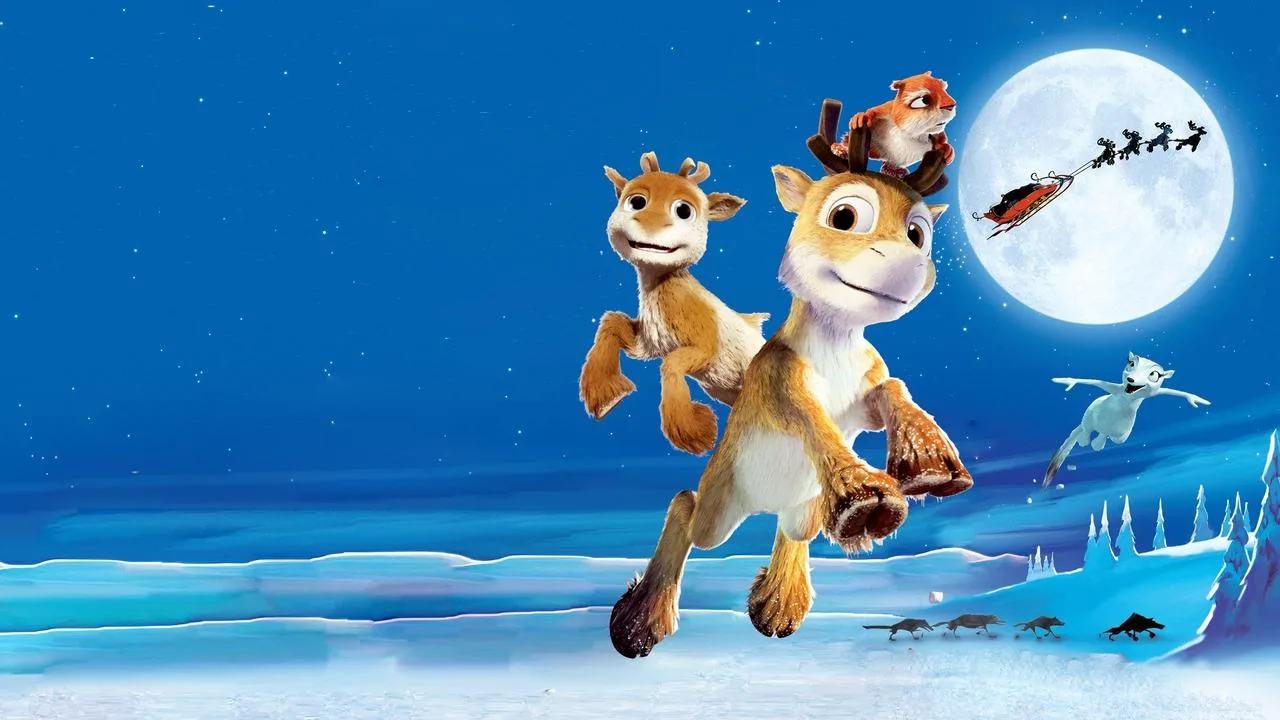
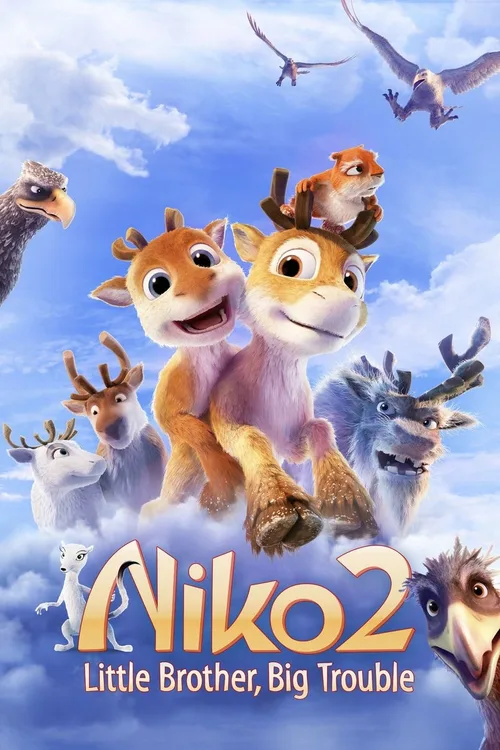
Set right before Christmas, young reindeer Niko must deal with his mother's remarriage and his being tasked with looking after his little stepbrother.
 rating 6/10 User rating 62 votes 60%
 ❄ Christmas Connection
Niko 2 takes place in the days leading up to Christmas in a snowy Nordic forest world where Santa Claus's flying reindeer are a real institution. The rescue mission unfolds against a ticking Christmas countdown, and the film's central conflict about family and belonging is resolved just in time for the holiday. Santa's Flying Forces serve as both backstory and aspiration throughout the plot.
Where to Watch


Our Review
Niko 2: Little Brother, Big Trouble opens with a problem familiar to children all over the world: your parent has found someone new, and that person has a kid, and now you're expected to just be fine about it. That Niko, a flying reindeer who lives in a Finnish forest, has to deal with this on top of training for Santa's Flying Forces gives the film its modest charm. It's a sequel that knows what it is, doesn't overreach, and delivers exactly what was promised on the box. Whether that's enough depends on how you felt about the original.
What Niko 2 Is Actually About
The 2008 original, The Flight Before Christmas, followed young Niko's search for his father Prancer among Santa's elite reindeer squad. That film had a clear emotional hook. Niko 2 tries to build a different kind of story on the same foundation. Niko's mother Oona announces she's fallen for a reindeer named Lenni, who comes with a small, annoyingly energetic son called Jonni. Niko wants nothing to do with either of them.
When Jonni is abducted by a flock of eagles working for White Wolf, the younger sister of the villain Niko defeated in the first film, Niko has no choice but to go after him. The rescue mission forms the plot's spine. Along for the ride are Julius the flying squirrel, Wilma the weasel, Saaga, and Tobias, an old near-blind reindeer who turns out to be the former leader of Santa's Flying Forces. Tobias is the best new addition to the cast, carrying quiet dignity and a backstory the film doesn't overexplain.
The Blended Family Angle
Here is where Niko 2 earns genuine credit. Divorce, remarriage, and the awkwardness of suddenly gaining a sibling are not topics that animated holiday films handle with any frequency. The film lays out the situation plainly and without melodrama. Oona's situation as a single reindeer mother who fell in love again is presented as simply normal. Niko's resentment reads as real rather than cartoonish villainy. Jonni, for his part, is annoying in exactly the way a small child trying too hard to be liked tends to be annoying.
None of this is handled with the depth a live-action drama would bring, but for a 75-minute children's film, it's genuinely thoughtful. Kids who actually live in blended families will recognise the emotional territory. That recognition is worth something.
Where the Sequel Formula Creaks
The structural problem with Niko 2 is obvious, and critics noted it at the time. The first film built its tension around whether Niko would find his father and whether reindeer could actually fly if they believed hard enough. The sequel borrows the same chassis: there is a villain who wants revenge for what happened in the previous film, there is a dangerous journey through a snowy wilderness, there is a reconciliation at the end. White Wolf is a serviceable antagonist but she carries none of the menace that Black Wolf had, partly because her entire motivation is derivative of someone else's defeat.
The comedy is thin. Julius provides most of it, and while he's an appealing sidekick, the jokes rarely land with any freshness. The screenplay, written by Hannu Tuomainen and Marteinn Thorisson, keeps the plot moving efficiently but rarely surprises.
A Pan-Nordic Production With Real Craft
The film was produced by Finnish studio Anima Vitae alongside Cinemaker OY, with co-producers A. Film (Denmark), Ulysses Filmproduktion (Germany), and Tidal Films (Ireland). The same international web that made the original possible reassembled for the sequel, with animation produced across Finland, Germany, and Denmark, and post-production handled in Ireland. It's a genuinely collaborative European production at a time when that kind of co-financing was essential to make feature animation outside the American studio system work.
The animation quality holds up well for a mid-budget European production. The winter forest environments have a genuine sense of cold and depth. Chase sequences involving the eagles are the visual high point, with Kari Juusonen, returning from the original, and co-director Jørgen Lerdam keeping the camera movement energetic without tipping into incoherence. Lerdam brought decades of experience in European animation to the project, having co-founded Danish studio A. Film in 1988 and worked on productions for Don Bluth in the early 1990s.
Composer Stephen McKeon, the Irish musician who scored the first film, returned for the sequel. The score maintains the Nordic-inflected warmth of the original without introducing anything particularly memorable on its own terms.
Released in 115 Finnish Theatres
The film opened in Finland on 12 October 2012, then in Germany and Denmark on 1 November 2012. Finnish audiences turned out in solid numbers, with 150,889 viewers seeing it in Finnish cinemas. It eventually grossed just under $24 million worldwide, a respectable number for a European animated feature without a major Hollywood distributor. A third film, Niko: Beyond the Northern Lights, arrived in 2024, completing what the filmmakers describe as a coming-of-age trilogy.
Niko 2 earns a 5.7 on IMDb, which is approximately correct. It's a film that does its job without embarrassing itself, that handles one unexpectedly real-world subject with more care than you'd expect, and that will hold the attention of children aged four to eight without making the adults in the room actively suffer. For a holiday sequel made twelve years before the third film came out, that's a reasonable legacy.
Fun Facts
The film was produced across four countries simultaneously: Finland and Denmark handled primary animation, Germany contributed additional production, and Ireland was responsible for post-production. This cross-border structure was made possible by the European co-production agreement signed between all parties.
Anima Vitae, the Helsinki-based studio behind both Niko films, was founded in 2000. The original Flight Before Christmas was sold to over 100 territories and was nominated for Best Feature at the European Film Awards in 2009.
The film ran 75 minutes in theatrical release and opened in 115 Finnish cinemas on 12 October 2012, approximately six weeks before most of its other international markets.
Jørgen Lerdam, the Danish co-director, had worked as a directing animator on Don Bluth productions in Ireland in the early 1990s, including A Troll in Central Park and Thumbelina, before co-founding animation studio A. Film in Copenhagen in 1988.
The worldwide theatrical gross reached approximately $23.8 million, a strong result for a European animated feature without a major Hollywood studio behind it. Finnish audiences alone contributed over 1.38 million euros at the box office.
White Wolf, the film's main villain, is the younger sister of Black Wolf from the first film. Her entire motivation is vengeance for her brother's defeat, making her the rare animated antagonist whose backstory requires the audience to have watched the previous film to fully understand.
Composer Stephen McKeon, who scored both Niko films, is an Irish musician known for his work in television and film. He composed the score for both the Finnish-language original and the English-dubbed version distributed internationally.
A third Niko film, Niko: Beyond the Northern Lights, was released in Finland in October 2024, more than twelve years after this sequel. The filmmakers described the three films collectively as a coming-of-age trilogy following Niko from childhood through early adolescence.
Cast