

Over Christmas (2020)
Down-and-out musician Bastian battles the blues as he returns home for Christmas and encounters a series of not-so-cheery surprises.
 rating 6/10 User rating 36 votes 59%
 ❄ Christmas Connection
Over Christmas is set entirely during the Christmas holiday period, with a family gathering in the Eifel region of Germany driving every plot development. Christmas markets, family dinners, and seasonal awkwardness are not just backdrop here — they are the engine. Remove Christmas and there is no story.
Our Review
There is a very specific kind of dread that comes with going home for Christmas when your life hasn't gone according to plan. You're a step behind everyone you grew up with, your parents ask the same three questions you've been dreading for months, and the house smells exactly the same as it always did, which somehow makes it worse. Over Christmas (original title: ÜberWeihnachten) understands that dread completely. What it does with it is somewhat more uneven.
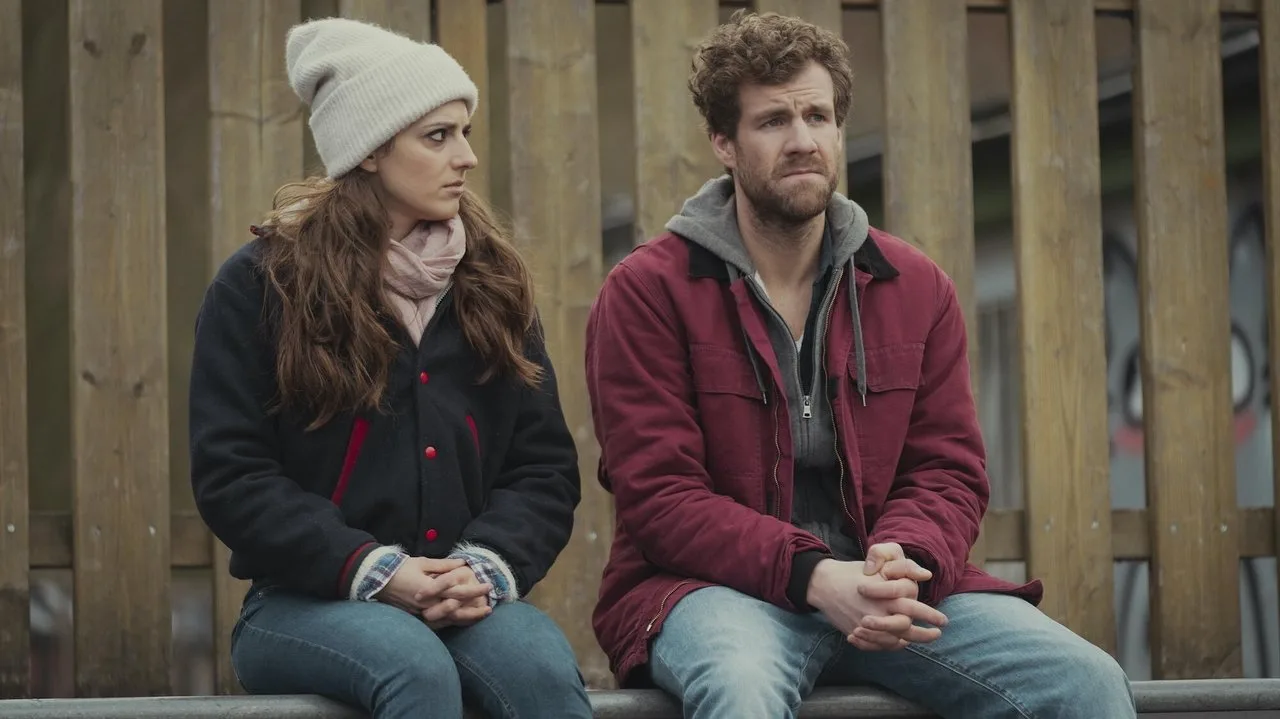
Released on Netflix on November 27, 2020, this three-episode German miniseries follows Bastian, a Berlin musician who hasn't made it, returning to his family home in the Eifel region. Within hours of arriving, he discovers that his brother is now dating Fine, his ex-girlfriend. The parents are hiding something too. Nothing in this house is going to be quiet or contemplative. Bastian is played by Luke Mockridge, a German-Canadian comedian who was at the time one of the biggest stand-up names in Germany. This was his acting debut.
Luke Mockridge: A Comedian Who Actually Shows Up
Comedian-turned-actor casting usually goes one of two ways: the comedian plays themselves with a thin fictional veneer, or they genuinely try and land somewhere surprising. Mockridge lands closer to the second option. Bastian is not a heightened version of Mockridge's stage persona — he's more passive, more internally chaotic, more recognizably human in his failures. The subdued quality works for the material.
Mockridge grew up in Germany but was born in Canada, speaks several languages, and has built his live career on observational comedy about cultural identity and family. The casting makes sense on more than one level. When Bastian squirms at a dinner table, you believe it.
Seyneb Saleh plays Fine, the ex at the center of the conflict, and she gives the role more texture than the script strictly requires. The chemistry between the three siblings — Bastian, Niklas (Lucas Reiber), and their sister — carries the show through its weaker stretches.
German Eifel Region as Setting
One of the show's quiet achievements is that it does not set the story in a generic anonymous suburb. The Eifel is a real, specific, somewhat rugged part of western Germany, and the production commits to it. Some scenes were filmed in Monschau, a medieval town with a working Christmas market. The production team built a stage on the marketplace in early March 2020 and brought in artificial snow, shooting weeks before the German lockdowns made any of that kind of location work nearly impossible.
The timing is worth noting. Editor Stefen Rocker completed the entire post-production edit from home, remotely, during the pandemic. The fact that the show looks and cuts as cleanly as it does is a minor logistical achievement.
The Groundhog Day Comparison Is Real but Overstated
Some early marketing leaned into a Groundhog Day framing, and it's not entirely wrong — Bastian finds himself cycling through scenarios, relitigating choices and confrontations. But the loop mechanic is not the dominant structural device here. The show is more interested in the emotional cycle: the way people who know each other very well can say the same things in the same conversations without ever actually resolving anything. The repetition is emotional, not literal. That distinction matters.
The three-episode format (each episode around 25-30 minutes) keeps the pacing tight in a way that works in the show's favor. There's no fourth episode of declining returns. The story has the shape of a short story, not a stretched feature.
What the Show Gets Right About Christmas
The best Christmas-set stories don't treat the holiday as decoration. They use it as pressure. The forced proximity of family, the expectation that everyone will be happy, the contrast between how a house felt in childhood and how it feels now — Over Christmas uses all of it. The Christmas market scene, the family dinner, the old bedroom — these aren't set dressing, they're the architecture of the conflict.
The show is also honest about something that most holiday specials avoid: the gap between the Christmas you imagined and the one you actually get. Bastian's return home is not secretly heartwarming underneath its complications. It's genuinely uncomfortable, and the show doesn't smooth that over entirely. That's rarer than it should be.
The series was loosely adapted from Christian Huber's 2018 novel 7 Kilo in 3 Tagen: Zuhause über Weihnachten (7 Kilos in 3 Days: Home Over Christmas), which had already drawn on Huber's own experiences returning home. The source material's autobiographical origins probably account for some of the show's specificity about how these family dynamics actually feel.
At six episodes' worth of runtime compressed into three, Over Christmas is a perfectly sized December watch. It doesn't overstay its welcome, which is more than you can say for most of the family members in it.
Fun Facts
The series is based on Christian Huber's 2018 autobiographical novel 7 Kilo in 3 Tagen: Zuhause uber Weihnachten, in which Huber wrote about his own experiences going home for the holidays and the weight gained in the process.
Luke Mockridge was born in Canada in 1989 but grew up in Germany, the son of a Canadian father and German mother. His multilingual, multicultural background is a major theme of his stand-up comedy career, which made him one of the highest-grossing live comedians in Germany before this series aired.
The outdoor Christmas market scenes were filmed in Monschau, a small medieval town in the Eifel region of North Rhine-Westphalia. Production built an entire market stage on the town's central marketplace in early March 2020, using artificial snow to recreate winter conditions.
Post-production editor Stefen Rocker cut the entire series from home during pandemic lockdowns, making this one of the early major German Netflix productions to complete editing remotely.
The series was released on Netflix Germany on November 27, 2020, which was Black Friday — a release timing choice that placed it directly into the most competitive weekend of the pre-Christmas streaming season.
The production was a collaboration between two German companies: Brainpool (known for live entertainment and TV production) and Lucky Pics, the Berlin-based production company behind several other German Netflix originals.
Director Tobi Baumann had previously directed multiple German comedies and TV films before ÜberWeihnachten, giving him a strong foundation in the kind of family-ensemble comedy the series required.
Cast