
Christmas in Netherlands
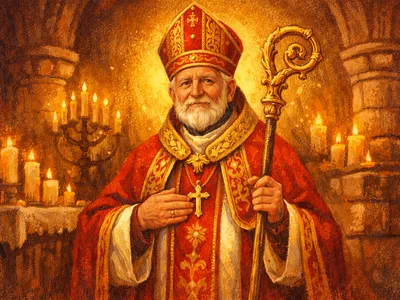
The Netherlands has two gift-giving occasions, and the first one is not Christmas. Sinterklaas, a white-bearded bishop who arrives by steamship from Spain in mid-November, dominates Dutch holiday culture. He delivers gifts on December 5 (Pakjesavond), accompanied by his helpers. By the time December 25 arrives, the main event is already over, and Christmas itself is a quieter, family-focused affair of church, dinner, and board games.
The Netherlands is the only country in Western Europe where Christmas is the second most important winter holiday. Sinterklaas, the original Saint Nicholas, dominates December. His arrival by steamship in mid-November is broadcast live to millions. His gift-giving night on December 5 is the emotional peak of the Dutch holiday season. By the time Christmas arrives on December 25, the presents have been opened, the poems have been read, and the country settles into a quieter celebration of family meals and board games.
Sinterklaas: The Main Event
Sinterklaas is not Santa Claus. He is a tall, thin bishop in red robes and a mitre, riding a white horse named Amerigo. He arrives by steamship from Spain (not the North Pole) in mid-November, and his arrival (intocht) is a major national event, broadcast live on television. In the weeks that follow, children place their shoes by the fireplace, leaving carrots and hay for the horse. In the morning, they find small gifts and pepernoten.
The culmination is Pakjesavond on December 5. Gifts are wrapped in elaborate disguises called surprises (pronounced in the French way). A book might be hidden inside a papier-mache volcano. A sweater might be frozen in a block of ice. Each gift comes with a personalized poem (gedicht) that gently mocks the recipient. The creativity of the wrapping and the wit of the poem matter as much as the gift itself.
Christmas: The Quiet Second Act
After the drama of Sinterklaas, Dutch Christmas is deliberately low-key. December 25 and 26 are both public holidays, and the two days serve a practical purpose: one for each set of in-laws. The meal on Christmas Day is increasingly likely to be gourmetten, a tabletop grill where each person cooks their own small pieces of meat, seafood, and vegetables. The format is social, interactive, and very Dutch.
Church attendance on Christmas remains significant, though the Netherlands is one of Europe's most secularized countries. Many who never attend church the rest of the year make an exception for the Christmas Eve or Christmas Day service.
Frequently Asked Questions
What is Sinterklaas?
Sinterklaas is a Dutch holiday figure based on Saint Nicholas, a 4th-century bishop. He arrives in the Netherlands by steamship from Spain in mid-November and delivers gifts to children on the evening of December 5 (Pakjesavond). He is the most important holiday figure in the Netherlands, culturally more significant than Santa Claus (Kerstman).
What is gourmetten?
Gourmetten is the Dutch tradition of cooking Christmas dinner on a tabletop grill. Each person cooks small pieces of meat, fish, and vegetables on their own hot plate. The communal, interactive format has become the most popular way to eat Christmas dinner in the Netherlands.
Why does the Netherlands celebrate two Christmas days?
Both December 25 and 26 are public holidays. The practical Dutch use the two days to visit both sides of the family: one day with one set of in-laws, the other day with the other. The custom avoids the annual negotiation of which family to visit on Christmas Day.
Traditions & Customs
Sinterklaas Arrival
In mid-November, Sinterklaas arrives in the Netherlands by steamship, supposedly from Spain. The arrival (intocht) is broadcast live on national television. He rides a white horse across rooftops, and children leave their shoes by the fireplace with carrots and hay for the horse.
Pakjesavond (December 5)
The evening of gift-giving. Gifts are wrapped in elaborate disguises (surprises) and accompanied by humorous poems (gedichten) that tease the recipient. The creative wrapping and personalized poems are as important as the gifts themselves.
Gourmetten
On Christmas Day, many Dutch families eat gourmetten, a communal tabletop grill where each person cooks small pieces of meat, fish, and vegetables on their own hot plate. The social, interactive format suits the Dutch preference for gezelligheid (coziness).
Two Christmas Days
Both December 25 (Eerste Kerstdag) and December 26 (Tweede Kerstdag) are public holidays. The first day is typically spent with one side of the family, the second with the other. The tradition reflects the Dutch practicality of giving both sets of in-laws equal time.
Pepernoten and Speculaas
Small spiced cookies (pepernoten) and thin spiced biscuits (speculaas) are consumed in enormous quantities during the Sinterklaas season. Supermarkets stock them from September onward. They disappear from shelves on December 6.
Kerstbrood and Kerststol
Dutch Christmas bread (kerstbrood) and Christmas stollen (kerststol) filled with almond paste, dried fruits, and spices are essential. Bakeries compete with elaborate versions throughout December.
Christmas Markets
Maastricht Christmas Market
Set beneath the towering Vrijthof square, Maastricht's market is considered the most atmospheric in the Netherlands. Over 100 stalls sell Dutch and Belgian crafts, food, and gluhwein.
Dordrecht Christmas Market
The largest Christmas market in the Netherlands, with over 300 stalls spread across the medieval old town. Dordrecht's market fills the harbor area and historic streets.
Key Dates
Sinterklaas Arrival (Intocht)
Sinterklaas arrives by steamship, broadcast live on national television. The event marks the official start of the Dutch holiday season. Children begin placing shoes by the fireplace.
Pakjesavond
The main Dutch gift-giving evening. Families exchange gifts wrapped in creative disguises with humorous personalized poems. This is the emotional climax of the Dutch holiday season.
Eerste Kerstdag (First Christmas Day)
A public holiday. Families gather for dinner, often gourmetten. Church services are attended by both religious and cultural Christians. Gift-giving on Christmas is secondary to Sinterklaas.
Tweede Kerstdag (Second Christmas Day)
A public holiday. Typically spent with the other side of the family. Some families attend a second church service or go for a winter walk.
Oudejaarsavond (New Year's Eve)
Celebrated with oliebollen (deep-fried dough balls), fireworks, and champagne. The Dutch set off more consumer fireworks per capita than any other European nation.
Christmas Carols
Sinterklaas Song
Sinterklaasje, bonne bonne bonneThe most famous Sinterklaas song, sung by children as they place their shoes by the fireplace. It is the soundtrack of Dutch December and played continuously from mid-November.
Silent Night
Stille NachtSung in Dutch at Christmas church services. The German-language title is often used due to the Netherlands' proximity to Germany.
Nu zijt wellekome
Nu zijt wellekomeA medieval Dutch Christmas carol dating to the 14th century. One of the oldest Christmas songs still performed in the Netherlands, sung at church services and school concerts.