
Let the mystery unfold.
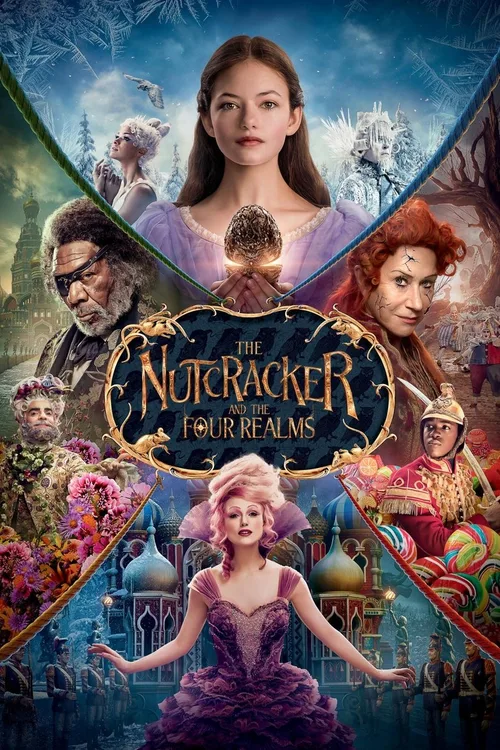
The Nutcracker and the Four Realms (2018)
When Clara’s mother leaves her a mysterious gift, she embarks on a journey to four secret realms—where she discovers her greatest strength could change the world.
 rating 5/10 User rating 2,223 votes 61%
 ❄ Christmas Connection
Set during Christmas Eve in Victorian London, the entire plot unfolds from a Christmas gift, a locked golden egg left by Clara's late mother. The Nutcracker ballet itself is one of the most iconic Christmas traditions worldwide, and this film drapes every frame in holiday spectacle.
Where to Watch


Our Review
The Nutcracker and the Four Realms (2018) is what happens when Disney opens the vault, writes a blank check to the costume department, and then apparently forgets to fund the screenplay. Directed by Lasse Hallstrom and Joe Johnston (the latter brought in for reshoots), this loose reimagining of E.T.A. Hoffmann's story and the Tchaikovsky ballet is one of the most visually lavish Christmas movies ever made. It is also one of the most dramatically inert.
The Story Behind Disney's Nutcracker
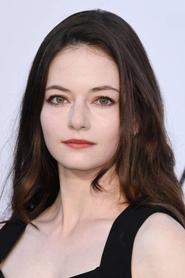
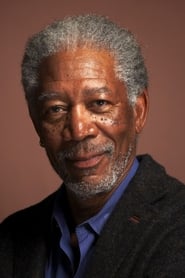
Clara Stahlbaum (Mackenzie Foy) receives a locked, egg-shaped gift from her recently deceased mother on Christmas Eve. The key, she's told, is at Drosselmeyer's annual holiday party. Her godfather Drosselmeyer (Morgan Freeman, doing exactly what you'd expect Morgan Freeman to do) hosts the kind of Christmas gathering that only exists in movies: a cavernous mansion rigged with elaborate mechanical gift-delivery systems.
Clara follows a golden thread to find her key and tumbles into a parallel world divided into four realms: the Land of Snowflakes, the Land of Flowers, the Land of Sweets, and the ominously named Fourth Realm. Her mother, it turns out, was the queen of this place. Now Clara must figure out what the egg contains, why the Fourth Realm has gone rogue, and how to restore order.
The premise is perfectly serviceable. A grieving girl discovers her mother's secret world and finds purpose in saving it. That's a strong emotional core. The problem is that the film never earns the emotions it reaches for.
A $120 Million Ornament
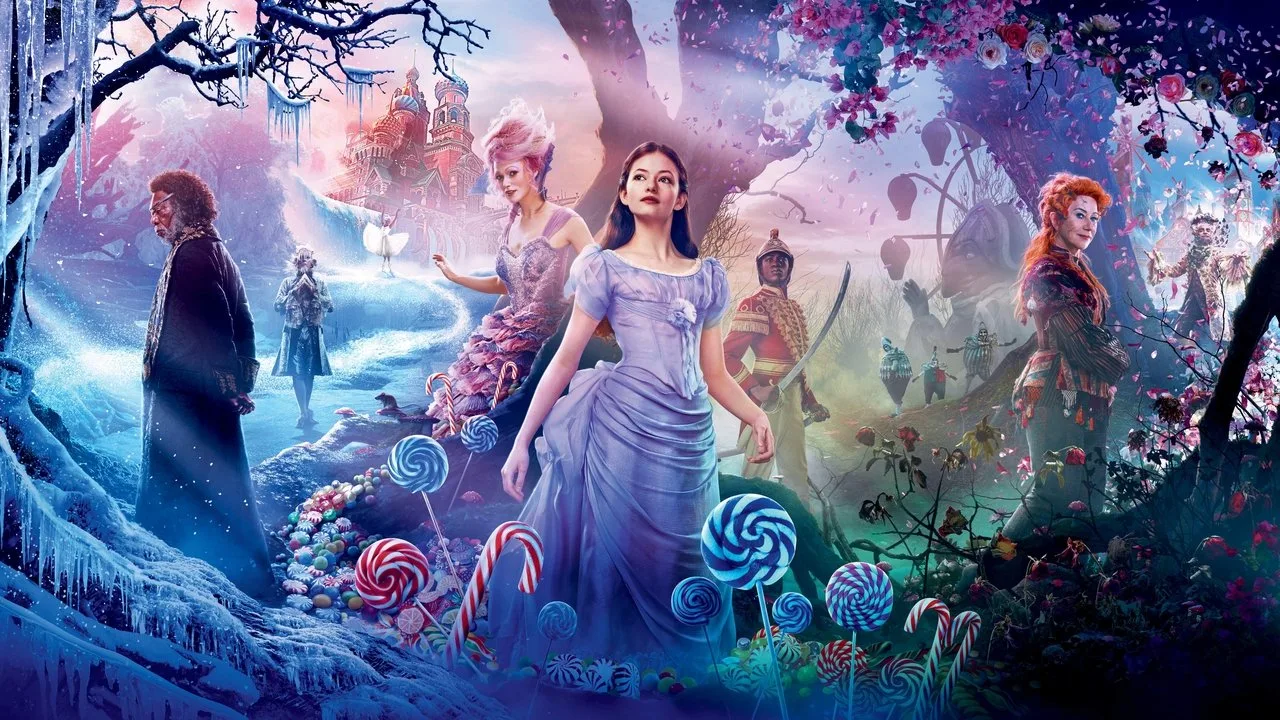
Let's give credit where it's enormous: this movie looks incredible. Production designer Guy Hendrix Dyas built a world of candy-colored palaces, frozen forests, and mechanical soldiers that feels like a Faberge egg come to life. Cinematographer Linus Sandgren (who won an Oscar for La La Land the year before) shoots it all with a warmth that makes every frame feel like a Victorian Christmas card.
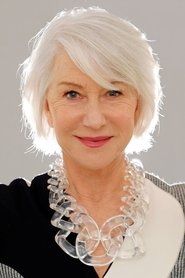
The costume design by Jenny Beavan is genuinely extraordinary. Keira Knightley's Sugar Plum Fairy wears dresses that look like they were assembled by pastry chefs with unlimited fondant budgets. Helen Mirren's Mother Ginger sports a militaristic coat that tells you everything about her character before she speaks a line. The costumes alone are worth watching.
But spectacle without stakes is just a screensaver. Clara moves from realm to realm solving problems that never feel difficult, confronting villains whose motivations are paper-thin, and delivering lines that sound like they were written to be translated into forty languages simultaneously (which, to be fair, they probably were).
The Cast Deserved Better Material
Mackenzie Foy is a capable young actress who does her best with a character that's been sanded down to "smart, brave, sad about mom." She showed real range in Interstellar. Here, she's mostly asked to look determined while walking through hallways.
Keira Knightley goes the opposite direction, cranking Sugar Plum up to a manic, high-pitched performance that is either the best or worst thing in the movie, depending on your tolerance for that sort of thing. She's clearly having fun. Whether the audience shares that fun is another question.
Helen Mirren brings quiet authority to Mother Ginger, a character who should be the emotional center of the third act but gets about fifteen minutes of screen time. Morgan Freeman is Morgan Freeman. Jayden Fowora-Knight plays Captain Philip Hoffman, Clara's Nutcracker soldier companion, and gives the role a likeable earnestness that the script doesn't bother to develop.
The real standout is Misty Copeland. The principal dancer of American Ballet Theatre performs a ballet sequence about two-thirds through the film that is, for about four minutes, the movie this should have been. It's graceful, emotional, and tells more story through movement than the dialogue manages in ninety minutes.
How Christmassy Is The Nutcracker and the Four Realms?
Very. The film is soaked in Christmas from its first frame to its last. It opens on Christmas Eve in Victorian London, the entire plot is set in motion by a Christmas gift, there's a lavish holiday party, snow everywhere, and the Nutcracker connection ties it to one of the most enduring Christmas traditions in the performing arts. If you want a movie that looks and feels like Christmas, this delivers.
The grief storyline also gives it a layer that resonates during the holidays. Christmas is often hardest for people who've recently lost someone, and the film at least acknowledges that, even if it doesn't explore it with much depth.
The Two-Director Problem
The production history explains a lot. Lasse Hallstrom (The Cider House Rules, Chocolat) directed the principal photography. Disney then brought in Joe Johnston for significant reshoots, reportedly to add more action sequences. The result feels like two different movies stitched together. The quiet, atmospheric scenes have Hallstrom's fingerprints. The CGI battle sequences feel dropped in from a different film entirely.
This kind of dual-director situation rarely produces great work, and it didn't here. The tonal shifts are noticeable. One moment the film is a contemplative fairy tale about loss. The next, it's a tin soldier army charging across a bridge. Neither mode gets enough room to breathe.
The Verdict
The Nutcracker and the Four Realms is a beautiful disappointment. It has everything a great Christmas fantasy needs except a script that trusts its audience. Young children will enjoy the color and spectacle. Adults will appreciate the production design and Misty Copeland's ballet. But the hollow center means it's unlikely to become anyone's annual Christmas tradition.
It made $173 million worldwide against a reported $120 million budget, making it a commercial disappointment for Disney. The studio has not pursued a sequel. Somewhere in this material, there's a great Christmas movie. This just isn't it. Misty Copeland's four-minute dance remains the film's best argument for its own existence.
Fun Facts
Misty Copeland, who performs the ballet sequence as the Ballerina Princess, was the first African American woman to be promoted to principal dancer at American Ballet Theatre, in 2015.
The film's costume designer Jenny Beavan has won two Academy Awards (for A Room with a View and Mad Max: Fury Road). She created over 100 unique costumes for the Four Realms' inhabitants.
Linus Sandgren, the cinematographer, won the Oscar for Best Cinematography for La La Land just one year before shooting this film.
The original Nutcracker ballet premiered on December 18, 1892, at the Imperial Mariinsky Theatre in St. Petersburg, Russia. It was considered a failure at the time.
Morgan Freeman's character Drosselmeyer is named after the same character in the original Hoffmann story "The Nutcracker and the Mouse King" (1816), though the film version is significantly less creepy than the literary original.
The film was Disney's first live-action adaptation of The Nutcracker, despite the studio releasing an animated Fantasia segment set to Tchaikovsky's Nutcracker Suite back in 1940.
Joe Johnston, the co-director brought in for reshoots, previously directed another effects-heavy period piece for Disney: The Rocketeer (1991).
Cast