
Christmas in Russia
Russian Christmas falls on January 7, following the Julian calendar of the Russian Orthodox Church. Under Soviet rule, Christmas was suppressed and replaced by a secular New Year celebration featuring Ded Moroz (Grandfather Frost) and the New Year tree. Today, both traditions coexist: the secular New Year festivities on December 31 and the religious Christmas on January 7.
Russian Christmas is a story of suppression and revival. For 70 years, the Soviet government banned religious Christmas celebrations and transferred its traditions (the tree, the gifts, the feast) to New Year's Eve. When the ban lifted in 1991, Orthodox Christmas on January 7 was restored as a public holiday. But the secular New Year, with its Ded Moroz, champagne toasts, and Kremlin chimes, had become so deeply embedded in Russian culture that it remained the dominant winter celebration. Today, Russians effectively have two holidays: the boisterous, gift-heavy New Year and the quieter, more spiritual Orthodox Christmas a week later.
New Year: Russia's Real Winter Holiday
December 31 is the night that matters most. Families gather for a lavish dinner featuring Olivier salad (a mayonnaise-dressed potato salad that is the single most consumed dish in Russia during the holidays), herring under a fur coat (layered herring and beet salad), tangerines, and Soviet-era champagne. At 11:55 PM, the President delivers a televised address. At midnight, the Kremlin chimes ring, champagne corks pop, and Ded Moroz has already left gifts under the yolka (tree).
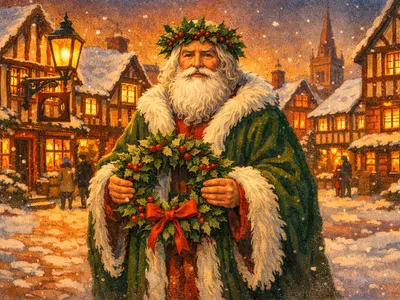
Ded Moroz is not Santa Claus. He is taller, thinner, wears a long robe (traditionally blue, though red versions exist), carries a magical staff, and travels with his granddaughter Snegurochka, the Snow Maiden. He does not use chimneys. The character draws from Slavic folklore and was formalized as a secular gift-bringer by the Soviet government in the 1930s.
Orthodox Christmas: January 7
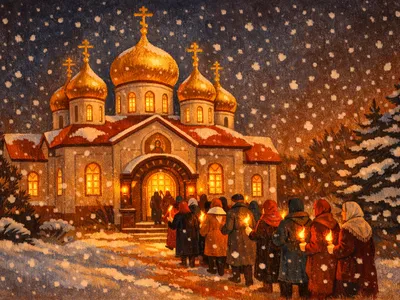
Orthodox Christmas on January 7 is a quieter affair. The Patriarch of Moscow leads the main service at the Cathedral of Christ the Saviour, broadcast live on Russian television. Across the country, churches hold services on the night of January 6-7. Devout families fast until the first star appears on January 6, then break the fast with sochivo (a wheat or rice porridge with honey and dried fruit).
The January 7 celebration has grown in visibility since 1991, but for many Russians, especially in cities, the religious dimension of Christmas remains secondary to the secular New Year festivities. Rural communities and older generations tend to observe Orthodox Christmas more actively.
Svyatki and Epiphany
The period between Christmas (January 7) and Epiphany (January 19) is called Svyatki, a time traditionally associated with fortune-telling, masquerades, and folk customs. Young women historically used candles, mirrors, and melted wax to divine the identity of their future husbands during Svyatki. The tradition persists in some rural areas.
On January 19, Orthodox Epiphany brings the dramatic tradition of ice swimming. Holes (prorubi) are cut in frozen lakes and rivers, and thousands of Russians plunge into the freezing water, believed to be blessed on this day. The tradition has grown enormously since the 1990s and now attracts participants across all age groups.
Frequently Asked Questions
Why is Russian Christmas on January 7?
The Russian Orthodox Church follows the Julian calendar, which is 13 days behind the Gregorian calendar used by most of the world. December 25 on the Julian calendar corresponds to January 7 on the Gregorian calendar. This is why Russian Orthodox Christmas falls on January 7.
Who is Ded Moroz?
Ded Moroz (Grandfather Frost) is Russia's gift-bringer, delivering presents on New Year's Eve rather than Christmas. He wears a long robe and carries a staff, and is accompanied by his granddaughter Snegurochka (Snow Maiden). The character was promoted by the Soviet government as a secular alternative to religious Christmas traditions.
Do Russians celebrate Christmas or New Year?
Both, but New Year is the larger celebration. The Soviet government suppressed Christmas and transferred its traditions to New Year's Eve, making December 31 the primary winter holiday. Since 1991, Orthodox Christmas on January 7 has been restored as a public holiday, but New Year remains the bigger event for most Russians.
Traditions & Customs
Ded Moroz and Snegurochka
Grandfather Frost and his granddaughter the Snow Maiden deliver gifts on New Year's Eve, not Christmas. Ded Moroz wears a long blue or red robe and carries a staff. The tradition was promoted by the Soviet government as a secular replacement for Christmas gift-giving.
New Year Tree (Yolka)
The decorated tree in Russia is a New Year tree (novogodnyaya yolka), not a Christmas tree. The Kremlin's main yolka in Cathedral Square is the most famous. The Soviet government moved the tree tradition from Christmas to New Year in the 1930s.
Orthodox Christmas Eve Fast
Devout Orthodox Christians fast until the first star appears on January 6. The first meal is sochivo, a porridge of wheat berries or rice with honey and dried fruit, similar to Ukrainian kutia. Christmas Day on January 7 brings a lavish feast.
Christmas Church Services
The Patriarch of Moscow leads the main Christmas service at the Cathedral of Christ the Saviour in Moscow, broadcast nationally. Across Russia, churches hold midnight services on January 6-7. Church attendance on Christmas has grown significantly since the end of Soviet rule.
Svyatki (Yuletide)
The period from Christmas (January 7) to Epiphany (January 19) is called Svyatki. Traditionally a time for fortune-telling, masquerades, and folk celebrations. Young women historically used Svyatki to divine the identity of their future husbands.
Ice Swimming on Epiphany
On January 19, Orthodox Epiphany, thousands of Russians plunge into ice holes (prорubi) cut in frozen lakes and rivers. The practice symbolizes Christ's baptism in the Jordan River. The tradition has grown dramatically since the 1990s.
Christmas Markets
GUM Fair
The famous GUM department store on Red Square hosts a Christmas and New Year fair with a skating rink, carousel, and market stalls selling crafts and traditional Russian foods. The setting against the Kremlin walls is spectacular.
St. Petersburg Christmas Market
A European-style Christmas market in the historic center, featuring Russian crafts, Ded Moroz appearances, and traditional food. The setting among the neoclassical buildings of Nevsky Prospekt adds architectural grandeur.
Key Dates
Novy God (New Year's Eve)
The biggest celebration of the Russian winter season. Families gather, watch the President's midnight address, open champagne, and exchange gifts. Ded Moroz delivers presents under the yolka. This is the secular holiday that replaced Christmas during Soviet times.
New Year Holidays
Russia has an extended holiday period from January 1-8. Most of the country is off work. Families visit relatives, attend festive events, and enjoy winter activities.
Rozhdestvo (Orthodox Christmas)
Christmas Day according to the Julian calendar. A public holiday since 1991. Devout Christians attend church services; many families have a festive meal. The religious significance of the day has been gradually recovering since the Soviet era.
Kreshcheniye (Epiphany)
Orthodox Epiphany, marked by the Blessing of the Waters. Thousands of Russians participate in ice swimming, plunging into holes cut in frozen rivers and lakes. The practice has become increasingly popular since the 1990s.
Christmas Carols
Christmas Troparion
Rozhdestvo Tvoye, Khriste Bozhe nashThe main hymn of the Orthodox Christmas service, sung on January 7. Its solemn, ancient melody is central to the religious celebration of Christmas across Russia.
In the Forest a Christmas Tree Was Born
V lesu rodilas yolochkaWritten by Raisa Kudasheva (lyrics, 1903) and Leonid Beckman (music, 1905), this is Russia's most beloved winter song. Although about a tree, it is associated with New Year rather than Christmas due to the Soviet-era shift.
A Little Christmas Tree Is Cold in Winter
Malenkey yolochke kholodno zimoyA popular Russian children's song about a Christmas tree shivering in the winter forest. Like V lesu rodilas yolochka, it is closely associated with New Year celebrations.