
The Snowman and the Snowdog (2012)
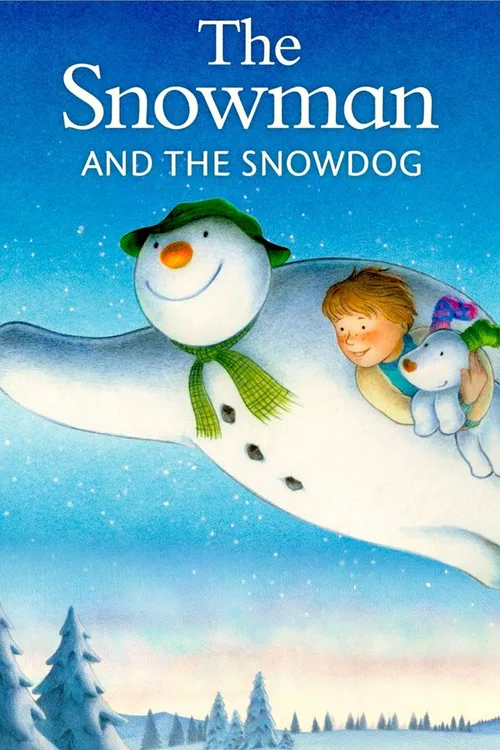
Charming animated sequel to Raymond Briggs's classic The Snowman. When a young boy and his mother move house, he builds a Snowman and a Snowdog who magically come to life.
 rating 8/10 User rating 84 votes 69%
 ❄ Christmas Connection
The Snowman and the Snowdog is set entirely on Christmas Eve, when a boy's freshly built snowman and snowdog come to life at midnight for a single magical night of adventure. The flying sequence over snow-covered landscapes is as directly Christmas-coded as animation gets. It was commissioned and broadcast as Channel 4's centrepiece Christmas special in 2012.
Where to Watch

Our Review
The original The Snowman from 1982 ended with a melted pile in a garden and a boy standing alone in the snow. Raymond Briggs, the author of the wordless picture book it was based on, held off sequel proposals for nearly three decades. The Snowman melts. That's the story. What more is there to say?
Apparently: quite a lot. In 2012, with the 30th anniversary of the original approaching, Briggs finally relented. The result was The Snowman and the Snowdog, a 24-minute Channel 4 Christmas special that aired on 24 December 2012 and drew an overnight audience of 4.9 million, the best-performing Christmas Eve programme on Channel 4 in over a decade. Over the full festive period, 11 million viewers watched it. For a hand-drawn short with no dialogue, that's extraordinary.
A Sequel That Actually Had a Reason to Exist
The setup is clever. Billy and his family have just moved into a new house, and in the garden he discovers a scarf and hat. His old snowman's belongings. He's not the boy from the original; he's a new child inheriting the magic. That single stroke sidesteps the obvious trap of pretending the 1982 film didn't have a definitive ending. The original isn't undone. It's mourned and then continued, which is entirely different.
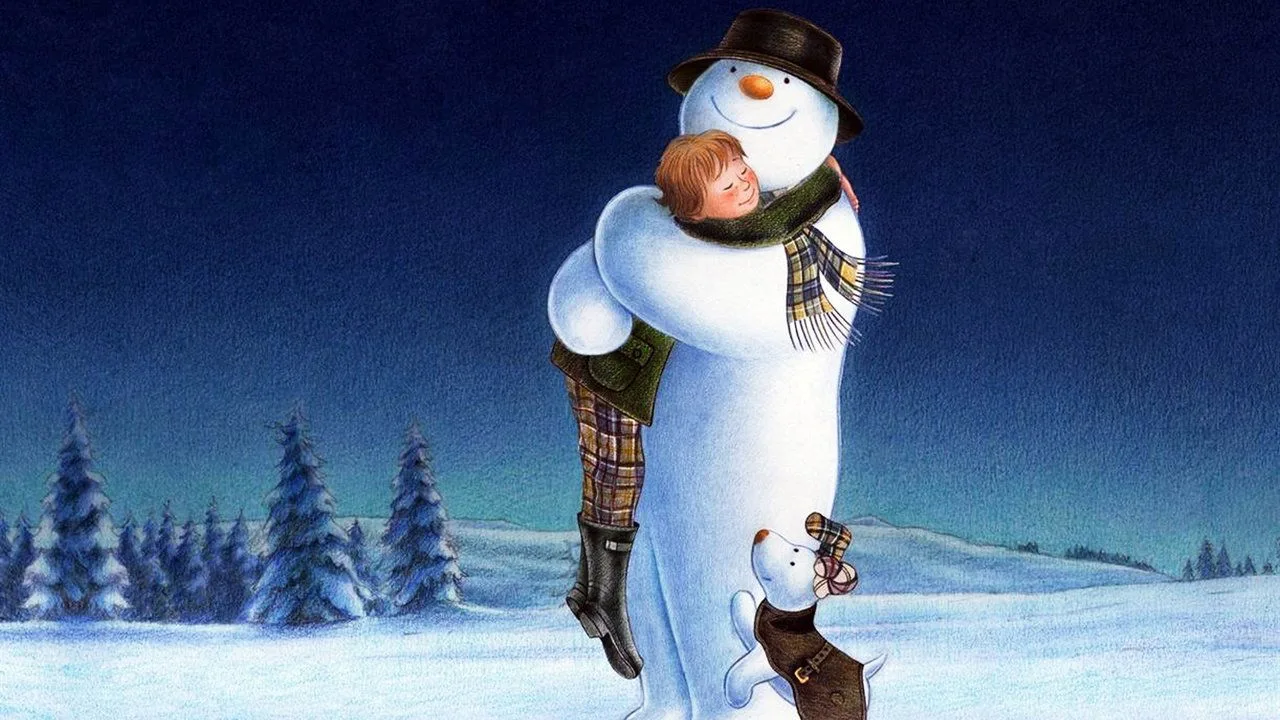
Billy builds a snowman and a snowdog. At midnight, they come to life. The snowdog digs up a magical sled. They fly to the North Pole, meet Father Christmas, the snowdog gets a real collar, and they return before dawn. The snowdog survives Christmas morning, transformed by the North Pole's magic into a real dog. It's a warmer ending than 1982, and the film earns it.
17,000 Frames by Hand
What makes The Snowman and the Snowdog worth your attention isn't just what it is, but how it was made. The production team at Lupus Films, based in Islington, tried to use modern software to replicate the original's look and failed. Digital tools preferred clean outlines. The original's hand-pencilled, slightly hazy Snowman wouldn't render properly in any software package they tested.
So they did it by hand. All 17,000 frames. Eight people who had worked on the 1982 original joined the new production. Some had spent the intervening decades doing book illustration or, in at least one case, gardening. They came back to animate a snowman.
The result looks like the original because it was made like the original. That's not a small thing. The decision cost more and took longer, and nobody would have noticed if the team had cheated slightly. They didn't.
The Song That Had to Follow "Walking in the Air"
The hardest job on this production belonged to composer Ilan Eshkeri and songwriter Andy Burrows, formerly the drummer for Razorlight. Their task: write the song that plays during the flying sequence. The song that would occupy the same structural and emotional space as Howard Blake's "Walking in the Air," which has been lodged in British cultural memory since 1982.
"Light the Night" is what they came up with. It's a proper piece of work: orchestral, uncluttered, built on a rising melody that gives the animators room to breathe. It doesn't try to copy "Walking in the Air" note for note, which would have been a disaster. It stands next to its predecessor rather than competing with it. That's a harder thing to pull off than it sounds.
John Coates, and Why the Film Has a Dedication
The closing credits of The Snowman and the Snowdog carry a dedication to producer John Coates, who had produced the 1982 original and spent years trying to convince Briggs to agree to a sequel. He died in September 2012, while the film was still in production. He never saw the finished version.
Coates had been the one who convinced Channel 4 to commission the original short back in 1982, and his persistence over three decades was the reason this sequel existed at all. The dedication is not decorative.
Does It Work as a Standalone?
Children who have never seen the 1982 film can watch The Snowman and the Snowdog without confusion. It functions on its own terms. But the film is richer for anyone who comes to it with the original in their memory. The scarf and hat Billy finds in the garden carry real weight then. The flying sequence reads as both a new experience and an echo of one already seen. That dual register is the sequel's real achievement.
The snowdog is genuinely a good addition. It gives the film a different emotional texture: scrappier, more comic, less solemn than the 1982 film. The original Snowman is a dignified, slightly melancholy figure. The snowdog is chaos with paws, and the contrast works.
The film won the Televisual Bulldog Award in 2013 for Best Children's programme, and received a BAFTA Children's Award nomination for Animation. Neither award is what stays with you. What stays is a specific shot: Billy standing at the window the next morning, looking at where the snowman was, and then a dog pressing its nose against the glass from outside. The film earns that moment because it set it up thirty minutes earlier with a scarf in the snow.
Fun Facts
Every one of the 17,000 frames in The Snowman and the Snowdog was hand-drawn on paper, after computer software proved unable to reproduce the original film's characteristic pencil-hatched linework.
Eight animators who had worked on the 1982 original returned to work on this sequel, some of whom had left the animation industry entirely in the intervening decades.
The film's original producer John Coates, who had lobbied Briggs for a sequel for nearly 30 years, died in September 2012 during production. The finished film was dedicated to his memory.
Raymond Briggs held off requests for a sequel for nearly three decades. He finally agreed when the 30th anniversary of the original approached, on the condition that the new film respect the original's ending rather than contradict it.
The song "Light the Night" was co-written by Ilan Eshkeri and Andy Burrows, best known as the drummer for Razorlight. It was designed to occupy the same structural role in the flying sequence as Howard Blake's "Walking in the Air" did in 1982.
The Christmas Eve 2012 broadcast drew 4.9 million overnight viewers, making it Channel 4's best-performing Christmas Eve programme in over ten years. The total audience across the festive period reached 11 million.
The production cost approximately 2 million pounds, a significant investment for a 24-minute hand-drawn short with no dialogue, produced by Lupus Films from their studio in Islington, London.
The film won the Televisual Bulldog Award for Best Children's programme in 2013 and was nominated for a BAFTA Children's Award in the Animation category the same year.