
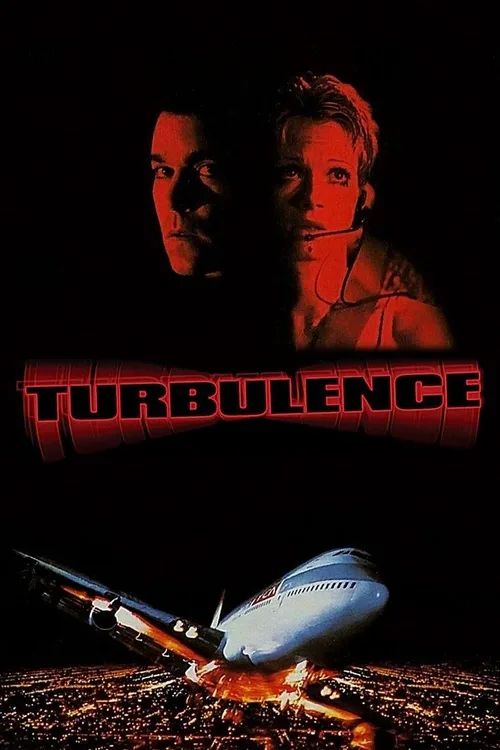
If you weren't afraid of flying before, you will be now.
Turbulence (1997)
On a flight transporting dangerous convicts, murderer Ryan Weaver manages to break free and cause complete chaos throughout the plane. As various people on board fall victim to Weaver, it is ultimately down to flight attendant Teri Halloran to keep the aircraft from crashing, with on-ground support from an air traffic controller. While Halloran struggles to pilot the plane, Weaver continues to terrorize the surviving members of the crew.
 rating 4/10 User rating 269 votes 54%
 ❄ Christmas Connection
Turbulence is set entirely on Christmas Eve, with the flight carrying holiday travelers home for the holiday and decorated with Christmas touches. The film leans into the season as dramatic irony rather than sentimentality. The festive backdrop makes the carnage feel more outrageous, which is precisely the point.
Where to Watch


Our Review
Turbulence arrived in January 1997 and disappeared almost immediately, earning roughly $11 million against a $65 million production budget. Critics savaged it. Audiences ignored it. The studio moved on. And yet, somehow, the movie survived. It exists today in a particular category of films that are terrible in ways that are genuinely entertaining, where the badness is so committed and so specific that it circles back around to a kind of cult appeal.
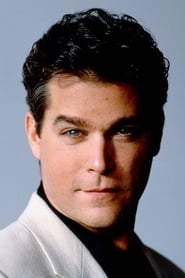
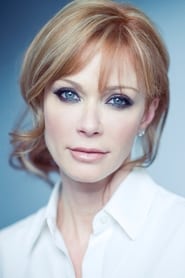
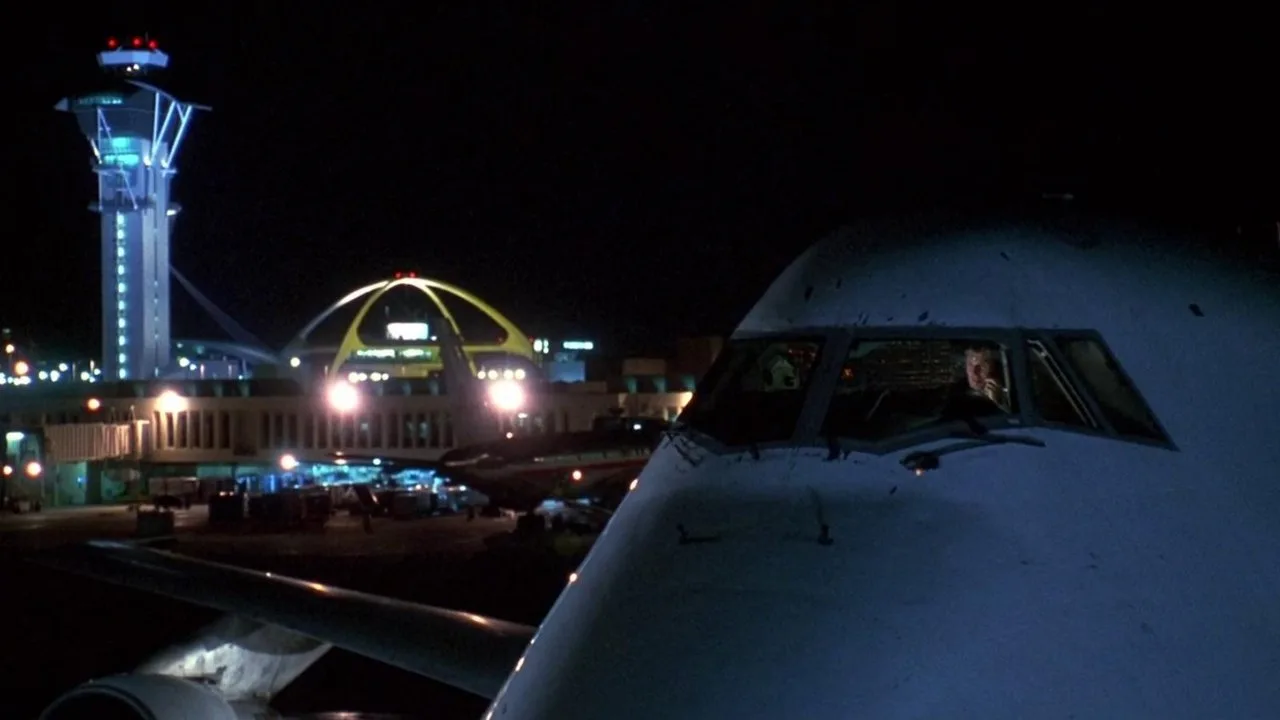
Set entirely on Christmas Eve, Turbulence stars Ray Liotta as Ryan Weaver, a convicted serial killer being transported on a commercial Boeing 747 along with another prisoner. The flight is mostly empty because it's the holiday, the crew is skeleton-sized, and the movie needs space to breathe. Weaver escapes custody mid-flight, kills the other prisoner and most of the crew, and then takes cheerful control of the situation while a massive storm bears down on Los Angeles. The lone flight attendant left standing, Teri Halloran (Lauren Holly), has to figure out how to land the plane herself.
That is the entire movie. It doesn't pretend otherwise.
Ray Liotta as a Christmas Villain
Whatever Turbulence is, Ray Liotta understood the assignment in a way nobody else did. He plays Weaver as a kind of deranged Christmas spirit, gleeful and unpredictable, at one point draping himself in tinsel and smashing through the cockpit door with an axe while "Rockin' Around the Christmas Tree" plays on the soundtrack. It is one of the most committed performances in any bad movie from the 1990s. Liotta is not winking at the camera. He is genuinely trying.
The Christmas decorations on the plane were not an afterthought. The production leaned into the holiday setting because the contrast between festive trimmings and murder is funnier than either element alone. Weaver singing along to Christmas carols while covered in blood is the movie's defining image. It's the scene that people who saw this in 1997 still remember.
Lauren Holly, who had just come off The Mask and Dumb and Dumber, is given the nearly impossible task of being the competent, terrified, resourceful center of the film while Liotta chews every piece of scenery. She mostly holds her own. The script gives her very little to work with beyond screaming into a radio and climbing through air vents, but she commits to it.
The Airplane Movie as a Genre
By 1997, the airplane disaster movie had already been mocked to death by Airplane! in 1980. Executive Decision came out in 1996 and did the "terrorists on a plane" premise competently. Air Force One came out the same summer as Turbulence and did it with Harrison Ford and an actual budget. Against that competition, Turbulence had no real chance of being taken seriously.
Director Robert Butler was primarily a television director, known for the pilots of Batman, Star Trek, and Moonlighting. He handles the action sequences competently but not memorably. The film's problems are structural. The middle act, in which Halloran spends a very long time trying to reach the cockpit and communicate with ground control, drags badly. The storm effects look expensive but dated. The ending arrives and resolves things quickly in ways that don't entirely make sense.
None of this matters as much as it should, because the movie knows what it is. When Liotta is on screen, Turbulence delivers exactly what it promises on the poster.
Is Turbulence a Christmas Movie?
The Christmas setting in Turbulence is not incidental. The filmmakers chose Christmas Eve deliberately, and the holiday is woven through the film in ways that go beyond decorating the set. The emptiness of the plane is a Christmas Eve detail. The skeleton crew is a Christmas Eve detail. The specific cruelty of disrupting a holiday journey is a Christmas Eve detail.
It's not a Christmas movie the way Home Alone is a Christmas movie. Christmas is not the subject. But the film uses the holiday as texture, and it does so more intentionally than many movies that get slotted into Christmas watchlists. The holiday makes the horror more absurd. The absurdity makes the horror easier to watch. That tension is the movie's only real idea, and it works better than it has any right to.
Weaver wrapping himself in tinsel while humming Christmas carols remains one of the stranger gifts that 1990s action cinema left behind.
Fun Facts
Turbulence was produced with a budget of approximately $65 million and grossed only around $11 million worldwide, making it one of the larger box office failures of early 1997.
The film used a full-scale Boeing 747 cabin set built on a gimbal that could pitch and roll to simulate turbulence. The set was large enough to film extended chase sequences through the entire plane interior.
Director Robert Butler directed the original pilots for three major television series: the 1966 Batman, the 1966 Star Trek, and the 1985 Moonlighting. Turbulence was one of his rare feature film credits.
Ray Liotta was coming off a run of well-regarded performances in films like Goodfellas and Unlawful Entry. Turbulence was widely cited as a low point in his career at the time, though Liotta later described taking roles that interested him rather than those that were likely to succeed critically.
Lauren Holly appeared in three consecutive high-profile films in the mid-1990s: The Mask (1994), Dumb and Dumber (1994), and Beautiful Girls (1996), before Turbulence marked a significant departure toward genre material.
The scene in which Weaver dons tinsel and attacks the cockpit while Christmas music plays became the clip most frequently referenced by critics writing about the film, both at release and in later retrospectives about 1990s action cinema.
Turbulence was released in January 1997, a common dump month for films studios lacked confidence in. The Christmas Eve setting made a holiday-season release logical, but the studio opted against competing with the 1996 holiday slate.
A direct-to-video sequel, Turbulence 2: Fear of Flying, was released in 1999 without Liotta or Holly. Two further sequels followed, none featuring the original cast.
Cast