
Father Christmas: History, Origin and Meaning
He existed for centuries before Santa Claus was even a concept. The real story of Father Christmas starts not with reindeer and chimneys, but with feasting, folklore, and a political fight for the soul of an English holiday.
Father Christmas is one of the oldest personifications of the holiday season in the English-speaking world, and he is not simply a British name for Santa Claus. For most of his existence, he had nothing to do with children, stockings, or chimneys. He was the spirit of adult merrymaking: feasting, drinking, and general midwinter revelry. His story stretches back to at least the 15th century in England, and the character we recognize today is the product of folklore, political propaganda, Victorian sentimentality, and a slow-motion merger with an American import.
Contents
- 1. Where Did Father Christmas Come From?
- 2. Father Christmas and the Puritan Ban
- 3. Why Does Father Christmas Wear Red?
- 4. Is Father Christmas the Same as Santa Claus?
- 5. Father Christmas in Different Countries
- 6. Father Christmas in UK Tradition
- 7. The Meaning of Father Christmas
- 8. Frequently Asked Questions
Understanding Father Christmas means understanding that the jolly gift-bringer who slides down chimneys on December 24th is actually the end point of a long and strange evolution. The original Father Christmas would barely recognize his modern self.
Where Did Father Christmas Come From?
The earliest known reference to a "Father Christmas" figure in England dates to a 1616 play by Ben Jonson called Christmas His Masque, in which a character called "Christmas" appears dressed in traditional fashion, defending the old holiday customs. But the archetype is older than the name. In medieval England, a figure sometimes called "Sir Christmas" or "Lord Christmas" presided over seasonal festivities as a master of ceremonies, not a gift-giver.
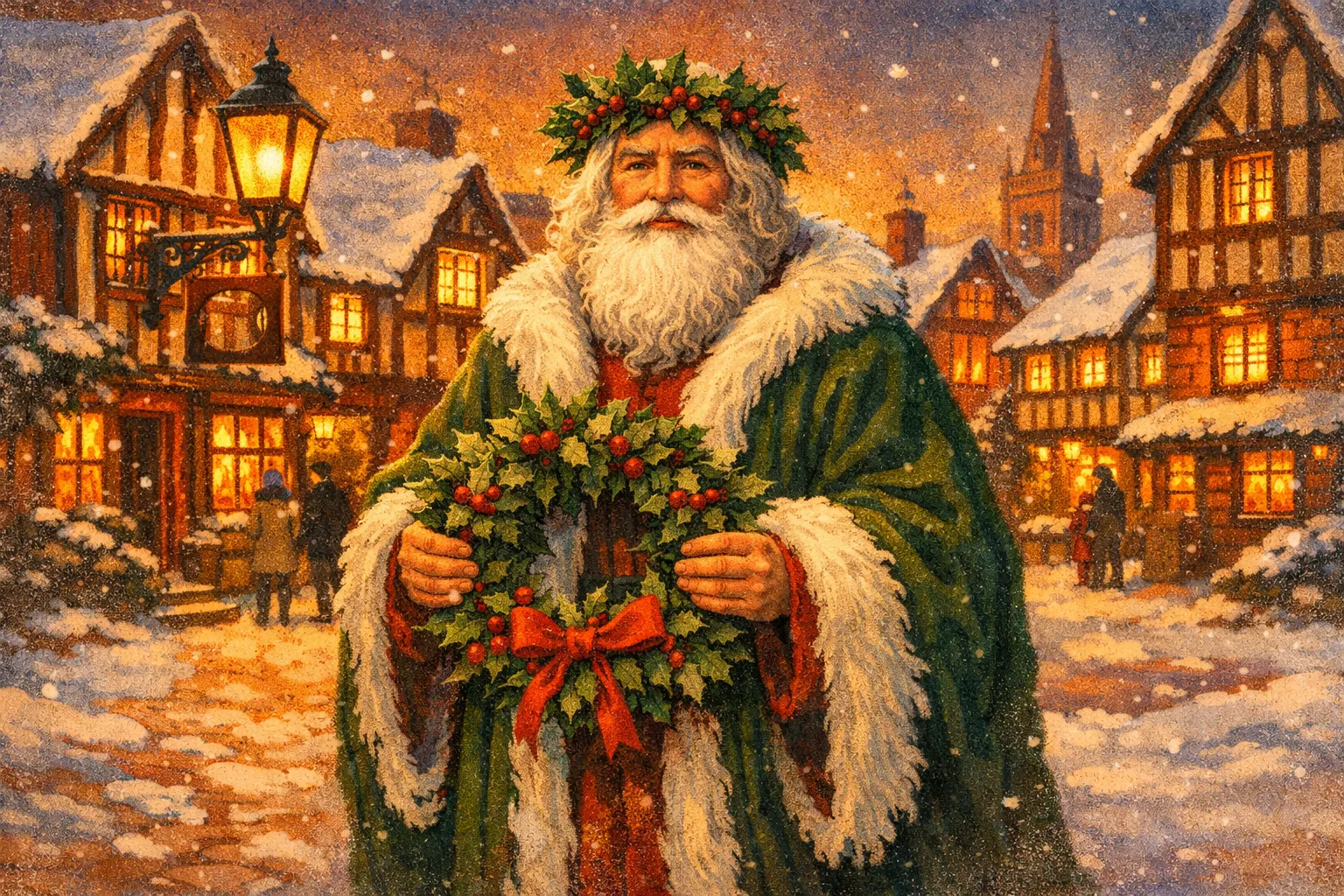
This character belonged to the tradition of personifying abstract ideas. Just as "Old Man Winter" stood for the cold season, Father Christmas embodied the spirit of the Yuletide feast. He was associated with warmth, hospitality, and generous tables. He wore long robes, often green or sometimes fur-lined, and carried holly or ivy. He looked more like a well-fed medieval lord than anything resembling the Santa Claus we know.
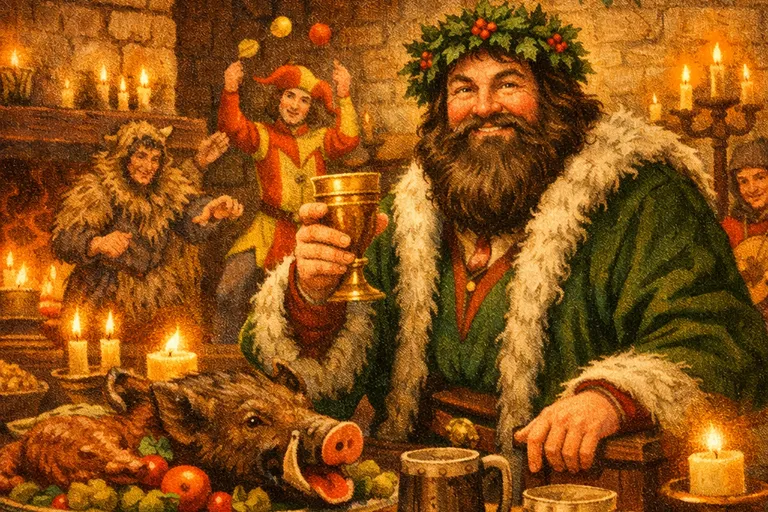
His purpose was straightforward. He showed up in mummers' plays, civic pageants, and printed broadsides to remind people that Christmas was a time for communal celebration. Children did not factor into this. Father Christmas was for adults, and the celebration he represented involved ale, roasted meat, and singing.
Father Christmas and the Puritan Ban
Father Christmas became a political figure in the 1640s, and not by choice. After the English Civil War, the Puritan-led Parliament passed an ordinance in June 1647 banning the celebration of Christmas, Easter, and Whitsun. The Puritans objected to what they saw as the Popish associations of the holiday and the excess that came with it: gambling, dancing, play-acting, and general disorder.
Traditional decorations like holly and ivy were outlawed. Singing carols became illegal. Shops were ordered to stay open on December 25th.
Father Christmas became a symbol of resistance. A 1652 pamphlet titled The Vindication of Christmas featured a woodcut of a bearded "Father Christmas" on its cover, defending himself against the charges. "I bring good cheere," the figure declared. He was no longer just a festive host. He was now a protest figure, representing everything the Puritans wanted to stamp out.
The ban lasted until the Restoration of Charles II in 1660. Christmas came back, but Father Christmas had gained a new dimension. He was now a symbol of tradition under threat, of the "good old days" that needed defending. This gave him a staying power that a simple party host might not have had.
Why Does Father Christmas Wear Red?
The persistent myth that Coca-Cola invented Father Christmas's red suit is exactly that: a myth. The red costume has roots that reach back centuries before the first Coke advertisement.
Saint Nicholas of Myra, the 4th-century bishop who is the distant ancestor of many Christmas gift-bringers, was traditionally depicted in red bishop's robes. When the American cartoonist Thomas Nast drew Santa Claus for Harper's Weekly over a twenty-year span starting in the 1860s, he initially used various colors including patriotic stars and stripes and green. By 1881, Nast settled on red and white, effectively creating what became Santa's official look.
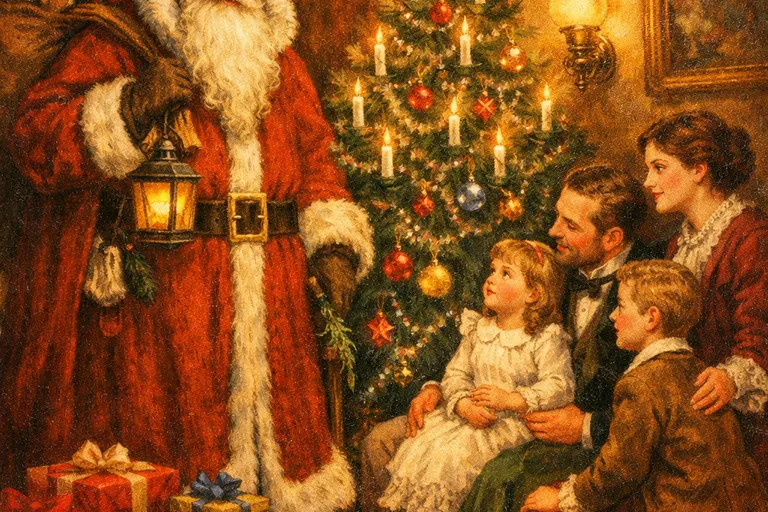
What Coca-Cola did, starting in 1931 with artist Haddon Sundblom's advertising campaign, was standardize and popularize the image. Sundblom's Santa was warmer, more human, and more consistent than the dozens of competing depictions circulating at the time. He took Nast's red suit and made it iconic on a global scale. The company did not invent the color scheme. They just made sure nobody forgot it.
The traditional English Father Christmas, meanwhile, wore green for most of his history. The shift to red in Britain happened gradually during the late 19th century as the American Santa Claus image crossed the Atlantic and merged with the existing Father Christmas figure.
Is Father Christmas the Same as Santa Claus?
No. Or at least, he was not the same for roughly four hundred years. Today, the two figures have merged so thoroughly in popular culture that most people use the names interchangeably. But their origins are completely separate.
Father Christmas is English. He emerged from medieval folk tradition as a personification of the Christmas season. He had no connection to children, gifts, reindeer, or the North Pole. He was about feasting and good cheer among adults.
Santa Claus is American (by way of the Netherlands). The name derives from "Sinterklaas," the Dutch version of Saint Nicholas. The 1823 poem A Visit from St. Nicholas, widely attributed to Clement Clarke Moore, gave Santa his sleigh, his reindeer, and his chimney entrance. Thomas Nast gave him his workshop and his appearance. Coca-Cola gave him global reach.
The merger happened in the 1870s and 1880s. As American cultural exports flowed into Britain, the image of a nocturnal gift-bringer who came down chimneys began replacing the older English figure. By the end of the Victorian era, Father Christmas had absorbed Santa's job description almost entirely. According to English Heritage, the two figures had become virtually indistinguishable by the 1880s, differing only in name.
Some Britons still insist on the distinction. Father Christmas, they'll tell you, is taller, more dignified, and less commercialized than his American counterpart. Whether that distinction still holds up in practice is debatable. But the historical difference is real.
Father Christmas in Different Countries
The concept of a Father Christmas figure, a benevolent older man who appears during the holiday season, exists across dozens of cultures. Each one reflects local history, climate, and religious tradition. The differences are more interesting than the similarities.
Swedish Father Christmas: Jultomten
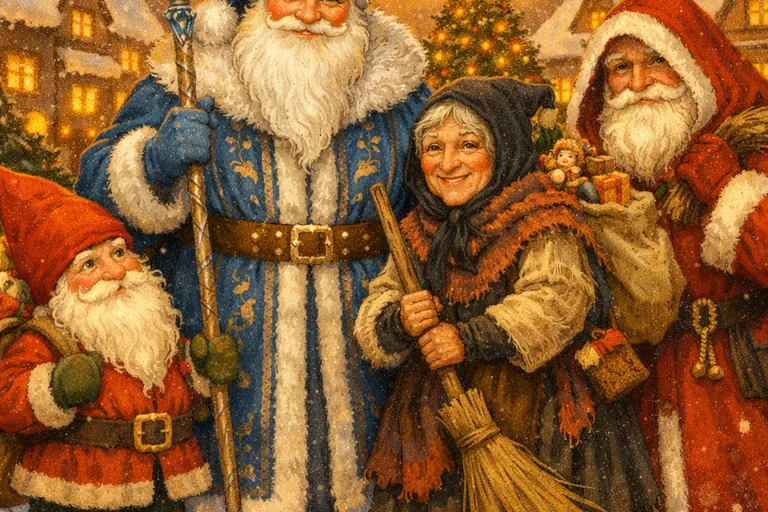
Sweden's gift-bringer is the Jultomten, and he is genuinely different from his English and American cousins. The tomte was originally not a Christmas figure at all. He was a small, gnome-like farm spirit from Scandinavian folklore who protected the homestead and its livestock. He was thought to be a spirit of previous generations at the farm, an echo of ancient ancestor veneration.
The modern Jultomten is a hybrid. Swedish artist Jenny Nyström fused the old farm gnome with the emerging Santa Claus image in the early 20th century, and the result is a figure who lives in a nearby forest (not the North Pole), knocks on the front door (never the chimney), and delivers presents directly on Christmas Eve afternoon. Swedish families still leave a bowl of porridge outside on Christmas Eve for the tomte. If the bowl is empty the next morning, the coming year will be a good one.
France, Germany, Italy, and Russia
In France, Pere Noel (literally "Father Christmas") brings gifts either on the evening of December 24th or the morning of December 25th. Germany's Weihnachtsmann ("Christmas Man") shares duties with the Christkind, the Christ Child, depending on the region. In Italy, Babbo Natale handles Christmas Day gifts, though the witch-like La Befana delivers gifts on Epiphany, January 6th. Russia's Ded Moroz ("Grandfather Frost") arrives on New Year's Eve, not Christmas, accompanied by his granddaughter Snegurochka, the Snow Maiden.
Each of these figures has a distinct personality, costume, and backstory shaped by local tradition. Ded Moroz wears blue or white as often as red. La Befana rides a broomstick. The Christkind is a child, not an old man. They share a function but little else.
Father Christmas in UK Tradition
In Britain today, Father Christmas remains the preferred name. According to a 2019 YouGov survey, about 58% of Britons call the figure "Father Christmas" rather than "Santa Claus." The name choice often breaks along generational lines, with older Britons favoring the traditional English term.
The UK tradition retains some features the American version does not. British children leave a mince pie and a glass of sherry (or brandy) for Father Christmas rather than milk and cookies. Stockings are hung, but the emphasis on a full sack of presents left under the tree is less intense than the American model. Christmas crackers, which have no American equivalent, are pulled at the dinner table.
Father Christmas also appears in British pantomime, the theatrical tradition that runs through the holiday season. He shows up at the end of many productions to distribute sweets to children in the audience. It is one of the few surviving echoes of his original role as a live, present figure rather than a nocturnal visitor nobody actually sees.
The Meaning of Father Christmas
The name itself tells us something. "Father" implies authority, warmth, and generational continuity. "Christmas" is the festival. Father Christmas is literally the father of the holiday, its guardian and embodiment. Compare this with "Santa Claus," which derives from a saint's name and carries religious connotations, or "Weihnachtsmann," which simply means "Christmas Man."
The English name positions the figure as something broader than a gift-bringer. He is the personification of the season itself. This is closer to his original medieval role than anything Santa Claus represents. When the Puritans tried to kill Christmas, it was Father Christmas, not a saint, who appeared on pamphlets to fight back. The character has always been less about religion and more about the cultural practice of celebrating midwinter with food, drink, and company.
In 1843, Charles Dickens published A Christmas Carol. The Ghost of Christmas Present, with his green robe, holly wreath, and enormous feast, is essentially Father Christmas by another name. Dickens did not invent the character, but he gave the archetype its most enduring literary expression. The Ghost sits among turkeys and puddings, surrounded by abundance. He is generous, warm, and temporary. He will vanish when the season ends, exactly as the original Father Christmas always did.
Frequently Asked Questions
Is Father Christmas the same as Santa Claus?
Historically, no. Father Christmas originated in English medieval folk tradition as a personification of adult feasting and seasonal celebration. Santa Claus developed separately in the United States from Dutch Sinterklaas traditions. The two figures merged in Britain during the 1870s and 1880s, and today most people treat the names as interchangeable, though their origins are quite different.
Where did Father Christmas come from?
Father Christmas comes from English folklore, with roots stretching back to at least the 15th century. He appeared in mummers' plays and civic pageants as a character representing the spirit of Christmas feasting and hospitality. He was not originally a gift-bringer for children but a symbol of adult merrymaking and communal celebration during midwinter.
Why does Father Christmas wear red?
Father Christmas originally wore green robes in the English tradition. The red suit comes from the American Santa Claus tradition, influenced by Saint Nicholas's red bishop's robes and popularized by Thomas Nast's illustrations in Harper's Weekly starting in 1881. Coca-Cola's 1931 advertising campaign standardized the image globally, but the company did not invent the red color scheme.
What is the difference between Father Christmas in the UK and Santa Claus in America?
British children leave mince pies and sherry for Father Christmas rather than milk and cookies. The name "Father Christmas" is still preferred by about 58% of Britons. Father Christmas also appears in British pantomime performances. While the two figures now share the same basic role of delivering gifts on Christmas Eve, the UK tradition retains some distinct cultural touches.
Who is the Swedish Father Christmas?
Sweden's Father Christmas is called Jultomten, a hybrid of the old Scandinavian tomte (a gnome-like farm spirit) and the modern Santa Claus figure. Unlike Santa, Jultomten lives in a nearby forest, knocks on the front door rather than coming down a chimney, and delivers presents on Christmas Eve afternoon. Swedish families traditionally leave a bowl of porridge for him.
What does Father Christmas mean?
The name "Father Christmas" literally means the father or guardian of the Christmas season. Unlike "Santa Claus," which derives from the Dutch name for Saint Nicholas, "Father Christmas" positions the figure as the personification of the holiday itself, reflecting his original medieval role as an embodiment of seasonal celebration rather than a religious figure.