Christmas can be such a bitch.
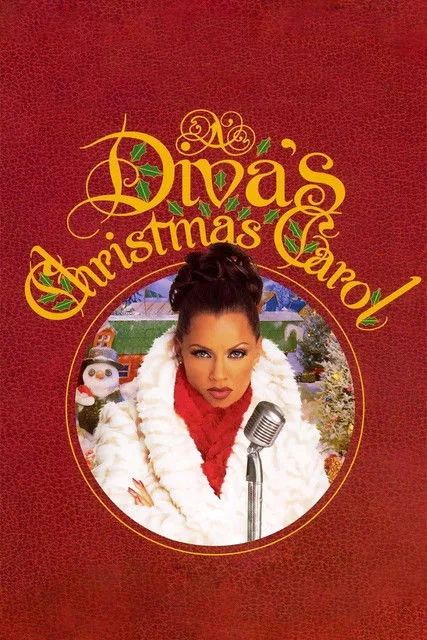
A Diva's Christmas Carol (2000)
In this remake of Charles Dickens' classic "A Christmas Carol", a cold-hearted superstar singer gets a reality check when she meets three Christmas spirits who would change her miserly ways for the better.
 rating 7/10 User rating 35 votes 62%
 ❄ Christmas Connection
The entire film is a direct retelling of Charles Dickens' A Christmas Carol, set on Christmas Eve and structured around three ghostly visits that force the protagonist to confront her past, present, and future. Christmas is not a backdrop here; it is the plot, the deadline, and the moral stakes. The ending hinges on a Christmas Day transformation.
Our Review
VH1 had no business making a movie this watchable. The channel was, in 2000, still primarily known for music countdowns and celebrity gossip specials. Yet A Diva's Christmas Carol arrived that December with Vanessa Williams at the center, a sharp script from teleplay writer Robert Sternin, and a genuine understanding of what makes the Dickens source material work. The result is a Christmas TV movie that earns its place on the annual rewatch list rather than just occupying space in a cable guide.
The premise does exactly what the best Dickens adaptations do: it transplants the story into a world where the central sin feels current and specific. Ebony Scrooge is not a generic miser. She is a solo pop star who clawed her way to the top by abandoning the girl group that made her, stealing songwriting credits, and treating her team as a service industry she barely acknowledges. In 2000, this read as pointed commentary on the music industry. It still does.
Vanessa Williams Carries the Whole Thing
There is no diplomatic way to say this: A Diva's Christmas Carol lives or dies on Vanessa Williams, and she is very good. She plays Ebony with the specific coldness of someone who knows exactly what she traded away and has spent years refusing to think about it. The selfishness is not cartoonish. Williams gives Ebony a brittle quality, the arrogance of a person who built walls and then forgot what she was keeping out.
Williams was already a star with real range in 2000, having won a Golden Globe for her performance in Ugly Betty years later and holding a long discography. But this role asked her to play against her own image as a warm, polished entertainer. She commits. The scene where the Ghost of Christmas Past shows Ebony her younger self performing with her group, the moment she recognizes what she was before success hollowed her out, lands because Williams does not play it for sentiment. She plays it for shame.
The Ghost Casting Is Half the Fun
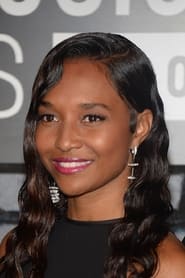
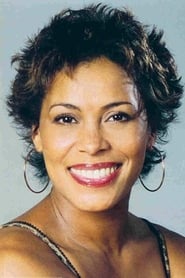
Rozonda Thomas, known as Chilli from TLC, plays the Ghost of Christmas Past. The casting is clever in a way the film barely bothers to wink at: TLC was one of the definitive girl groups of the 1990s, precisely the cultural reference point that gives Ebony's backstory its weight. Having Chilli guide Ebony through the ruins of her abandoned group feels less like casting and more like the movie making an argument about loyalty and what the music industry does to women who trust each other.
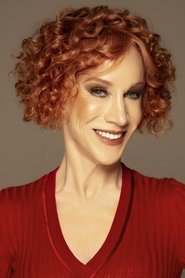
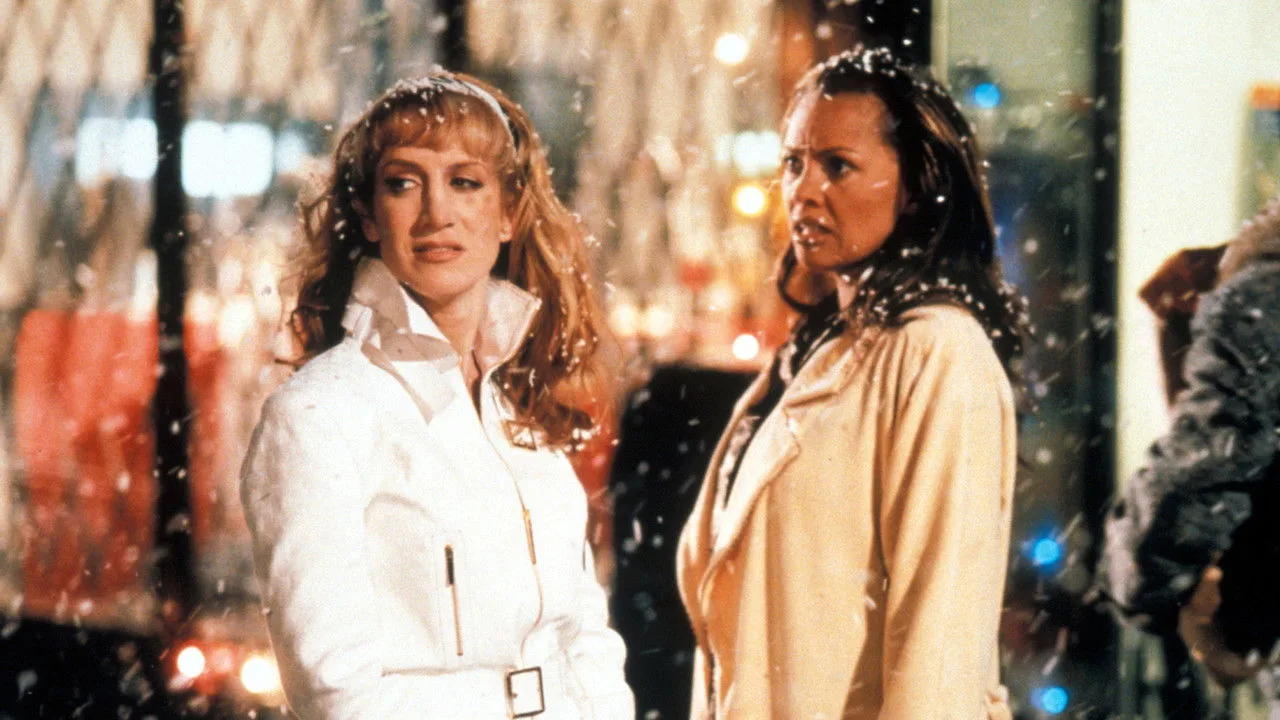
Kathy Griffin plays the Ghost of Christmas Present. Griffin was not yet the stand-up institution she became, but she already had the specific energy the role needs: relentless, slightly unhinged, impossible to dismiss. She plays the ghost as someone exhausted by Ebony's excuses and not bothering to hide it. The dynamic works.
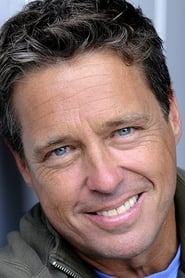
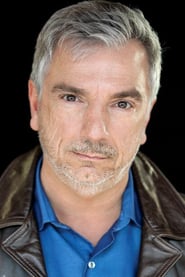
Brian McNamara plays Bob Cratchit, here reimagined as Ebony's put-upon assistant. McNamara keeps the role grounded while the bigger performances orbit around him, which is exactly what the Cratchit role requires.
The Musical Numbers Earn Their Keep
The film features original songs written specifically for it, which could have been a disaster. Original songs in TV movies are frequently the weakest element, there to check a box rather than serve the story. Here they serve the story. The songs tied to Ebony's past, the girl group material she abandoned, are deliberately warmer and simpler than her solo material. The contrast is doing real work.
Williams is a trained singer with genuine pop chops. She does not need the camera to hide anything. The production values are limited, this is a VH1 TV budget, but the musical sequences are shot with enough energy that the limitations don't distract.
What the Film Gets Right About the Source Material
The Dickens adaptation problem is this: modern audiences know the structure so well that the only question is whether the specific version justifies its own existence. A Diva's Christmas Carol justifies itself by making Ebony's transformation feel earned rather than mechanical.
The three-ghost structure works here because the music industry setting gives each ghost a different kind of evidence to present. The Past is about betrayal. The Present is about consequence. The Future is about irrelevance, which for a pop star is the correct version of Dickens' graveyard. The film understands that for someone like Ebony, the worst thing is not death but being forgotten.
Director Richard Schenkman keeps the pacing tight at 90 minutes. There are no scenes that exist purely to pad runtime. This sounds like a low bar, but for a TV movie with a built-in three-act ghost structure, it is easy to let things drift. Schenkman does not let them drift.
The film aired on VH1 on December 4, 2000, and was rebroadcast several times that season. It found an audience that recognized what it was: a legitimate holiday film wearing cable-TV clothes.
Fun Facts
Rozonda "Chilli" Thomas of TLC was cast as the Ghost of Christmas Past, a piece of music-industry-aware casting that gives her scenes an unspoken layer: TLC was one of the most famous girl groups in history, the exact archetype Ebony Scrooge abandoned.
Vanessa Williams recorded the original songs for the film herself. Williams had maintained an active recording career alongside her acting work, with her 1992 single "Save the Best for Last" having reached number one on the Billboard Hot 100.
The film was directed by Richard Schenkman, who had previously directed The Pompatus of Love (1995). He shot A Diva's Christmas Carol on a tight television schedule typical of VH1 productions of the era.
Kathy Griffin's role as the Ghost of Christmas Present came two years before her Grammy-nominated comedy album For Your Consideration and well before her long run on My Life on the D-List. The film is an early example of Griffin in a scripted role rather than playing herself.
The teleplay was written by Robert Sternin, a television writer with credits including Married... with Children. The sharp comic edge in Ebony's dialogue reflects that background.
A Diva's Christmas Carol was one of the first original scripted films produced by VH1, a channel that had launched in 1985 primarily as an adult-oriented companion to MTV.
The fictional girl group Ebony abandoned before her solo career is called "Divas," which the film uses to set up the irony in her current stage name without belaboring the point.
The film has no theatrical release history and was never issued on DVD in a wide release, which makes its ongoing reputation as a cult Christmas TV movie almost entirely the result of cable reruns and later streaming availability.
Cast