
Disney makes the classical musical more magical than ever!
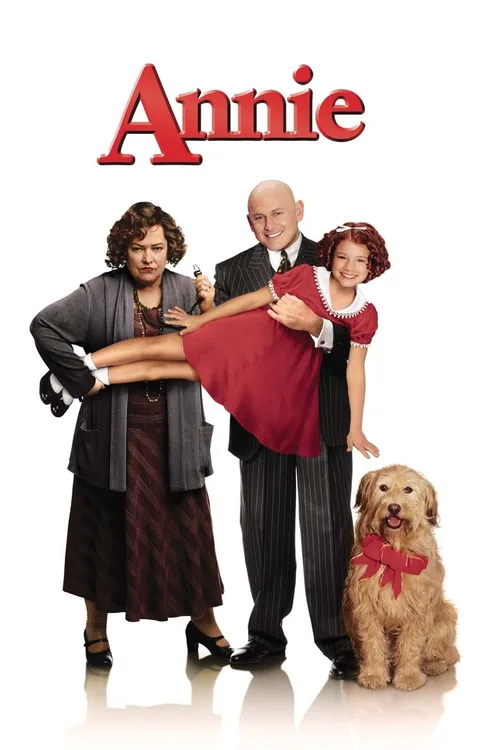
Annie (1999)
Things seem pretty bad for a young girl living a "hard-knock life" in an orphanage. Fed up with the dastardly Miss Hannigan, Annie escapes the run-down orphanage determined to find her mom and dad. It's an adventure that takes her from the cold, mean streets of New York to the warm, comforting arms of bighearted billionaire Oliver Warbucks - with plenty of mischief and music in between.
 rating 7/10 User rating 191 votes 64%
 ❄ Christmas Connection
The climax of Annie takes place at a Christmas Eve party at the Warbucks mansion, where Annie's dream of a real family and a real Christmas collides with the threat of being returned to Miss Hannigan's orphanage. The holiday setting isn't incidental -- it's the emotional pressure cooker the story needs. Christmas here represents everything Annie has been denied: warmth, safety, and a place that's actually home.
Where to Watch


Our Review
The 1982 theatrical version of Annie has the benefit of nostalgia, a $35 million budget, and Albert Finney. The 1999 ABC television remake has Kathy Bates in a prison warden's uniform doing a cakewalk. These are different kinds of gifts, and the 1999 version deserves more credit than it typically gets for knowing exactly which kind it is.
Rob Marshall directed this before Chicago, before Memoirs of a Geisha, before any of the awards-season prestige that would define his later career. Annie was his feature directing debut, and what he did with it was essentially a masterclass in using television's limitations as cover for theatrical ambition. The budget is clearly modest. The sets look like sets. The movie doesn't care. It commits fully and moves fast.
The Cast That Makes or Breaks Any Annie
Alicia Morton was eleven years old when she played Annie, and she'd been cast over thousands of auditioners after a nationwide search. That's the kind of pressure that flattens child performers. Morton doesn't buckle. She plays Annie as stubborn and grounded rather than relentlessly chirpy, which is the right call. The character works best when she reads as a kid who has learned not to hope too loudly.
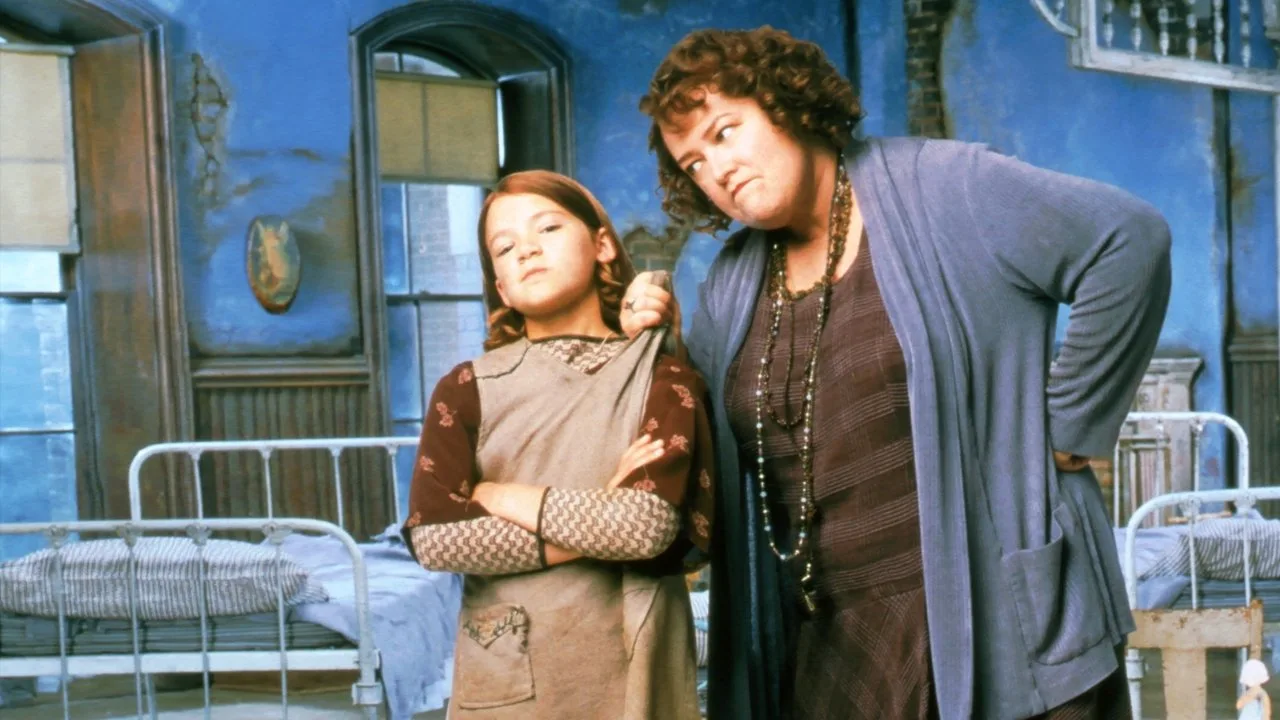
Kathy Bates as Miss Hannigan is the reason to watch this movie. The role has a tradition of being played big -- Carol Burnett's 1982 take remains iconic precisely because Burnett played it as broad physical comedy with a drunk's timing. Bates goes elsewhere. Her Hannigan is bitter and specific, a woman who genuinely resents where her life ended up, and the performance keeps almost tipping into something darker before the comedy yanks it back. The "Little Girls" number alone is worth the runtime.
Victor Garber plays Warbucks with real dignity. He doesn't do the bumbling-millionaire routine. His Warbucks is a self-made man who's confused by warmth, not a caricature. Audra McDonald as Grace brings her stage background to bear without overwhelming scenes she's not meant to dominate. Alan Cumming as Rooster is flamboyantly unhinged in exactly the way the villain role demands.
What Rob Marshall Updated (and Why It Matters)
The 1999 version moved the setting from the 1930s to a version of New York that feels slightly more contemporary without committing to an actual year. The Depression-era context is retained for tone but softened. Some of the musical arrangements were updated to feel less like vintage Broadway and more like late-1990s television spectacle, which is a fair trade for reaching an audience that might not have grown up on original cast recordings.
The script also plays the Rooster subplot straighter than the 1982 film did. In the original, the con-man scheme to fake Annie's parents is played mostly for slapstick. Here it's framed as a genuine threat. The result is that the Christmas Eve climax lands with more weight. When Warbucks realizes what's happening and moves to stop it, the stakes feel real.
Is Annie a Christmas Movie?
The story of Annie isn't about Christmas in the way A Christmas Carol is about Christmas. But the 1999 version leans harder into the holiday than most adaptations. The third act unfolds at a Christmas Eve party that Warbucks throws specifically for Annie. The decorations, the guests, the emotional beats -- all of it is staged as a Christmas set piece. Annie getting adopted, Annie finally having a home: these things happen at Christmas, and that's intentional.
The classic song "Tomorrow" takes on different meaning when "tomorrow" is Christmas Day. It's a small thing, but it's not accidental. Marshall understood that the holiday amplified what the story was already doing.
The Honest Assessment
This is a television movie. It has the visual scope of a television movie. Anyone expecting the production scale of the 1982 version or the 2014 remake will be disappointed. The dance numbers are staged more tightly, the extras are fewer, and some of the sets have that slightly flat quality that afternoon television lighting produces.
None of that actually diminishes it as a piece of storytelling. Marshall keeps the pace up. The performances from the adult cast are legitimately good, not just competent. And the decision to cast Broadway-caliber talent across the board, including McDonald and Cumming alongside Bates and Garber, gives the musical numbers a level of technical quality that many bigger-budget productions don't bother to achieve.
The 1999 Annie is the version most people who were children in the late 1990s actually watched, and they watched it multiple times. That's not nostalgia distorting judgment. That's the movie doing its job.
Fun Facts
Rob Marshall had never directed a feature film before Annie. The 1999 television movie was his directorial debut, making his jump to Chicago just three years later one of the more striking career trajectories in modern Hollywood.
Alicia Morton was selected from a search of approximately 8,000 girls across the United States. The nationwide audition process was organized by ABC and lasted several months before Morton was cast.
Audra McDonald had already won two Tony Awards before filming Annie in 1999. She won for Carousel in 1994 and Master Class in 1996, and would go on to win four more, making her the most Tony-decorated performer in history.
Kathy Bates was 50 years old when she played Miss Hannigan, a role she had never done on stage. Her take on the character drew deliberately on her dramatic background rather than the comedic tradition established by Carol Burnett in the 1982 film.
Alan Cumming, who plays Rooster, is a native of Scotland and was already known to theatre audiences for his Tony-winning performance in the 1998 Broadway revival of Cabaret, which he played simultaneously with its London run.
The musical arrangements for the 1999 version were supervised by composer Irwin Kostal's team. Several songs received tempo adjustments and new orchestrations to suit the late-1990s television format while retaining Charles Strouse's original melodies.
Victor Garber, who plays Daddy Warbucks, is Canadian and had an extensive stage career before taking the role. He originated the role of Jesus in the original Toronto production of Godspell in 1972.
The 1999 broadcast drew an audience large enough to make it one of ABC's highest-rated movies of the year, which helps explain why it remains the version most people under 40 remember as the definitive Annie.
Cast