
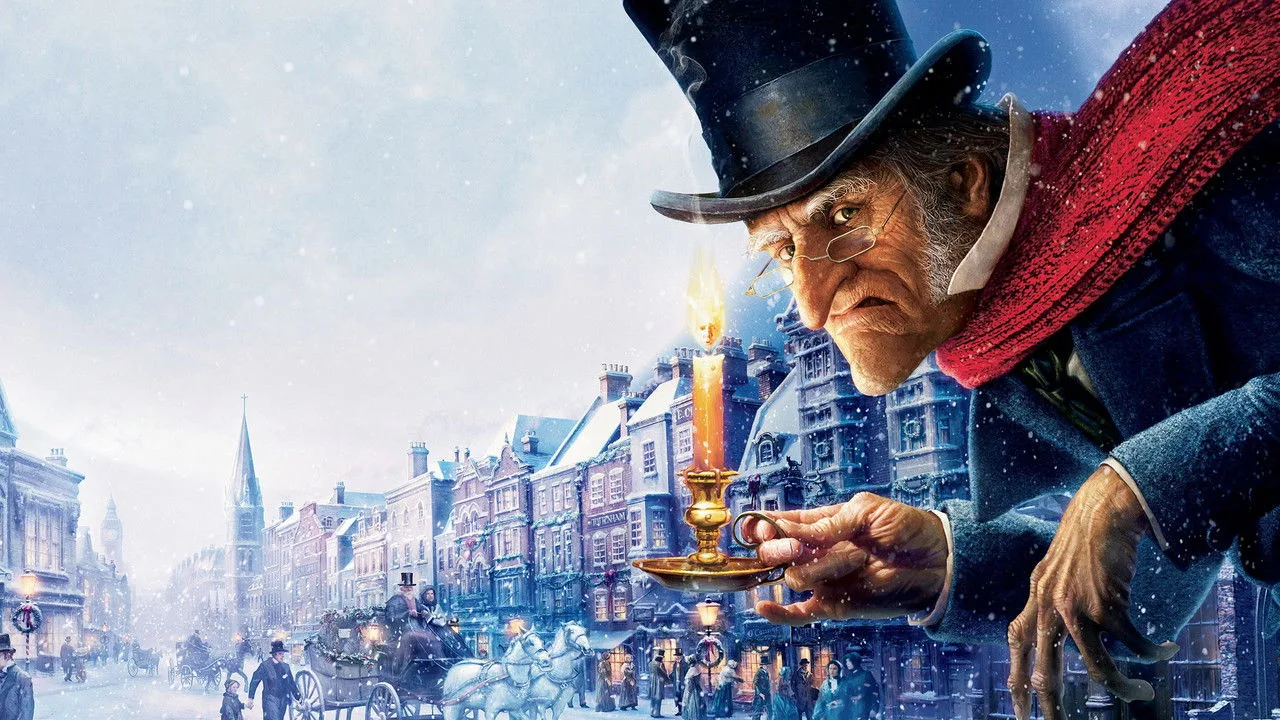
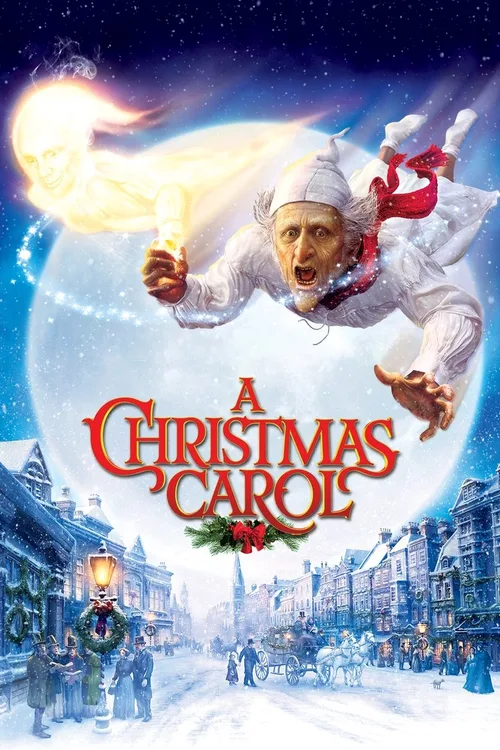
In just one night, he has seen his past, his present, and his future... and they've all come back to haunt him.
A Christmas Carol (1999)
Miser Ebenezer Scrooge is awakened on Christmas Eve by spirits who reveal to him his own miserable existence, what opportunities he wasted in his youth, his current cruelties, and the dire fate that awaits him if he does not change his ways. Scrooge is faced with his own story of growing bitterness and meanness, and must decide what his own future will hold: death or redemption.
 rating 6/10 User rating 221 votes 69%
 ❄ Christmas Connection
Cuento de Navidad is a direct animated adaptation of Charles Dickens' 1843 novella A Christmas Carol, the story that arguably invented the modern template for Christmas sentiment. Every element, from Scrooge's transformation to the three visiting spirits, is built entirely around Christmas Eve and the redemptive meaning of the holiday. There is no version of this story that is not a Christmas movie.
Where to Watch


Our Review
By 1999, the world had already produced over a hundred adaptations of Charles Dickens' A Christmas Carol. Animated versions alone numbered in the dozens: Disney had done it with Donald Duck, the Muppets had done it with Kermit, even Mr. Magoo had done it. The question any new version has to answer is not "should this exist" but "why does this particular version exist, and for whom?" Spain's BRB Internacional, the studio behind beloved European animated series like Dogtanian and the Three Muskehounds and Around the World with Willy Fog, gave their answer with Cuento de Navidad, directed by José Luis Moreno, one of Spain's most prolific television personalities.
What BRB Brought to Dickens
BRB Internacional built its reputation through literary adaptations. The studio spent the 1980s and early 1990s turning Jules Verne and Alexandre Dumas into Saturday-morning cartoons, typically through co-productions with Japanese studios like Nippon Animation. Their work had a particular warmth to it, a European sensibility that trusted the source material rather than trying to outrun it with gags. That instinct serves Cuento de Navidad well. This is not a version that strains to modernize Dickens or inject pop-culture commentary. It sits comfortably inside the story.
José Luis Moreno was better known at the time as a Spanish television institution. He had spent years producing and directing variety programming for TVE, including the iconic New Year's Eve specials that millions of Spanish families watched together. Bringing him to an animated Christmas feature was not such a strange leap. Moreno understood spectacle, sentimentality, and the rhythms of family television, and Cuento de Navidad wears all three of those influences on its sleeve.
The animation reflects the production realities of late-1990s European television animation. It is not lavish. The backgrounds have more detail than the character movement, which is a common trade-off in this era of the medium. But the character designs have personality. Scrooge in particular looks genuinely unpleasant, all angular shoulders and pinched face, before the story does its work on him.
Scrooge, the Spirits, and Why the Story Still Works
Dickens published A Christmas Carol in December 1843, writing the entire story in six weeks. He was broke, his publisher had just cancelled his contract, and he needed money fast. The book sold out its first print run of 6,000 copies by Christmas Eve of that year. Dickens wept while writing it and laughed while writing it, sometimes both at once. You can feel that in any faithful adaptation, and this one is faithful.
The three-ghost structure still works because Dickens built it to work. The Ghost of Christmas Past is melancholy, the Ghost of Christmas Present is jolly to the point of excess, and the Ghost of Christmas Yet to Come is pure dread. Each one hits a different emotional register. Any adaptation that respects these three movements has a decent floor to stand on, and Cuento de Navidad respects them.
What this version does particularly well is the Bob Cratchit scenes. Tiny Tim's famous line, in Spanish, carries a different weight when delivered in a language that millions of European children grew up hearing. There is something to be said for encountering a canonical story in your own tongue rather than through a dub. For Spanish-speaking children in 1999, this was a Cuento de Navidad that actually belonged to them.
Where It Earns Its Rating
The film is not ambitious. It does not try to be the definitive Christmas Carol. It tries to be a warm, accessible version for children and families, and on those terms it largely succeeds. The pacing is sensible, the emotional beats land, and Scrooge's transformation does not feel rushed or unearned.
The musical elements are modest but effective. Spanish Christmas animation in this period often leaned into song, and there is a gentleness to the soundtrack that fits the material. It does not overpower the story the way some animated holiday productions do, where every emotional moment gets buried under an orchestral swell.
The version's biggest limitation is ambition. BRB was capable of more visually than this production shows. Compare it to their earlier work and you can see a studio working within tighter constraints than it did in its peak years. The late 1990s were a difficult period for European animation, with budgets contracting and production increasingly offshored. Cuento de Navidad shows those pressures.
But here is the thing about low-ambition faithful adaptations of great stories: they often age better than flashy revisionist ones. The 1997 DiC animated version with Tim Curry went for pop energy and feels dated. This one simply tells the story. In 2026 it still does what it set out to do.
Who Should Watch It
Spanish-speaking families with young children will find this the most natural entry point to Dickens' story in their language. It is short enough not to test a child's patience and earnest enough not to condescend to them. Anyone who grew up watching BRB productions will recognize the house style immediately, that particular brand of European animated warmth that defined a generation of children's television across Spain, Italy, and Germany.
For everyone else, this is a curiosity, a small, honest piece of Spanish animation history attached to the most-adapted story in Christmas literature. Dickens would have recognized what they were trying to do. He spent his whole career believing that stories about the poor and the cold deserved to be told clearly and well, not as vehicles for spectacle. BRB, in its modest way, agreed.
Fun Facts
Charles Dickens wrote A Christmas Carol in just six weeks in autumn 1843 and personally financed the first printing. Despite selling 6,000 copies in its first few days, the elaborate production costs meant he earned far less than he had hoped from the initial run.
BRB Internacional was founded in 1972 by Tito Baste, José Rodriguez, and Claudio Biern Boyd, whose initials form the company name. At its peak, BRB co-produced animated series with studios in Japan, including Nippon Animation, and distributed content in over 100 countries.
José Luis Moreno began his television career as a ventriloquist, performing with puppet characters including Rockefeller the chimp and Macario. He became one of Spain's most-watched television producers, responsible for the New Year's Eve specials on TVE watched by millions of Spanish families each December 31.
Dickens' novella is credited with helping revive and codify several English Christmas traditions that had been fading by the 1840s, including the emphasis on family gatherings, charitable giving, and festive feasting. The phrase "Merry Christmas" appears in the text multiple times, helping cement its use in Victorian culture.
A Christmas Carol has been adapted for film and television over 135 times, making it one of the most-adapted fictional works in screen history. The earliest surviving film version dates to 1901, produced in Britain by R.W. Paul, just 58 years after the novella was published.
BRB Internacional entered bankruptcy proceedings in 2022 after 50 years of operation, ending an era of Spanish animation that had shaped childhood television across Europe for three generations. The company's back catalogue, including series like Dogtanian, is still distributed and streamed internationally.
Dickens performed one-man readings of A Christmas Carol himself, staging theatrical readings across Britain and the United States for over 25 years. He read the story more than 127 times in public performances, and accounts describe audiences weeping and laughing in equal measure.
Cast