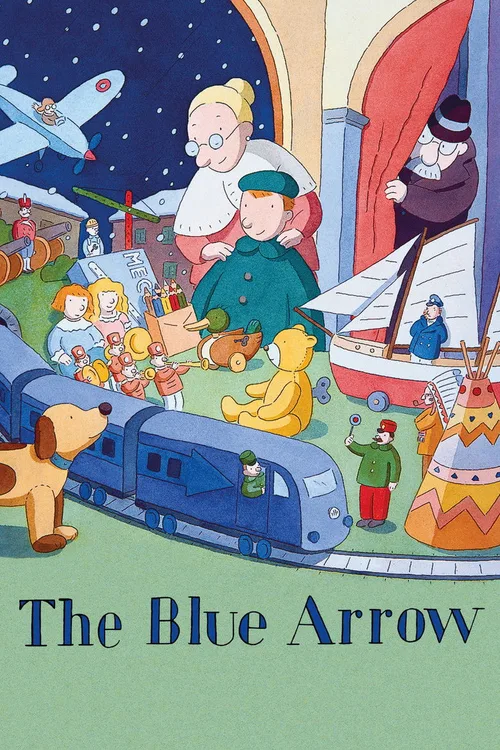
A magical movie about believing in your dreams!
How the Toys Saved Christmas (1996)
When Santa's helper La Befana falls ill and must take off a Christmas Eve, she recruits Scarafoni to help deliver all the toys. No one but the toys knows is that Scarafoni plans to auction off the toys to the highest bidder, which means the toys won't make it to the children who have been good all year and deserve them. The toys decide to deliver themselves, and the story follows them as they struggle to avoid the heartless Scarafoni and to find their true homes.
 rating 7/10 User rating 111 votes 72%
 ❄ Christmas Connection
The film is set entirely on the night of Epiphany (January 6), the Italian holiday when the witch Befana delivers gifts to children, making it Christmas-adjacent by Italian tradition. The plot revolves around toy delivery, gift-giving gone wrong, and the idea that presents belong in the hands of children who need them. In Italy, Epiphany is as central to the holiday season as Christmas Day itself.
Where to Watch

Our Review
How the Toys Saved Christmas arrived in 1996 as an Italian-American co-production that most American audiences have never seen and most Italian audiences remember with genuine affection. Based on Gianni Rodari's 1964 children's book "La freccia azzurra" (The Blue Arrow), the film takes place not on Christmas Eve but on the night of Epiphany, January 6. In Italy, that's the night the witch Befana flies on her broomstick to deliver gifts to children. The film's American distributors had to do some quiet explaining about why Santa Claus isn't running this particular show.
A Toy Store Rebellion with a Political Edge
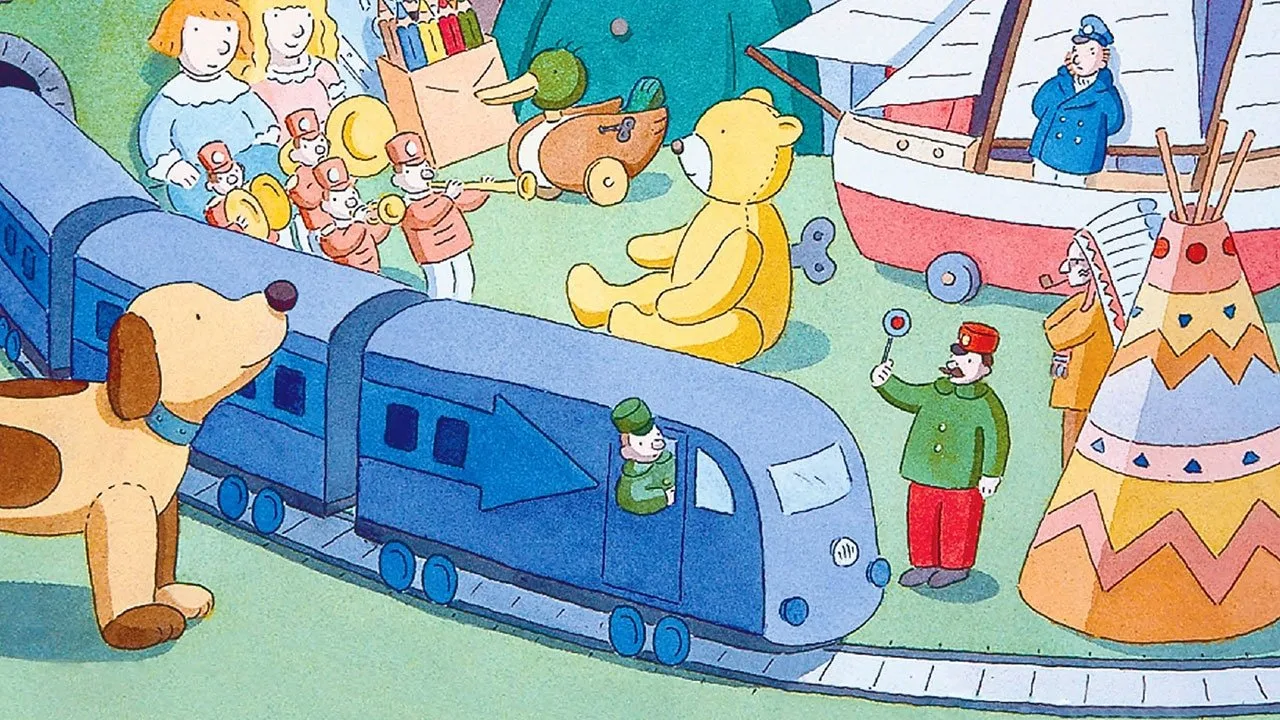
The premise is deceptively simple: a greedy toy shop owner decides to sell off her inventory rather than give the toys away to poor children as Befana intends. The toys, led by a small train called the Blue Arrow, come to life and take matters into their own hands. They escape the shop, travel across Italy overnight, and try to find the children who were supposed to receive them.
Rodari was a committed leftist, a member of the Italian Communist Party, and a children's author who believed stories could carry real ideas without condescending to young readers. "La freccia azzurra" is, at its core, a story about wealth hoarding and class. The villain isn't supernatural. She's a small-business owner who looks at a warehouse full of toys meant for poor kids and sees profit instead. For a 1996 animated film aimed at children, that's a fairly pointed critique.
The film handles this without becoming a lecture. It focuses on the toys' perspective, their loyalty to the children they were made for, and the logistics of a cross-country toy delivery operation conducted entirely by animated objects. The political subtext is there for adults who want to find it, and invisible to children who don't.
Mary Tyler Moore, Tony Randall, and the English Dub Question
The English-language version featured Mary Tyler Moore as the Befana character and Tony Randall as the toy shop owner's conniving assistant, Francesco. Both were well into the later chapters of their careers: Moore had won seven Emmy Awards and Randall was best known for playing Felix Unger in "The Odd Couple" television series. Neither is doing their best work here, but neither is phoning it in.
The English dub is competent rather than inspired. This is true of most Italian-English animation co-productions from the era. The original Italian audio tracks the lip movements far more naturally, and the Italian voice performances have a theatrical warmth the English version flattens somewhat. If you can watch it in Italian with subtitles, you should.
The Animation Style: Milan in the 1990s
The film was produced by Reteitalia and animated largely in Italy. The style sits somewhere between classic European animation and early-90s American Saturday morning television. It doesn't have the budget or fluidity of a Disney production from the same period, but it has a genuine visual personality. The city of Milan appears in the background of several sequences, rendered with a kind of affectionate specificity you don't often see in animated Christmas films, which typically default to generic snowy towns.
The Blue Arrow train itself is a good piece of character design. It doesn't have a face in the traditional animated sense, but the filmmakers give it personality through movement and sound. A steam train navigating Italian streets at midnight while carrying a cargo of escaping toys is an inherently cinematic image, and the film is smart enough to let it breathe.
Epiphany, Befana, and Why This Film Confuses American Audiences
The film's central problem for English-language markets is cultural. Epiphany on January 6 is the climax of the Italian Christmas season. Befana is an old woman who fills children's stockings with candy if they've been good and coal if they haven't. She's as culturally central in Italy as Father Christmas is in Britain or Santa Claus in the United States. The American distributors replaced her name with a more generic "Christmas witch" framing and leaned heavily on the word "Christmas" in the English title, even though the story takes place after Christmas Day.
This rebranding explains why the film has always had a slightly confused identity in English-speaking markets. It shows up in Christmas movie lists but takes place in January. It stars a figure most American children don't recognize. It was made in Italy but dubbed in English. None of this makes it a worse film. It makes it a more interesting one: a genuine window into how a different country experiences the end of the holiday season.
The Silver Ribbon (Nastro d'Argento) it won for Best Animated Film in Italy in 1996 means more than any American distribution deal. That award is voted on by Italian film journalists and represents real recognition from the culture that produced the source material.
Fun Facts
The original Italian children's book "La freccia azzurra" was written by Gianni Rodari and published in 1964. Rodari won the Hans Christian Andersen Award in 1970, considered the most prestigious international prize in children's literature.
Mary Tyler Moore, who voiced Befana in the English dub, had won seven Primetime Emmy Awards over her career, including for "The Dick Van Dyke Show" and "The Mary Tyler Moore Show." This was one of her few animation credits.
Tony Randall, who voiced the villain's assistant Francesco, was 77 years old when the English dub was recorded. He had been best known since the early 1970s for playing the fastidious Felix Unger in the American television version of "The Odd Couple."
The film won the Nastro d'Argento (Silver Ribbon) for Best Animated Film in Italy in 1996. The Nastro d'Argento is Italy's oldest film award, established in 1946 by the Italian National Union of Film Journalists.
In Italy, Befana is a figure with roots that predate Christianity in the region. Some historians trace the tradition of an old woman flying on a broomstick in early January to pre-Christian midwinter customs that were later absorbed into the Feast of the Epiphany.
Gianni Rodari was a member of the Italian Communist Party and worked as a journalist for "L'Unita," the party's newspaper, before becoming Italy's most celebrated children's author. His stories for children frequently featured working-class protagonists and critiques of wealth and greed.
The film's original Italian title, "La freccia azzurra," translates literally as "The Blue Arrow," referring to the small toy train that leads the other toys to freedom. The English title "How the Toys Saved Christmas" was created entirely for the American market and does not appear in Italian promotional materials.
Cast