
It's Christmas, Carol! (2012)
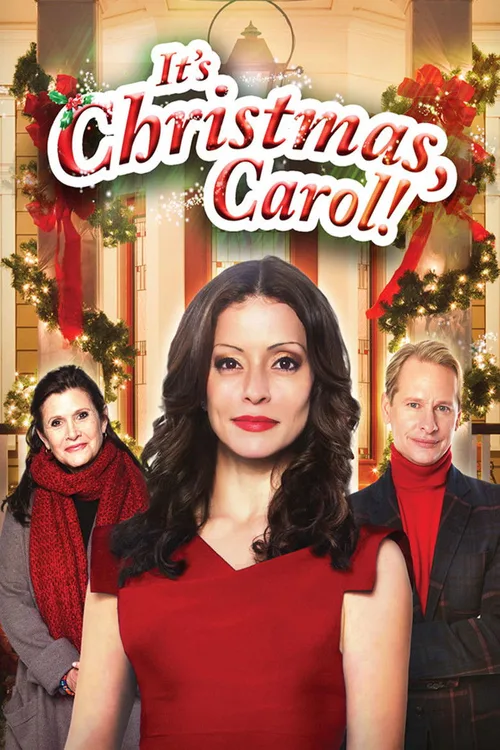
The story of driven, heartless, publishing executive, Carol Huffman, who on Christmas Eve is visited by the ghost of her former boss, Eve. Eve tells Carol that she has lost sight of the things that are truly important in life and that she is there to show her the error of her ways. Eve explains that normally there would be three ghosts for the job but due to budget cutbacks, she is in charge of Carol's journey through her past, present and future.
 rating 6/10 User rating 36 votes 55%
 ❄ Christmas Connection
The entire film is a beat-for-beat modernization of Charles Dickens' 1843 novella A Christmas Carol, with Christmas Eve visits, ghostly interventions, and a redemption arc built around a book publisher named Carol who despises the holiday spirit. Christmas is not backdrop here; it is the whole plot, the whole premise, and the whole point.
Where to Watch

Our Review
There have been, by various counts, over 200 filmed adaptations of Charles Dickens' 1843 novella A Christmas Carol. It is, without question, the most adapted story in the English language after the Bible. So what does the 2012 Hallmark Channel version, It's Christmas, Carol!, bring to that crowded shelf? One thing, mostly: Carrie Fisher playing all three ghosts of Christmas, exhausted and bone-dry, as if she's doing the universe a favor by showing up at all. It's enough.
The Setup: A Publishing Scrooge Named Carol
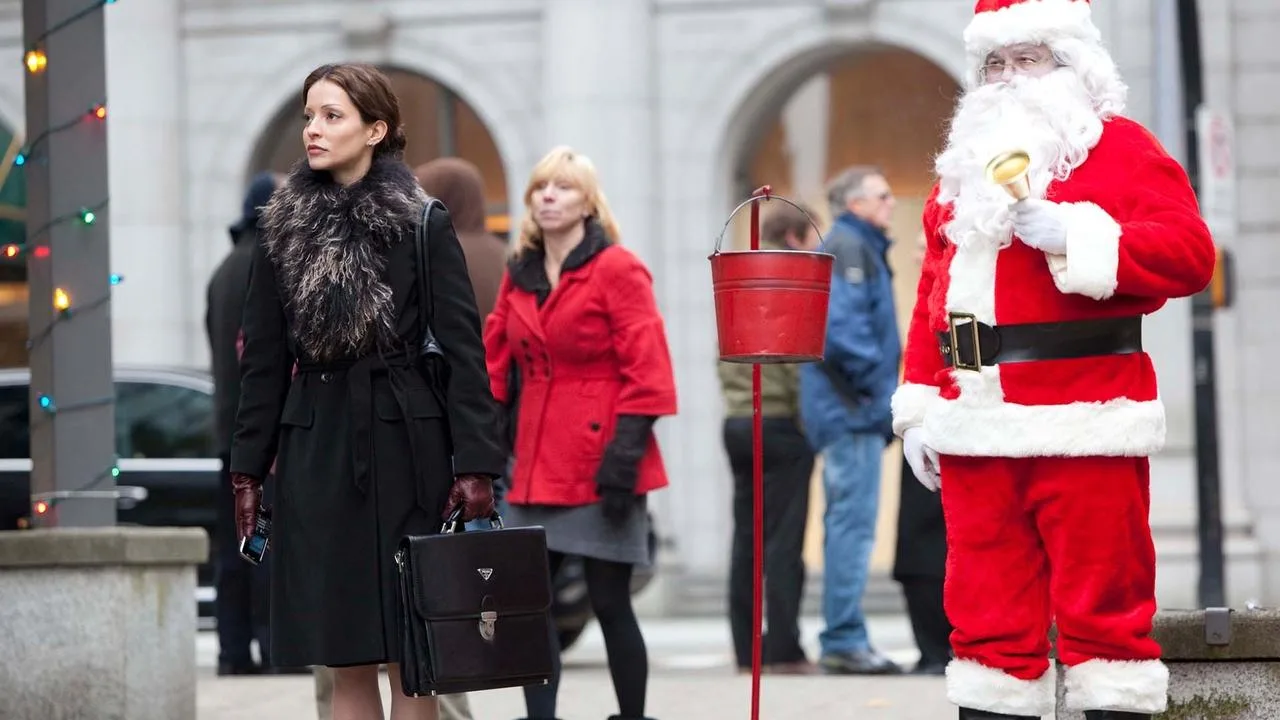
The film's central gimmick is a name pun that the script is quite pleased with. Carol Huffman (Emmanuelle Vaugier) is a successful Chicago book publisher who has spent years squeezing the humanity out of a company once built on a genuine love of literature. Her staff hates her. Her assistant is quietly organizing a workplace revolt. And she's about to fire half her employees three days before Christmas.
On Christmas Eve, she's visited by the ghost of her predecessor, Eve Miller (Carrie Fisher). Eve, we're told, was everything Carol is not: kind, generous, devoted to books for their own sake. She built the company. Carol monetized it. Now Eve has been dispatched from the afterlife to take Carol on the familiar three-stop tour of her own failures.
There's a wrinkle. Eve was supposed to send three separate ghosts, one per Christmas phase, but due to budget cuts in the afterlife, she's handling all three visits herself. This joke is the smartest thing in the movie, and to the film's credit, it commits to it fully.
What Carrie Fisher Does With It
Fisher was 56 when this aired. She had been through Star Wars iconhood, a public struggle with mental illness and addiction, a bestselling memoir, and a career as one of Hollywood's most in-demand script doctors. She was not exactly saving her best material for Hallmark specials.
And yet she's the only reason to watch this film a second time. Fisher plays Eve not as a benevolent spirit but as someone deeply inconvenienced by the whole assignment. She's sardonic without being cruel, resigned without being boring, and she delivers every line with the kind of flat authority that only comes from someone who stopped caring what anyone thought of them about three decades ago.
The film also nods at her own biography twice: a Star Wars book appears on a shelf during one of the Past sequences, and Fisher makes a passing verbal reference to the franchise. Both land as gentle self-deprecating jokes rather than forced cameos, which takes more skill to pull off than it looks.
Vaugier Holds the Center
Emmanuelle Vaugier, born in Vancouver and a veteran of Two and a Half Men, CSI: NY, and Smallville, has the harder job. Scrooge is a technical acting problem: the character needs to be sufficiently awful to earn the redemption while remaining watchable for 86 minutes. Vaugier gets it largely right. Her Carol is cold rather than cartoonishly villainous, which keeps the film grounded in something approaching believability.
Her performance earned her a Leo Award, the British Columbia film industry's equivalent of a regional Emmy, which is a more meaningful credential than it sounds. The Leo Awards have been running since 1998 and don't hand out acting prizes to anyone who just happens to be standing in frame.
Where the Film Stumbles
Merging the Marley figure with all three ghosts into a single character is a structural idea that sounds clever in a pitch meeting and turns out to be slightly awkward in practice. In Dickens' original, each ghost has a distinct personality, a distinct visual identity, and a distinct emotional register. Past is nostalgic and wistful. Present is generous and corrective. Future is silent and terrifying. Giving all three to one person, no matter how good that person is, compresses the emotional arc into something flatter than the story needs.
Fisher manages the transitions more gracefully than expected, but the Future sequence in particular loses the dread that makes the original's ending land so hard. A comedy-inflected ghost-from-the-afterlife is simply not the right instrument for an encounter with death and regret.
Carson Kressley, playing Carol's assistant Fred (the name lifted from Scrooge's cheerful nephew in Dickens), brings genuine energy to a role that doesn't give him much to do. His subplot involving the employee revolt resolves too quickly to feel earned.
The Hallmark Formula, Used Honestly
This film premiered on November 18, 2012, as part of Hallmark's annual Countdown to Christmas programming block. It was produced to a specific brief and a specific budget, and it meets both without pretending to be something larger. The Chicago setting is competently dressed without looking like Chicago. The emotional beats arrive on schedule. The ending wraps cleanly.
That's not a criticism. Hallmark Christmas films operate within deliberate constraints, and within those constraints this one is better than average, primarily because its casting director understood that Carrie Fisher doing anything on camera is inherently more interesting than a generic holiday movie actor doing the same thing.
The film rates a six. Generous, perhaps, but Fisher earns most of it herself, budget cuts and all.
Fun Facts
The film premiered on November 18, 2012, as part of Hallmark Channel's Countdown to Christmas, the network's flagship seasonal programming event that typically runs from late October through December 25.
Carrie Fisher was born on October 21, 1956, and made her film debut in Shampoo (1975), two years before Star Wars turned her into a global icon. By 2012 she had also worked as an uncredited script doctor on films including Hook, Sister Act, and The Wedding Singer.
Emmanuelle Vaugier won a Leo Award for Best Lead Performance by a Female in a Dramatic Series or Feature for this film. The Leo Awards are administered by the Motion Picture Arts and Sciences Foundation of British Columbia and have recognized BC-based production since 1998.
The screenplay collapses the four supernatural visitors in Dickens' novella (Marley's ghost plus the three Spirits) into a single character, Eve, who visits Carol three times in different modes. This consolidation is explained with a joke about afterlife budget cuts.
Carrie Fisher's Star Wars connection is acknowledged twice inside the film: a Star Wars book appears on a bookstore shelf during one of the Past sequences, and Fisher's character makes a verbal reference to the franchise in dialogue.
Fisher wrote several bestselling memoirs and novels, including Postcards from the Edge (1987), and worked as one of Hollywood's most sought-after script doctors. She received BAFTA and Writers Guild Award nominations for the Postcards from the Edge screenplay adaptation.
The original Dickens novella, published on December 19, 1843, sold out its first edition of 6,000 copies by Christmas Eve of the same year. It has been in continuous print for over 180 years and is credited with reviving the practice of sending Christmas cards and popularizing the phrase "Merry Christmas."
Cast