
"The Sequel to The Once Upon a Christmas Story"
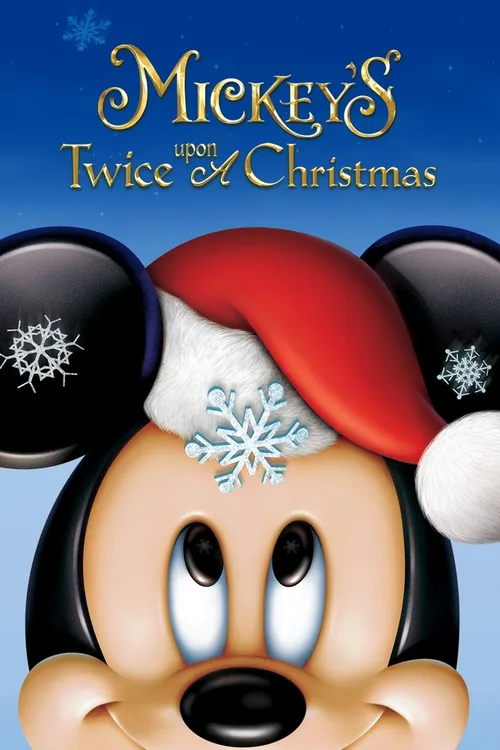
Mickey's Twice Upon a Christmas (2004)
Santa Claus, Mickey Mouse and all his Disney pals star in an original movie about the importance of opening your heart to the true spirit of Christmas. Stubborn old Donald tries in vain to resist the joys of the season, and Mickey and Pluto learn a great lesson about the power of friendship.
 rating 6/10 User rating 473 votes 70%
 ❄ Christmas Connection
Five interconnected Christmas stories starring Mickey Mouse and friends, covering everything from holiday ice skating and Santa's workshop to Christmas decorating disasters. Every segment revolves around a Christmas lesson or tradition.
Where to Watch


Our Review
Mickey's Twice Upon a Christmas arrived on DVD in November 2004 as the sequel to 1999's Mickey's Once Upon a Christmas. The original was a hand-drawn anthology with three segments. The sequel bumps that number to five and swaps traditional animation for CGI. On paper, more stories and newer technology should equal a better film. In practice, it's more complicated than that.
The 2004 sequel was produced by DisneyToon Studios and animated primarily by Blur Studio, making it one of the very first productions to render classic Disney characters in full computer animation. Mickey, Donald, Goofy, and the rest had existed as 2D drawings for over 70 years. Translating them into three dimensions was always going to be a gamble.
The Five Segments of Mickey's Twice Upon a Christmas
"Belles on Ice" opens the film with Minnie and Daisy competing in a holiday ice skating show. Their rivalry escalates from passive-aggressive choreography to full-on sabotage before they reconcile and perform together. It's slight but well-paced, and the skating animation is genuinely fluid. The segment works best as a showcase for what the CGI can do with movement and physics.
"Christmas Impossible" sends Huey, Dewey, and Louie to the North Pole after they land on Santa's naughty list. The boys wreak havoc at Santa's workshop, then clean up their mess, and in a genuinely sweet twist, use their chance to write on the nice list to add Scrooge McDuck's name instead of their own. Alan Young voicing a touched Scrooge on Christmas morning is the emotional highlight.
"Christmas Maximus" follows Max Goof bringing his friend Mona home for the holidays. Goofy embarrasses his college-aged son with baby photos and overbearing affection. Max eventually realizes his dad's goofiness is exactly why he loves him. It's a formula that worked in A Goofy Movie, and it works fine here, if less memorably. The character Mona exists because the animators couldn't figure out how to render Roxanne's flowing hair in CGI, which tells you something about the production's technical limitations.
Donald's Gift Is the Best Segment by a Wide Margin
"Donald's Gift" is where the film finds its voice. Donald Duck is driven slowly insane by the inescapable sound of "We Wish You a Merry Christmas." It plays in stores, on the radio, from carolers on every corner. He can't escape it. His frustration builds to the point where he accidentally destroys a mall window display and gets thrown out by security.
What makes this segment work is that it treats Donald's irritation as legitimate rather than as a character flaw to be corrected. Anyone who has endured the same five Christmas songs on loop from October through December will sympathize completely. Donald's eventual surrender to the holiday spirit feels less like a moral lesson and more like the resigned acceptance of someone who has simply been outnumbered.
Tony Anselmo's voice work as Donald carries real comedic timing. The character's angry, sputtering reactions to each new chorus of the song build like a slow-burn comedy sketch. This is the one segment that could stand alone as a short film without any apology.
Mickey's Dog-Gone Christmas and the Ending
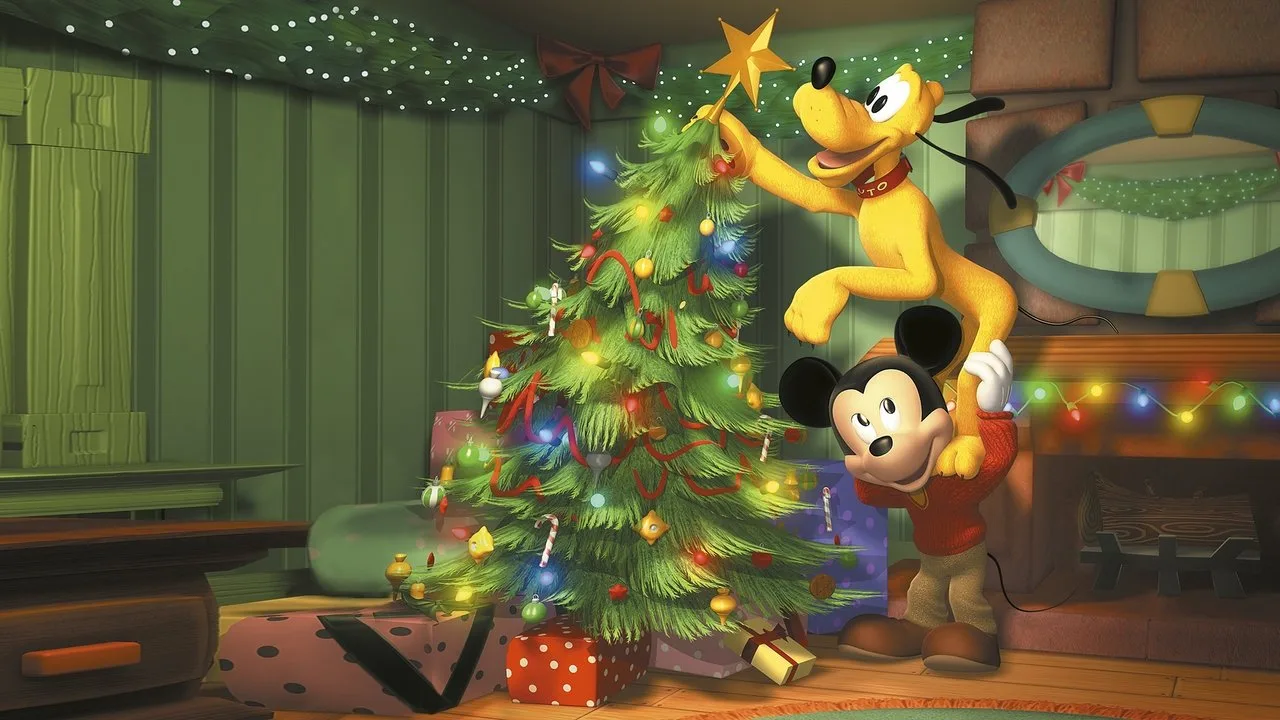
The final segment sends Pluto running away from home after he ruins Mickey's Christmas decorations. He ends up at the North Pole, adopted by Santa's reindeer, while Mickey searches the city with help from all his friends. Scrooge volunteers to buy a snowplow company for the search effort, which is an absurdly charming detail. Pluto eventually gets homesick and returns, and the ending brings the full cast together for the finale.
It's a perfectly adequate segment that does its job of tying the anthology together. The problem is that Pluto has no dialogue, so the emotional heavy lifting falls on reaction shots and body language. In traditional 2D animation, Disney artists excelled at this. In early 2000s CGI, the subtlety gets lost. Pluto's expressions read as slightly stiff rather than heartbreaking.
The CGI Question: Does Mickey Mouse Work in Three Dimensions?
The honest answer in 2004 was: not quite. Mickey Mouse's design is fundamentally built for two dimensions. The circular ears that always face the viewer, the simple dot eyes, the white gloves. These elements were perfected over decades of hand-drawn animation. Translating them into CGI strips away some of that graphic clarity.
The characters look like toys. Not in a Toy Story way, where the plastic quality is intentional and charming, but in a way that suggests the technology wasn't yet sophisticated enough to capture what makes these characters appealing on a flat page. Goofy fares best among the cast, probably because his lanky proportions and physical comedy translate more naturally to 3D space.
Disney would eventually crack this problem. The Mickey Mouse shorts that began airing in 2013 went back to stylized 2D, and projects like the 2017 DuckTales reboot found a visual language that honored the characters' graphic origins. But in 2004, the studio was still figuring it out.
The Cast Behind Mickey's Twice Upon a Christmas
Wayne Allwine voiced Mickey Mouse, a role he had held since 1977. Russi Taylor voiced both Minnie Mouse and the triplets Huey, Dewey, and Louie. In real life, Allwine and Taylor were married. They met at a 1988 recording session and married in 1991, making them quite possibly the most on-brand couple in entertainment history. They kept the marriage private, not wanting their personal lives to become a Mickey and Minnie novelty.
Bill Farmer doubled as both Goofy and Pluto. Alan Young returned as Scrooge McDuck, a role he'd been playing since Mickey's Christmas Carol in 1983. The veteran British actor brought more gravitas to Scrooge's brief screen time than the character probably required, which is exactly what made him great in the part.
Fun Facts
Mickey's Twice Upon a Christmas was DisneyToon Studios' first fully computer-animated film produced without Pixar's involvement. The animation was handled by Blur Studio, the same company that later created the opening cinematics for major video games.
The character Mona in "Christmas Maximus" replaced Roxanne from A Goofy Movie because the animators couldn't successfully render Roxanne's long, wavy hair in CGI.
Wayne Allwine (Mickey) and Russi Taylor (Minnie) were married in real life from 1991 until Allwine's death in 2009. Both were named Disney Legends in 2008.
At the 2005 DVD Exclusive Awards, the film won Best Original Score for a DVD Premiere Movie and received nominations for Best Screenplay and Best Animated Character Performance.
Alan Young voiced Scrooge McDuck continuously for over 40 years, from Mickey's Christmas Carol in 1983 through various Disney projects until his death in 2016 at age 96.
The film's predecessor, Mickey's Once Upon a Christmas (1999), was one of the best-selling direct-to-video Disney titles of its era, which greenlit this sequel.
Along with the Mickey's PhilharMagic theme park attraction (which opened in 2003), this film was among the first Disney productions to depict classic Mickey Mouse characters in full CGI animation.
Cast