Mickey's Once Upon a Christmas (1999)
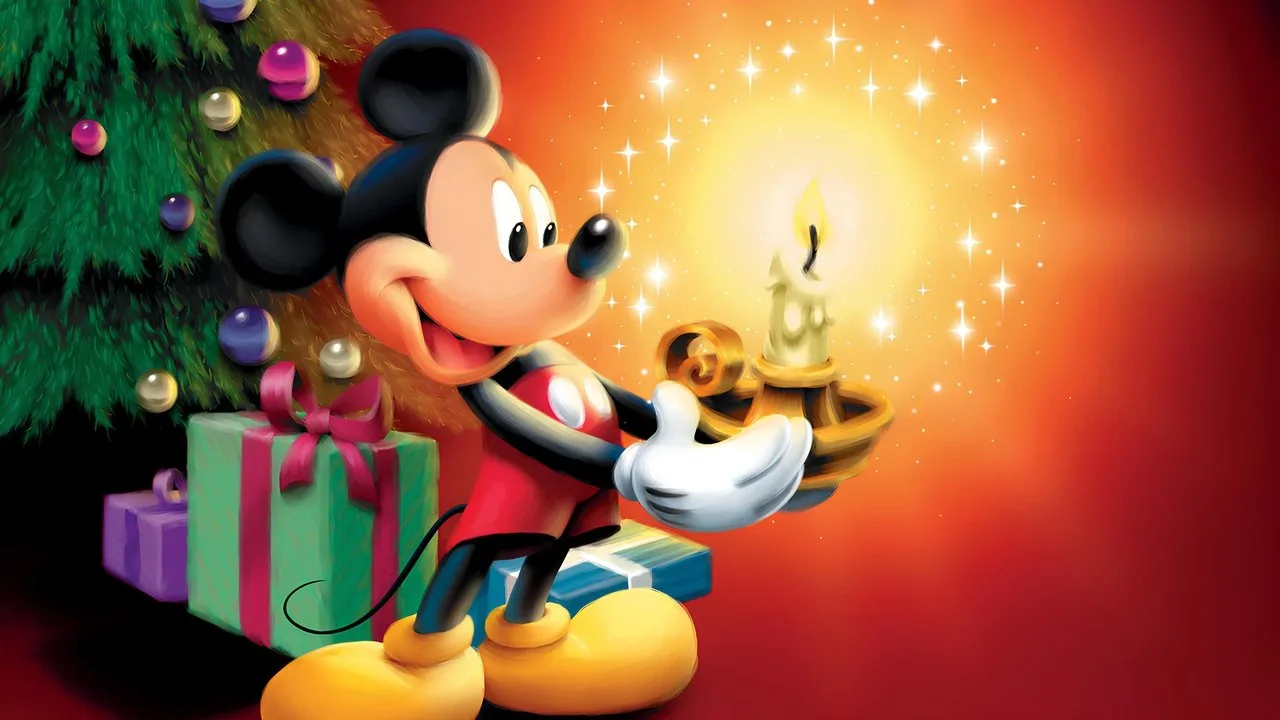
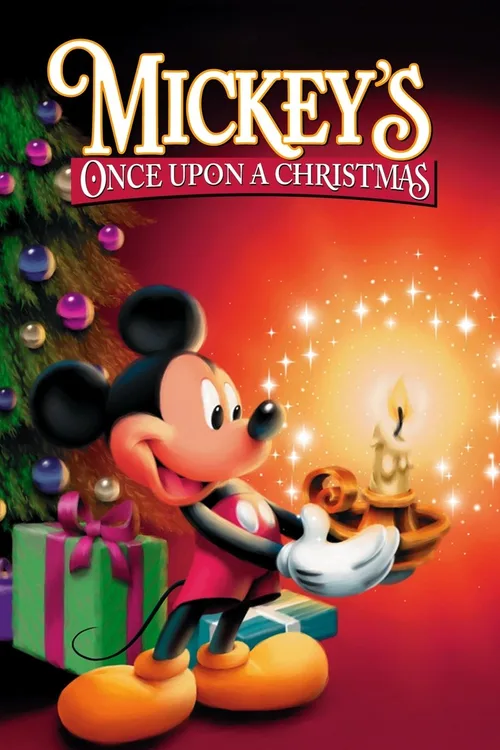
Mickey, Minnie, and their famous friends Goofy, Donald, Daisy and Pluto gather together to reminisce about the love, magic and surprises in three wonder-filled stories of Christmas past.
 rating 7/10 User rating 708 votes 71%
 ❄ Christmas Connection
Three interlocking Christmas stories featuring Disney's core characters. Every segment revolves around Christmas Day, from holiday wish fulfillment to gift-giving sacrifice to discovering the true meaning of the season.
Where to Watch


Our Review
Mickey's Once Upon a Christmas arrived direct-to-video in 1999, which in Disney terms usually signals a product that exists to sell VHS tapes at Walmart. The studio's direct-to-video output in the late '90s was, to put it gently, not where the prestige lived. So it's genuinely surprising that this 66-minute anthology holds together as well as it does, offering three distinct Christmas stories with three different emotional registers.
The film gives Mickey, Donald, and Goofy each their own segment, and the smartest decision was not forcing them to share the screen. Each story gets room to breathe.
Three Stories, Three Different Takes on Christmas
The structure is simple. Donald Duck and Daisy anchor "Stuck on Christmas," where Huey, Dewey, and Louie wish for Christmas Day to repeat forever. Goofy carries "A Very Goofy Christmas," where Max loses his belief in Santa Claus. Mickey and Minnie close the film with "Gift of the Magi," a retelling of the O. Henry classic.
The Donald segment is the strongest of the three by a comfortable margin. It takes the Groundhog Day premise and puts it in the hands of three young ducks who initially think repeating Christmas is the greatest thing that ever happened to them. Free presents every morning. No consequences. Every pie they throw at Donald's face resets by tomorrow.
The comedy escalates fast. They wreck the house. They terrorize the neighborhood. They treat Christmas dinner like a food fight. Then, slowly, the repetition stops being fun. The gifts lose their novelty. The chaos gets boring. They start paying attention to what the adults around them are actually doing on Christmas and realize there's more to it than presents.
It's a clever structure because it lets the film go broad and physical before pulling back into something sincere. The tonal shift doesn't feel forced because the kids earn it through exhaustion rather than a lecture.
Goofy, Santa, and the Question Every Kid Asks
"A Very Goofy Christmas" tackles the Santa Claus question directly, which is bolder than it sounds for a Disney property. Max's neighbor Pete (of course it's Pete) tells him Santa isn't real, and Max believes him because Pete's argument is grounded in basic logic. Chimneys are too small. The geography doesn't work. Reindeer can't fly.
Goofy's response isn't to counter with evidence. He just keeps believing, which drives Max crazy. There's a surprisingly poignant scene where Goofy climbs onto the roof on Christmas Eve to prove Santa is coming, and the silence stretches just long enough to make you wonder if the film is going to play it straight.
It doesn't, obviously. This is a Disney movie and Goofy is involved. But the segment gets more emotional mileage out of the father-son dynamic than you'd expect from a character whose primary skill is falling down stairs.
Mickey and Minnie's Gift of the Magi
The final segment is the most straightforward and the most predictable. Mickey sells his harmonica to buy Minnie a chain for her watch. Minnie sells her watch to buy Mickey a case for his harmonica. O. Henry wrote this irony in 1905, and it has been adapted roughly ten thousand times since.
What saves it from feeling redundant is the animation. The segment is set in a cozy, snow-covered town that looks like a Christmas card come to life. The character animation is warm and expressive, and there's a tenderness between Mickey and Minnie that the voice actors sell convincingly. Pluto's subplot about chasing the neighborhood cat adds physical comedy without derailing the sentiment.
It's the slightest of the three segments, but it works as a closer because it's the simplest emotionally. After Donald's existential time loop and Goofy's crisis of faith, a straightforward love story feels like the right note to end on.
The Animation Holds Up Better Than Expected
For a direct-to-video release, the animation quality is notably above the usual standard. The character designs stay on-model, the backgrounds have genuine texture, and the winter settings are rendered with care rather than slapped together from stock elements. The Donald segment in particular has strong visual comedy timing, with sight gags that land because the animators understood pacing.
Disney Television Animation handled the production, and this was clearly a project the team cared about. The hand-drawn style gives the film a warmth that ages better than the early CGI experiments Disney was running in the same era.
Mickey's Once Upon a Christmas originally released on VHS in November 1999 and became one of Disney's top-selling direct-to-video titles that holiday season. It spawned a sequel, Mickey's Twice Upon a Christmas, in 2004, which switched to CGI animation and lost most of the original's charm in the process. The 1999 film remains the stronger of the two, and it's now streaming on Disney+, where it routinely appears in the platform's most-watched Christmas content each December.
Fun Facts
Mickey's Once Upon a Christmas was released direct-to-video on November 9, 1999, and became one of the best-selling VHS titles of that holiday season.
The "Stuck on Christmas" segment featuring Donald Duck was inspired by the 1993 film Groundhog Day, applying its time-loop concept to Christmas Day.
Wayne Allwine voiced Mickey Mouse in the film. He had been Disney's official Mickey voice since 1977 and was married to Russi Taylor, who voiced Minnie Mouse in the same film.
The "Gift of the Magi" segment is based on the 1905 O. Henry short story of the same name, one of the most adapted Christmas stories in literary history.
Tony Anselmo voiced Donald Duck in the film. He learned the voice directly from Clarence Nash, the original Donald Duck voice actor, before Nash's death in 1985.
Bill Farmer, who voices Goofy, has been the character's official voice since 1987 and also voices Pluto in the film.
The sequel, Mickey's Twice Upon a Christmas (2004), was one of DisneyToon Studios' first fully CGI direct-to-video features, a stark visual departure from the hand-drawn original.
Cast