
Christmas in Philippines
The Philippines holds the world record for the longest Christmas season. It begins in September (when the 'ber' months start) and does not end until the Feast of the Three Kings on the first Sunday of January. In a country where over 80% of the population is Catholic, Christmas is the most important event of the year. Simbang Gabi, the nine-day pre-dawn Mass, and Noche Buena, the midnight feast, anchor a season that is celebrated with a fervor unmatched anywhere on earth.
No country on earth celebrates Christmas longer than the Philippines. The season starts on September 1, when radio stations begin playing Jose Mari Chan's 'Christmas in Our Hearts,' and it does not end until the Feast of the Three Kings in early January. That is four months of Christmas. In a country of 110 million people, over 80% of whom are Catholic, the holiday is not just the biggest event of the year. It is the organizing principle of the calendar.
Simbang Gabi: Nine Mornings in the Dark
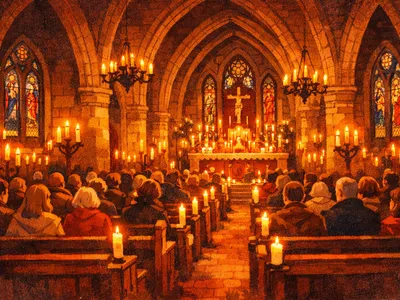
From December 16 to 24, millions of Filipinos wake before dawn to attend Simbang Gabi, a series of nine consecutive Masses. Services begin at 4 AM, and churches are packed. The tradition dates to the Spanish colonial era, when farmers attended early Mass so they could return to the fields by daylight. Completing all nine Masses is believed to grant a special wish.
The scene outside the church is as important as the service inside. Vendors sell bibingka (rice cake baked in clay pots with banana leaf lining) and puto bumbong (purple sticky rice steamed in bamboo tubes). These foods are eaten almost exclusively during Simbang Gabi. Their appearance marks the season as surely as any carol or decoration.
Noche Buena: The Midnight Feast
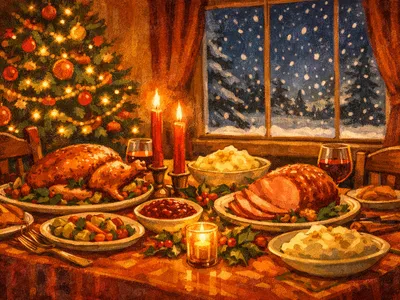
Christmas Eve dinner is the peak of Filipino Christmas. After Midnight Mass, families gather for Noche Buena, a feast that features lechon (whole roast pig), hamon (glazed ham), queso de bola (ball of Edam cheese in its red wax coating), pancit (noodles for long life), fruit salad with condensed milk, and leche flan. The table is abundant by design. Christmas generosity is measured in food.
The Parol: Light in the Tropics
The parol, a star-shaped lantern, is the most recognizable symbol of Filipino Christmas. Originally made from bamboo sticks and Japanese paper lit by a candle, modern parols use capiz shells, cellophane, and LED lights. They hang in windows, doorways, and streets across the country. The Giant Lantern Festival (Ligligan Parul) in San Fernando, Pampanga, features parols up to 20 feet in diameter with thousands of roving lights synchronized to music. San Fernando has earned the title 'Christmas Capital of the Philippines.'
Frequently Asked Questions
When does Christmas start in the Philippines?
The Filipino Christmas season starts on September 1, when the 'ber' months begin. Malls put up decorations, radio stations switch to Christmas music, and the countdown begins. The season runs until the Feast of the Three Kings in early January, making it the longest Christmas season in the world at over four months.
What is Simbang Gabi?
Simbang Gabi is a Filipino tradition of attending nine consecutive dawn Masses from December 16 to 24. Services start at 4 AM. Completing all nine is believed to grant a special wish. Outside the churches, vendors sell seasonal foods like bibingka and puto bumbong.
What is a parol?
A parol is a star-shaped lantern that is the quintessential Filipino Christmas decoration. Made from bamboo, paper, and capiz shells, parols represent the Star of Bethlehem. The Giant Lantern Festival in San Fernando, Pampanga, features parols up to 20 feet in diameter.
What is Noche Buena?
Noche Buena is the Filipino Christmas Eve feast, served after Midnight Mass. The table features lechon (roast pig), hamon (ham), queso de bola (Edam cheese), pancit (noodles), and fruit salad. It is the most important family meal of the Filipino year.
Traditions & Customs
Simbang Gabi (Nine Dawn Masses)
From December 16 to 24, Filipino Catholics attend Mass before dawn, often at 4 AM. Completing all nine masses is believed to grant a special wish. Outside the churches, vendors sell bibingka (rice cake) and puto bumbong (purple rice cake), which are eaten only during this season.
Noche Buena
The Christmas Eve feast after Midnight Mass is the biggest meal of the Filipino year. The table features lechon (whole roast pig), queso de bola (Edam cheese), hamon (glazed ham), pancit (noodles for long life), fruit salad, and leche flan.
Parol (Christmas Lantern)
The parol, a star-shaped lantern made from bamboo and paper (or now, capiz shells and LED lights), is the quintessential Filipino Christmas decoration. The Giant Lantern Festival in San Fernando, Pampanga, features parols up to 20 feet in diameter with thousands of lights.
Christmas Season from September
Filipinos begin celebrating Christmas on September 1, when the 'ber' months begin. Malls put up decorations, radio stations play Jose Mari Chan's 'Christmas in Our Hearts,' and the countdown starts. The four-month season is the longest in the world.
Aguinaldo (Gift-Giving)
Children visit godparents, aunts, uncles, and elderly relatives to pay respects and receive aguinaldo (gift money). The tradition reinforces family bonds and the importance of showing respect to elders during the holiday season.
Giant Lantern Festival
The Ligligan Parul in San Fernando, Pampanga, is held every December. Massive parol lanterns, some measuring 20 feet across with thousands of roving lights, compete in a dazzling display. San Fernando is known as the Christmas Capital of the Philippines.
Christmas Markets
Dapitan Arcade Christmas Market
Manila's largest Christmas decoration market, where vendors sell parols, ornaments, and holiday decor at wholesale prices. The market runs year-round but peaks from September to December.
Key Dates
Start of 'Ber' Months
The unofficial start of the Filipino Christmas season. Malls begin decorating, radio stations play Christmas music, and Jose Mari Chan memes flood social media.
Simbang Gabi
Nine consecutive dawn Masses, attended before sunrise. Completing all nine is believed to grant a wish. Bibingka and puto bumbong vendors set up outside churches.
Noche Buena
The Christmas Eve feast after Midnight Mass. The most important family meal of the year, featuring lechon, hamon, queso de bola, and Filipino sweets.
Pasko (Christmas Day)
A public holiday. Children visit relatives to receive aguinaldo. Families continue feasting with leftovers from Noche Buena.
Feast of the Three Kings
Marks the official end of the Filipino Christmas season. Many families keep decorations up until this date.
Christmas Carols
Christmas in Our Hearts
Written and performed by Jose Mari Chan in 1990. It is the unofficial anthem of Filipino Christmas and begins playing on radio stations on September 1. The song's opening notes signal the start of the season.
Pasko Na Naman
A classic Filipino Christmas song about the joy of the season returning. Its simple, heartfelt melody captures the Filipino spirit of Christmas celebration.
Ang Pasko ay Sumapit
One of the most traditional Filipino Christmas carols, announcing that Christmas has arrived. It is sung at Simbang Gabi services and family gatherings.