
Midnight Mass: The Christmas Eve Tradition Explained
For over 1,600 years, churches have opened their doors at the darkest hour of Christmas Eve. The tradition started with a single pilgrim's account of Bethlehem and became one of Christianity's most recognizable rituals.
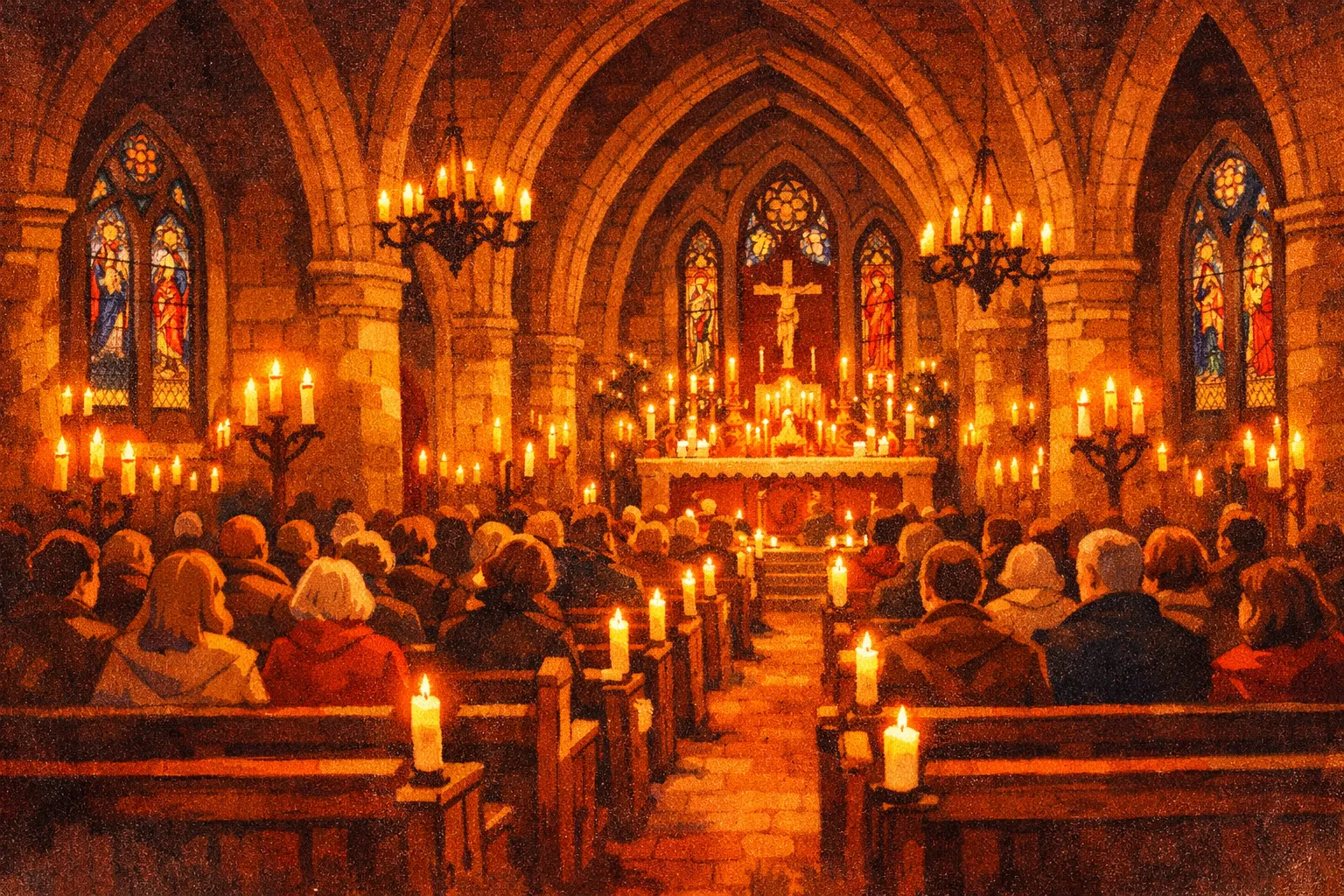
Midnight mass is the Christian liturgical service held on Christmas Eve, traditionally beginning at midnight to mark the moment Christmas Day begins. It is the oldest and most widely observed Christmas church service in the world, practiced across Catholic, Anglican, Lutheran, and many Protestant denominations. The core idea is simple: the congregation gathers in darkness to celebrate the birth of Christ at the hour tradition holds he was born.
Contents
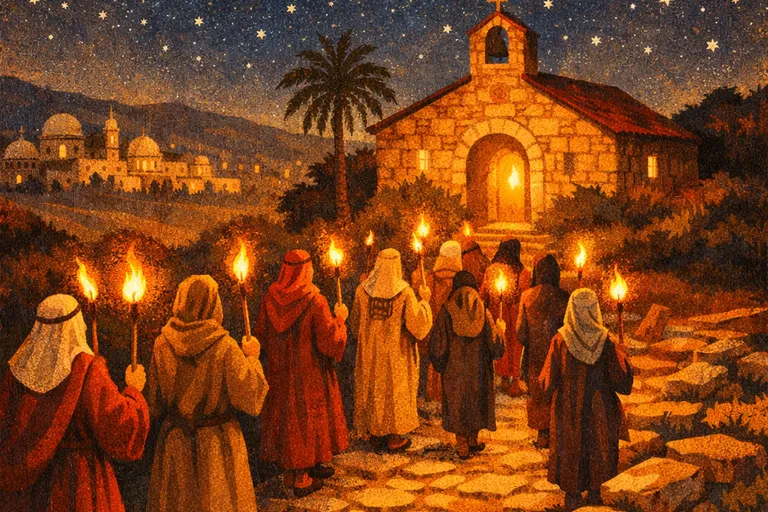
The practice dates back to at least the late 4th century. A pilgrim named Egeria, traveling through the Holy Land between 381 and 384 AD, described Christians in Jerusalem holding a midnight vigil in Bethlehem, then processing by torchlight to the Church of the Resurrection in Jerusalem, arriving at dawn. Her travel diary, now preserved in a single 11th-century manuscript in the municipal library of Arezzo, Italy, is the earliest surviving written account of the ritual.
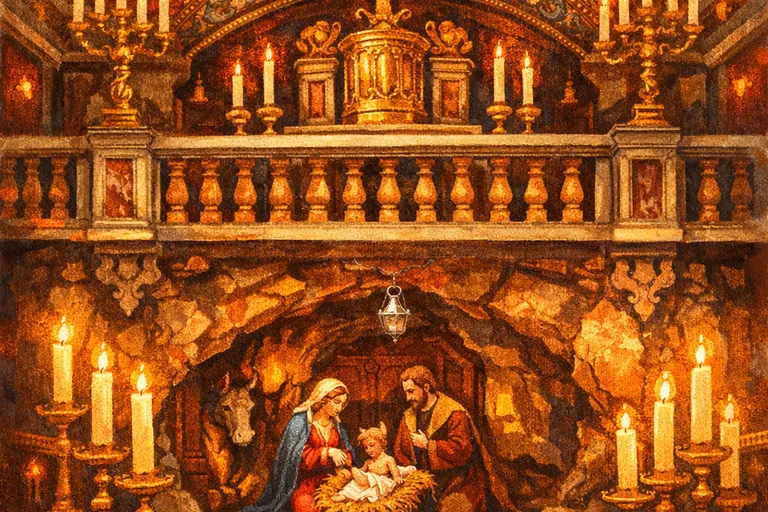
By the 5th century, the tradition had reached Rome. Pope Sixtus III, who led the Church from 432 to 440, built a grotto-like chapel beneath the Basilica of Santa Maria Maggiore, modeled after the Bethlehem cave where Jesus was believed to have been born. He celebrated Christmas mass at midnight in that chapel, and the practice stuck. Sixteen centuries later, churches across the globe still follow the same basic pattern.
Why Is There a Midnight Mass on Christmas Eve?
The timing is theological, not arbitrary. The Gospel of Luke describes Jesus' birth happening at night, with shepherds "keeping watch over their flock" when the angels appeared. Early Christians took this literally. If Christ was born in darkness, then the proper way to honor that birth was to gather in darkness.
There's also a symbolic layer. The contrast between the dark night and the light of Christ entering the world is central to Christian theology. Walking into a candlelit church at midnight makes that symbolism physical. You feel it. The darkness outside is real, the cold is real, and the light inside the church is real.
The practical explanation matters too. In the early centuries of Christianity, the liturgical day began at sundown, following the Jewish calendar convention. Christmas Day therefore started on the evening of December 24th. Midnight mass wasn't technically an "eve" service; it was the first service of Christmas Day itself.
What Happens at Midnight Mass?
The structure of midnight mass follows the standard format of a Christian worship service, but with readings and hymns specific to the Nativity. In the Catholic tradition, the service opens with a procession, often accompanied by "O Come, All Ye Faithful" or another Christmas hymn. The church is typically decorated with poinsettias, evergreens, and a nativity scene.
The Liturgy of the Word includes an Old Testament reading (usually from Isaiah, prophesying the coming of a savior), a responsorial Psalm, a New Testament reading, and the Gospel. The Gospel reading at midnight mass is Luke 2:1-14, the account of Jesus' birth in Bethlehem, the angelic announcement to the shepherds, and the famous line: "Glory to God in the highest, and on earth peace to people of good will."
After the homily comes the Liturgy of the Eucharist, where the priest consecrates bread and wine and distributes communion. The entire service typically runs 60 to 90 minutes, though in churches with elaborate choral programs, it can stretch longer. Many parishes begin with a prelude of Christmas carols 30 minutes before the actual mass starts.
The Three Masses of Christmas
Most people don't realize that the Catholic liturgical calendar actually calls for three separate masses on Christmas, not one. These are the Mass during the Night (midnight mass), the Mass at Dawn (sometimes called the Shepherd's Mass), and the Mass during the Day. Each has its own set of readings, prayers, and theological focus.
The midnight mass celebrates the physical birth of Christ. The dawn mass focuses on the shepherds spreading the news. The daytime mass shifts to the deeper theological mystery of the Incarnation, drawing from the opening of John's Gospel: "In the beginning was the Word."
For most of Church history, only the Pope had the privilege of celebrating all three masses on Christmas Day. It wasn't until around the 12th century that all priests were granted permission to celebrate three masses, provided they used the correct readings at each appointed time.
The History of Midnight Mass: From Bethlehem to the World
Egeria's account from the 380s describes a localized practice in Jerusalem. The ritual spread westward through the Roman Empire over the following decades. Pope Sixtus III's decision to build the Bethlehem-style grotto at Santa Maria Maggiore gave the tradition an official Roman home and a powerful piece of liturgical theater. Worshippers could descend into a cave-like space and feel, in some approximate way, what it might have been like to visit the birthplace.
The tradition grew steadily through the medieval period. By the High Middle Ages, midnight mass on Christmas Eve was standard practice across Western Christendom. It survived the Protestant Reformation in some traditions and was abandoned in others. The Church of England dropped midnight services after the Reformation, preferring a morning communion on December 25th. But by the mid-19th century, riding a wave of nostalgia for "Olde English Christmas" customs, Anglican churches brought it back.
Lutheran churches in Germany and Scandinavia maintained the tradition more consistently. Christmas Eve in Lutheran tradition features Krippenspiele (nativity plays), brass choir music, and candlelight services, often culminating in a midnight Eucharist. For many German families, the Christvesper (Christmas Vespers) in the early evening and the midnight service bookend the entire celebration.
Midnight Mass Traditions Around the World
The basic framework is the same everywhere, but the cultural variations are striking.
In Spain and across Latin America, midnight mass is called "Misa de Gallo," literally "Rooster's Mass." The name comes from the legend that the only time a rooster ever crowed at midnight was the night Christ was born. Spanish families traditionally light small oil lamps in every room of the house before walking to church together.
The Philippines takes the concept further than anywhere else. Simbang Gabi is a series of nine dawn masses held daily from December 16 through December 24, with the final mass on Christmas Eve being the true Misa de Gallo. The tradition originated as a practical accommodation for farmers who needed to be in the fields before sunrise. Over centuries, it became the defining feature of Filipino Christmas. After each mass, churchgoers buy bibingka (rice cakes cooked over coals) and puto bumbong (steamed purple rice cakes with coconut and brown sugar) from vendors outside the church.
In Venezuela, the Misa de Gallo is one of a series of dawn masses called Misa de Aguinaldo, similar to the Filipino practice. In Puerto Rico, the congregation sings aguinaldos, traditional Christmas songs, during the service.
The Shift Away from Actual Midnight
Here's the thing most articles about midnight mass won't tell you: most "midnight masses" no longer happen at midnight. In the United States, the majority of Catholic parishes now offer their Christmas Eve mass at 10:00 PM, 8:00 PM, or even as early as 4:00 PM for families with young children. The Vatican itself moved the papal Christmas mass earlier. Pope Benedict XVI began celebrating it at 10:00 PM, and Pope Francis has continued that practice.
The reasons are practical. Aging congregations don't want to drive home at 1:30 AM. Families with small children can't keep them awake. Priests who must celebrate multiple masses on Christmas Day need rest. The Roman Missal technically calls the service "Mass during the Night," not "Midnight Mass," giving parishes flexibility on the exact start time.
Some traditionalists mourn this shift. There's an undeniable difference between walking into a church at 11:30 PM on Christmas Eve and attending what amounts to an early evening service. The darkness, the cold, the sense of keeping vigil while the rest of the world sleeps: that atmosphere is part of what made midnight mass singular for over a millennium.
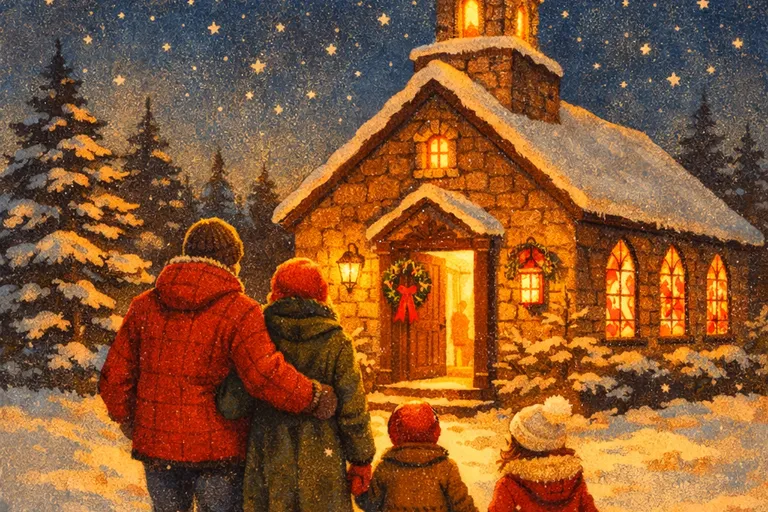
The Meaning of Midnight Mass Beyond Religion
Midnight mass draws people who don't attend church at any other time of year. Surveys consistently show that Christmas Eve services are the most attended church events in the Christian calendar, surpassing even Easter. For many, it's the one annual point of contact with organized religion.
That says something about the ritual's power. The combination of music, candlelight, familiar readings, and a late-night hour creates a specific emotional register that's hard to replicate elsewhere. Even for non-believers or lapsed churchgoers, midnight mass often carries personal weight: memories of going with grandparents, the smell of incense in a particular church, hearing a choir sing "Silent Night" with the lights dimmed.
In Central European countries like the Czech Republic, Slovakia, and Poland, midnight mass (known as "pasterka" in Polish, or "pulnocni mse" in Czech) holds a particularly strong cultural position. Even during the Communist era, when religious practice was officially discouraged, Christmas Eve midnight mass remained one of the few church services that large numbers of people continued to attend. It was an act of quiet cultural persistence as much as religious devotion.
Frequently Asked Questions
Why is there a midnight mass on Christmas Eve?
Midnight mass is held on Christmas Eve because early Christians believed Jesus was born at night, based on the Gospel of Luke's account of shepherds keeping watch over their flocks. The liturgical tradition dates to at least 381 AD, when the pilgrim Egeria recorded a midnight vigil in Bethlehem. The timing also carries symbolic meaning: Christ as the light entering the world's darkness.
What happens at a midnight mass service?
A midnight mass follows the standard structure of a Christian worship service with readings and hymns specific to the Nativity. It typically includes Scripture readings from Isaiah and Luke's Gospel (the birth narrative), a homily, the celebration of the Eucharist (communion), and Christmas hymns. Most services last between 60 and 90 minutes, often preceded by a 30-minute carol prelude.
Do you have to be Catholic to attend midnight mass?
No. Midnight mass is open to anyone, regardless of religious affiliation. Non-Catholics are welcome to attend, participate in the prayers and hymns, and listen to the readings. The only restriction is that non-Catholics should not receive communion (the Eucharist) during a Catholic service. Many Protestant and Anglican churches also hold their own Christmas Eve services.
What time does midnight mass actually start?
Despite the name, most parishes no longer begin at midnight. In the United States and many other countries, "midnight mass" commonly starts at 10:00 PM, 8:00 PM, or even as early as 4:00 PM for family-friendly services. The Vatican's papal Christmas mass has started at 10:00 PM since Pope Benedict XVI's papacy. The Roman Missal officially calls it "Mass during the Night," allowing flexibility.
What is Misa de Gallo?
Misa de Gallo, Spanish for "Rooster's Mass," is the term used in Spain, Latin America, and the Philippines for midnight mass on Christmas Eve. The name refers to the legend that a rooster crowed at midnight the night Christ was born. In the Philippines, it is the culminating service of Simbang Gabi, a nine-day series of dawn masses held from December 16 to 24.
How old is the midnight mass tradition?
The earliest written record of a Christmas midnight vigil dates to between 381 and 384 AD, documented by the pilgrim Egeria in Bethlehem. Pope Sixtus III formalized the practice in Rome around 432-440 AD by celebrating midnight mass in a grotto chapel beneath the Basilica of Santa Maria Maggiore. The tradition has been continuously practiced for over 1,600 years.