
Christmas in Slovakia
Slovak Christmas mirrors Czech traditions in many ways but retains its own character. Stedry vecer (Generous Evening) on December 24 features a meatless supper with kapustnica (sauerkraut soup), lokse (potato flatbread), and oplatky (Christmas wafers). The Jezisko (Baby Jesus) brings gifts, and the folk traditions of central Slovakia, with their intricate betlehems (nativity plays) and fujara music, give Slovak Christmas a distinctly Carpathian flavor.
Slovak Christmas shares DNA with Czech traditions but has its own Carpathian character. The oplatky ritual, the kapustnica debate, the invisible Jezisko: these elements parallel Czech customs but are practiced with distinctly Slovak inflections. Add the folk traditions of central Slovakia, the betlehemci nativity plays, and the fujara music echoing through mountain valleys during Advent, and you have a Christmas that is unmistakably Slovak.
Stedry vecer: The Generous Evening
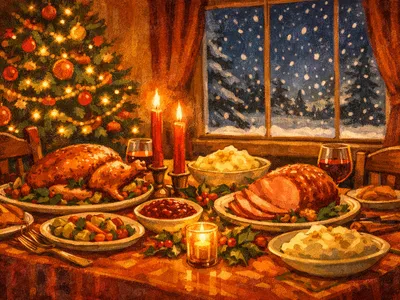
Christmas Eve in Slovakia follows the same template as in the Czech Republic: fasting during the day (children watch for the golden piglet), an evening meal beginning when the first star appears, fortune-telling after dinner, and Midnight Mass. The differences are in the details. Where Czechs eat fried carp, Slovaks eat fish too but give greater prominence to kapustnica, a sauerkraut soup that is the national Christmas dish.
The meal begins with the sharing of oplatky (Christmas wafers) spread with honey. Each family member takes a wafer and offers wishes for health and happiness to every other person at the table. The ritual is intimate and often emotional, particularly when empty chairs remind the family of absent members. Oplatky are also mailed to relatives living abroad.
Kapustnica: The National Debate
Every Slovak family makes kapustnica for Christmas Eve, and every family is certain that their recipe is the correct one. The basic ingredients are sauerkraut, dried mushrooms, and cream or sour cream. The controversy centers on protein: purists insist on a meatless version for Christmas Eve, while many families add smoked sausage, dried plums, or both. The debate is conducted annually and with passion. A national survey would likely produce as many recipes as respondents.
Betlehemci and Folk Christmas
In central Slovakia, particularly in the Liptov, Orava, and Spis regions, groups of betlehemci (nativity players) travel from house to house during the Christmas season performing short dramatic pieces about the birth of Christ. The players wear folk costumes and carry a small portable nativity scene (betlehem). The tradition has roots in medieval mystery plays and has been maintained without interruption in many villages.
The fujara, Slovakia's iconic overtone flute (recognized by UNESCO in 2005), is associated with pastoral culture and appears in Advent and Christmas musical performances. Its deep, meditative sound is the aural equivalent of a mountain valley at dusk: vast, resonant, and unmistakably Slovak.
Frequently Asked Questions
What is kapustnica?
Kapustnica is a sauerkraut soup that is Slovakia's most important Christmas dish. Made with sauerkraut, dried mushrooms, and cream, it is served on Christmas Eve. Whether it should include sausage or remain meatless is a long-standing national debate.
Who brings gifts in Slovakia?
Jezisko (Baby Jesus) brings gifts on Christmas Eve. Like the Czech Jezisek, Jezisko is never seen. A bell rings to signal that presents have appeared under the tree. Mikulas (St. Nicholas) brings smaller treats on December 6.
What are oplatky?
Oplatky are thin, round wafers stamped with nativity images, shared with honey at the start of Christmas Eve supper. Each family member breaks a piece of wafer with every other person, offering wishes for the coming year. The ritual parallels the Polish oplatek tradition.
Traditions & Customs
Stedry vecer (Generous Evening)
The Christmas Eve supper is the most important meal of the Slovak year. The table is set with a white cloth over hay, and an extra place is laid for an unexpected guest. Oplatky (thin wafers) are shared with honey before the meal, similar to the Polish oplatek tradition.
Kapustnica
Sauerkraut soup with dried mushrooms, sausage, and cream is the essential Slovak Christmas dish. Every family has its own recipe, and the debate over whether kapustnica should be meatless or contain sausage is a recurring national discussion.
Jezisko (Baby Jesus)
Like the Czech Jezisek, the Slovak Jezisko brings gifts on Christmas Eve. He is invisible and rings a bell to announce that presents have appeared under the tree. The tradition is deeply ingrained in Slovak culture.
Betlehemci (Nativity Players)
Groups of betlehemci travel from house to house performing short nativity plays during Advent and Christmas. The tradition is strongest in central Slovakia and the Spis region, where elaborate folk costumes accompany the performances.
Mikulas (December 6)
Mikulas visits children with an angel and a devil, identical to the Czech tradition. Good children receive chocolate and fruit; naughty ones receive coal or garlic from the devil. The trios roam the streets in the evening of December 5.
Fortune-Telling
Slovak Christmas Eve includes fortune-telling rituals similar to Czech ones: cutting apples, pouring lead, and pulling straws from beneath the tablecloth. These folk customs coexist naturally with the religious celebration.
Christmas Markets
Bratislava Christmas Market
Set in the Hlavne namestie (Main Square) and Hviezdoslavovo namestie in the old town, Bratislava's market features traditional Slovak crafts, lokse, medovina (honey wine), and varocne punciky (Christmas punch).
Kosice Christmas Market
Slovakia's second city hosts a market on the Hlavna ulica (Main Street), the longest pedestrian avenue in Europe. The market features eastern Slovak specialties and crafts from the Spis region.
Key Dates
Mikulas Eve
Mikulas, an angel, and a devil visit children. The tradition is identical to the Czech Mikulash and is observed across Slovakia.
Stedry vecer (Christmas Eve)
The main celebration. Oplatky with honey, kapustnica, fish, and other meatless dishes. Jezisko brings gifts. Many families attend Midnight Mass (polnocna omsa).
Vianoce (Christmas Days)
Both are public holidays. December 25 features a meat-based festive dinner. December 26 (Druhy sviatok vianocny) is for visiting family.
Tri krali (Three Kings Day)
Epiphany marks the end of the Christmas season. Children go door to door as the Three Kings, singing and collecting for charity. Doorframes are marked with K+M+B in blessed chalk.
Christmas Carols
Born Is Christ the Lord
Narodil sa Kristus PanThe most important Slovak Christmas carol, equivalent to the Czech version. It is sung at Midnight Mass and during family celebrations on Christmas Eve.
Silent Night
Ticha nocThe Slovak version of Silent Night, a standard part of every Christmas Eve celebration and church service.
Shepherds, Arise
Pampajdi, pastieri, pampajdiA lively Slovak pastoral carol about shepherds being called to Bethlehem. Its energetic melody makes it a favorite for group singing.