
Christmas Cactus Care, History and How to Make It Bloom
It's not from the desert, it doesn't need sand, and the one your grandmother gave you might outlive your house. The Christmas cactus is one of the most misunderstood and longest-lived houseplants on Earth.
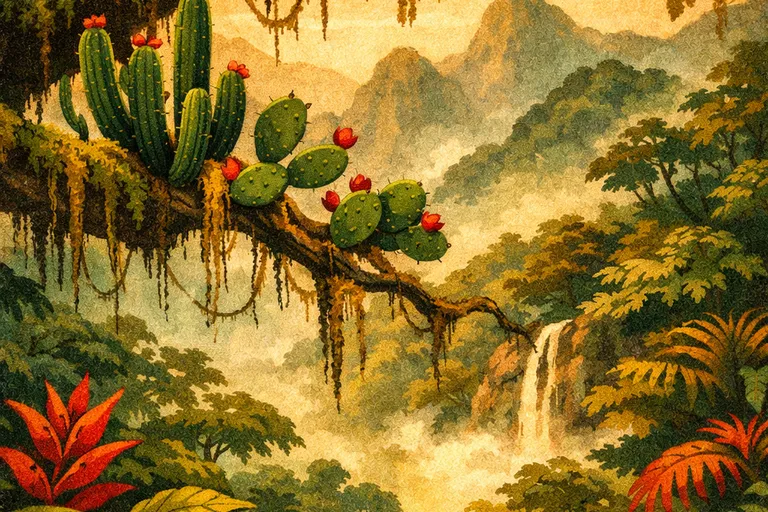
The Christmas cactus is not a desert plant. That single fact trips up more well-meaning plant owners than any other piece of gardening misinformation. Schlumbergera, the genus behind every Christmas cactus on every grandmother's windowsill, grows wild in the coastal mountains of southeastern Brazil, clinging to tree branches and rock faces in shady, humid forests between 700 and 2,800 meters above sea level. It's an epiphyte, meaning it grows on other plants for support, not in sandy soil under a blazing sun.
Contents
- 1. Where Does the Christmas Cactus Come From?
- 2. How the Christmas Cactus Got Its Name
- 3. Christmas Cactus Care: Light, Water, and Temperature
- 4. How to Make a Christmas Cactus Bloom
- 5. Christmas Cactus vs. Thanksgiving Cactus
- 6. How Long Does a Christmas Cactus Live?
- 7. Why the Christmas Cactus Became a Holiday Gift Plant
- 8. Frequently Asked Questions
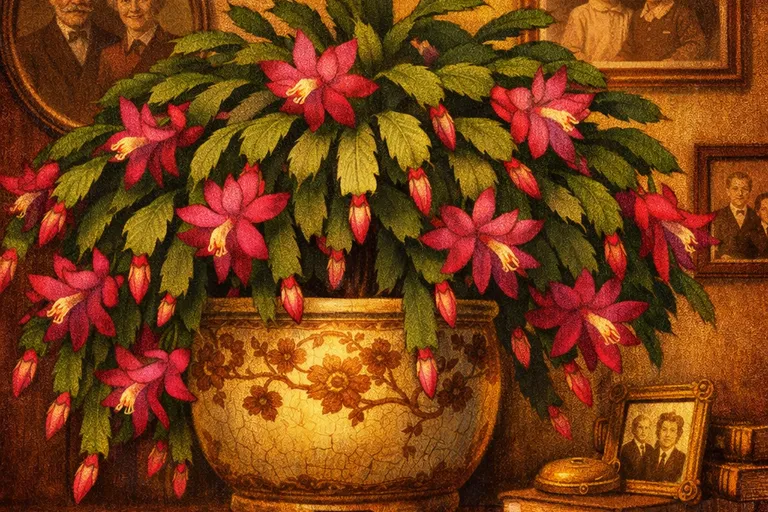
With proper care, a Christmas cactus can live for over a century. Some documented specimens have been passed through four or five generations of the same family, blooming faithfully every December. That 111-year-old plant displayed at an office in Bismarck, North Dakota? It started as a cutting from someone's great-great-grandmother's cactus in the late 1800s.
Where Does the Christmas Cactus Come From?
The Christmas cactus originates from the Mata Atlantica, the Atlantic Forest biome that stretches along Brazil's southeastern coast in the states of Sao Paulo, Rio de Janeiro, Minas Gerais, and Espirito Santo. This is one of the most biodiverse regions on the planet. The conditions there are nothing like a desert: cool temperatures, heavy mist, dappled shade from a dense tree canopy, and constant humidity from the nearby Atlantic Ocean.
European collectors first brought Schlumbergera truncata to cultivation at Kew Gardens in London in 1818, courtesy of British botanist Allan Cunningham. A second species, Schlumbergera russelliana, arrived in Europe in 1839. In the 1840s, a nurseryman named William Buckley at the Rollisson Nurseries in England crossed the two species, producing the hybrid Schlumbergera x buckleyi, first recorded in 1852. That hybrid is what most people today call the "true" Christmas cactus.
French botanist Charles Lemaire named the genus Schlumbergera in 1858, honoring Frederic Schlumberger, a French collector who maintained a notable cactus collection at his chateau near Rouen.
How the Christmas Cactus Got Its Name
The plant's common name is simple biology. In the Southern Hemisphere, where it originated, Schlumbergera blooms during the local autumn and winter. Flip that to the Northern Hemisphere, and the bloom cycle lines up almost perfectly with late November through early February, peaking right around Christmas.
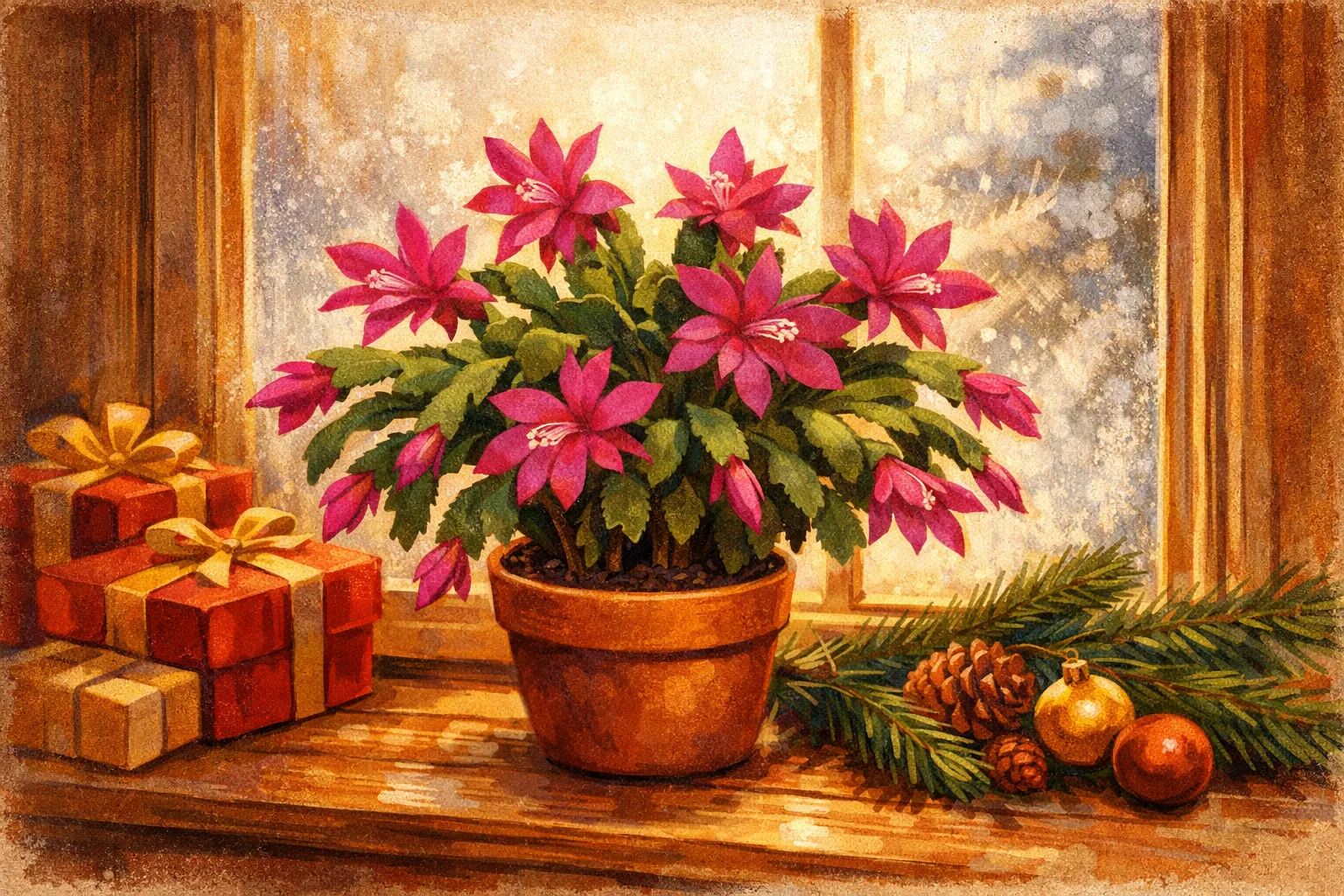
Victorian-era gardeners seized on this timing. By the 1860s, the Christmas cactus was a prized ornamental in heated greenhouses and parlors across Britain and Europe. It bloomed when almost nothing else would, producing bright, pendulous flowers in shades of magenta and pink during the darkest, coldest weeks of the year. The name stuck because the plant delivered its spectacle on schedule.
Christmas Cactus Care: Light, Water, and Temperature
If you remember that this plant comes from a shady, humid forest canopy and not a sunbaked desert, care becomes intuitive.
Light
Bright, indirect light is ideal. A north-facing or east-facing window works well. Direct sunlight, especially harsh afternoon sun, will stress the plant. If the flat, segmented stems start turning red or purplish, that's the plant telling you it's getting too much light. Move it back from the window or add a sheer curtain.
Christmas Cactus Watering
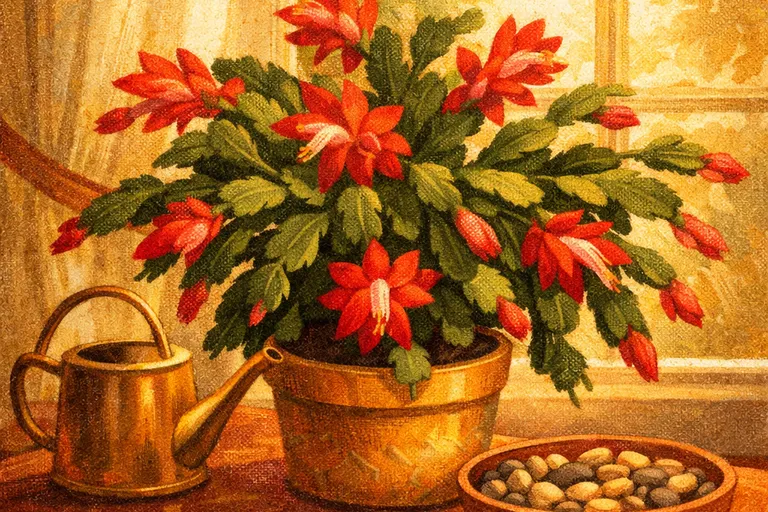
This is where most people go wrong. Because it has "cactus" in the name, they water it like a desert succulent, which is to say, almost never. Christmas cacti need more moisture than typical cacti. Water thoroughly when the top inch or two of soil feels dry. Let the excess drain completely and never leave the pot sitting in a saucer of standing water for more than 15 minutes.
During the fall bloom-preparation period, reduce watering slightly. After flowering ends, cut back watering for about 30 days to give the plant a rest period. Resume normal watering when you see new growth appearing.
Temperature
Daytime temperatures between 60 and 70 degrees Fahrenheit (15 to 21 Celsius) suit the plant best. Nighttime lows around 50 to 55 Fahrenheit (10 to 13 Celsius) are actually beneficial, especially during the bud-setting period. The biggest enemy is sudden temperature swings. Keep it away from heating vents, radiators, fireplaces, and drafty doors. A stable environment prevents the heartbreak of bud drop, where a plant that looked ready to bloom suddenly sheds all its buds overnight.
Humidity matters too. These plants evolved in misty cloud forests. A pebble tray filled with water beneath the pot helps. So does grouping it with other plants.
How to Make a Christmas Cactus Bloom
A healthy Christmas cactus that refuses to bloom is almost always missing one of two triggers: darkness or cool temperatures. The plant needs both to set buds.
Starting about six to eight weeks before you want flowers (mid-September to early October if you're aiming for December blooms), give the plant 12 to 14 hours of uninterrupted darkness every night. "Uninterrupted" means total darkness. Even a brief flash of artificial light, switching on a lamp in the room, scrolling your phone nearby, can reset the clock and prevent bud formation. Many growers place the plant in a closet, a spare bedroom, or cover it with a box each evening.
During the same period, keep nighttime temperatures around 50 to 55 Fahrenheit. This cool-and-dark combination mimics the conditions of a Brazilian autumn in the mountains, where shorter days and cooler nights signal the plant to begin its reproductive cycle.
Reduce watering during this phase and stop fertilizing entirely. Once buds appear, you can move the plant back to its normal spot and resume regular care. Just don't rotate or relocate the plant once buds are forming. Christmas cacti are sensitive to changes in light direction, and moving them can cause buds to drop.
Christmas Cactus vs. Thanksgiving Cactus
Here's a fact that has ruined Thanksgiving dinners: most plants sold in stores as "Christmas cactus" are actually Thanksgiving cactus (Schlumbergera truncata). The two are closely related, both in the same genus, but they're distinct plants with different bloom times and, crucially, different leaf shapes.
The easiest way to tell them apart is to look at the edges of the stem segments (the flat, leaf-like pads). Thanksgiving cactus has pointed, claw-like projections along the edges. The points are sharp and jagged, almost like tiny saw teeth. The true Christmas cactus (Schlumbergera x buckleyi) has smooth, scalloped, rounded edges with no points at all.
Other differences:
- Bloom time: Thanksgiving cactus blooms from mid-November through late December. True Christmas cactus blooms from late December through February.
- Flower orientation: Thanksgiving cactus flowers project outward, almost horizontally. Christmas cactus flowers hang straight down.
- Flower shape: Thanksgiving cactus has asymmetrical flowers. Christmas cactus flowers are more symmetrical and tubular.
There's also an Easter cactus (Rhipsalidopsis gaertneri), which blooms in spring and has star-shaped flowers. All three are commonly lumped together as "holiday cacti." If your plant bloomed right around Thanksgiving and has pointy leaf edges, you have a Thanksgiving cactus regardless of what the label at the store said.
How Long Does a Christmas Cactus Live?
The Christmas cactus is one of the longest-lived houseplants in common cultivation. A well-cared-for specimen will easily reach 20 to 30 years. Many live 50 years or more. The documented upper range exceeds a century.
One of the most famous examples was a plant in Bismarck, North Dakota, confirmed to be at least 111 years old as of 2013. It had been passed down through multiple generations, propagated from cuttings taken from the original plant. Another documented case traces back to a plant given to Dora Reamer when she married William Hoffman in Peoria, Illinois, in 1893. That cactus was already more than three years old at the time.
The plant's longevity makes propagation straightforward. Twist off a segment with two or three pads, let the cut end dry for a day or two, and stick it in moist potting mix. Within a few weeks, it will root. This ease of propagation is exactly why Christmas cacti become family heirlooms. One plant becomes five becomes twenty, each one a genetic clone of the original, spreading through a family like a living inheritance.
Why the Christmas Cactus Became a Holiday Gift Plant
The Christmas cactus occupies a peculiar niche in the holiday gift economy. It's not flashy like a poinsettia, which makes a bold red statement and then dies in your kitchen within six weeks. The Christmas cactus is the slow-burn gift. It looks modest when you receive it, but it's still blooming on your windowsill when the poinsettia is long gone, and it's still there five Christmases later.
Victorian-era Europeans drove the first wave of popularity. By the 1860s, over 200 cultivars existed in a range of colors, from white and pale pink to deep magenta and salmon. The plant adapted well to indoor conditions, thrived in the relatively cool, low-light environments of European homes, and reliably produced flowers during the holiday season.
Its gift appeal goes beyond aesthetics. A Christmas cactus is low-maintenance, long-lived, and easy to propagate. You can share cuttings from a single plant with dozens of friends and family members. The Missouri Botanical Garden notes that the true Christmas cactus (S. x buckleyi) remains among the most popular winter-flowering houseplants worldwide, with commercial growers producing millions of plants annually for the holiday market.
In parts of Central Europe, receiving a blooming Christmas cactus is considered a sign of good luck for the coming year. The plant doesn't just survive the holidays. If you treat it right, it survives the century.
Frequently Asked Questions
How often should you water a Christmas cactus?
Water your Christmas cactus when the top one to two inches of soil feel dry. During active growth and blooming (fall through winter), this typically means once every one to two weeks. After blooming, reduce watering for about 30 days and resume when new growth appears. Always let excess water drain and never leave the pot in standing water.
Why is my Christmas cactus not blooming?
The most common reason is insufficient darkness during the bud-setting period. Christmas cacti need 12 to 14 hours of complete, uninterrupted darkness each night for six to eight weeks before the desired bloom date. Cool nighttime temperatures around 50 to 55 degrees Fahrenheit also help trigger bud formation. Even brief exposure to artificial light during the dark period can prevent blooming.
How can you tell a Christmas cactus from a Thanksgiving cactus?
Look at the edges of the flat stem segments. A Thanksgiving cactus (Schlumbergera truncata) has pointed, claw-shaped projections along the segment edges. A true Christmas cactus (Schlumbergera x buckleyi) has smooth, rounded, scalloped edges with no sharp points. Thanksgiving cacti also bloom earlier, typically mid-November, while Christmas cacti bloom in late December through February.
How long can a Christmas cactus live?
Christmas cacti are among the longest-lived houseplants, commonly reaching 20 to 30 years with basic care. Many specimens survive 50 years or more, and documented examples have exceeded 100 years. Their ease of propagation through stem cuttings means a single plant can be passed down through multiple generations as a living family heirloom.
Where is the Christmas cactus originally from?
The Christmas cactus (genus Schlumbergera) is native to the coastal mountains of southeastern Brazil, in the states of Sao Paulo, Rio de Janeiro, Minas Gerais, and Espirito Santo. It grows as an epiphyte on tree branches and rocks in cool, shady, humid cloud forests at elevations between 700 and 2,800 meters. It was first brought to Europe in 1818.
Is a Christmas cactus a good gift?
Christmas cacti are excellent gift plants because they bloom during the holiday season, require minimal care, and can live for decades or even over a century. Unlike poinsettias, which are often discarded after the holidays, a Christmas cactus can become a long-term houseplant. They are also easy to propagate from cuttings, making them ideal for sharing with family and friends.