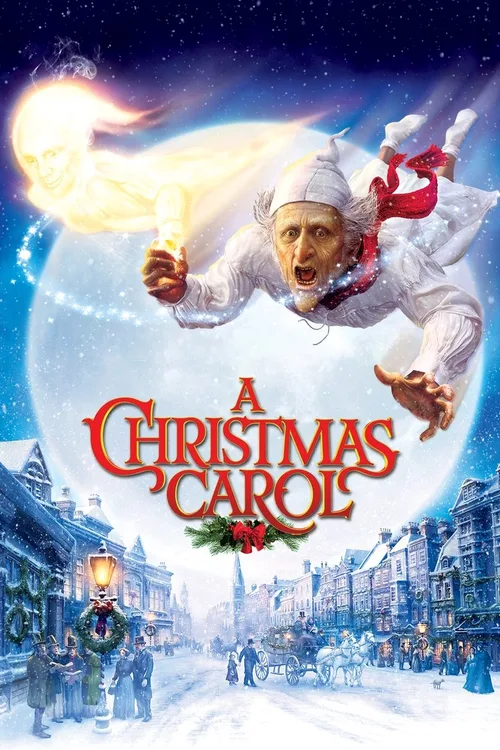
Christmas comes but once a year, but for one man, that's once too often.
A Christmas Carol (2009)
Miser Ebenezer Scrooge is awakened on Christmas Eve by spirits who reveal to him his own miserable existence, what opportunities he wasted in his youth, his current cruelties, and the dire fate that awaits him if he does not change his ways. Scrooge is faced with his own story of growing bitterness and meanness, and must decide what his own future will hold: death or redemption.
 rating 7/10 User rating 4,854 votes 69%
 ❄ Christmas Connection
The entire story is about Christmas Eve and Christmas Day. Scrooge's redemption is triggered by the ghosts of Christmas Past, Present, and Yet to Come. It is the most influential Christmas story ever written, and every adaptation is a Christmas movie by definition.
Where to Watch


Our Review
Charles Dickens wrote "A Christmas Carol" in six weeks during the autumn of 1843, partly because he needed money and partly because he was furious about child labor in London. The novella sold out its first print run of 6,000 copies by Christmas Eve. Nearly two centuries later, it remains the most adapted Christmas story in history, with over 130 film and television versions. The 2009 animated adaptation starring Jim Carrey is one of the most visually ambitious of the lot, though whether ambition equals quality is another question entirely.
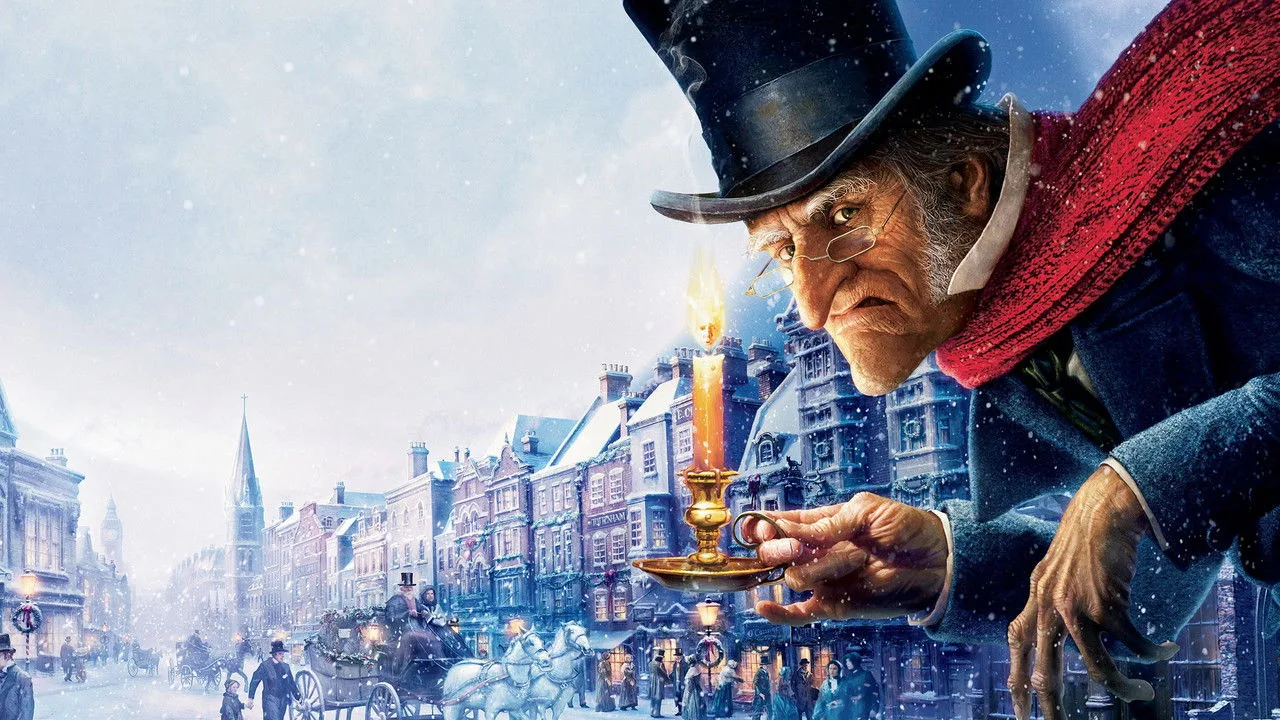
Jim Carrey's 2009 A Christmas Carol
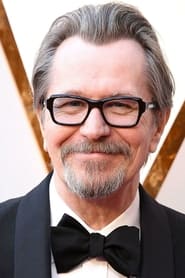
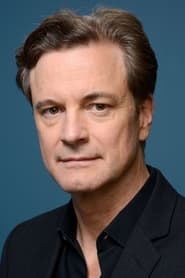
Robert Zemeckis directed the 2009 "A Christmas Carol" using the same performance capture technology he'd deployed on "The Polar Express" five years earlier. Jim Carrey played Scrooge, plus the Ghosts of Christmas Past, Present, and Yet to Come. Gary Oldman took on Bob Cratchit, Marley, and Tiny Tim. Colin Firth played nephew Fred. The cast is stacked.
The animation is impressive on a technical level. Victorian London feels dense, atmospheric, and cold. Snow doesn't just fall; it settles on cobblestones and lampblack-stained brick. Zemeckis and his team at ImageMovers Digital rendered every breath of fog, every candle flame, every cracked window pane with obsessive detail. The film cost $175 million to make.
The problem is the uncanny valley. Performance capture in 2009 could map an actor's expressions onto a digital face, but it couldn't quite make the eyes look alive. Carrey's Scrooge has dead, glassy eyes in close-up, and the effect is unsettling rather than moving. When the Ghost of Christmas Yet to Come chases Scrooge through a shrinking London in a seven-minute action sequence, the film turns into something closer to a roller coaster than Dickens.
Still, Carrey's vocal performance carries real weight. His young Scrooge has a wounded fragility. His old Scrooge has a rasp that sounds like decades of bitterness compressed into each syllable. When the transformation comes on Christmas morning, the joy in his voice is genuine and earned.
The 1984 George C. Scott Version
If you want one adaptation that nails the tone, it's the 1984 television film starring George C. Scott. Directed by Clive Donner, it was shot on location in Shrewsbury, England, in buildings that looked almost exactly as they would have in Dickens' time. Scott plays Scrooge not as a cackling villain but as a deeply intelligent man who has made a conscious decision to shut out the world. His cruelty isn't theatrical; it's quiet and precise.
The Christmas dinner scene at the Cratchit home is the benchmark. David Warner plays Bob Cratchit as a man holding his family together through sheer decency. When Tiny Tim delivers his famous "God bless us, every one," it lands without sentimentality because the film has earned it through restraint.
Scott reportedly argued with the director about how to play the reformed Scrooge. He wanted the joy to feel like a man who has been holding his breath for thirty years and can finally exhale. That's exactly what he delivers.
The Muppet Christmas Carol and the 1938 Original
Brian Henson's "The Muppet Christmas Carol" (1992) is a different animal entirely. Michael Caine plays Scrooge opposite Kermit the Frog as Bob Cratchit, and he does something brilliant: he plays it completely straight. Caine has said he approached the role as if he were performing alongside the Royal Shakespeare Company, not a felt frog. The contrast between his dead-serious Scrooge and the Muppets' chaos around him is what makes the film work.
Gonzo narrates as Charles Dickens, which sounds like a joke but actually provides a clever way to keep Dickens' original prose in the film. The songs by Paul Williams are genuinely good. "One More Sleep 'Til Christmas" holds up as a standalone carol.
The 1938 MGM version starring Reginald Owen was the first major Hollywood adaptation. It's 69 minutes long, shot in black and white, and gets straight to the point. Owen's Scrooge is a pantomime villain in the best sense. The film condensed Dickens ruthlessly, cutting the Ghost of Christmas Past sequence nearly in half. What remains is lean and effective, though it lacks the emotional depth of later versions.
Why Dickens' Story Keeps Getting Remade
"A Christmas Carol" has been adapted so many times because its structure is almost mechanically perfect. Three ghosts. Three time periods. One transformation. The story moves through past regret, present neglect, and future consequence with the precision of a three-act screenplay. Dickens essentially invented the format that every redemption story still follows.
The story also helped shape modern Christmas itself. Before 1843, Christmas in England was a declining holiday. Dickens didn't single-handedly revive it, but "A Christmas Carol" crystallized the idea that Christmas should be about generosity, family, and social responsibility rather than just church attendance. The phrase "Merry Christmas" appears 21 times in the novella.
Each adaptation reveals something about the era that made it. The 1938 version is Depression-era Hollywood finding comfort in a rich man's moral awakening. The 1984 version reflects Thatcher-era Britain grappling with wealth inequality. The Muppets turned it into something inclusive and playful. Zemeckis' 2009 film tried to make Dickens into a blockbuster spectacle. None of them are wrong. The story is sturdy enough to survive all of it, and will almost certainly survive whatever comes next.
Fun Facts
Dickens wrote "A Christmas Carol" in just six weeks, from mid-October to late November 1843. He reportedly wept, laughed, and walked 15 to 20 miles through London's streets at night while composing it.
Jim Carrey performed all four of his roles (Scrooge at three ages plus the three ghosts) in the same motion capture suit, sometimes acting opposite himself using pre-recorded takes.
Michael Caine has called his role in "The Muppet Christmas Carol" one of his proudest performances, saying he played it as though "the Muppets were the Royal Shakespeare Company."
The 1984 George C. Scott version was filmed in Shrewsbury, England, whose medieval streets required almost no set dressing to pass for Victorian London.
Dickens' original manuscript shows that he changed Tiny Tim's famous line from "God help us, every one" to "God bless us, every one" during editing.
The 2009 animated film grossed $325 million worldwide but was considered a financial disappointment given its $175 million production budget plus marketing costs.
The first known film adaptation of "A Christmas Carol" was a British silent short made in 1901 by Walter R. Booth. It ran just over three minutes.
"A Christmas Carol" was originally sold for five shillings per copy. Dickens insisted on gilt-edged pages and hand-colored illustrations, which ate into his profits so badly that he earned only 230 pounds from the first edition despite selling out the entire run.
Cast