
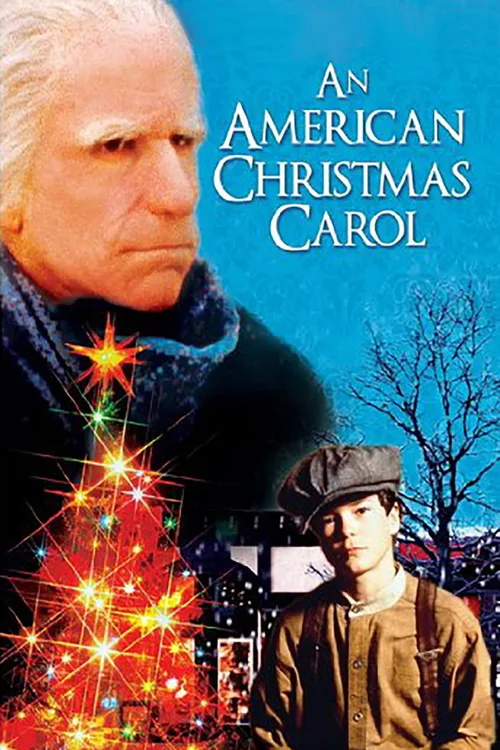
Charles Dicken's Victorian London becomes America's great Depression in this exciting new film
An American Christmas Carol (1979)
In Depression-era New England, a miserly businessman named Benedict Slade receives a long-overdue attitude adjustment one Christmas Eve when he is visited by three ghostly figures who resemble three of the people whose possessions Slade had seized to collect on unpaid loans. Assuming the roles of the Ghosts of Christmas Past, Present, and Future from Charles Dickens' classic story, the three apparitions force Slade to face the consequences of his skinflint ways, and he becomes a caring, generous, amiable man.
 rating 6/10 User rating 38 votes 62%
 ❄ Christmas Connection
The entire film is a retelling of Dickens' "A Christmas Carol" set on Christmas Eve in Depression-era New Hampshire. Benedict Slade is visited by three ghosts who force him to confront his cruelty, and his redemption arrives on Christmas morning. It is a Christmas story through and through.
Where to Watch


Our Review
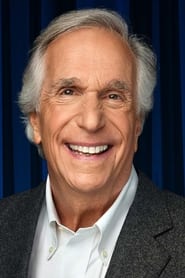
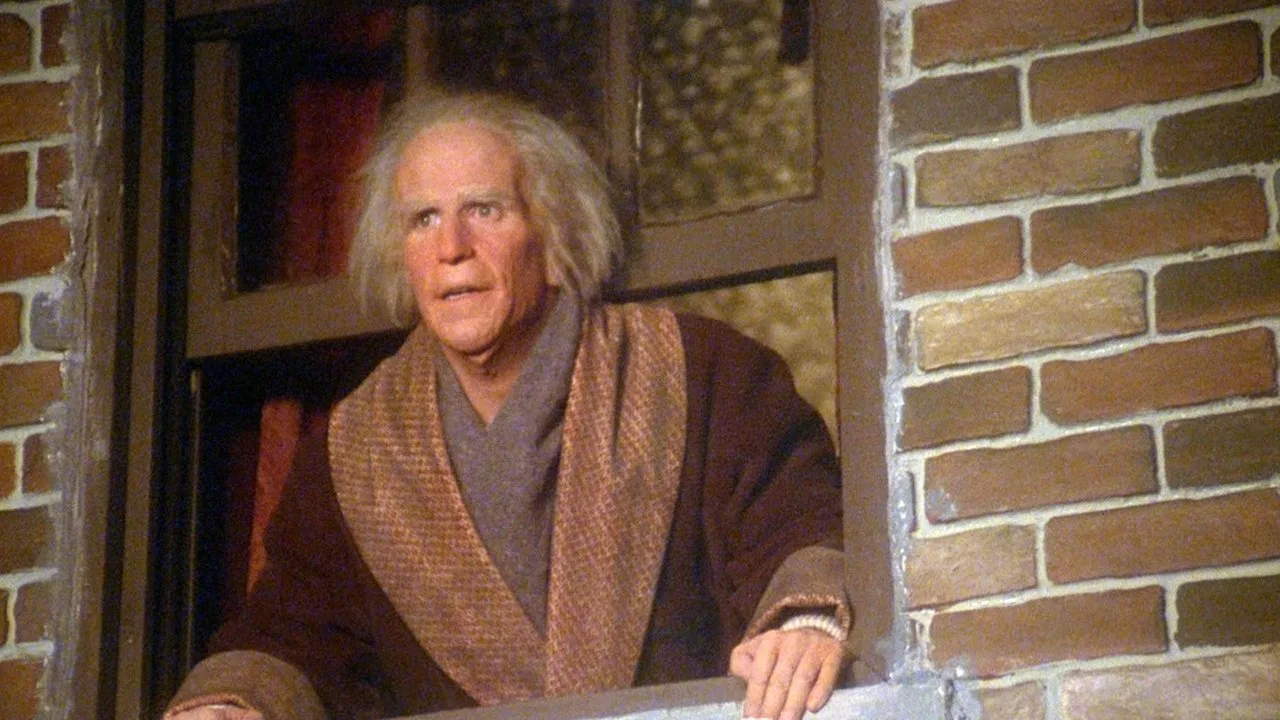
"An American Christmas Carol" aired on ABC on December 16, 1979, and its central gamble was simple: could the guy who played the Fonz on "Happy Days" convince anyone he was a mean old miser? Henry Winkler was 34 years old when he took the role of Benedict Slade, a Depression-era businessman who seizes the possessions of anyone who can't pay their debts. The role required aging makeup, a hunched posture, and a cold, clipped voice that had nothing to do with Arthur Fonzarelli. It was a deliberate career move, and it worked better than most people expected.
Henry Winkler as Benedict Slade
The casting of Winkler was the whole pitch. In 1979 he was one of the most recognizable actors on American television, and "Happy Days" was still pulling 30 million viewers a week. Playing Scrooge was his attempt to prove he could do serious drama. Director Eric Till, a Canadian filmmaker with a strong background in television, gave Winkler the room to build Slade from the ground up.
Winkler plays Slade with a controlled stillness. There's no scenery-chewing or cartoonish villainy. When Slade repossesses a family's radio on Christmas Eve, Winkler doesn't play the moment for laughs or obvious cruelty. He plays it like a man filling out a form. The indifference is what makes it chilling.
The aging makeup, designed by Rick Baker and Greg Cannom (both of whom would go on to win multiple Academy Awards for makeup effects), holds up reasonably well. Winkler disappears under prosthetics that add decades to his face. It's not seamless by modern standards, but it's convincing enough that you forget the Fonz within the first ten minutes.
Dickens in the Great Depression
Screenwriter Jerome Coopersmith made one smart structural decision: he moved the story from Victorian London to a fictional New Hampshire town during the 1930s Depression. The adaptation fits Dickens like a glove. The economic desperation of Depression-era America maps perfectly onto the poverty of Dickens' London. Instead of counting houses and debtors' prisons, we get bank foreclosures and repossessed furniture.
The three ghosts don't appear as supernatural specters in the traditional sense. They take the forms of people whose belongings Slade has confiscated: a bookseller, a shopkeeper, a musician. Each ghost forces Slade to confront how his greed has destroyed real lives, real families. This grounding device gives the film an emotional specificity that a lot of Dickens adaptations lack. These aren't abstract phantoms. They're people Slade has actually hurt.
The Depression setting also lets the film make a sharper point about wealth and responsibility than many Christmas Carol adaptations bother with. Slade isn't just stingy. He's profiting from other people's ruin during the worst economic crisis in American history. The moral stakes feel concrete.
An American Christmas Carol Cast and Production
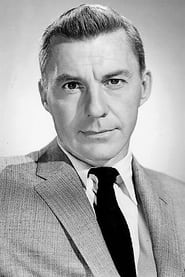
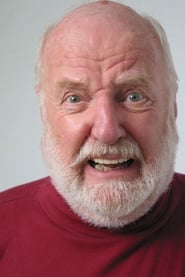
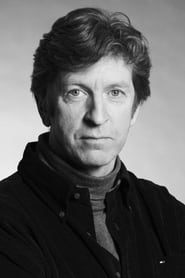
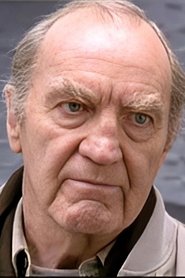
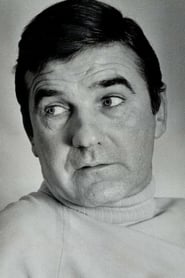
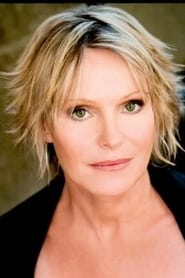
The supporting cast is filled with reliable Canadian character actors. David Wayne plays Merrivale, Chris Wiggins brings warmth to Nathaniel Brewster, and Dorian Harewood gives a strong turn as Matt Reeves. Susan Hogan is memorable as Helen Brewster. None of these are star-power names, but they bring a lived-in authenticity to the small-town setting that serves the story well.
The film was produced in Canada on a budget of roughly $2 million, which was respectable for a TV movie in 1979. Cinematographer Richard Ciupka shot it with a muted, wintry palette. The streets look cold. The interiors feel cramped and dim. It doesn't have the visual polish of a theatrical film, but the modesty suits the material. Depression-era New Hampshire shouldn't look glamorous.
Hagood Hardy composed the score, keeping it restrained and folk-tinged rather than bombastic. The music supports the period setting without overwhelming it.
Where It Falls Short
The film's limitations are largely the limitations of late-1970s television production. The pacing drags in the middle act, particularly during the Ghost of Christmas Present sequence, where the script gets repetitive. Some scenes feel like they exist to pad the runtime to 98 minutes rather than to advance the story.
The transformation scene, where Slade wakes up on Christmas morning as a changed man, is too abrupt. Winkler sells the joy convincingly, but the script doesn't give him enough breathing room to make the shift feel earned. He goes from terrified to giddy in about ninety seconds. George C. Scott got an entire sequence to play that same transition in the 1984 version, and the difference shows.
Still, as a network TV movie from 1979, "An American Christmas Carol" punches above its weight. Winkler's performance is genuine, the Depression setting is inspired, and the film treats Dickens' story with more respect than many higher-budget adaptations have managed. It aired once, became a VHS staple, and developed a quiet cult following that has kept it circulating for over four decades. For a TV movie, that's a real accomplishment.
Fun Facts
Rick Baker, who designed the aging makeup for Henry Winkler in this film, went on to win seven Academy Awards for Best Makeup, including for "An American Werewolf in London" (1981) and "Men in Black" (1997).
Greg Cannom, who also worked on the makeup, later won Oscars for "Dracula" (1992), "The Curious Case of Benjamin Button" (2008), and "Vice" (2018).
Henry Winkler took the role specifically to break away from his "Happy Days" image. He later said playing Slade was one of the most creatively satisfying experiences of his career.
The film was shot entirely in Canada, primarily in and around small towns in Ontario, which stood in for Depression-era New Hampshire.
Director Eric Till was a British-born Canadian filmmaker who also directed "Luther" (2003) starring Joseph Fiennes. He specialized in television dramas throughout the 1970s and 1980s.
The film aired on ABC on December 16, 1979, competing against CBS's "The Oldest Living Graduate" starring Henry Fonda. The ABC broadcast drew strong ratings.
Michael Wincott, who appears briefly as a choir leader, later became known for villain roles in "Robin Hood: Prince of Thieves" (1991) and "The Crow" (1994).
Cast