Celebrate the magic of a new Christmas classic!
Babes in Toyland (1997)
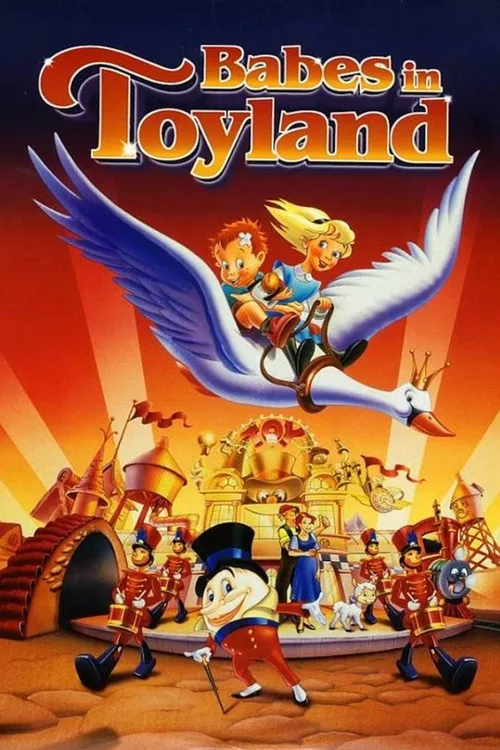
With just days to go before presents are scheduled for Christmas delivery, Toyland is buzzing with activity. However, curmudgeonly creditor Barnaby Crookedman is hatching a devious scheme to destroy Toyland – meaning no presents for the world's children! Siblings Jack and Jill, alongside toy factory workers Tom and Mary, rush into action to stop the villain, receiving some assistance from the likes of Humpty Dumpty and even Santa Claus himself.
 rating 5/10 User rating 25 votes 51%
 ❄ Christmas Connection
Babes in Toyland is set entirely in a magical Christmas-adjacent Toyland and opens on Christmas Eve, with Santa Claus as a key figure in the plot. The story's core conflict revolves around saving Toyland in time for Christmas morning. It belongs to a tradition of Christmas operetta adaptations stretching back over a century.
Where to Watch


Our Review
Victor Herbert's 1903 operetta "Babes in Toyland" has been adapted so many times that each new version arrives carrying the weight of its predecessors. The 1934 film gave Laurel and Hardy their best-remembered feature. The 1961 Disney version gave Annette Funicello a Christmas movie career highlight. The 1997 MGM animated version, directed by Paul Sabella and Toby Bluth, gave the world Lacey Chabert at age fifteen and Charles Nelson Reilly as the villain. Two out of three of those things are genuinely good.
What Babes in Toyland 1997 Is Actually About
The plot follows a young boy named Barnaby Jr. who falls asleep on Christmas Eve and wakes up in Toyland, a magical realm where nursery rhyme characters live, toys roam free, and Santa Claus operates what amounts to the most important factory on earth. The villain is Barnaby, a scheming miser who wants to destroy Toyland and steal its magic for himself. The boy teams up with the residents to stop him.
It's a light retelling of Herbert's source material, and calling it an adaptation is generous. The operetta's original story has been so thoroughly reworked across its many versions that by 1997, what remained was mostly the name, a handful of musical echoes, and the general Toyland setting. The specific songs from Herbert's score don't appear here in recognizable form. The film has its own musical identity, modest as it is.
Lacey Chabert voices Mary Contrary, one of the Toyland residents who helps Barnaby Jr. on his quest. Joseph Ashton voices the boy. Raphael Sbarge rounds out the cast in a supporting role. But the performance that actually registers is Charles Nelson Reilly as the villain Barnaby. Reilly had a gift for playing theatrical menace with a wink, and he brings genuine energy to a character that could have been a flat obstacle. He sounds like he's enjoying himself, which gives the audience something to hold onto during the slower stretches.
Where the Film Struggles
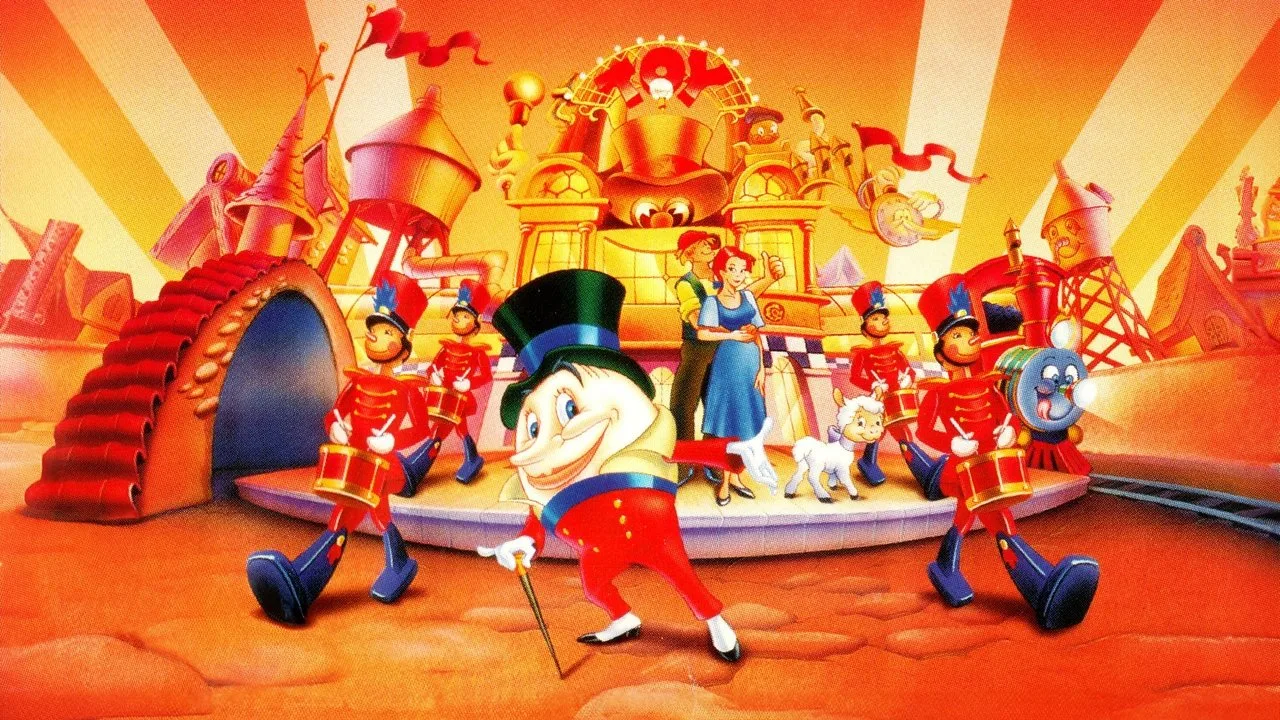
The animation is the film's most obvious limitation. Released directly to video, it carries the visual hallmarks of mid-1990s made-for-home-video animation: flat backgrounds, limited movement, color palettes that try to compensate for production constraints with sheer brightness. It doesn't hold up next to the theatrical releases of the same era, and it wasn't trying to. This was a budget production aimed at holiday VHS shelves, not cinema.
The pacing is uneven. The middle section of the film loses momentum around the time Barnaby Jr. has settled into Toyland but before the final confrontation begins. There are scenes that feel like they exist to pad runtime rather than advance anything. A tighter edit could have improved it considerably.
The songs are forgettable. This is a real problem for a film rooted in a celebrated musical tradition. Herbert's original work has genuine, hummable tunes. The 1997 version's songs come and go without leaving much trace.
The Case for Watching It Anyway
The film is earnest in a way that's rare. It doesn't hedge or wink at the audience, doesn't comment on its own silliness, doesn't position itself as too cool for the premise. It commits to Toyland as a real place and the stakes as real stakes. For a certain age group, that sincerity lands.
Reilly's Barnaby is also genuinely theatrical in a way that distinguishes him from the usual animated villains of the era. He projects. He emotes. He sounds like a man who spent decades in theater and television before landing in an animated direct-to-video Christmas film, which is exactly what he was.
There's also something worth noting about where this film sits in its franchise's history. The 1934 Laurel and Hardy version is beloved by film historians. The 1961 Disney version remains a cable staple. The 1997 version exists in the gap between those touchstones, known mostly to people who rented it as children. That specific kind of childhood memory, the film that felt magical at age seven and confusing in retrospect, is its own category of Christmas movie experience.
Is It a Christmas Movie?
Yes, fully. The story begins on Christmas Eve. Santa Claus is a character with an active role. The central conflict is about saving Christmas delivery. The setting, Toyland, functions as a Christmas mythology location in the same way the North Pole does in other films. There is no ambiguity here the way there is with, say, Die Hard or Lethal Weapon. This is a Christmas movie the way Rudolph the Red-Nosed Reindeer is a Christmas movie: it was built to be one.
The Christmas vibes rating is high because the film is genuinely festive in its visual palette and its stakes. The rating for overall quality is more moderate, because "Christmassy" and "good" are not the same thing.
Fun Facts
Paul Sabella, one of the film's two directors, was a veteran of animated television production with credits going back to the 1970s. His co-director Toby Bluth is the younger brother of animator Don Bluth, whose own 1980s animated features like "The Land Before Time" (1988) were a clear influence on the aesthetic ambitions of many direct-to-video competitors.
Lacey Chabert was fourteen years old when production on the film began, and fifteen by the time of its release in 1997. She was simultaneously cast as Claudia on "Party of Five" (1994-2000) during much of this period, making Babes in Toyland one of several concurrent projects she was involved in as a child actor.
Charles Nelson Reilly, who voices the villain Barnaby, had been a fixture of American television game shows and variety programs since the 1960s and 1970s, most notably as a panelist on "Match Game." He was 63 years old at the time of the film's release.
Victor Herbert composed the original "Babes in Toyland" operetta in 1903, making it one of the longest-running source materials in Christmas film history. By 1997, the story had been adapted for film at least three times, for television multiple times, and had been staged in live productions continuously for nearly a century.
The 1961 Disney version of "Babes in Toyland," which starred Annette Funicello and Tommy Sands, was actually a box office disappointment on its original release, though it found a long afterlife on television broadcasts. Disney re-released and repackaged it several times through the 1980s, which is part of why the 1997 MGM version was competing against a film that had already become a seasonal institution.
MGM released the film directly to home video, bypassing theatrical distribution entirely. The direct-to-video Christmas animation market in the late 1990s was highly competitive, with studios producing holiday titles specifically for the rental and retail VHS market rather than for cinema exhibition.
The operetta's most famous song, "March of the Toys," has been recorded by hundreds of orchestras and musicians since 1903. It is one of the most recognized pieces of holiday instrumental music in the American canon, though the 1997 animated film does not use it in a form that listeners would recognize from those recordings.
Cast