
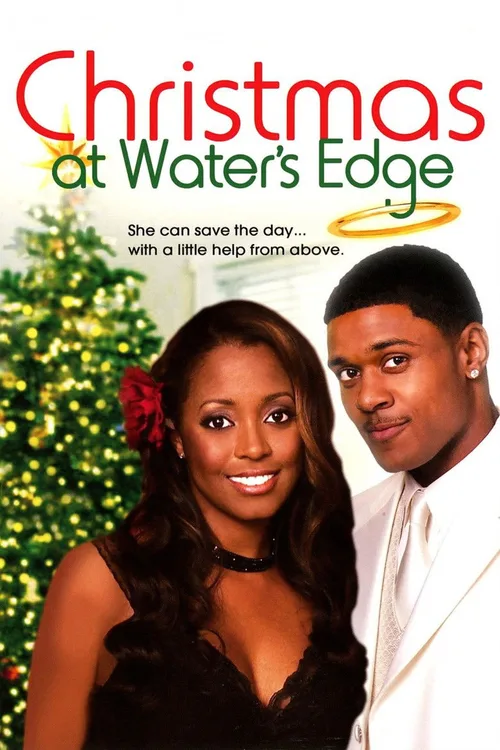
She can save the day... with a little help from above.
Christmas at Water's Edge (2004)
Everyone knows Christmas is a time of giving — well, everyone but one wealthy, spoiled college student who's about to get the ultimate wake-up call. When she helps organize a holiday concert at a youth center, little does she know the grumpy cabbie she works with is actually an angel in training.
 rating 5/10 User rating 3 votes 73%
 ❄ Christmas Connection
The entire film is built around a Christmas holiday concert fundraiser, with Dickensian redemption as its structural backbone. The transformation of spoiled college student Layla Turner mirrors Scrooge's arc beat for beat, compressed into a single holiday season. Christmas is not a backdrop here, it is the deadline, the catalyst, and the point.
Our Review
If you line up every Christmas movie ever made that is secretly just A Christmas Carol with different clothes on, Christmas at Water's Edge belongs somewhere in the middle of that pile. Not near the bottom, not near the top. Firmly, comfortably, stubbornly in the middle. Director Lee Davis made no secret of his source material: the film is openly pitched as a contemporary variation on Dickens, and it delivers exactly that, no more, no less.
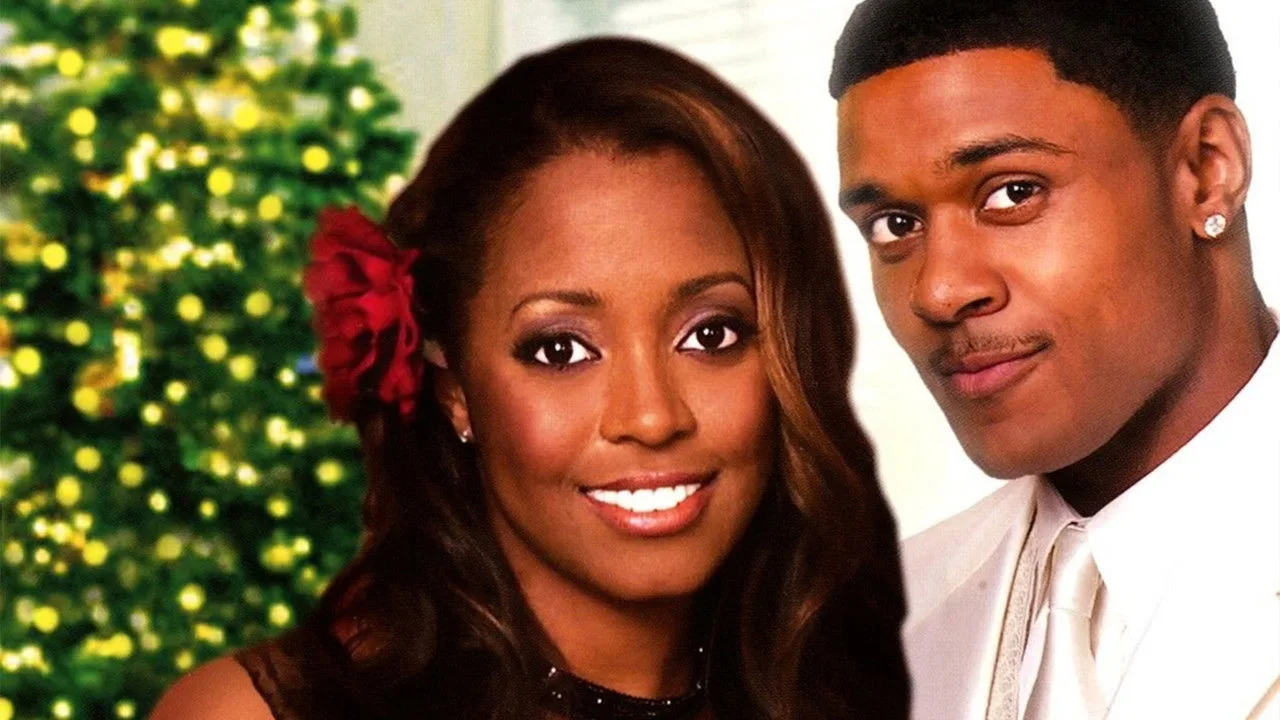
The premise is blunt. Layla Turner, a wealthy college student played by Keshia Knight Pulliam, gets a visit from an angel-in-training named Marcus (Pooch Hall), whose mission is to redirect her from materialism toward community before Christmas arrives. The vehicle for this transformation is a holiday concert fundraiser for a local youth center. Layla goes from obstacle to organizer. Marcus watches, assists, and presumably earns his wings.
The Cast Is the Film's Best Argument
Keshia Knight Pulliam spent eight years as Rudy Huxtable on "The Cosby Show," finishing in 1992 at age thirteen. By 2004 she had graduated from Spelman College with a sociology degree, competed on "Celebrity Mole: Yucatan," and was navigating the specific difficulty of being a very famous child actor trying to build an adult career. Layla Turner is a reasonable showcase for that transition. The character is designed to start unlikable and end warm, and Pulliam handles the arc with enough credibility that you don't actively resist the movie's intentions.
Pooch Hall, cast here as the angel Marcus, would go on to play football star Derwin Davis on "The Game" starting in 2006, which effectively launched him as a leading man. This film caught him in his pre-breakout period, when he was appearing in independent productions like "Black Cloud" (2004) while building a resume. He's natural on screen and avoids the trap of playing the angel as a wide-eyed saint. Marcus has a light touch of mischief to him, which helps.
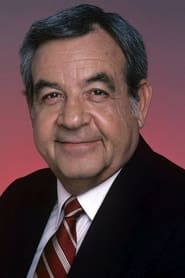
Tom Bosley, Emmy-nominated from "Happy Days" and beloved from "Murder, She Wrote," shows up as Harry, an older figure connected to the youth center. Bosley had a remarkable 2004 for Christmas content: he played Santa Claus in "Felix the Cat Saves Christmas" the same year. His presence in this film is the kind of credibility-lending cameo that TV movies routinely deploy, and it works the way it's supposed to work.
Ray J, credited here as an actor before his 2005 pop breakthrough with "One Wish," rounds out the ensemble. He had been acting since 1993 on "The Sinbad Show" and had roles in "Mars Attacks!" and "Moesha," so this wasn't new territory. But watching it now knowing what came after adds a layer of historical interest the original broadcast obviously couldn't have.
What Davis Gets Right, and Where the Screenplay Loses Its Nerve
Lee Davis came to this project with serious credentials. He trained under Spike Lee, directed the 2000 Showtime original "3 A.M." (starring Danny Glover, Pam Grier, and Michelle Rodriguez, executive-produced by Spike Lee), and earned two cable award nominations for it. Variety named him one of the Top Ten Screenwriters to Watch in 2000. He brought genuine craft to low-budget television, and the film looks and moves better than its budget suggests it should.
The screenplay, however, keeps pulling its punches. The problem with updating Dickens is that the original works because the ghosts are terrifying and Scrooge's fall is genuinely ugly. Modernized versions that soften the protagonist's flaws and make the supernatural element charming rather than unsettling end up with a story that has the right shape but lacks the weight. Layla Turner's selfishness never quite reaches the level of alienation that would make her transformation feel earned. She's more inconsiderate than actively cruel, which makes the angel's mission feel like a slightly unnecessary intervention.
The youth center concert as the redemption vehicle is well chosen, though. It grounds the abstract Dickensian message in something concrete and community-oriented. The film's most effective scenes are the ones involving the kids at the center, which are specific and warm without being cloying.
Is Christmas at Water's Edge Worth Watching?
It premiered as one of the first nationally syndicated made-for-TV movies in years, which was genuinely unusual for 2004. The theatrical-style distribution strategy gave it an odd status, not quite a TV movie and not quite an independent film release, which may explain why it's hard to categorize in retrospect. The DVD release came three years later, in 2007, suggesting the distributor thought it had shelf life.
If you watch it as a Christmas movie comfort pick, it delivers. The holiday atmosphere is consistent, the cast is likable, and the runtime moves. If you come looking for something that rethinks or subverts the Carol template, you'll leave unsatisfied. Davis knows how to direct actors and frame a scene, but the script doesn't give him much to work against.
The IMDB score of 5.5 is accurate in the way aggregate scores occasionally manage to be. This is a 5.5 movie. It's good enough to finish and not good enough to seek out. For fans of the cast or collectors of early-2000s African American ensemble television, it's a find worth the time. For everyone else, it's a comfortable Christmas option that won't disappoint you and won't surprise you.
Fun Facts
Director Lee Davis trained directly under Spike Lee and was named one of Variety Magazine's Top Ten Screenwriters to Watch in 2000, making his pivot to syndicated holiday television an unexpected career detour.
The film had its world premiere as one of the first nationally syndicated made-for-TV movies in several years, a distribution model that had largely disappeared from American television by the early 2000s.
Keshia Knight Pulliam, who plays lead character Layla Turner, graduated from Spelman College with a Bachelor of Arts in Sociology in 2001, three years before the film's release, having completed her degree while working as an actress.
Pooch Hall, cast as the angel Marcus, was still two years away from his breakout role as Derwin Davis on "The Game" (2006), the role that established him as a television leading man.
Tom Bosley played Santa Claus in "Felix the Cat Saves Christmas" the same year (2004), giving him an unusual double Christmas film credit in a single calendar year.
Ray J appeared in the film while still primarily known as an actor rather than a musician; his R&B hit "One Wish" was not released until 2005, when it peaked at number 11 on the Billboard Hot 100.
Davis's earlier film "3 A.M." (2000), a Showtime original that premiered at the Sundance Film Festival, was executive-produced by Spike Lee and starred Danny Glover, Pam Grier, and Michelle Rodriguez before Rodriguez became internationally known.
The DVD release of the film was delayed until 2007, three years after the original broadcast, which was unusually long for a holiday TV movie that had aired nationally.
Cast