
Christmas in Poland
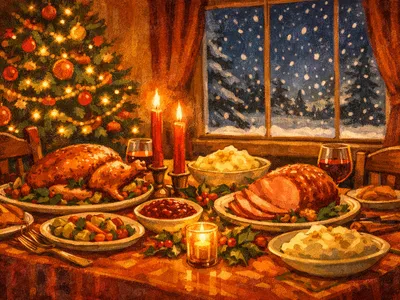
Polish Christmas revolves around Wigilia, the Christmas Eve supper that is the most important meal of the year. The table is set with hay beneath the tablecloth, an extra place for an unexpected guest, and exactly 12 meatless dishes. When the first star appears in the evening sky, the family breaks the oplatek wafer and the feast begins.
Christmas in Poland is Wigilia. Everything else, the tree, the gifts, the church services, orbits around this single evening on December 24. The 12-dish meatless supper is the most anticipated meal of the Polish year, and the oplatek wafer shared before it is the most emotional ritual in Polish culture. In a country where 87% of the population identifies as Catholic, Christmas is both deeply religious and profoundly domestic.
Wigilia: The Heart of Polish Christmas
Preparations begin early on December 24. The table is set with a white cloth over a bed of hay, recalling the manger. An extra place is laid for an unexpected guest, a stranger, or a departed family member. When the first star appears in the evening sky, the meal begins.
The oplatek comes first. Each family member takes a wafer and moves around the table, breaking a piece from each person's wafer while offering wishes for health, happiness, and prosperity. The ritual often brings tears, particularly when empty chairs remind the family of those who are missing. Oplatki are mailed to relatives abroad so they can participate symbolically from a distance.
The 12 Dishes
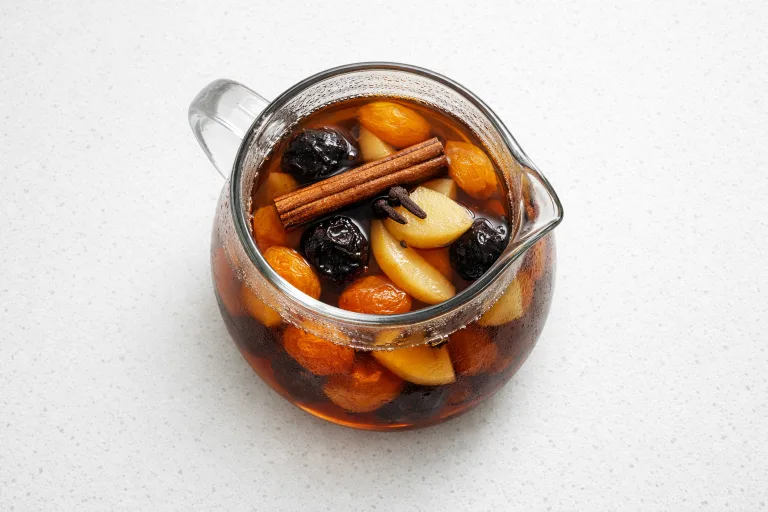
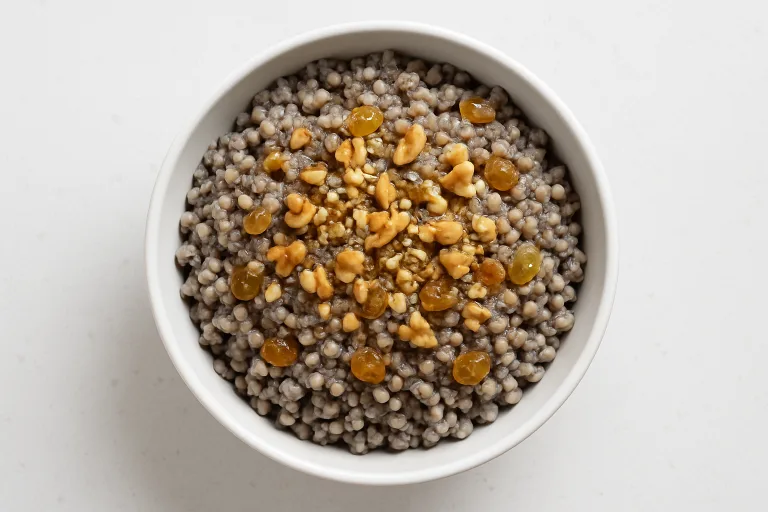
Wigilia is strictly meatless. The 12 dishes represent the 12 apostles, though the exact menu varies by region. A typical spread in central Poland includes barszcz czerwony z uszkami (clear beet soup with tiny mushroom dumplings), carp (fried, baked, or in aspic), pierogi filled with sauerkraut and mushrooms, kutia (wheat berry and poppy seed pudding), sauerkraut with peas, herring in oil, and kompot z suszu (dried fruit compote).
In Silesia, the meal might include makówki (poppy seed dessert) and kluski z makiem (noodles with poppy seeds). In the east, near the Lithuanian border, kutia is the centerpiece. The tradition is not about variety for its own sake. Each dish carries meaning, and the number 12 is non-negotiable.
After Dinner
Gifts are exchanged after the meal. In much of Poland, Swiety Mikolaj (St. Nicholas) brings them on Christmas Eve, though in Greater Poland the gift-bringer is Gwiazdor (the Star Man), and in Silesia it is Dzieciątko (the Christ Child). The differences are regional and fiercely defended.
At midnight, families walk to Pasterka, the Midnight Mass. Polish churches fill to standing room, and the koledy (carols) sung during the service are among the most beautiful in European sacred music. Bog sie rodzi, written by Franciszek Karpinski in 1792, carries the weight of national identity as much as religious devotion.
Krakow's Szopki
Krakow has a Christmas tradition found nowhere else: the szopka, an elaborate architectural nativity scene built from foil, cardboard, and wood. These miniature structures incorporate the city's landmarks, including Wawel Castle and St. Mary's Basilica, alongside biblical scenes and contemporary figures. The annual competition at the foot of the Adam Mickiewicz monument in the Main Market Square dates to 1937. UNESCO added the Krakow szopka tradition to its Representative List of Intangible Cultural Heritage in 2018.
Frequently Asked Questions
What is Wigilia?
Wigilia is the Polish Christmas Eve supper, traditionally consisting of 12 meatless dishes. It begins when the first star appears in the sky and is preceded by the sharing of oplatek (Christmas wafer). It is the most important meal of the Polish year and the centerpiece of the country's Christmas celebrations.
What is oplatek?
Oplatek is a thin, unleavened wafer stamped with religious images, shared among family members before the Wigilia meal. Each person breaks a piece from another's wafer while exchanging wishes for the coming year. It is the most emotional ritual of Polish Christmas and is also mailed to relatives who cannot be present.
Why are there 12 dishes at Wigilia?
The 12 dishes represent the 12 apostles. All must be meatless, reflecting the tradition of fasting on Christmas Eve. Common dishes include barszcz (beet soup), carp, pierogi, kutia (wheat berry pudding), and kompot (dried fruit compote). The exact menu varies by region.
Why is there hay under the tablecloth?
Hay is placed beneath the Wigilia tablecloth as a symbol of the manger where Jesus was born. In some families, guests draw straws from under the cloth: a green straw predicts a good year, a yellow one foretells difficulty. The custom is a blend of Christian symbolism and older folk traditions.
What are Krakow's szopki?
Szopki are elaborate architectural nativity scenes unique to Krakow, built from foil, cardboard, and wood. They incorporate the city's real landmarks alongside biblical characters. The annual szopka competition has been held since 1937 and was added to UNESCO's Intangible Cultural Heritage list in 2018.
Traditions & Customs
Wigilia (12 Dishes)
The Christmas Eve supper consists of exactly 12 meatless dishes, one for each apostle. Common dishes include barszcz with uszka (beet soup with mushroom dumplings), carp, pierogi, kutia (wheat berry pudding), and kompot (dried fruit compote). No meat or alcohol is served before midnight.
Oplatek (Christmas Wafer)
Before the Wigilia meal, family members share the oplatek, a thin unleavened wafer stamped with religious images. Each person breaks a piece from another's wafer, offering wishes for the coming year. It is the most emotional moment of Polish Christmas. Oplatki are also mailed to family members who cannot be present.
Hay Under the Tablecloth
A handful of hay is placed beneath the Wigilia tablecloth as a reminder that Jesus was born in a manger. In some families, children pull straws from under the cloth to predict the coming year: a green straw means good fortune, a yellow one hardship.
Empty Place at the Table
An extra place is always set at the Wigilia table for an unexpected guest or a family member who has passed away. The tradition reflects the Polish value of hospitality, rooted in the belief that no traveler should be turned away on Christmas Eve.
Pasterka (Midnight Mass)
Midnight Mass is the spiritual climax of Polish Christmas. Churches across the country fill to capacity. The tradition dates to the earliest days of Polish Christianity and remains one of the most widely attended religious services in Europe.
First Star (Pierwsza Gwiazdka)
The Wigilia meal cannot begin until the first star appears in the evening sky, symbolizing the Star of Bethlehem. Children are often sent to watch the sky, and the sighting of the first star marks the official start of the celebration.
Choinka (Christmas Tree)
The Christmas tree tradition arrived in Poland from Germany in the 19th century. Polish trees are decorated with ornaments, lights, and sometimes handmade straw decorations. The tree is typically set up in the days before Christmas Eve.
Koledy (Christmas Caroling)
Polish Christmas carols (koledy) are among the most beautiful in Europe. Koledy singing begins on Christmas Eve and continues through Epiphany. Groups of carolers (kolednicy) visit homes, sometimes dressed as biblical characters or folk figures.
Christmas Markets
Krakow Christmas Market
Set on the Main Market Square (Rynek Glowny), the largest medieval square in Europe, Krakow's market features traditional wooden stalls selling oscypek (smoked cheese), gingerbread, and handcrafted ornaments. A highlight is the annual Szopka (nativity scene) competition.
Wroclaw Christmas Market
One of Poland's largest markets, with over 180 stalls around the Rynek (market square). Known for its fairytale atmosphere, Wroclaw's market features live music, a nativity scene, and the city's famous bronze dwarfs decorated for the season.
Gdansk Christmas Fair
The Baltic port city's market fills the Long Market (Dlugi Targ) with stalls selling amber jewelry, traditional Kashubian crafts, and hot mead. The setting among colorful Renaissance merchant houses is one of the most picturesque in Poland.
Key Dates
Mikolajki (St. Nicholas Day)
Children receive small gifts and sweets from Swiety Mikolaj. In some regions, particularly Greater Poland, the gift-bringer is called Gwiazdor (Star Man) or Gwiazdka (Little Star) and visits on Christmas Eve instead.
Wigilia (Christmas Eve)
The most important day of Polish Christmas. Preparations begin in the morning. The 12-dish meatless supper starts when the first star appears. After dinner, gifts are exchanged, and families attend Pasterka (Midnight Mass).
Boze Narodzenie (Christmas Days)
Both days are public holidays. December 25 is spent with immediate family, with a large meat-based dinner (after the previous evening's meatless feast). December 26 (Drugi Dzien Swiat) is for visiting extended family and friends.
Trzech Kroli (Three Kings Day)
Epiphany is a public holiday in Poland (reinstated in 2011). Processions of the Three Kings pass through town centers across the country. Families mark their doorframes with K+M+B (the initials of the Three Kings) in blessed chalk.
Matki Boskiej Gromnicznej (Candlemas)
The traditional end of the Christmas season in Poland. Candles blessed at church on this day (gromnice) are believed to protect the home from storms and evil spirits throughout the year.
Christmas Carols
God Is Born
Bog sie rodziWritten by Franciszek Karpinski in 1792, this is the most important Polish Christmas carol. Its solemn, hymn-like melody is sung at Midnight Mass and considered the 'national Christmas carol' of Poland.
Today in Bethlehem
Dzisiaj w BetlejemA lively 17th-century carol celebrating the birth of Jesus. Its energetic melody and call-and-response structure make it a favorite for group singing at Wigilia and church services.
Lullaby, Little Jesus
Lulajze, JezuniuA tender lullaby traditionally attributed to the 17th century. Frederic Chopin used its melody in his Scherzo No. 1 in B minor (1835). The carol's gentle beauty makes it one of the most recognizable Polish Christmas songs.
In the Silence of the Night
Wsrod nocnej ciszyAn 18th-century pastoral carol describing the shepherds' journey to Bethlehem. Its flowing melody evokes the quiet of the Polish winter night and is a staple of both church and home celebrations.