
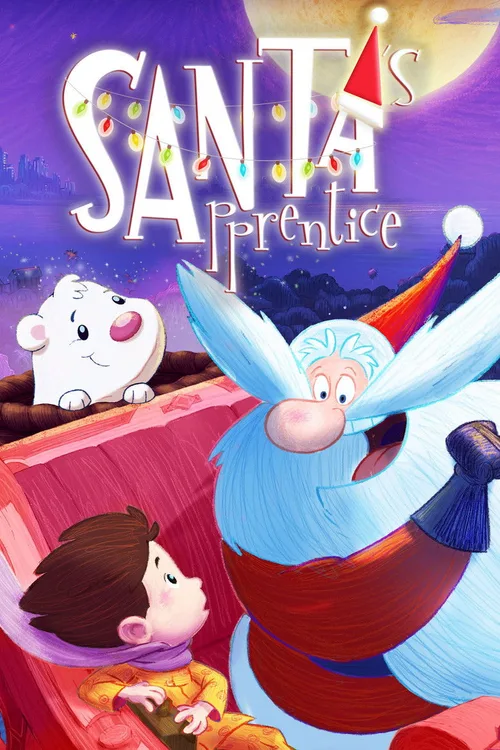
Santa's Apprentice (2010)
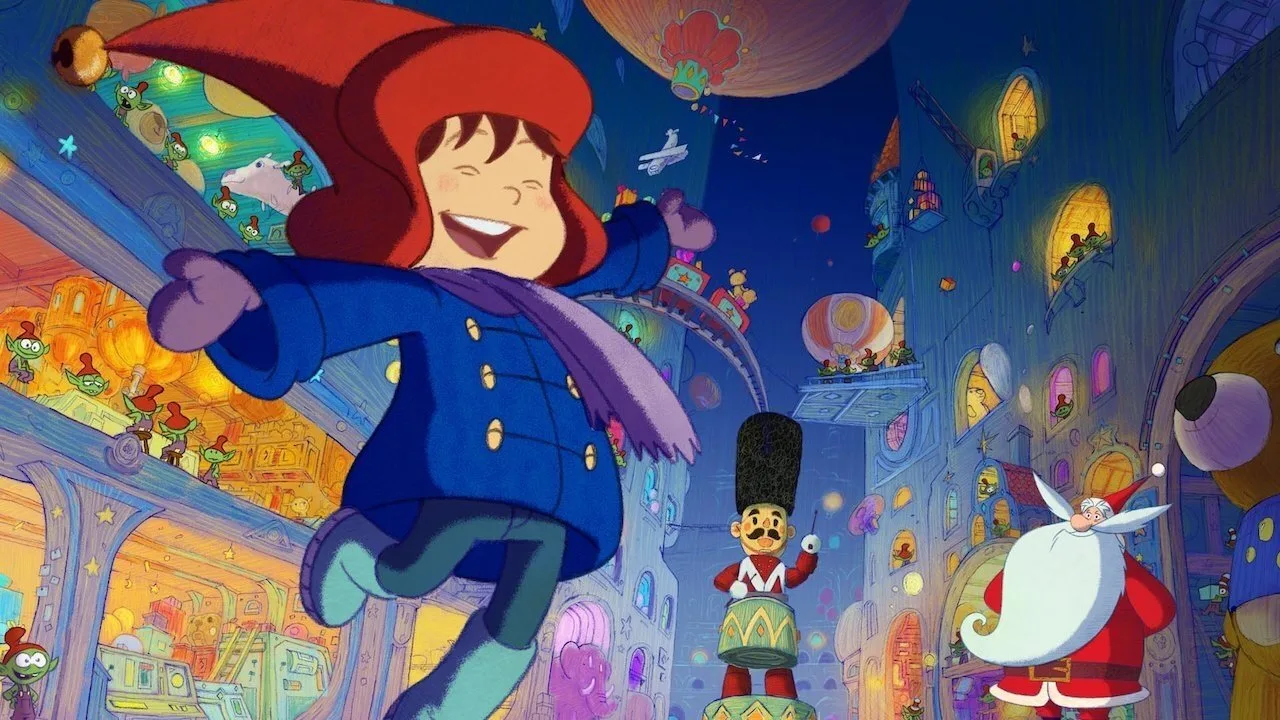
Santa doesn't want to retire, but rules are rules and he must train someone to replace him. The lucky winner, to be chosen from among millions of children, must be named Nicholas, be an orphan and have a pure heart. On the other side of the planet, there is a little boy who is a perfect match, but his lack of self-confidence and fear of heights make him a poor contestant. Will Santa agree to step down, and help his apprentice take his place?
 rating 6/10 User rating 51 votes 62%
 ❄ Christmas Connection
Santa's Apprentice is built entirely around the mythology of Father Christmas, from the Council of Retired Santas to the search for the perfect orphan Nicholas, to the full North Pole training montage. It takes place almost entirely during the Christmas season and culminates on Christmas Eve. There is no ambiguity here: this film has nothing to say except through the lens of Christmas.
Where to Watch


Our Review
Santa's Apprentice is not trying to reinvent Christmas. The 2010 French-Australian animated film, known in France as L'Apprenti Pere Noel, has a modest, specific ambition: to answer the question of who Santa Claus is before he becomes Santa Claus. It does this with old-fashioned warmth, pastel-colored North Pole sets, and a plot that runs on the logic of fairy tales rather than Hollywood screenwriting. The result is uneven, occasionally clunky, and genuinely sweet in a way that most Christmas films aim for but rarely achieve.
What Santa's Apprentice Is Actually About
Every 178 years, Santa Claus must retire and hand the job to a successor. The rules are strict: the new Santa must be an orphan named Nicholas, with a pure heart. Santa scans the globe and lands on a boy in Sydney, Australia, living in an orphanage with his best friend Felix.
Nicholas is afraid of heights and short on self-confidence. He's picked on by the orphanage bully, Grincroch, who takes special pleasure in insisting Santa doesn't exist. When Santa shows up and whisks Nicholas to the North Pole, the film turns into an extended training montage: chimney-sliding, toy-making, reindeer-wrangling. There's a villain, a magic ball, some shrinking, an arrest of Santa by an overzealous inspector, and a climactic Christmas Eve delivery run back at the orphanage.
The story is light. But the lightness is intentional, not lazy. This is a film adapted from a Belgian animated TV series, SantApprentice, created by Jan Van Rijsselberge in 2006. The show had 50 twelve-minute episodes and two 26-minute specials, all built around the same premise. Director Luc Vinciguerra had to compress an entire world's mythology into 80 minutes, and he mostly succeeds by keeping the emotional core narrow: one orphan, one fear to overcome, one friendship to honor.
The Animation and Where It Comes From
The film is a co-production between Gaumont-Alphanim in France and Flying Bark Productions in Australia. Flying Bark is the oldest continuously operating animation studio in Australia, founded in 1967 by Polish-Australian filmmaker Yoram Gross as Yoram Gross Film Studios. The studio went through several ownership changes and was rebranded as Flying Bark in 2006, two years before Santa's Apprentice began production.
The animation style is 2D-dominant with a soft, hand-drawn European aesthetic. The North Pole looks like a storybook illustration brought to life, all rounded architecture and warm amber light. It's a deliberate contrast to the CGI gloss that had taken over family animation by 2010. Whether this reads as charming or dated depends on your age and your tolerance for a movie that looks like it was made in 1998.
For young children, it works. The visual language is clear, the characters are easy to read, and the color palette keeps everything feeling safe and cozy. The film was released in France on 24 November 2010, then made it to Australian cinemas a full year later in November 2011.
The English Dub and Its Surprising Cast
The Australian English dub recruited a genuinely interesting group of voice performers. Singer Delta Goodrem voices Little Beatrice, Shane Jacobson (best known for the Australian comedy Kenny) voices Santa, and comedian Magda Szubanski takes the role of a formidable matron. These are not typical animation voice cast choices, and the performances have a quality of real personality rather than corporate smoothness.
The French original features Jean-Pierre Marielle as Santa, a veteran stage and film actor with a career stretching back to the 1960s. The two versions of the film have very different tonal registers: the French original leans into deadpan European humor, while the Australian dub softens the edges and plays more broadly.
The UNICEF Prize That Nobody Talks About
At the 2011 Annecy International Animation Film Festival, Santa's Apprentice won the special UNICEF award. Annecy is not a minor festival. It's the premier animation event in the world, the Cannes of the animated film industry. The UNICEF prize is awarded to the film that best reflects the goals of the UN Convention on the Rights of the Child.
The win makes sense. The film's protagonist is an orphan whose rights, dignity, and future are taken seriously by the narrative. The Council of Retired Santas isn't a comic device: they're a governing body ensuring the transition of power is fair. Nicholas gets a say. He gets to earn his place rather than simply being handed it. For a children's film, that's a more thoughtful moral framework than most.
The award went largely unnoticed in English-speaking markets. The film made little commercial impact outside France and Australia.
What Works and What Doesn't
The film's biggest problem is its villain. Grincroch serves the plot mechanically rather than dramatically. He's jealous, he's mean, he steals the magic ball, and he gets his comeuppance. There's no weight to any of it. In comparison, Nicholas's friendship with Felix, who gets adopted and leaves for America midway through the film, carries genuine feeling. That small loss, a best friend disappearing into a different life, is more emotionally honest than anything the villain subplot offers.
The Santa character is drawn interestingly. He doesn't want to retire. He's made to by bureaucratic decree. There's something almost sad about him, a man defined entirely by a job he can no longer legally hold, who must now invest all his remaining purpose into training a frightened ten-year-old. The film doesn't push this angle far, but it's there.
Nicholas's fear of heights pays off properly in the third act. That's good storytelling economy.
Who This Film Is For
Children under ten will get the most from it. The stakes feel real, the pacing is brisk, and the Christmas iconography is dense and satisfying: elves, workshops, reindeer, sleighs, chimneys. It's the kind of film that answers questions kids actually ask: who was Santa before he was Santa, and what happens when he gets too old.
Adults watching alongside them will find a film that's competent and harmless, occasionally charming, and not as boring as it could be. The 80-minute runtime is correctly calibrated. The Annecy UNICEF award is genuinely deserved. And the French-Australian co-production arrangement, two countries with very little in common producing a film about a universal figure, is itself a small Christmas miracle of international logistics.
Fun Facts
The film is based on the 2006 Belgian animated TV series SantApprentice, created by Jan Van Rijsselberge, which originally ran for 50 episodes of 12 minutes each. The movie condenses the entire apprenticeship mythology into 80 minutes.
Flying Bark Productions, the Australian co-producer, was founded in 1967 by Polish-Australian filmmaker Yoram Gross as Yoram Gross Film Studios, making it the oldest continuously operating animation studio in Australia. The studio was rebranded as Flying Bark just four years before this film was made.
The film won the special UNICEF award at the 2011 Annecy International Animation Film Festival, which is the world's most prestigious animation festival. The award recognizes the animated film that best upholds the UN Convention on the Rights of the Child.
The French release title is L'Apprenti Pere Noel. The film opened in France on 24 November 2010, but Australian audiences had to wait a full year for the English dub release in November 2011.
Singer Delta Goodrem, known internationally for her pop music career and the Australian TV series Neighbours, voices the character Little Beatrice in the English dub.
Comedian Magda Szubanski, who played Babe's owner Esme Hoggett in the 1995 film Babe, takes one of the key voice roles in the Australian English dub, while Shane Jacobson, star of the 2006 Australian comedy Kenny, voices Santa himself.
The film's internal mythology states that Santa must retire every 178 years and be replaced by an orphan boy named Nicholas with a pure heart. The 178-year figure comes directly from the original TV series and has no basis in any traditional Christmas legend.
Gaumont-Alphanim, the French production company, was renamed Gaumont Animation in 2013. The studio had originally been founded as Alphanim in 1997 by Christian Davin, becoming Gaumont-Alphanim in 2009, just one year before the film's release.
Cast