
Why Is Christmas Called Xmas? The Real Origin
The X in Xmas isn't a deletion. It's a 1,000-year-old abbreviation rooted in ancient Greek, used by monks, kings, and poets long before anyone thought to complain about it.
Christmas is called Xmas because the X stands for the Greek letter Chi (Χ), which is the first letter of the Greek word Christos (Χριστός), meaning "Christ." The abbreviation is not modern, not secular, and not an attempt to remove Christ from Christmas. It's a shorthand that Christian scribes, monks, and theologians have used for over a thousand years.
Contents
The confusion is understandable. In English, X usually means "unknown" or "cancelled." But in this case, the X comes from a completely different alphabet with a completely different meaning. The scribes who first wrote it were deeply religious men working in monasteries. They weren't trying to cross anything out. They were saving ink and parchment.
Why Is Christmas Abbreviated as Xmas?
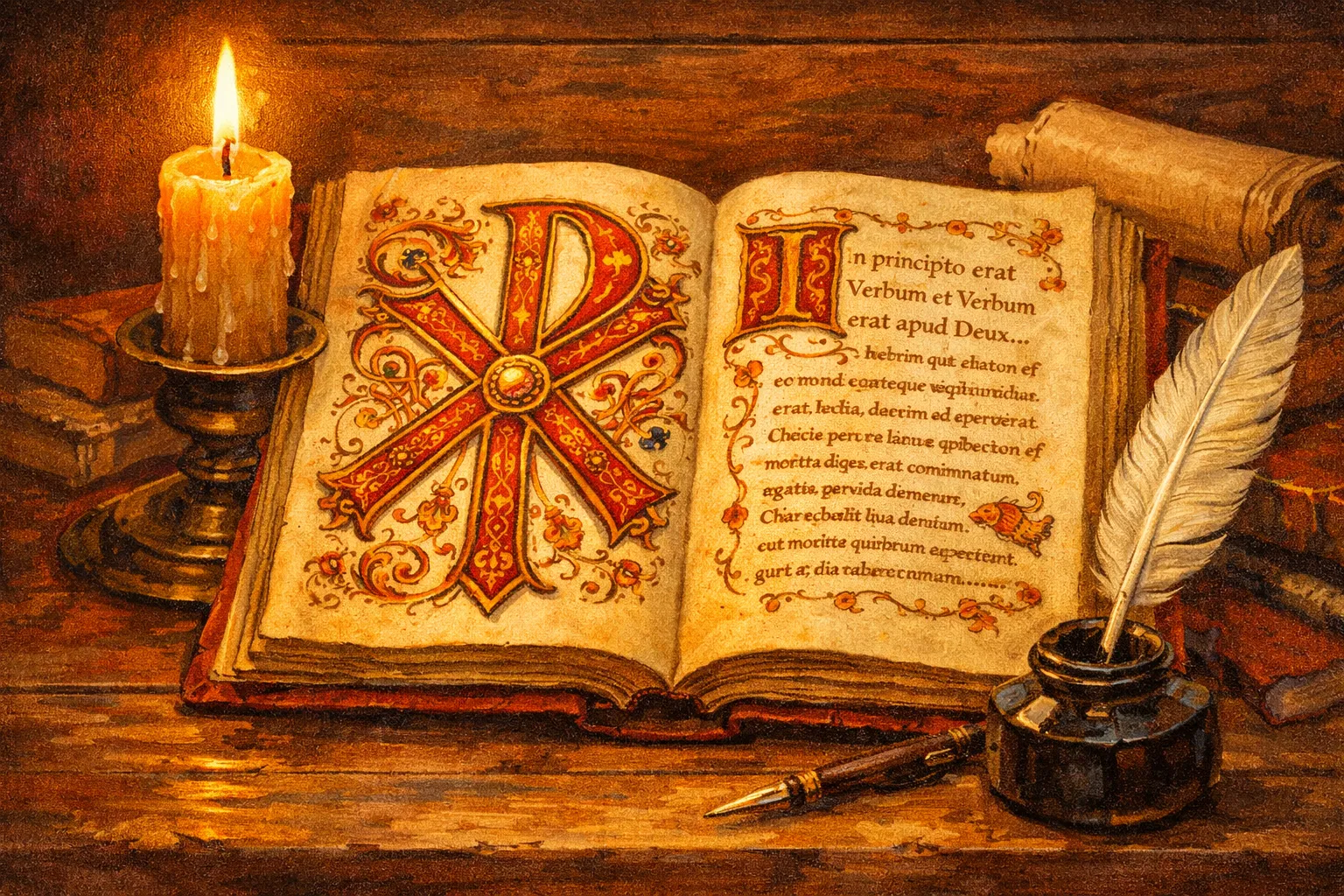
The Greek word for Christ is Χριστός (Christos), and its first letter is Chi, written as Χ. To English eyes, that letter looks identical to the Latin letter X. Medieval scribes who copied religious texts in Latin and Greek regularly abbreviated sacred words, and "Christ" was one of the most frequently shortened. They wrote Χ or Xp (combining Chi and Rho, the first two Greek letters of Christos) as a standard abbreviation.
This wasn't a casual shortcut. It was a recognized convention called a Nomen Sacrum (sacred name), used across Christian manuscripts for centuries. The same scribes abbreviated "Jesus" as IHC or IHS (from the Greek ΙΗΣΟΥΣ) and "God" as DS (from the Latin Deus). Abbreviating Christ as X or Xp was no different. It was standard practice, not disrespect.
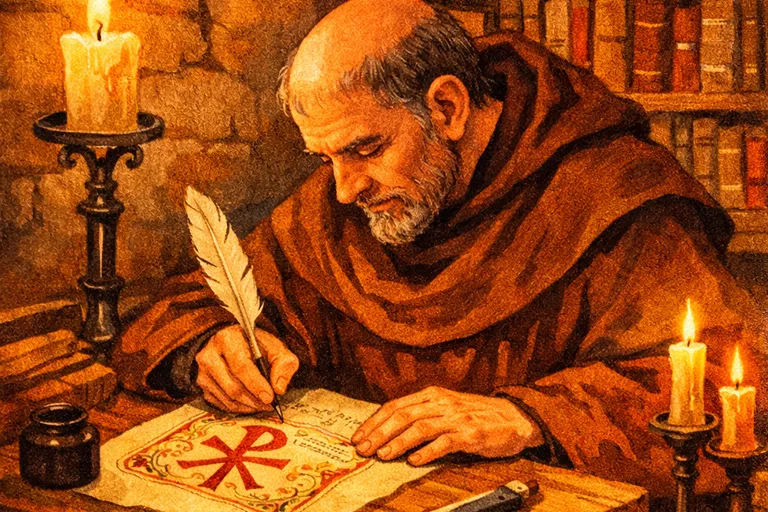
When English-speaking writers began abbreviating "Christmas," they simply followed the same convention their predecessors had used for Christ. The X in Xmas is the Greek Chi. The "mas" comes from the Old English maesse, meaning "Mass" or "feast." Xmas literally means "Christ's Mass," just written with fewer letters.
How Old Is the Abbreviation?
Much older than most people assume. The Anglo-Saxon Chronicle, one of the most important records of early English history, contains an entry for the year 1021 that uses the spelling "Xp̄es mæsse" for "Christmas." The Xp combines the Greek letters Chi and Rho, the first two letters of Christos. This was written by monks in an English monastery over a thousand years ago.
The form closer to modern "Xmas" appears in a letter written by King Edward VI to the Lord Deputy of Ireland on November 26, 1551, where it's spelled "X'temmas." By the 18th century, the abbreviation was common in private correspondence. George Woodward used "Xmas" in a letter in 1753. Samuel Coleridge wrote it in 1801. Lord Byron used it in 1811. Lewis Carroll used it in 1864.
None of these writers were secularists trying to erase Christianity. Coleridge was a devout Anglican. Carroll was an ordained deacon. They used Xmas the same way they might abbreviate any frequently used word. It was a convenience, not a statement.
What Is the Chi Rho Symbol?
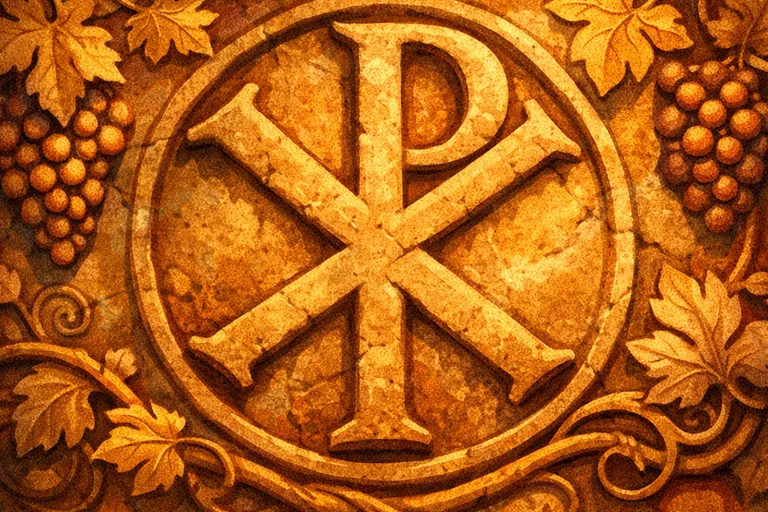
The Chi Rho (☧) is one of the earliest and most important Christian symbols. It's formed by superimposing the Greek letters Chi (Χ) and Rho (Ρ), the first two letters of Christos. It predates the widespread use of the cross as a Christian emblem.
The symbol gained its greatest prominence under Emperor Constantine I. Before the Battle of the Milvian Bridge in 312 AD, Constantine reportedly saw a vision of the Chi Rho in the sky, accompanied by the words "In this sign, conquer." He ordered the symbol painted on his soldiers' shields and placed on the labarum, his military standard. After winning the battle, Constantine legalized Christianity throughout the Roman Empire.
The Chi Rho appears carved into Roman sarcophagi, stamped on coins, woven into church mosaics, and painted in manuscripts across the Christian world. It was the dominant visual symbol of Christianity for centuries before the crucifix replaced it. The X in Xmas descends directly from this tradition.
Why Do People Think Xmas Is Disrespectful?
The backlash against "Xmas" is a 20th-century phenomenon, not a centuries-old tradition. For most of the word's history, nobody objected to it because educated people understood what the X meant.
The objections began in earnest in the mid-20th century, driven by concerns about the commercialization and secularization of Christmas. In December 1957, the Church League of America published an article titled "X=The Unknown Quantity," arguing that the abbreviation erased Christ from Christmas. In 1966, the political activist Gerald L.K. Smith called Xmas a "blasphemous omission of the name of Christ," claiming the X symbolized something "unknown."
Both arguments relied on the same misunderstanding: treating the X as a Latin letter rather than a Greek one. The X in Xmas has never meant "unknown." It has always meant Christ. But the argument resonated with people who didn't know the Greek backstory, and it became embedded in the broader "War on Christmas" narrative that gained traction in American culture from the 1990s onward.
The irony is that the people who object to Xmas on religious grounds are rejecting a convention that was created by religious people for religious purposes. The monks who wrote Xp̄es mæsse in the Anglo-Saxon Chronicle were not waging a war on their own faith.
Xmas vs. Christmas: Is There a Difference?
There is no difference in meaning. Xmas and Christmas refer to the same holiday. The only distinction is register and context.
In formal writing, "Christmas" is standard. Style guides at major publications, including the Associated Press and the Chicago Manual of Style, recommend spelling out "Christmas" in edited prose. "Xmas" reads as informal or commercial. You'll see it on sale signs, in text messages, and in casual correspondence, but rarely in a newspaper headline or an official letter.
This isn't because Xmas is incorrect. It's because English writing conventions treat abbreviations as less formal than spelled-out words. The same logic applies to "Dr." vs. "Doctor" or "St." vs. "Saint." The abbreviation isn't wrong. It's just casual.
One pronunciation note: "Xmas" is typically pronounced "Christmas," not "ex-mas." The X was never meant to be spoken as the English letter. People who say "ex-mas" are reading the abbreviation letter by letter rather than expanding it, which is how the word gained its reputation as a secular shortening.
Other X Abbreviations for Christ
Xmas isn't the only word that uses X for Christ. The same convention produced "Xian" and "Xtian" for "Christian," "Xianity" for "Christianity," and "Xtopher" for "Christopher" (whose name means "Christ-bearer"). In academic and theological writing, these abbreviations appeared regularly through the 19th century.
The tradition goes beyond abbreviations. The practice of marking religious objects with an X or Chi Rho continued well into the modern era. The Greek Orthodox Church still uses the Chi Rho prominently in liturgical art. Russian Orthodox churches display the Cyrillic equivalent. The symbol appears on priestly vestments, altar cloths, and church architecture around the world.

The next time you see "Xmas" on a shop window or a greeting card, you're looking at an abbreviation older than the English language itself, one that medieval monks, Renaissance kings, Romantic poets, and Victorian novelists all used without hesitation. The X always meant Christ. It still does.
Frequently Asked Questions
Why do people call Christmas Xmas?
The X in Xmas comes from the Greek letter Chi (Χ), which is the first letter of the Greek word Christos (Χριστός), meaning "Christ." Medieval scribes used X or Xp as a standard abbreviation for Christ in religious manuscripts. Xmas simply means "Christ's Mass" written in shorthand. The abbreviation has been in use for over a thousand years.
Is Xmas disrespectful to Christians?
No. The abbreviation was created by Christian monks and scribes as a standard convention for writing sacred names. The objection to Xmas is a 20th-century misunderstanding based on reading the X as a Latin letter (meaning "unknown" or "crossed out") rather than as the Greek letter Chi, which has always stood for Christ.
When was the word Xmas first used?
The earliest known use of the X abbreviation for Christ in English appears in the Anglo-Saxon Chronicle around 1021, written as "Xp̄es mæsse." A form closer to modern Xmas ("X'temmas") appears in a 1551 letter by King Edward VI. The spelling "Xmas" became common in the 18th and 19th centuries, used by writers including Samuel Coleridge, Lord Byron, and Lewis Carroll.
How do you pronounce Xmas?
Xmas is pronounced "Christmas," not "ex-mas." The X was never meant to be read as the English letter X. It represents the Greek letter Chi, standing for Christ. Pronouncing it "ex-mas" treats the abbreviation as a phonetic spelling rather than a symbol, which contributes to the misconception that the word removes Christ from Christmas.
What is the Chi Rho symbol?
The Chi Rho (☧) is an early Christian symbol formed by overlapping the Greek letters Chi (Χ) and Rho (Ρ), the first two letters of Christos. Emperor Constantine adopted it as a military emblem in 312 AD, and it became one of the most widespread symbols in Christian art. The X in Xmas descends directly from this same Chi letter.