
The Snow Queen's Revenge (1996)
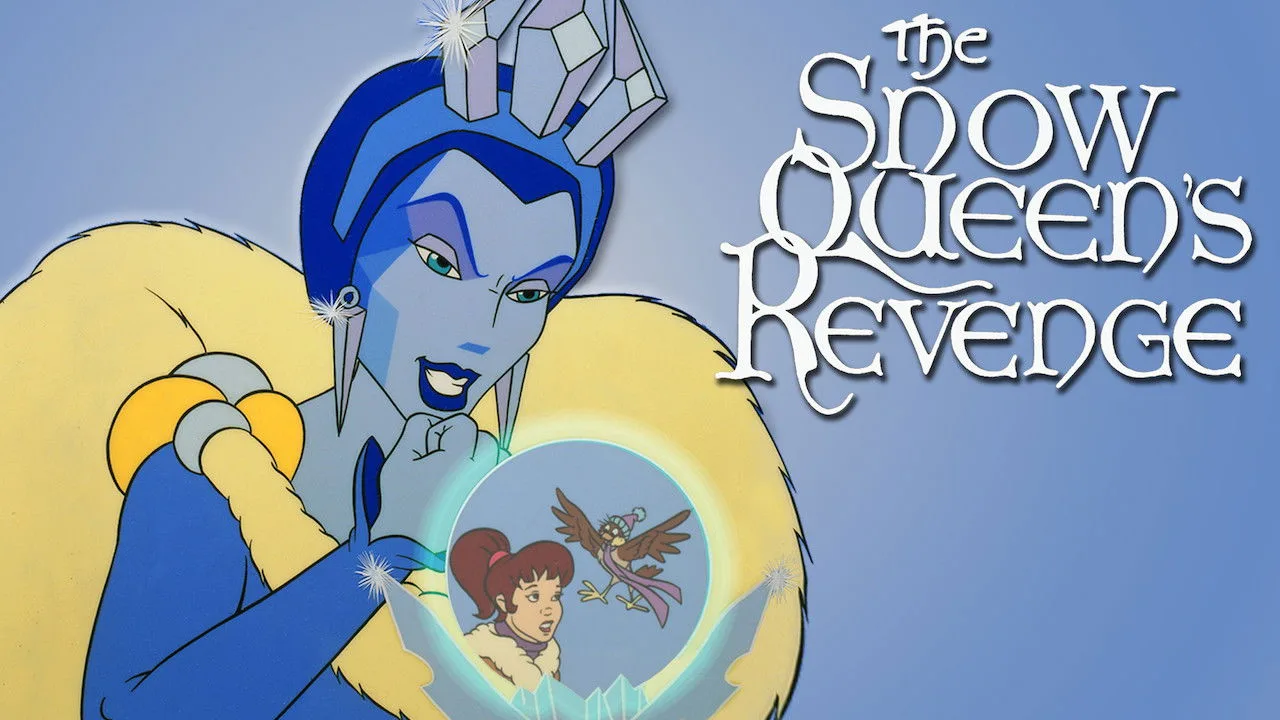
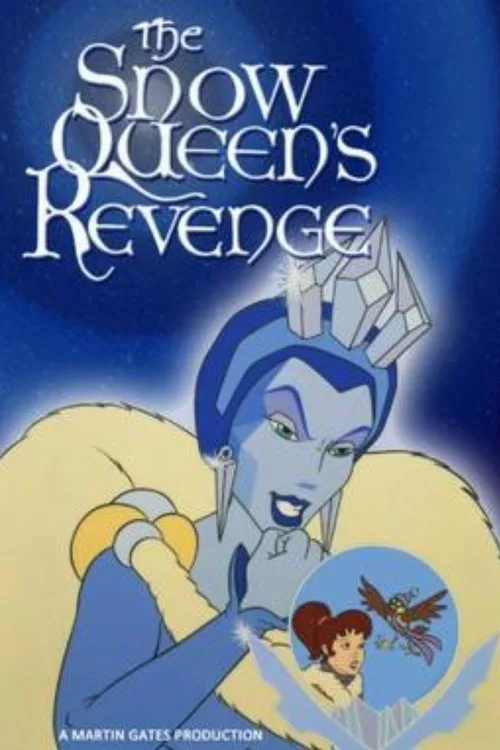
The Snow Queen holds Ellie responsible for ruining her plans to freeze the world and sets out to seek revenge. She kidnaps Dimly the flying reindeer and once again Ellie and her friend Peeps the Sparrow are forced to travel, this time to the South Pole, where the Snow Queen and her Trolls have taken up residence.
 rating 5/10 User rating 12 votes 55%
 ❄ Christmas Connection
The Snow Queen's Revenge is set in a perpetual winter kingdom where snow and ice define every scene, pulling from a fairy tale tradition that has long been entwined with the European Christmas season. Hans Christian Andersen's original Snow Queen story has been a Christmas staple in Scandinavia and Central Europe for generations. The sequel doubles down on the winter world, making it a natural watch for families in the weeks before Christmas even if no one hangs stockings or trims a tree on screen.
Our Review
The Snow Queen's Revenge arrived in 1996 as a follow-up to Martin Gates Productions' 1995 adaptation of Hans Christian Andersen's "The Snow Queen." Where the original had a fairy tale source to lean on, this sequel is entirely original, which is both its bravest quality and its most obvious liability. The Snow Queen, defeated in the first film, is back. She is angry. She wants revenge. The title is not working hard to conceal the premise.
That said, there is something quietly admirable about a low-budget British animated sequel that commits fully to its own invented mythology rather than retreading the original story beat for beat. This film builds outward from the world the first film established, which is more ambition than most direct-to-video sequels bother to muster.
What The Snow Queen's Revenge Actually Is
Martin Gates Productions was a British animation house responsible for a run of Andersen adaptations through the 1990s, working in a style that borrowed from the tradition of European fairy tale animation without matching the production values of Disney or Don Bluth. The results were always sincere, sometimes affecting, and occasionally clunky. The Snow Queen's Revenge sits in that middle zone. It looks like what it is: a production made carefully but without enormous resources, with hand-drawn character animation that ranges from competent to awkward depending on the scene.
The story sends Gerda and Kai back into conflict with the Snow Queen, who is gathering power and plotting to freeze the land permanently. There are new characters introduced to pad the running time, a troll or two, some comic relief, and the general structure of a quest. The screenplay does not reinvent anything, but it moves at a reasonable pace and does not bore younger viewers.
Rik Mayall and the Voice Cast
Rik Mayall is the legitimate reason to pay attention to this production. Mayall, the British comedian best known for The Young Ones, Bottom, and his anarchic work with Adrian Edmondson, was genuinely one of the funniest people working in British entertainment. He brings that energy to his role here, giving a performance that is too large for the material in the best possible way. Wherever Mayall appears on the soundtrack, the film livens up.
He was an interesting casting choice for an animated fairy tale aimed at children, given that his comedy was almost entirely built on chaos and aggression. Those instincts translate surprisingly well to a pantomime villain register. He understood how to be funny while being threatening, which is the only mode that works in this kind of animated antagonist role.
The rest of the voice cast performs competently without distinction. This is a production where the writing did not give most performers much to work with beyond functional dialogue.
Is The Snow Queen's Revenge a Christmas Movie?
Debating whether this counts as a Christmas film is a reasonable question with a partial answer. The movie has no Christmas content. No one celebrates anything, exchanges gifts, or decorates a tree. The setting is frozen northern landscape, which is winter without being specifically Christmas. The Snow Queen herself predates any Christmas mythology, drawn from pre-Christian Scandinavian folklore before Andersen shaped her into literary form in 1844.
And yet. The film belongs to a specific category of winter fantasy that European families have watched in the weeks around Christmas for decades. The Andersen adaptation tradition is a Christmas tradition in Denmark, the Czech Republic, Slovakia, and Poland in particular, where fairy tale films air on television every year during the Christmas season as reliably as carols on the radio. By cultural context and timing, this is a Christmas-adjacent film even when it has nothing to say about Christmas directly.
Put it this way: no one watches The Snow Queen's Revenge in July.
The Honest Assessment
The Snow Queen's Revenge is not a good film in the way adults evaluate films. The animation has limits it runs into frequently. The script introduces ideas it does not fully develop. The pacing in the middle section loses momentum. These are genuine flaws.
For the audience this film was made for, which is children under ten watching at home on a winter afternoon, none of that matters much. The Snow Queen is visually effective as a villain. The world feels cold and genuinely threatening in the way fairy tale worlds are supposed to. The film understands that children want stakes and resolution, and it delivers both. Rik Mayall is funny enough to entertain a parent sitting nearby.
As sequels to mid-budget animated fairy tale adaptations go, there are worse outcomes than this. The film is not cynical. It is not lazy in the way truly bad sequels are lazy. It is just small, working within its means, occasionally exceeding them.
Fun Facts
The Snow Queen's Revenge is a fully original story, not based on any Hans Christian Andersen source material. The 1995 predecessor adapted Andersen's 1844 story, but the sequel invented its own plot from scratch.
Martin Gates Productions, which made both films, was based in the United Kingdom and produced a series of animated Andersen adaptations through the 1990s, including versions of "The Ugly Duckling" and "Thumbelina."
Rik Mayall, who voices a character in this film, co-created and starred in the BBC sitcom The Young Ones (1982-1984), which helped define British alternative comedy in the 1980s. He died in June 2014 at age 56.
Hans Christian Andersen published "The Snow Queen" in 1844 as part of a collection called New Fairy Tales. It remains one of his longest and most structurally ambitious stories, running across seven chapters.
The original 1995 Snow Queen adaptation was released direct-to-video in the United Kingdom, making it one of a wave of animated fairy tale films produced for home video in the early 1990s as the VHS market for children's content expanded rapidly.
The Snow Queen as a figure appears across multiple Northern European folk traditions before Andersen formalized her in literature. Variants of the ice queen archetype appear in Finnish, Norse, and Slavic folklore, which is part of why the character resonates across a wide geographic audience.
Disney's Frozen (2013), which grossed over $1.2 billion worldwide, drew loose inspiration from Andersen's "The Snow Queen," though the finished film shares almost nothing with the source material's plot beyond the icy setting and sisterly relationship.
Cast