
 Morocco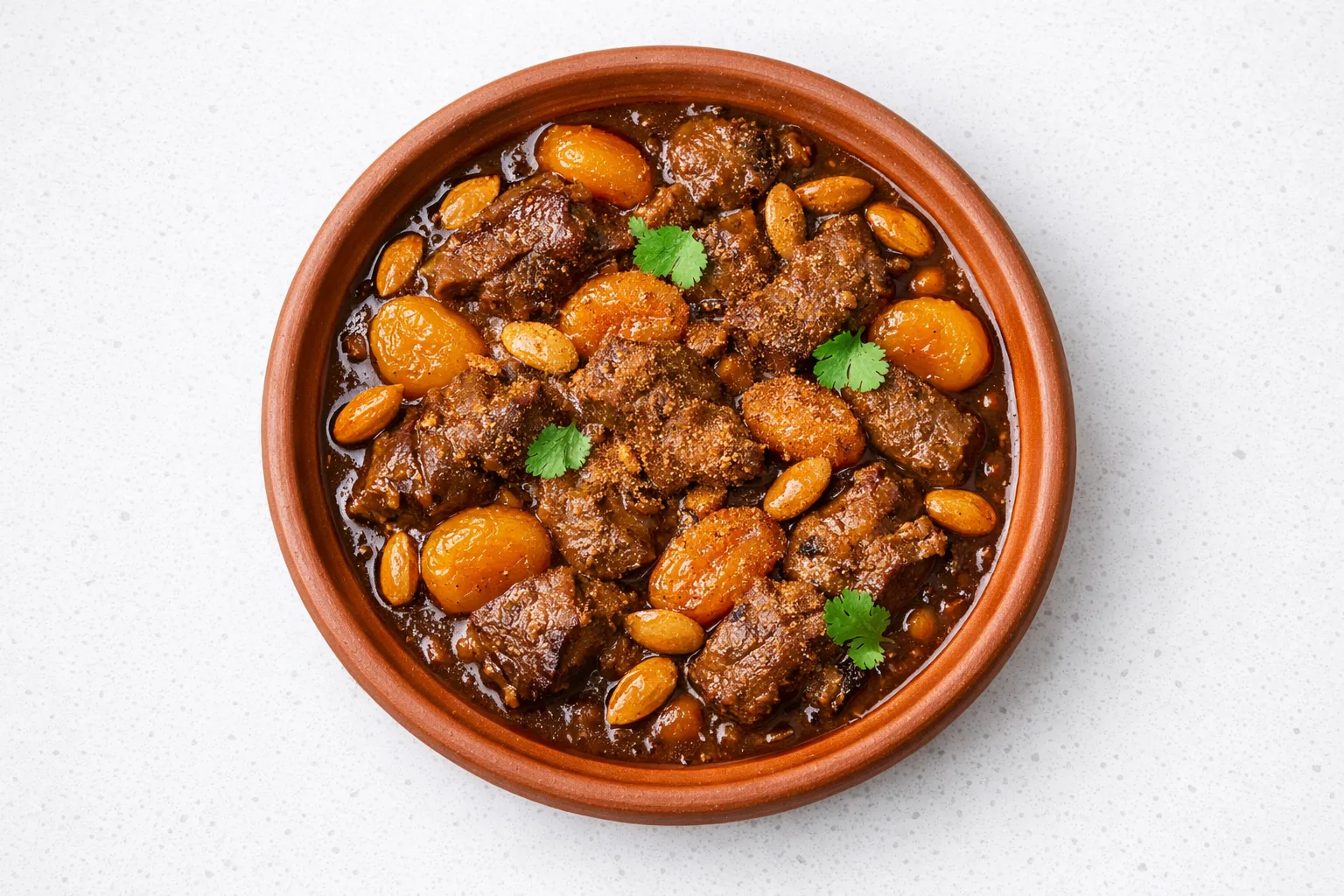
The tagine is Morocco's most iconic dish, a slow-braised stew named after the conical clay pot it cooks in. For Christmas celebrations in Morocco's Christian communities and among expatriate Moroccan families celebrating abroad, the lamb tagine is the meal that marks the occasion: a generous, warming dish built on the country's signature spice architecture, ras el hanout, layered with sweet-dried fruit and the crunch of toasted almonds.
This moroccan lamb tagine uses bone-in shoulder pieces, which stay tender and yielding over a long, low braise without falling apart entirely. The sauce builds its depth from browning the meat properly first, blooming the spices in fat, and then letting the dried apricots cook down until they almost dissolve into the braising liquid. What comes out of the pot is a tagine with real backbone: savory, gently sweet, and fragrant without being perfumed.
You do not need a tagine pot to make this. A wide, heavy Dutch oven produces results that are essentially identical, since the traditional pot's conical lid is most useful for open-fire cooking where moisture management is critical. On a stovetop or in an oven, a tight-fitting lid on a heavy casserole does the same job.
Equipment
Instructions
Tap each step to track your progress
- 1
Pat the lamb pieces dry with paper towels. Season all over with salt and pepper. Drying the surface is essential for proper browning; wet meat steams rather than sears.
- 2
Combine all the spice paste ingredients in a small bowl. Set aside.
- 3
Heat the olive oil in a large Dutch oven or heavy casserole over medium-high heat until it shimmers. Working in two batches to avoid crowding, brown the lamb pieces on all sides, about 3 to 4 minutes per side. The pieces should develop a deep, golden-brown crust. Transfer to a plate and set aside.
- 4
Reduce the heat to medium. Add the grated onions to the same pot and cook, stirring frequently, for 8 to 10 minutes until they are soft, golden, and have released most of their liquid. The onions should not be caramelized, just deeply softened.
- 5
Add the garlic and the spice paste. Stir constantly for 1 to 2 minutes until the spices are fragrant and coating the onions. Add the tomato paste and stir for another 30 seconds.
- 6
Return the browned lamb pieces to the pot along with any accumulated juices on the plate. Add the stock, water, honey, drained diced tomatoes, and apricots. Stir to combine, scraping up any browned bits from the bottom of the pot.
- 7
Bring the liquid to a gentle simmer, then reduce heat to low. Cover tightly with a lid and cook for 1 hour 30 minutes to 1 hour 45 minutes, until the lamb is fork-tender. Check every 30 minutes; the liquid should bubble very gently, not boil. If it is boiling hard, reduce the heat further.
- 8
Alternatively, cook in a 325F (165C) oven with the lid on for the same duration. The oven method produces more even heat and is particularly useful if you are cooking for a crowd and need the stovetop free.
- 9
Once the lamb is tender and the sauce has thickened, taste and adjust seasoning. If the sauce is too thin, remove the lid and simmer uncovered for 5 to 10 minutes to reduce. If it is too thick, add a splash of water or stock.
- 10
Transfer to a serving dish or bring the Dutch oven directly to the table. Scatter the toasted almonds, cilantro, parsley, and preserved lemon rind over the top just before serving.
Tips & Tricks
Make it the day before
This tagine is one of those dishes that genuinely tastes better reheated. The spices mellow and the sauce tightens as it sits overnight. For a Christmas dinner, cooking it on December 24 and reheating on December 25 is a practical and flavor-positive strategy. Reheat covered over low heat, adding 2 to 3 tablespoons of water if needed.
Grate, do not dice, the onions
Grated onions break down completely during cooking and become part of the sauce rather than remaining as identifiable chunks. This is standard in Moroccan cooking and is what gives the sauce its silky, cohesive texture. Use the coarse side of a box grater and accept that your eyes will water.
Build a substitute for ras el hanout if needed
Ras el hanout is a North African spice blend available in specialty grocers and online. If unavailable, combine 1 teaspoon cumin, 1 teaspoon coriander, 1/2 teaspoon cinnamon, 1/2 teaspoon ginger, 1/4 teaspoon allspice, 1/4 teaspoon cayenne, and 1/4 teaspoon cardamom. It is not identical but achieves a similar layered warmth.
Brown the meat in small batches
Crowding the pan drops the temperature and causes the lamb to steam rather than sear. A pale, grey exterior adds almost nothing to the final depth of flavor. Take the extra 8 to 10 minutes to do two proper batches; the difference is significant.
Toast the almonds separately
Spread blanched almonds in a dry skillet over medium heat and stir for 3 to 4 minutes until golden and fragrant. They continue toasting slightly off the heat, so pull them when they are just past pale gold. Add them only at the very end; toasted nuts soften and lose texture if cooked in the braise.
Troubleshooting
The sauce is watery and thin
The onions likely were not cooked down long enough, which leaves too much moisture in the pot, or the lamb was too wet when it went in. Grating the onions rather than dicing them helps them break down faster. If the sauce is thin at the end of cooking, remove the lid and simmer on medium heat for 10 to 15 minutes until it reduces to a coating consistency.
The meat is tough after the full cooking time
Lamb shoulder contains significant connective tissue that needs time and heat to convert to gelatin. If the lamb is still chewy at 1 hour 45 minutes, simply keep cooking with the lid on, checking every 15 minutes. The difference between tough and yielding can be a matter of just 20 additional minutes, depending on the age of the animal and the cut.
The spices taste harsh or raw
The spices were not properly bloomed in step 5. Blooming dry spices in fat for 60 to 90 seconds is what activates fat-soluble flavor compounds. If the dish tastes sharp or one-dimensional at the end, stir in 1/2 teaspoon of ras el hanout with the honey when adjusting seasoning, and cook uncovered for 5 more minutes to mellow it.
The apricots have disintegrated completely
This happens when apricots are added too early or are very soft to begin with. It does not ruin the dish; the apricots thicken and sweeten the sauce, which is actually desirable. If you want visible apricot pieces, add them in the last 45 minutes rather than at the beginning.
The lamb has a strong gamey smell
This is characteristic of older or grass-fed lamb. The long list of warming spices in this recipe is specifically designed to balance that quality. If you are particularly sensitive, soak the lamb pieces in cold salted water for 30 minutes before cooking, pat dry, and proceed. Using spring lamb or younger lamb from the butcher also helps.
Variations
With Chickpeas
Add one 14-oz (400 g) can of drained, rinsed chickpeas to the pot in the last 30 minutes of cooking. They absorb the braising liquid and make the tagine more substantial, turning it from a 6-serving dish into an 8-serving one. This is a common Moroccan home addition for feeding a larger family.
Prune and Orange Variation
Replace the dried apricots with pitted prunes and add the zest and juice of one orange to the braising liquid. Prunes make the sauce darker and richer, with a deeper sweetness. Reduce the honey to 1 tablespoon since prunes are sweeter than apricots.
Gluten-Free and Dairy-Free
This recipe is naturally gluten-free and dairy-free as written. Verify that your ras el hanout blend contains no wheat-based fillers (some blended spice mixes do). Serve with rice, gluten-free couscous, or millet instead of regular couscous.
Slow Cooker Version
Brown the lamb and cook the onion-spice base on the stovetop as described, then transfer everything to a slow cooker. Cook on low for 7 to 8 hours or high for 4 to 5 hours. The meat will be more fall-apart tender than the stovetop version, which suits those who prefer a very soft braise. Add the almonds, herbs, and preserved lemon only at the end.
Serving & Gifting
Serve the tagine directly from the Dutch oven or a large warmed bowl, with couscous, flatbread, or steamed rice to absorb the sauce. Fluffy couscous moistened with a little butter is the most traditional accompaniment. For a festive Christmas table, pair it with a simple green salad with orange slices and olives, and a bottle of full-bodied red wine such as a Syrah or a Moroccan Grenache. Leftovers make an outstanding filling for flatbread wraps the next day.
Storage & Freezing
Leftover tagine keeps in an airtight container in the refrigerator for up to 4 days and improves noticeably on day two as the spices deepen. Reheat gently on the stovetop over low heat with a splash of water or stock to loosen the sauce. The tagine freezes well for up to 3 months; freeze in portions, thaw overnight in the refrigerator, and reheat as above. Do not freeze with the almond and herb garnish; add fresh ones when reheating.
Common Questions
Can I use boneless lamb shoulder instead of bone-in?
Yes. Boneless shoulder pieces are easier to eat and cook slightly faster, typically 15 to 20 minutes less. The bone-in version does add a bit more gelatin to the sauce as it braises, giving the finished liquid a richer body, but boneless shoulder produces an excellent tagine and is more practical for a dinner party.
What is the difference between a tagine and a regular stew?
A tagine uses the same braising principles as a stew but with a distinct Moroccan spice profile (cumin, ginger, cinnamon, turmeric) and a balance of savory and sweet elements, typically dried fruit and sometimes honey. The traditional conical clay pot creates a self-basting cycle as steam condenses and runs back down, but in a sealed Dutch oven the effect is virtually identical.
How long does slow cooked lamb tagine need to braise?
Bone-in lamb shoulder needs at least 1 hour 30 minutes at a gentle simmer to become truly tender. At 1 hour 45 minutes it is reliably fork-tender. The connective tissue and collagen in shoulder takes time and sustained heat to break down; do not rush it with high heat, which toughens the exterior before the interior softens.
Can I make this moroccan christmas dinner dish ahead for a large group?
Yes, and it is ideal for advance preparation. Double the recipe in a large pot and refrigerate up to 2 days ahead. The flavors improve with time. Reheat covered on low heat, adding a little stock or water to restore the sauce consistency. Add fresh herbs and almonds only after reheating.
Is this recipe gluten-free?
Yes, the recipe as written is gluten-free. The only potential issue is the ras el hanout spice blend: some commercial blends contain wheat-based fillers or anticaking agents. Check the label or make your own blend from whole spices to be certain.
What can I serve with moroccan lamb tagine instead of couscous?
Steamed basmati rice works well and is naturally gluten-free. Flatbread or pita for scooping is very traditional. Mashed sweet potato or roasted root vegetables also complement the warm spices. For a Christmas dinner table, roasted cauliflower with olive oil and cumin makes a fitting side that echoes the Moroccan flavor profile.