
 France
  United Kingdom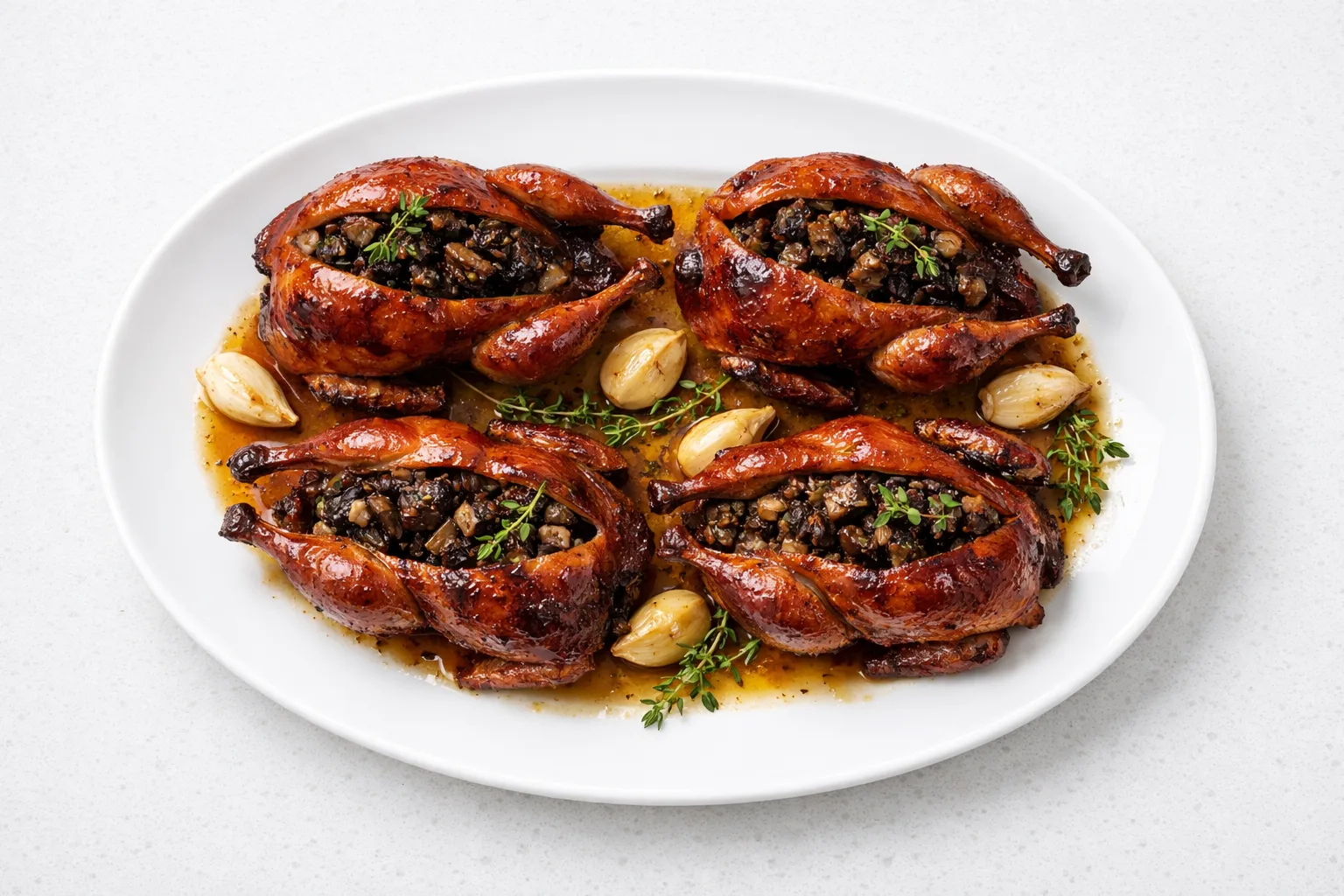
Roast quail for Christmas is the kind of dish that signals a cook who knows what they are doing. Quail have been prized game birds on European holiday tables for centuries, especially in France, where caille rotie appears on Christmas Eve menus in homes that take the reveillon feast seriously. Each bird is a single elegant serving, the skin crisps fast under high heat, and the flavor is far richer than chicken with none of the fussiness of a whole roast goose.
This recipe stuffs the cavity with a quick sauté of wild mushrooms, shallots, and fresh thyme, then pushes compound herb butter under the breast skin before roasting at high heat. The mushroom stuffing steams from the inside while the butter bastes from below the skin, keeping the breast meat from drying out in the short cook time. The result is a Christmas quail dinner where the bird is genuinely juicy, the skin is genuinely crisp, and the whole thing is on the table in under an hour.
Plan on two quail per person as a main course. The birds are small but dense with flavor, and serving two per guest makes for a generous, visually striking plate.
Equipment
Instructions
Tap each step to track your progress
- 1
Make the stuffing first so it has time to cool. Melt 2 tbsp butter in a medium skillet over medium-high heat. Add the shallots and cook for 2 minutes until softened and translucent. Add the minced garlic and cook for 30 seconds. Add the chopped mushrooms and raise the heat to high. Cook without stirring for 2 minutes to get some browning, then stir and continue cooking for another 3 to 4 minutes until the mushrooms have released their moisture and the pan looks almost dry. Add the thyme, rosemary, and white wine. Cook for 1 minute until the wine evaporates. Season with salt and pepper, stir in the breadcrumbs, and transfer to a plate to cool completely.
- 2
Make the herb butter by combining the softened butter, grated garlic, thyme, rosemary, salt, and lemon zest in a small bowl. Mix with a fork until fully combined. Set aside at room temperature.
- 3
Preheat the oven to 450°F (230°C). Place a heavy roasting pan or large cast iron skillet in the oven while it preheats. A hot pan means immediate searing contact from below.
- 4
Prepare the quail. Pat each bird completely dry with paper towels inside and out. Moisture is the enemy of crisp skin. Season the cavities lightly with salt and pepper.
- 5
Stuff the cavities. Divide the cooled mushroom stuffing evenly among the 8 birds, packing it loosely into the cavity with a spoon. Do not overfill; the stuffing should sit inside without spilling. If the birds are semi-boned, truss the legs together loosely with kitchen twine.
- 6
Apply the herb butter under the skin. Use your finger to gently separate the breast skin from the meat by carefully working your finger under the skin from the neck end. Be slow and patient; the skin tears easily. Push roughly 1 teaspoon of herb butter under each breast, then smooth the skin back down and press gently to distribute the butter evenly.
- 7
Rub the outside of each bird with a thin film of neutral oil. Season the exterior with salt and cracked pepper. Tuck a thyme sprig against each bird.
- 8
Remove the preheated pan from the oven. Arrange the smashed garlic cloves and remaining thyme sprigs in the pan, then place the quail breast-side up with enough space between birds to allow air circulation. Pour the white wine or stock into the base of the pan.
- 9
Roast for 18 to 22 minutes. The skin should be deep mahogany brown and the legs should feel firm when pressed. A thermometer inserted into the thickest part of the thigh (not touching bone) should read 160°F (71°C). Quail are forgiving of a little pink at the bone near the leg joint; they are safe to eat and more flavorful when not overcooked to 165°F.
- 10
Rest the birds on a warm platter, tented loosely with foil, for 5 minutes. While they rest, set the roasting pan over medium-high heat on the stovetop. Scrape up any fond, let the liquid reduce by half, taste for seasoning, and pour the pan juices over the birds before serving.
Tips & Tricks
Dry the birds for at least an hour before cooking
Crisp quail skin requires dry surface moisture. If you have time, unwrap the birds and set them uncovered on a rack in the refrigerator for 1 to 4 hours before cooking. The difference in skin texture compared to birds roasted straight from the package is significant.
Use a hot pan for immediate contact heat
Starting the quail in a preheated heavy pan means the underside of the bird gets direct searing heat from the moment it touches the surface, not from above. This browns the back and base of the bird without any extra steps.
Push butter under the skin with cold hands
Body heat melts the butter quickly. Work fast, or chill your hands under cold water first. Once placed, press gently but firmly over the skin to spread the butter into an even layer covering the whole breast, not just a blob in the center.
Season heavily on the outside
Quail skin is thin and you are seasoning through it to reach the meat. Be more generous with salt on the outside of these birds than you would with a chicken. Under-seasoned quail tastes bland rather than delicate.
Prep everything the night before for a stress-free Christmas dinner
The stuffing keeps refrigerated for 2 days. The herb butter keeps refrigerated for up to a week (bring to room temperature before using). On Christmas Day, you only need to dry and stuff the birds, apply the butter, and roast. The total active time on the day is under 20 minutes.
Troubleshooting
The skin is pale and soft, not crispy
The bird was not dried thoroughly before roasting, or the oven was not fully preheated. Moisture steams the skin instead of roasting it. Pat the birds completely dry, including inside the cavity, and give the oven and pan a full 20 minutes to reach temperature before the birds go in.
The breast meat is dry and stringy
The quail were overcooked. These birds have very little fat and cook fast. Start checking the internal temperature at 18 minutes. Pull the birds at 160°F; they will carry over to safe temperature during the 5-minute rest. If you consistently overshoot, try wrapping the breasts with pancetta (see variations) which provides insulation and extra fat.
The stuffing falls out during roasting
The stuffing was overpacked or the birds were handled roughly when transferring to the pan. Use a spoon to push the stuffing firmly but not tightly into the cavity. For birds that are not semi-boned, the rib cage naturally holds the stuffing in place. For semi-boned birds, truss the legs snugly with twine so the cavity opening is smaller.
The herb butter melted out and pooled in the pan before cooking
The birds went into the oven while the butter was too warm and liquid. After placing the butter under the skin, refrigerate the birds for 15 to 20 minutes before roasting. Cold butter holds its position under the skin and melts slowly during cooking, basting from within.
The pan juices are bitter
The garlic cloves or thyme burned in the dry pan before the wine was added. Keep the garlic cloves unpeeled (they self-protect in their papery skin), and do not skip the wine or stock in the base of the pan. If the fond looks very dark before deglazing, add a splash more stock to dilute it.
Variations
Pancetta-Wrapped Quail
Omit the herb butter under the skin. Instead, wrap each stuffed bird tightly with 2 thin slices of pancetta, overlapping to cover the breast completely. The pancetta self-bastes and adds a salty, porky richness. Roast as directed; the pancetta will be crispy and deeply browned. This approach is more forgiving for beginners since the pancetta protects against any danger of the breast drying out.
Dried Fruit and Chestnut Stuffing
Replace the mushroom stuffing with a mixture of sautéed shallots, crumbled cooked chestnuts (vacuum-packed works fine), chopped dried apricots, and a pinch of allspice. This variation skews sweeter and is particularly good with a splash of port in the pan rather than white wine. The flavor profile is more classically British in the game-bird tradition.
Gluten-Free Adaptation
Omit the breadcrumbs from the mushroom stuffing entirely. The binding role they play is minimal; the stuffing will be slightly looser but holds in the cavity without issue. All other ingredients in this recipe are naturally gluten-free. Check your stock carefully if using store-bought.
Spiced Orange Quail
Replace the herb butter with a compound of softened butter, orange zest, 1/4 tsp ground coriander, 1/4 tsp ground cardamom, and a pinch of cayenne. Use orange juice in place of wine in the roasting pan. The warm spice profile suits a Christmas table and pairs well with cranberry sauce or a simple radicchio salad with pomegranate.
Serving & Gifting
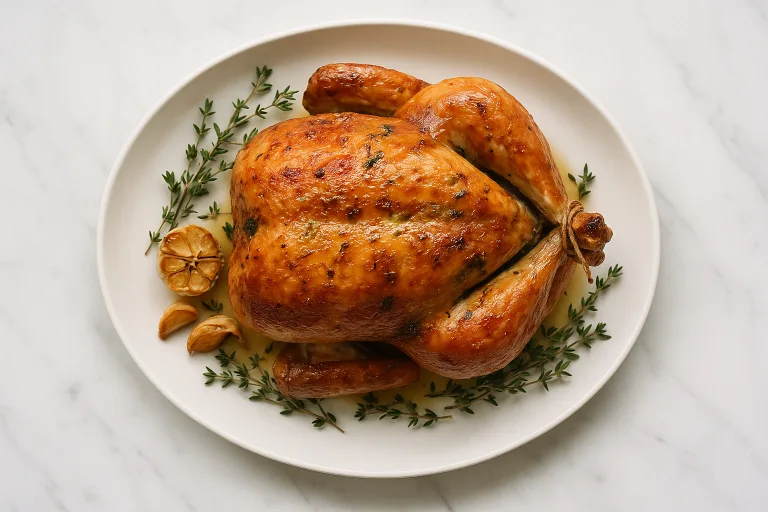
Two quail per person is the right portion for a main course. Arrange the birds on a warm oval platter, pour the reduced pan juices over the top, and scatter a few fresh thyme sprigs alongside. Roast quail pairs naturally with roasted root vegetables, creamed spinach, potato gratin, or buttered lentils. For drinks, a medium-bodied red Burgundy or a good Cotes du Rhone works better than a heavy Cabernet, which overwhelms the delicate game flavor. As part of a multi-course Christmas dinner, a single bird per person is generous enough as a second course after a starter.
Storage & Freezing
Roasted quail are best eaten immediately after resting; the skin softens on standing. If you have leftovers, refrigerate in an airtight container for up to 2 days. Reheat gently in a 325°F (165°C) oven covered with foil for 10 to 12 minutes; expect some loss of crispness. The mushroom stuffing can be made up to 2 days ahead and kept refrigerated; cold stuffing is actually easier to work with when filling the birds. Do not freeze stuffed, raw quail as the texture of the mushroom filling degrades on thawing.
Common Questions
How do I know when roast quail is cooked through?
Use an instant-read thermometer in the thickest part of the thigh, avoiding the bone. You are looking for 160°F (71°C). The legs should feel firm when pressed and the skin should be deep golden brown. Small quail cook fast; at 450°F they typically need only 18 to 22 minutes.
Can I prepare stuffed roast quail ahead of time?
You can stuff the birds and refrigerate them uncovered for up to 4 hours before roasting. The cold stuffing keeps the birds cooler in the center, so add an extra 2 to 3 minutes to the roasting time. Do not fully cook and reheat quail; reheating dries out the breast meat and softens the skin irreversibly.
What does quail taste like compared to chicken?
Quail has a richer, slightly gamey flavor with more mineral depth than chicken, though it is milder than duck or pheasant. The meat is darker and denser, particularly in the legs. Think of it as a more intensely flavored small chicken. It is not at all strong or challenging, which makes it an accessible choice for guests unfamiliar with game birds.
Is it hard to eat quail at the table?
Quail is traditionally eaten with your hands at informal dinners, but for a formal Christmas table it is easier to pre-carve in the kitchen. A sharp knife separating the legs from the breast, then the breast halved, gives four tidy pieces per bird that are fork-and-knife friendly. Alternatively, serve the birds whole and provide small bowls for bones.
Can I substitute quail with another bird for this recipe?
The herb butter and mushroom stuffing technique works for any small game bird. Squab (pigeon) takes the same temperature and a similar time. Poussin (small chicken) will need 35 to 40 minutes at the same temperature. The stuffing also works well inside a larger chicken under the skin rather than in the cavity, with cooking time extended accordingly.
Where can I buy quail for Christmas dinner?
Most butcher shops will carry fresh quail in the weeks before Christmas, especially if ordered in advance. Frozen quail are available year-round at specialty grocery stores and online from game meat suppliers. Thaw frozen quail overnight in the refrigerator; never on the countertop.