
 United Kingdom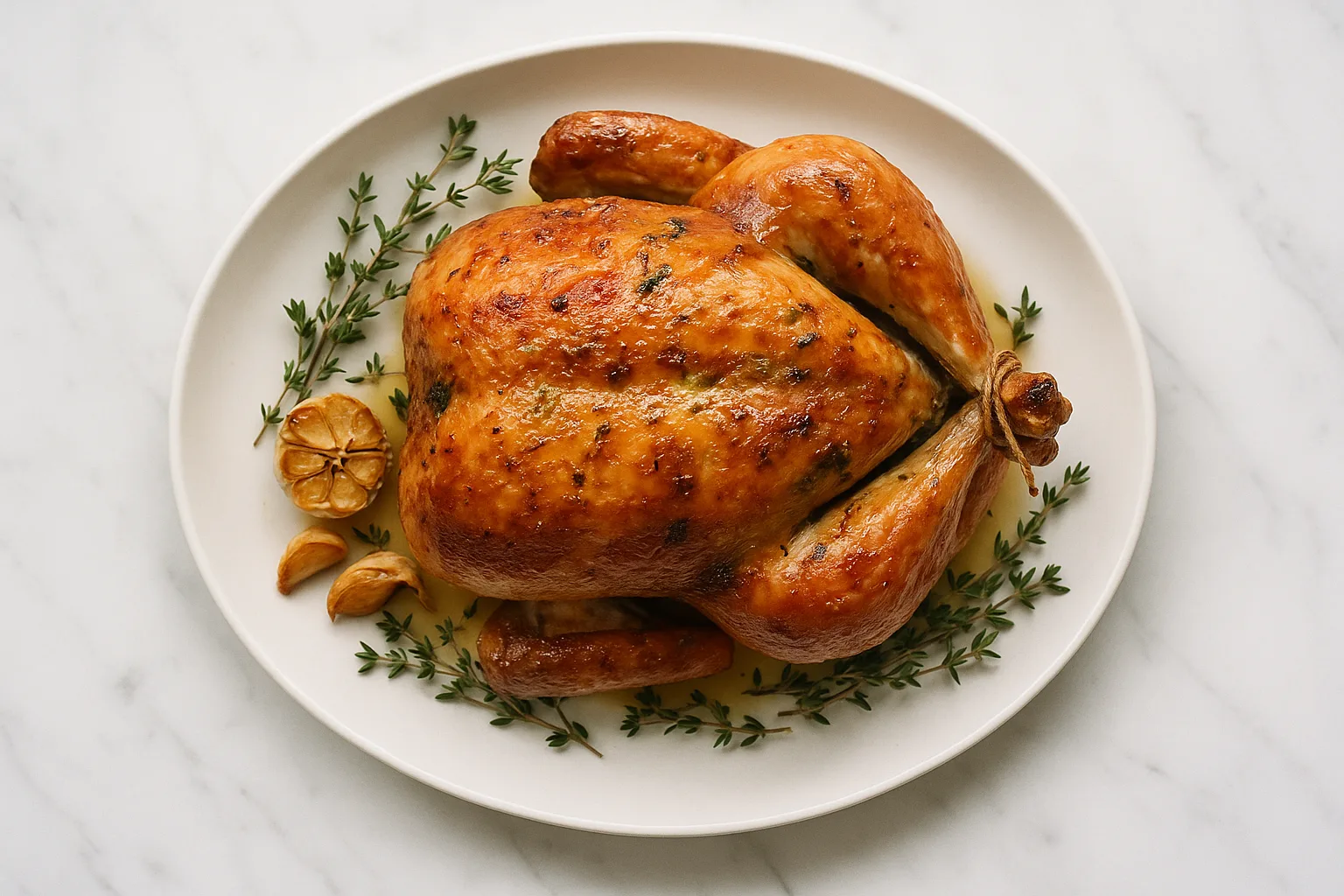
Christmas roast chicken earns its place at the holiday table for exactly the same reasons it works every other Sunday of the year: even heat, good butter, and a bird that fits in a standard oven without a fight. In Britain and across much of Europe, a well-roasted whole chicken with stuffing has long been the practical alternative to turkey for smaller households, and it is no less festive for it. The key difference between a forgettable roast and a genuinely memorable Christmas chicken is what happens before it goes in the oven.
Herb butter worked under the skin keeps the breast meat from drying out during the longer cook time, while a simple bread stuffing scented with sage, onion, and lemon zest perfumes the entire bird from the inside. The result is juicier meat, more flavour in every slice, and a stuffing that absorbs all the chicken fat as it cooks. This recipe targets an internal temperature of 165 F (74 C) in the thigh, rests for at least 15 minutes, and carves cleanly every time.
Equipment
Instructions
Tap each step to track your progress
- 1
Take the chicken out of the refrigerator 45 minutes before roasting. Preheat your oven to 425 F (220 C). A cold bird straight from the fridge leads to uneven cooking, with the outside overcooking before the inside reaches temperature.
- 2
Make the herb butter: combine the softened butter, grated garlic, thyme, rosemary, lemon zest, salt, and pepper in a small bowl. Mash together with a fork until fully incorporated and uniformly green-specked.
- 3
Make the stuffing: melt 1 tablespoon butter in a skillet over medium heat. Add the diced onion and cook, stirring occasionally, for 6 to 7 minutes until soft and translucent. Add the minced garlic and chopped sage; cook 1 minute more until fragrant. Remove from heat. In a bowl, combine the bread cubes with the cooked onion mixture, lemon zest, chicken broth, beaten egg, salt, and pepper. Toss until the bread is evenly moistened but not soggy. The mixture should just hold together when pressed.
- 4
Season the chicken cavity with a pinch of salt, then stuff it loosely with the bread stuffing. Do not pack tightly; the stuffing expands as it cooks and needs room to cook through properly. Tuck the lemon halves, smashed garlic cloves, and thyme sprigs into any remaining space.
- 5
Use your fingers to carefully separate the skin from the breast meat, working from the cavity end without tearing. Push the herb butter under the skin in an even layer covering as much of the breast as possible. Rub any remaining butter over the outside of the skin. Drizzle the olive oil over the top and season the outside with salt and pepper.
- 6
Tie the legs together with kitchen twine and tuck the wing tips under the body. Place the chicken breast-side up on a roasting rack set inside a roasting pan. The rack keeps the bird out of its own juices so the underside browns rather than steams.
- 7
Roast at 425 F (220 C) for 20 minutes until the skin starts to blister and colour. Reduce the oven temperature to 375 F (190 C) and continue roasting for 50 to 60 minutes more, depending on the size of the bird. A 3.5 lb chicken will be done closer to 50 minutes after the temperature drop; a 4.5 lb bird will need the full 60.
- 8
Check for doneness by inserting an instant-read thermometer into the thickest part of the thigh, not touching bone. You want 165 F (74 C). The stuffing in the cavity must also reach 165 F. If the skin is browning too fast before the thigh hits temperature, tent loosely with foil.
- 9
Transfer the chicken to a cutting board and rest uncovered for at least 15 minutes before carving. The juices redistribute during this time. Resting is not optional: carve too early and the juices run out onto the board, leaving the meat dry. Pour any collected juices from the roasting pan over the carved portions before serving.
Tips & Tricks
Dry the skin the night before
For the crispiest skin, unwrap the chicken the evening before Christmas and leave it uncovered on a rack in the refrigerator overnight. The cold, dry air of the fridge pulls moisture from the skin far more effectively than patting with paper towels. The next day, the skin will look almost leathery before buttering, and it will blister beautifully in the oven.
Use a thermometer, not the leg test
Wiggling the leg or checking the colour of the juices is imprecise. An instant-read thermometer costs less than 15 dollars and removes all guesswork. Insert it into the thickest part of the thigh at an angle, avoiding bone, and you will know within 10 seconds if the bird is done.
Let the butter fully soften
Herb butter that is still slightly cold will not spread under the skin without tearing it. Give the butter a full 30 minutes at room temperature, or microwave it in 5-second bursts until it is soft and pliable but not melted. Melted butter will just run out rather than stay under the skin.
Rest longer than you think
15 minutes is the minimum for a 3.5 lb bird, but 20 minutes is better. The resting period allows the muscle fibres to relax and reabsorb the juices that were driven to the surface by heat. The chicken will still be well above serving temperature after 20 minutes if you do not cut into it.
Make the stuffing ahead
The bread stuffing can be assembled up to 24 hours in advance and stored covered in the refrigerator. Cold stuffing takes a few minutes longer to heat through in the cavity, which is not a problem if you are using a thermometer to verify doneness.
Troubleshooting
The breast meat is dry even though the thigh hit 165 F
The breast and thigh finish at different times in a whole bird. The herb butter under the breast skin is your main insurance against this, but it only works if it is fully softened and spread in an even layer. If butter was still cold or lumpy, it will not distribute. Next time, mash the butter thoroughly and let it sit at room temperature for at least 20 minutes before using.
The stuffing in the cavity is still undercooked when the thigh is done
This happens when the cavity is packed too tightly. Stuffing needs air circulation to cook through. Remove the chicken from the oven, scoop the stuffing into an oven-safe dish, and bake it separately at 375 F for 15 to 20 minutes until it reaches 165 F. Return the chicken to the warm oven (turned off) while the stuffing finishes.
The skin is pale and not crisping up
The chicken was not dry enough before going into the oven. Moisture on the surface steams rather than roasts. Pat the skin completely dry with paper towels and make sure no marinade or wet brine is on the outside. The initial blast at 425 F is designed to drive off surface moisture and start the Maillard reaction; do not skip it.
The pan drippings are burning
Your roasting pan has too little liquid and too much fat. Add 1/2 cup of chicken broth or water to the bottom of the pan when you reduce the oven temperature. This prevents the drippings from scorching and gives you the start of a pan sauce when you deglaze after roasting.
The bird is done 20 minutes earlier than expected
Oven calibration varies. Always trust the thermometer, not the clock. Rest the chicken for at least 15 minutes regardless of when it finishes; a bird pulled at 165 F will coast up a few degrees during resting and the meat will be fully safe and juicier.
Variations
Lemon and Tarragon Chicken
Swap the rosemary and thyme in the herb butter for 2 tablespoons of fresh tarragon and increase the lemon zest to 2 teaspoons. Stuff the cavity with lemon halves and a few tarragon sprigs instead of the bread stuffing. The flavour is brighter and more delicate, well suited to those who find sage too assertive.
Garlic and Paprika Crust
Replace the herb butter with a paste of 4 tablespoons softened butter, 4 grated garlic cloves, 1 teaspoon smoked paprika, and 1/2 teaspoon sweet paprika. Spread under and over the skin. This gives the finished bird a deep amber colour and a faintly smoky flavour that pairs well with roasted root vegetables.
Gluten-Free Stuffing
Replace the bread cubes with the same quantity of cooked white rice or a gluten-free bread torn into small pieces. Use gluten-free chicken broth to moisten. The rice stuffing absorbs the chicken fat beautifully and has a softer, more porridge-like texture than bread stuffing. All other steps remain the same.
Smaller Bird for Two
For a 2 to 2.5 lb (900g to 1.1 kg) spatchcocked or small whole chicken, halve all quantities and reduce the cook time: 20 minutes at 425 F, then 25 to 30 minutes at 375 F. A smaller bird browns faster, so check the skin at the 30-minute mark.
Serving & Gifting
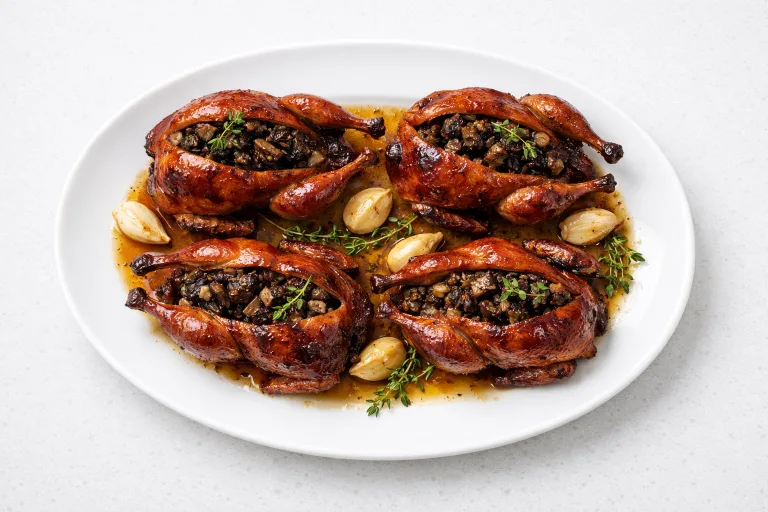
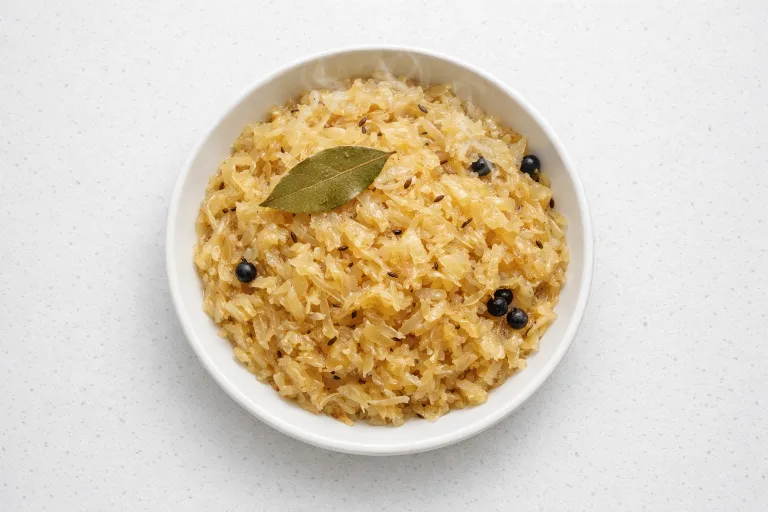
Carve the chicken at the table or in the kitchen and arrange on a warm platter with the stuffing scooped alongside. Collect every drop of the resting juices and pour them over the sliced meat before serving. Christmas roast chicken pairs naturally with roasted potatoes, braised red cabbage, or glazed carrots, and a simple green salad cuts through the richness. For a more formal Christmas dinner feel, make a quick pan sauce by deglazing the roasting pan with 1/2 cup white wine and 1/2 cup chicken broth, scraping up the browned bits, and reducing by half over medium heat.
Storage & Freezing
Leftover roast chicken keeps in an airtight container in the refrigerator for up to 3 days. Store the stuffing separately from the chicken carcass to prevent sogginess. For freezing, strip the cooked meat from the bones, freeze in zip-lock bags for up to 2 months, and thaw overnight in the refrigerator before reheating gently in a covered pan with a splash of broth. The stuffing also freezes well for up to 2 months. Do not reheat chicken more than once.
Common Questions
How long does it take to roast a whole chicken for Christmas?
A 3.5 to 4.5 lb (1.6 to 2 kg) chicken takes approximately 70 to 80 minutes total using this method: 20 minutes at 425 F, then 50 to 60 minutes at 375 F. Always verify doneness with a meat thermometer reading 165 F (74 C) in the thigh.
Can I make christmas roast chicken ahead of time?
You can prepare the herb butter and the stuffing up to 24 hours in advance and refrigerate them separately. Stuff and butter the chicken no more than 1 hour before it goes in the oven. Fully roasted chicken is best served freshly carved; reheated whole roast chicken loses much of its crisp skin.
What is the best way to keep roast chicken moist?
Three things keep a roast chicken moist: herb butter under the breast skin, not overcooking past 165 F, and resting for at least 15 minutes before carving. The butter insulates the breast during cooking, the thermometer confirms when to stop, and resting allows juices to redistribute rather than run out when you cut.
Is it safe to cook stuffing inside the chicken?
Yes, provided the stuffing reaches 165 F (74 C) internally, which is the same temperature required for the chicken meat. Stuff the cavity loosely, not tightly packed, to allow heat to penetrate. Use an instant-read thermometer to verify the stuffing temperature at the centre.
What can I serve with christmas roast chicken?
Classic accompaniments include roasted potatoes, roasted parsnips, braised red cabbage, glazed carrots, and green beans. A simple pan sauce made from the drippings ties everything together. For a lighter meal, a crisp green salad with a sharp mustard dressing works well alongside the richness of the herb butter.
How do I know when my roast chicken is done without a thermometer?
Pierce the thigh at its thickest point with a skewer or thin knife. The juices that run out should be completely clear with no pink tinge. However, this method is far less reliable than a thermometer, particularly when the cavity contains stuffing. A basic instant-read thermometer is strongly recommended for food safety.