
 Germany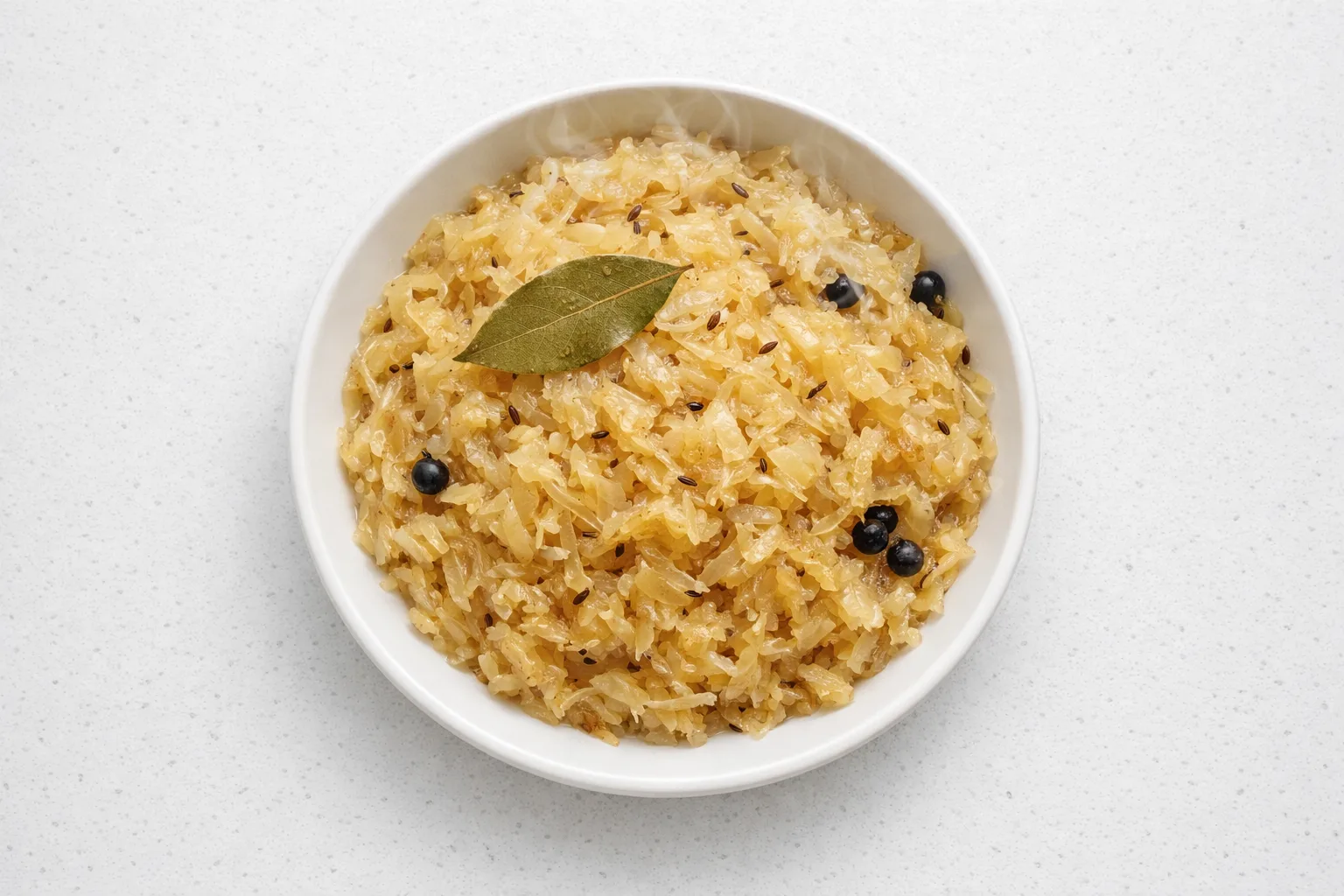
Christmas sauerkraut is one of the most enduring side dishes on the German holiday table. Sauerkohl, as it is called in many parts of Germany, appears alongside roast pork, goose, and bratwurst at Christmas Eve and Christmas Day feasts, where its sharp fermented acidity cuts through rich fatty meats in a way that gravy or potatoes simply cannot. The tradition of eating sauerkraut on feast days goes back centuries in central Europe, where fermented cabbage was the primary preserved vegetable through winter months and carrying it into the holiday meal was a matter of practical necessity long before it became custom.
The difference between good holiday sauerkraut and bad comes down almost entirely to technique. Raw jarred or bagged sauerkraut is fine as a starting point, but it needs at least 40 minutes of slow braising with fat, aromatics, and liquid to transform from sharp and one-dimensional into something layered and mellow. Caraway seeds are non-negotiable in the German style. Juniper berries are optional but strongly recommended. A dry white wine or dry Riesling gives the braising liquid the right fruity backbone without sweetening the result. The sauerkraut should be tender, silky, and aromatic, with a balanced sourness that does not overwhelm.
Equipment
Instructions
Tap each step to track your progress
- 1
Drain the sauerkraut in a colander and press out as much liquid as you can with your hands. Do not rinse it; you want to keep the flavor but shed the excess brine. If the sauerkraut is very long-stranded, give it a few rough chops.
- 2
In a large heavy-bottomed pot or wide saucepan set over medium heat, melt the lard or butter until it shimmers. Add the diced onion and cook, stirring occasionally, for 6 to 8 minutes until softened and just beginning to turn golden at the edges.
- 3
Add the caraway seeds and crushed juniper berries to the pot. Stir and cook for 1 minute until the caraway smells toasty and fragrant. Add the bay leaves.
- 4
Add the drained sauerkraut to the pot and stir everything together to coat the kraut in the fat and aromatics.
- 5
Pour in the white wine and broth. Stir in the sugar. The liquid should come about halfway up the sauerkraut; if it looks dry, add another splash of broth.
- 6
Bring the mixture to a gentle boil, then reduce the heat to low, cover with a lid slightly ajar, and simmer for 35 to 40 minutes, stirring occasionally. The sauerkraut should be very tender and most of the liquid should have cooked down into a glossy, lightly syrupy coating.
- 7
Remove the bay leaves and juniper berries. Taste and adjust seasoning with salt and black pepper. If the sauerkraut tastes too sharp for your preference, stir in an additional pinch of sugar and cook for another 2 minutes.
- 8
Serve hot, directly from the pot, or transfer to a warmed serving dish.
Tips & Tricks
Press the sauerkraut firmly before adding it
Excess brine will make the dish taste sharp and one-dimensional no matter how long you cook it. Squeeze the drained kraut in your fists over the colander until very little liquid drips out. You can also wrap it in a clean kitchen towel and twist.
Bloom the caraway seeds in fat
Adding caraway directly to liquid means it barely releases its flavor. Cooking it in hot fat for a full minute before any liquid goes in draws out the aromatic oils and gives you a noticeably more complex result.
Use real lard if you can find it
Lard produces a distinctly richer, rounder flavor than butter in sauerkraut. It is common in German cooking and available at butcher shops or European delis. Duck fat is an excellent substitute. Butter works but produces a lighter result.
Make it the day before
This is one of the best make-ahead side dishes for Christmas dinner. The sauerkraut tastes better the next day. Cook it fully, cool, refrigerate, and reheat gently on the day. One less thing to manage while the roast is resting.
Match the wine to the meat
If serving alongside goose or duck, use a slightly off-dry Riesling in the braise; the residual sugar harmonizes with the richness of dark poultry. For pork, a drier white wine keeps the kraut sharper and cuts the fat more cleanly.
Troubleshooting
My sauerkraut is still very sharp after cooking
The brine was not pressed out thoroughly enough, or the sauerkraut needed more time. Press the kraut firmly before adding it, and if it still tastes too sour after 40 minutes, add a small pinch more sugar and a splash of extra broth, then cook uncovered for another 5 to 10 minutes to mellow it further.
The liquid evaporated too fast and the sauerkraut is catching on the bottom
The heat was too high. Reduce to the lowest simmer and add another 1/4 cup of broth. Heavy-bottomed pots spread heat more evenly; thin pans create hot spots that scorch the kraut. A lid that is slightly ajar helps trap enough steam to prevent this.
The sauerkraut tastes flat and dull
This usually means insufficient fat or under-cooked aromatics. The onion needs 6 to 8 minutes in the fat before the kraut goes in, and the caraway seeds need at least a minute in the hot fat to bloom. Using lard or duck fat instead of butter also makes a noticeable difference in depth of flavor.
I can taste the juniper berries too much
You used too many, or they were not removed before serving. Juniper berries should be used whole and lightly cracked, not ground, and removed at the end along with the bay leaves. Eight berries in this quantity of sauerkraut should give a subtle piney note, not a medicinal one.
Variations
Vegan Adaptation
Swap the lard or butter for a neutral vegetable oil such as sunflower or refined coconut oil, and use vegetable broth instead of chicken broth. The result is slightly less rich but still fully flavored. All other ingredients remain unchanged.
Bavarian-Style with Apple
Add 1 medium apple, peeled and grated or finely diced, along with the onion at step 2. The apple cooks down almost completely and adds a faint sweetness that is characteristic of Bavarian Christmas kraut. Reduce the sugar to 1/2 teaspoon. This version pairs especially well with roast goose.
Sauerkraut with Bacon
Render 3 oz (85g) of diced smoked bacon or lardons in the pot over medium heat before adding the onion. Remove the bacon once crispy and set aside, then cook the onion in the rendered fat. Return the bacon at the end, stirred through just before serving. This is the richer, smokier version common at German Christmas markets alongside bratwurst.
Non-Alcoholic Version
Replace the white wine with an equal quantity of unsweetened apple juice and an extra splash of cider vinegar (about 1 teaspoon). The flavor profile shifts slightly sweeter and fruitier, which works well if serving to children or in an alcohol-free household.
Serving & Gifting
Serve the sauerkraut hot as a side dish alongside roast pork shoulder, Christmas goose, duck, or bratwurst. A spoonful of sauerkraut on the same plate as a rich meat cuts through the fat and provides the acidic balance the dish needs. It also works alongside mashed or boiled potatoes. For a formal Christmas dinner presentation, serve in a warmed white ceramic bowl. The sauerkraut holds beautifully in a low oven (200 degrees F / 95 degrees C) for up to an hour if dinner is running behind schedule.
Storage & Freezing
Leftover sauerkraut keeps in an airtight container in the refrigerator for up to 5 days and actually improves after a day as the flavors continue to meld. Reheat gently in a small saucepan with a splash of broth or water over low heat, stirring to prevent scorching. The cooked sauerkraut can also be frozen for up to 3 months; thaw overnight in the refrigerator before reheating.
Common Questions
What type of sauerkraut is best for this recipe?
Use refrigerated jarred or bagged sauerkraut for the best flavor. Canned sauerkraut tends to be softer and more acidic, and the metallic notes from the can come through after long cooking. In Germany, fresh sauerkraut from a barrel or a vacuum-sealed pouch is the standard. Check the refrigerator section of German or Eastern European delis.
Can I make Christmas sauerkraut without alcohol?
Yes. Replace the white wine with an equal amount of unsweetened apple juice plus 1 teaspoon of apple cider vinegar. The flavor is slightly sweeter and fruitier but still balanced. Broth-only versions also work, though they lack the complexity the wine provides.
How do I keep sauerkraut from being too sour?
Press out as much brine as possible before cooking, use a small amount of sugar (just 1 teaspoon for this quantity), and braise for the full 40 minutes. The slow cooking mellows the acidity significantly. Do not rinse the sauerkraut or you will also wash away its fermented flavor.
Is this recipe vegetarian?
Yes, if you use butter or vegetable oil instead of lard and vegetable broth instead of chicken broth. All other ingredients are plant-based. The caraway and juniper berries are essential for depth, so do not skip them.
What do Germans traditionally eat with Christmas sauerkraut?
Roast pork, particularly <em>Schweinebraten</em> (roast pork shoulder), is the most classic pairing. Goose (<em>Weihnachtsgans</em>) and duck are also traditional on Christmas Day in many German households. Bratwurst and potato dumplings (<em>Klosse</em>) round out the typical plate.
Can I use caraway seeds from the supermarket?
Yes. Standard ground caraway seeds are too strong for this recipe; use whole seeds. If your whole caraway seeds are more than a year old, they will have lost much of their potency. Smell them before using: they should have a sharp, anise-like fragrance. Old, dull-smelling seeds should be replaced.