
Christmas in Greece
Greek Christmas centers on Epiphany and the sea. While December 25 matters, the season peaks on January 6 when priests throw a cross into the water and young men dive to retrieve it. The 40-day Advent fast shapes the food, kalanda (carol) singers go door to door, and boats rather than trees are the traditional Christmas decoration.
Greek Christmas operates on a different rhythm than the rest of Europe. The season runs from mid-November (when the Advent fast begins) through January 6 (Epiphany), and the emotional peaks fall not on December 25 but on New Year's Day (when gifts arrive) and January 6 (when priests bless the waters). In between, there is fasting, feasting, door-to-door caroling, and a country that decorates with boats instead of trees.
The 40-Day Fast and the Feast That Follows
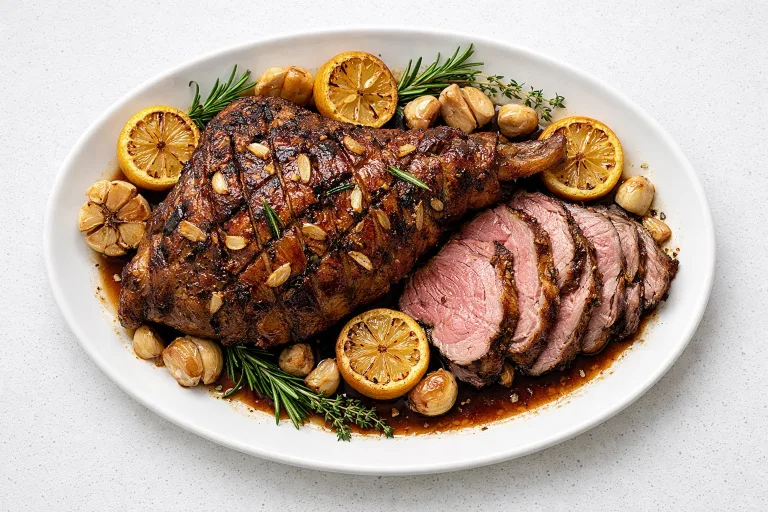
Greek Orthodox tradition calls for a 40-day fast before Christmas, beginning on November 15. Observant Christians avoid meat, dairy, eggs, and (on stricter days) fish and olive oil. The fast gives Christmas dinner its intensity. When the restrictions lift on December 25, the table overflows: roast pork or lamb, stuffed turkey, potatoes, salads, and the two indispensable sweets, melomakarona and kourabiedes.
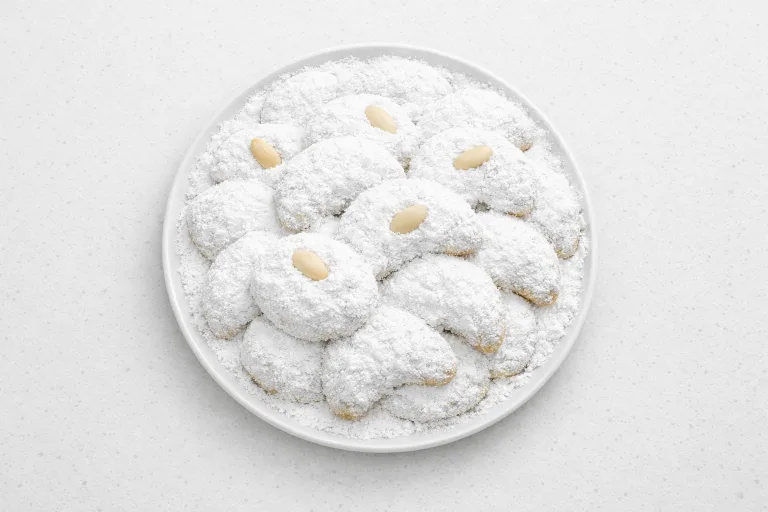
Melomakarona are honey-drenched walnut cookies spiced with cinnamon and orange. Kourabiedes are butter cookies packed with almonds and buried under powdered sugar. Every Greek household makes both in enormous quantities, and visitors are offered a plate the moment they walk through the door.
Kalanda: Greece's Door-to-Door Carols
On the mornings of Christmas Eve, New Year's Eve, and Epiphany Eve, groups of children walk through neighborhoods singing kalanda, traditional carols accompanied by triangles and small drums. Householders open their doors, listen, and give the singers coins, candy, or small gifts. The tradition is one of the oldest surviving Christmas customs in Greece, with roots stretching back centuries.
Boats, Not Trees
The traditional Greek Christmas decoration is not a tree but a small wooden boat, the karavaki. In a country with 6,000 islands and a seafaring history stretching back to the Bronze Age, the boat makes more sense than a fir tree. The tradition faded during the 20th century as Christmas trees became popular under Western European influence, but it has experienced a revival. Athens now erects a large illuminated boat alongside its Christmas tree in Syntagma Square.
Epiphany: The Real Climax
January 6, Theophania, is when the Greek Christmas season reaches its true peak. The Blessing of the Waters ceremony takes place at every harbor, river, and lake in the country. A priest throws a wooden cross into the water, and young men dive in to retrieve it, often in near-freezing temperatures. The one who surfaces with the cross is believed to receive a year of good fortune. In Piraeus, the Athens port, hundreds of swimmers compete. The ceremony draws crowds comparable to any Christmas Day celebration elsewhere in Europe.
Frequently Asked Questions
When do Greeks exchange gifts?
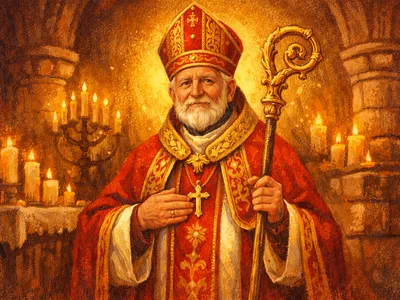
The main gift-giving day in Greece is January 1, the feast of Agios Vasilis (St. Basil). St. Basil, not Santa Claus, is the traditional Greek gift-bringer. However, Santa Claus (Agios Nikolaos) has become increasingly popular, and some families now exchange gifts on December 25 as well.
What is vasilopita?
Vasilopita is a New Year's cake baked with a hidden coin inside. On January 1, the cake is ceremonially cut with the first slice reserved for Christ, the second for the household, and subsequent slices for each family member by age. Finding the coin brings good luck for the year.
Why do Greeks decorate with boats?
The karavaki (small wooden boat) is the traditional Greek Christmas decoration, reflecting the country's maritime heritage. Trees became popular under Western influence in the 20th century, but the boat tradition has been revived in recent years. Many Greek homes now display both.
Traditions & Customs
Kalanda (Carol Singing)
On Christmas Eve, New Year's Eve, and Epiphany Eve, children go door to door singing kalanda (carols) and playing triangles and drums. Householders give them coins and sweets. The tradition is one of the oldest surviving Christmas customs in Europe.
Christmas Boats
The traditional Greek Christmas decoration is not a tree but a wooden boat (karavaki), reflecting Greece's maritime identity. Trees became popular in the 20th century under Western influence, but the boat tradition has experienced a revival in recent years.
Epiphany Cross Diving
On January 6, a priest throws a cross into the sea, river, or lake, and young men dive into the freezing water to retrieve it. The one who finds it is blessed with good luck for the year. The ceremony takes place in harbors and waterfront towns across Greece.
Agios Vasilis (St. Basil)
Greece's gift-bringer is not Santa Claus but Agios Vasilis (St. Basil), who brings presents on January 1. The historical St. Basil was a 4th-century bishop from Caesarea (modern Turkey), celebrated for his charity.
Vasilopita
On New Year's Day, families cut the vasilopita, a cake with a hidden coin inside. The cake is ceremonially cut with the first piece going to Christ, the second to the household, and then to each family member by age. Finding the coin brings good luck.
40-Day Advent Fast
Many Greek Orthodox Christians observe a 40-day fast before Christmas, avoiding meat, dairy, and (on some days) fish and oil. The Christmas meal on December 25 breaks this fast and is therefore especially celebratory.
Christmas Markets
Syntagma Square Christmas Village
Athens' main square hosts a Christmas village with stalls, a skating rink, and a large illuminated tree. The setting in front of the Parliament building makes it the most prominent Christmas installation in Greece.
Thessaloniki Christmas Market
Greece's second city sets up a European-style Christmas market along the waterfront, with stalls selling Greek sweets, crafts, and hot wine. The view across the Thermaic Gulf adds to the atmosphere.
Key Dates
Start of Advent Fast
The 40-day fast begins, during which observant Greek Orthodox Christians abstain from meat, dairy, and some other foods. The fast shapes cooking and eating throughout the pre-Christmas period.
Christmas Eve (Paramoni)
Children sing kalanda door to door in the morning. Families prepare for the feast that breaks the Advent fast. Many attend evening church services.
Christougenna
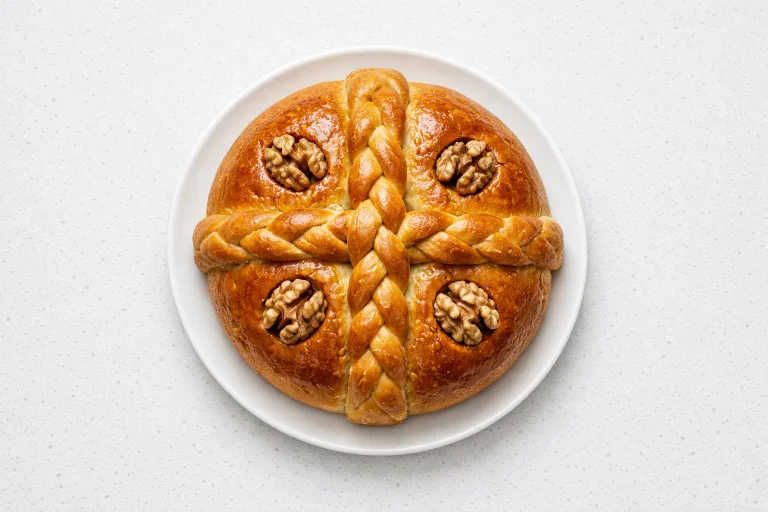
Christmas Day marks the end of the 40-day fast. Families gather for a large meal of roast pork, lamb, or turkey. Melomakarona and kourabiedes are the essential sweets.
Protochronia (New Year's Day / St. Basil's Day)
The day of Agios Vasilis (St. Basil), when gifts are exchanged. Families cut the vasilopita cake with the hidden coin. Children sing the New Year's kalanda.
Theophania (Epiphany)
The Blessing of the Waters ceremony takes place at harbors, rivers, and lakes across Greece. A priest throws a cross into the water and young men compete to retrieve it. This marks the end of the Greek Christmas season.
Christmas Carols
Christmas Kalanda
Kalanda ChristougennonThe traditional carol sung by children going door to door on Christmas Eve. Its simple, rhythmic melody accompanied by triangle and drum is one of the most recognizable sounds of Greek Christmas.
New Year's Kalanda
Kalanda ProtochroniaSung on New Year's Eve, this carol celebrates the arrival of Agios Vasilis. Like the Christmas kalanda, children sing it door to door in exchange for coins.
Silent Night
Agia NychtaThe Greek version of Silent Night, sung at church services on Christmas Eve. The translation preserves the reverent tone of the Austrian original.