
Christmas in Ukraine
Ukrainian Christmas follows the Julian calendar, with the main celebration on January 7. The Svyata Vechera (Holy Supper) on January 6 mirrors Polish Wigilia with 12 meatless dishes, but adds distinctly Ukrainian elements: kutia (wheat berry pudding), carolers dressed as goats and bears, and the Didukh, a sheaf of wheat that represents ancestors.
Ukrainian Christmas exists in two calendars. The traditional celebration falls on January 7, following the Julian calendar used by the Orthodox Church. But since 2023, Ukraine has also recognized December 25 as a public holiday, part of a cultural shift accelerated by the ongoing war and a desire to distinguish Ukrainian traditions from Russian ones. The result is a country that increasingly celebrates Christmas twice, with the ancient rituals of Svyata Vechera coexisting alongside the newer December date.
Svyata Vechera: The 12-Dish Supper
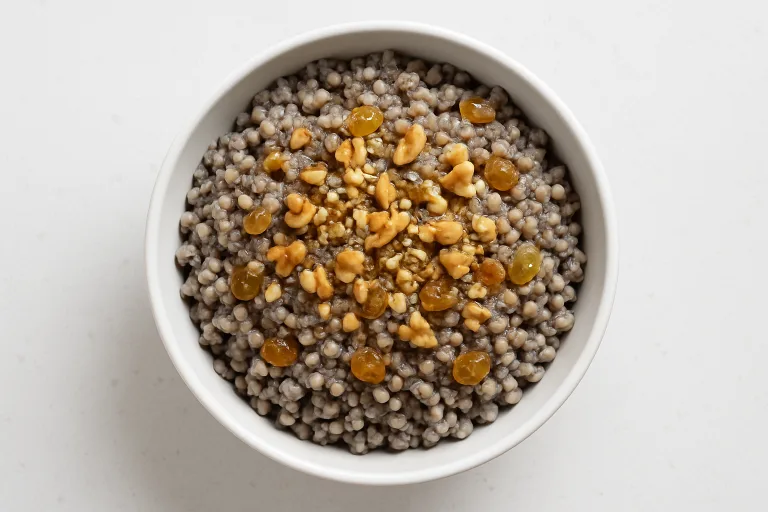
The heart of Ukrainian Christmas is the Holy Supper on the evening of January 6. Like Polish Wigilia, it begins when the first star appears in the sky. The table holds 12 meatless dishes, representing the 12 apostles. Kutia, a sweet pudding of wheat berries, poppy seeds, honey, and walnuts, is always first. The dish is ancient, predating Christianity in Ukraine, and carries deep symbolic weight: the wheat represents resurrection, the poppy seeds abundance, and the honey the sweetness of life.
Other dishes typically include borscht (beet soup, served clear with vushka dumplings), varenyky (filled dumplings with potato, sauerkraut, or cherry), holubtsi (stuffed cabbage rolls), baked fish, mushroom dishes, and uzvar, a compote of dried fruits. The meal is unhurried and ceremonial. Hay beneath the tablecloth recalls the manger. A candle is placed in the window to guide the spirits of ancestors home.
Carol of the Bells: Ukraine's Gift to Christmas Music
In 1916, Ukrainian composer Mykola Leontovych arranged a folk chant called Shchedryk into a choral piece built on a four-note motif. The Ukrainian National Chorus performed it in the United States in 1921. American choir director Peter Wilhousky later added English lyrics and renamed it Carol of the Bells. The piece became one of the most performed and recorded Christmas compositions in the world. Few people who hear it in shopping malls and movie soundtracks each December know they are listening to a Ukrainian folk melody.
Kolyadky and the Living Tradition of Caroling
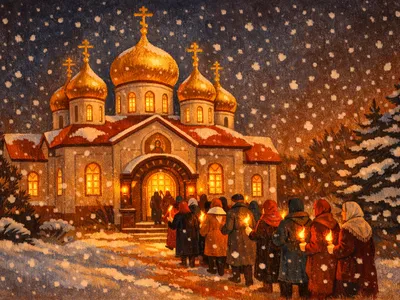
Ukrainian caroling (kolyaduvannya) is not a passive activity. Groups of singers, sometimes in costume, travel from house to house performing kolyadky (Christmas carols) and shchedrivky (New Year songs). The songs blend Christian themes with older folk elements: wishes for a good harvest, healthy livestock, and household prosperity. In western Ukraine, particularly in the Carpathian region, the tradition remains vibrant. Carolers may be accompanied by a vertep, a portable puppet theater staging the Nativity story.
Frequently Asked Questions
When is Ukrainian Christmas?
Ukraine celebrates Christmas on both December 25 and January 7. The January 7 date follows the Julian calendar used by the Orthodox Church and is the traditional celebration. Since 2023, December 25 has also been an official public holiday. Many families now celebrate on both dates.
What is kutia?
Kutia is a sweet pudding made from boiled wheat berries, poppy seeds, honey, and walnuts. It is the first dish eaten at Svyata Vechera (Christmas Eve supper) and the most symbolically important food of Ukrainian Christmas. The dish predates Christianity and represents prosperity and remembrance of ancestors.
What is the connection between Carol of the Bells and Ukraine?
Carol of the Bells is based on Shchedryk, a Ukrainian folk chant arranged by composer Mykola Leontovych in 1916. The piece was first performed in the US by the Ukrainian National Chorus in 1921. Peter Wilhousky later added English lyrics. The four-note motif that the world recognizes comes directly from Ukrainian musical tradition.
Traditions & Customs
Svyata Vechera (Holy Supper)
The 12-dish meatless supper on Christmas Eve (January 6) is the centerpiece of Ukrainian Christmas. Kutia, a sweet wheat berry pudding with poppy seeds and honey, is the most important dish and is eaten first. The meal begins when the first star appears.
Didukh
A sheaf of wheat placed in the corner of the home, representing the spirits of ancestors. The Didukh is the oldest Ukrainian Christmas symbol, predating Christianity. It is ceremonially brought into the house before Svyata Vechera.
Kolyadky (Caroling)
Groups of carolers go door to door singing kolyadky, traditional Christmas carols that blend Christian and pre-Christian themes. Carolers sometimes dress in costumes representing a goat, bear, or other folk characters. The tradition is strongest in western Ukraine.
Vertep (Nativity Play)
A traditional puppet theater depicting the Nativity story, performed by carolers going house to house. The two-level stage represents heaven (above) and earth (below). Vertep performances date to the 17th century.
Two Christmases
Since 2023, Ukraine officially recognizes December 25 as a public holiday alongside the traditional January 7 date. Many Ukrainians now celebrate on both dates, with December 25 gaining popularity as part of a broader cultural shift away from Russian-aligned traditions.
Hay Under the Table
Like in Poland, hay is placed under the tablecloth at Svyata Vechera to recall the manger. Ukrainian families also sometimes place garlic cloves at the corners of the table to ward off evil spirits.
Christmas Markets
Sophia Square Christmas Market
Kyiv's main Christmas market sets up around Sophia Square and along Khreshchatyk boulevard. A large Christmas tree and stage for performances anchor the festivities. The market reflects Ukraine's growing embrace of December 25 celebrations.
Lviv Christmas Market
Set in the historic center of Lviv, a UNESCO World Heritage Site, this market features traditional western Ukrainian crafts, food, and caroling performances. Lviv is considered the most Christmassy city in Ukraine.
Key Dates
Svyatyi Mykolai (St. Nicholas Day)
St. Nicholas brings small gifts to children. In Ukrainian tradition, he places them under children's pillows rather than in stockings or shoes.
Christmas (Gregorian)
Since 2023, December 25 is an official public holiday in Ukraine. Many families, especially younger ones, now celebrate on this date alongside or instead of January 7.
Svyaty Vechir (Christmas Eve, Julian)
The traditional Christmas Eve. Families gather for the 12-dish Svyata Vechera supper when the first star appears. Carolers begin their rounds.
Rizdvo (Christmas Day, Julian)
The traditional Christmas Day. Families attend church services and continue celebrations. This remains the primary Christmas date for many Ukrainians.
Malanka (Old New Year)
A folk celebration on New Year's Eve according to the Julian calendar. Malanka festivities include costumes, pranks, and caroling. It is particularly vibrant in western Ukraine.
Christmas Carols
Shchedryk (Carol of the Bells)
ShchedrykComposed by Mykola Leontovych in 1916 based on a Ukrainian folk chant. The four-note motif became known worldwide as 'Carol of the Bells' after Peter Wilhousky arranged it with English lyrics in 1936. It is Ukraine's most famous musical export.
God Eternal
Boh PredvichnyOne of the most solemn and beautiful Ukrainian kolyadky. Its majestic melody is sung in churches across Ukraine on Christmas Eve and Christmas Day.
New Joy Has Come
Nova Radist StalaA joyful traditional kolyada (Christmas carol) announcing the birth of Christ. It is one of the most popular carols sung by caroling groups going door to door.