
 Poland
  Ukraine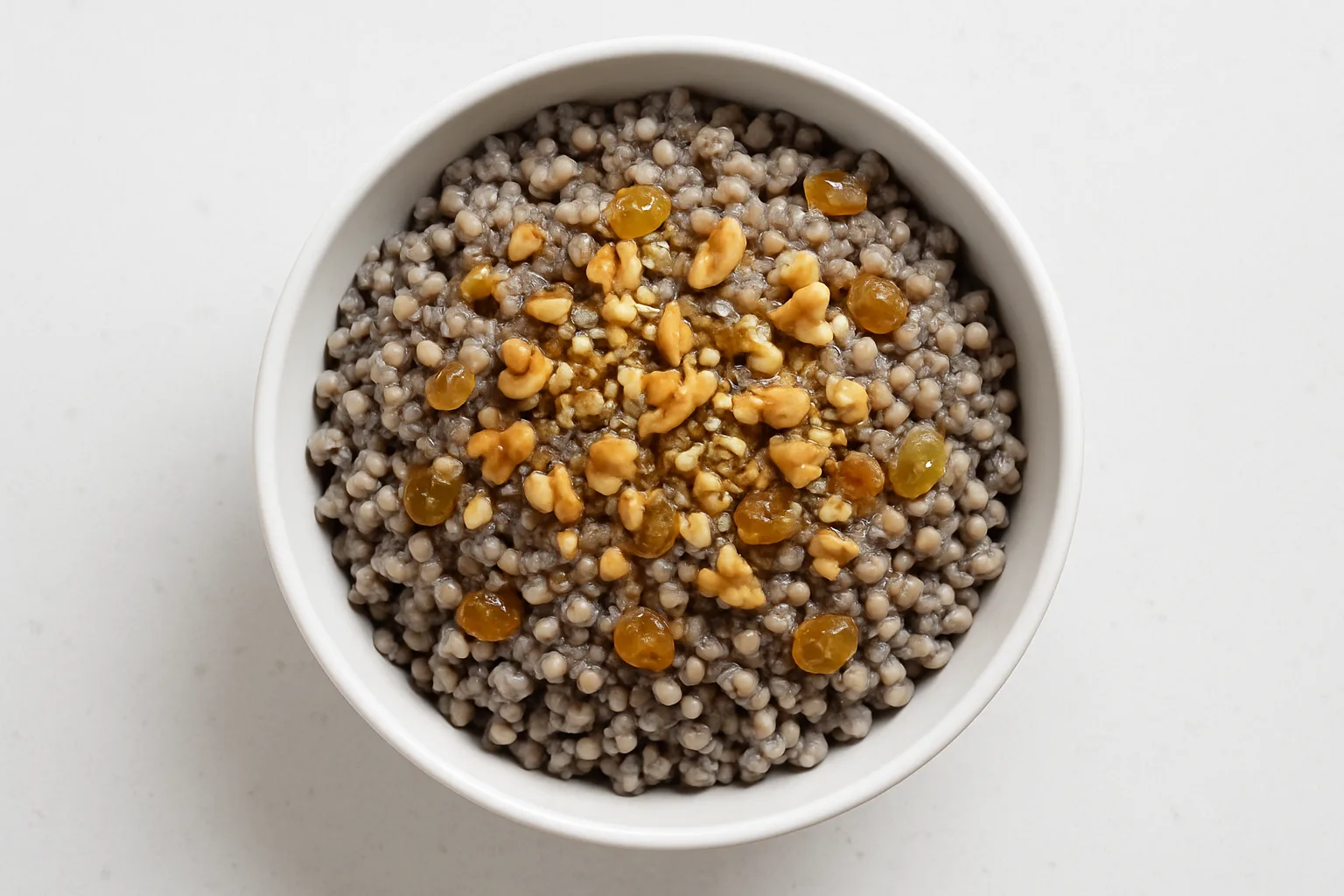
Kutia is the first and most important dish of the Eastern European Christmas Eve supper. In Poland, where it appears on the Wigilia table, and across Ukraine, Belarus, and other Slavic countries, where it goes by names like sochivo or kolivo, kutia carries religious and folk significance that no other dish in the region can match. It is eaten before all other dishes, sometimes shared from a single bowl, sometimes thrown at the ceiling to predict the harvest. The core ingredients, whole wheat berries, poppy seeds, honey, walnuts, and dried fruit, have remained essentially unchanged for centuries.
The key to a proper kutia is patience with the wheat. Whole grain wheat berries need a long soak and a slow cook; they should be tender through but still have a slight chew, never mushy. The poppy seed mixture, ground with honey until the seeds release their oils and turn into a fragrant paste, is what gives kutia its distinctive grey color and slightly bitter depth. This recipe follows the Polish Wigilia tradition, which tends toward a lighter, honey-forward sweetness compared to the richer Ukrainian versions.
Make this the day before Christmas Eve. Kutia improves overnight as the wheat absorbs the honey and the flavors meld. Serve it cold or at room temperature, in small portions, as the ritual opener to the twelve-dish Christmas Eve feast.
Equipment
Instructions
Tap each step to track your progress
- 1
The day before cooking, rinse the wheat berries under cold running water, then place in a large bowl. Cover with at least 4 inches of cold water and soak for 12 to 24 hours. The berries will swell noticeably. Drain and rinse well before cooking.
- 2
Transfer the soaked wheat berries to a large saucepan. Add 6 cups of fresh water and the salt. Bring to a boil over high heat, then reduce to a low simmer. Cook uncovered for 60 to 90 minutes, checking every 20 minutes. The berries are done when they are tender throughout but still have a distinct chew, not mushy. If the water runs low before they are tender, add more by the half-cup. Drain through a fine-mesh sieve and let cool completely.
- 3
While the wheat cooks, prepare the poppy seeds. Place the dry poppy seeds in a medium saucepan, cover with water, and bring to a boil. Simmer for 10 minutes to soften slightly, then drain through a fine-mesh sieve lined with cheesecloth or a very fine strainer. Let drain for 5 minutes.
- 4
Transfer the drained, hot poppy seeds to a food processor. Add 3 tbsp honey and 2 tbsp boiling water. Process for 2 to 3 minutes, stopping to scrape down the sides, until the seeds are coarsely ground and begin to release their oils. The mixture will look dark grey and have a slightly sticky, paste-like consistency. It should smell nutty and faintly bitter. Do not over-process into a smooth paste; some texture is correct.
- 5
Toast the walnut pieces in a dry skillet over medium heat for 3 to 4 minutes, shaking occasionally, until they smell fragrant and take on a very light color. Watch carefully, walnuts burn quickly. Let cool completely.
- 6
In a large mixing bowl, combine the cooled, drained wheat berries with the poppy seed mixture. Stir to distribute the poppy seeds evenly throughout the grain.
- 7
Add the 1/3 cup honey, vanilla sugar, golden raisins, and toasted walnuts. Fold gently but thoroughly. Taste the mixture: it should be sweet but not cloying, with the mild bitterness of poppy seeds balanced by the honey. Adjust with an extra tablespoon of honey if needed. Stir in cranberries and apricots if using.
- 8
Transfer to a serving bowl or individual bowls, cover tightly with plastic wrap, and refrigerate for at least 4 hours or overnight. This rest period is not optional; it is what transforms the ingredients from a mixture into a unified dish.
- 9
Before serving, taste again and add a drizzle of honey over the top. Serve cold or at room temperature. The kutia should be moist but not wet; if it seems dry after refrigeration, stir in 1 to 2 tablespoons of warm water or honey.
Tips & Tricks
Source proper whole grain wheat berries
Do not use pearled or semi-pearled wheat; the polishing process removes the bran and husk that give kutia its characteristic chewy texture and slightly earthy flavor. Look for hard winter wheat berries in health food stores, Eastern European grocers, or online. Spelt berries make an acceptable substitute if wheat berries are unavailable.
Soak for the full 12 to 24 hours
This is not optional. Inadequately soaked wheat berries will not cook through in a reasonable time and will have a hard, unpleasant core. Start soaking the morning or evening before you plan to cook.
Process the poppy seeds until they look grey and pasty
Under-processed poppy seeds pass through the dish whole and do not contribute their full flavor or the distinctive color. The seeds must be broken down enough to release their oils. Two to three full minutes in a food processor with scraping is the minimum; a mortar and pestle also works but requires significant effort.
Make it at least one day ahead
Freshly assembled kutia tastes like sweetened grain with poppy seeds. After a night in the refrigerator, the honey penetrates the wheat, the flavors unify, and the dish transforms into something far more cohesive and complex. It is genuinely better cold and rested.
Toast the walnuts even if the recipe seems to call for a small step
Raw walnuts add bitterness that clashes with the honey. Three to four minutes in a dry pan over medium heat turns them nutty and mellow. Let them cool completely before adding; warm walnuts will melt the honey and make the kutia sticky.
Troubleshooting
The wheat berries are still hard after 90 minutes of cooking
The most common cause is old wheat berries that have been stored too long or were not soaked long enough. Older grain takes significantly longer to hydrate. Continue simmering with additional water and check every 15 minutes. If they are still resistant after 2 hours total cooking time, they may be too old; source fresher wheat berries for best results. An overnight soak of at least 12 hours is not negotiable.
The kutia is too dry after refrigerating overnight
The wheat berries continued absorbing liquid from the honey and fruit. Stir in warm water, one tablespoon at a time, until the mixture is moist again. A thin drizzle of honey also helps re-loosen the texture without diluting flavor. Do not add cold water directly from the tap; warm water absorbs into the grain more readily.
The poppy seed mixture tastes overwhelmingly bitter
You may be using stale poppy seeds, which turn bitter as their oils oxidize. Fresh poppy seeds should smell faintly nutty, not sour or rancid. Blanching in boiling water (step 3) reduces bitterness; if the seeds are still sharp after processing, increase the honey in the poppy paste by an additional tablespoon. Avoid using pre-ground poppy seed powder; it is often already bitter.
The kutia is too sweet and cloying
Reduce the honey in assembly to 1/4 cup and add a squeeze of lemon juice (1 to 2 teaspoons). The acid cuts through the sweetness and brightens the overall flavor. A small pinch of salt stirred in also helps balance the sweetness without being detectable as salty.
The poppy seeds are not distributing evenly; they clump together
This happens when the poppy seed paste is too thick or too cold. Warm the paste slightly by microwaving for 15 seconds or stirring in an additional teaspoon of warm water before mixing with the wheat. Work quickly to fold it through the warm grain before the paste stiffens.
Variations
Ukrainian-Style Kutia (Sochivo)
Ukrainian versions are typically richer and use more dried fruit, sometimes including figs, prunes, and dried cherries alongside raisins. Add 2 tablespoons of sunflower oil or melted unsalted butter for a richer, glossier texture, and increase the poppy seed quantity to 1 1/4 cups. Some Ukrainian recipes also add a few tablespoons of rum or kompot (stewed fruit liquid) to moisten the grain.
Vegan Adaptation
This recipe is already naturally vegan as written, provided you use plant-sourced honey or swap honey for maple syrup or agave nectar in equal quantities. Maple syrup gives a slightly different flavor profile but works well, pairing particularly well with the toasted walnut bitterness. Do not use dark or blackstrap molasses as a substitute; it is too strong and will overwhelm the poppy seeds.
With Poppy Seed Paste (Faster Method)
If whole poppy seeds are difficult to source, use pre-made poppy seed paste (available in Central European shops and online, often sold as "mak" filling). Use 3/4 cup of ready-made poppy seed paste and reduce the honey in the assembly step slightly, as the paste is usually pre-sweetened. Stir the paste directly into the cooked wheat berries; no blending or pre-cooking required.
Fruited Winter Version
For a dessert-forward variation, increase the dried fruit significantly: 1/2 cup golden raisins, 1/4 cup dried sour cherries, 1/4 cup diced dried apricots, and 2 tbsp candied orange peel. Soak the dried fruit in warm water or orange juice for 30 minutes before adding to soften and plump it. This version leans more toward a dessert than a ritual dish, but it travels well and is excellent served with a spoonful of creme fraiche.
Serving & Gifting
Serve kutia cold or at room temperature in a communal bowl placed at the center of the Wigilia table, or portion into individual small bowls as the first course. In Polish tradition, each guest takes a small spoonful before any other dishes are served. For a more informal presentation, serve alongside the twelve-dish Christmas Eve spread with a small pitcher of extra honey on the side. If serving as a standalone dessert, a spoonful of barely sweetened creme fraiche on top provides a pleasant contrast to the dense grain.
Storage & Freezing
Kutia keeps refrigerated in an airtight container for up to 5 days; it tastes best on days 2 and 3 after the flavors have had time to meld. If it dries out in the refrigerator, stir in a tablespoon of warm water and a drizzle of honey before serving. Kutia can be frozen for up to 2 months in a sealed container; thaw overnight in the refrigerator and re-moisten as needed. Do not freeze kutia with fresh fruit added, as it becomes waterlogged on thawing.
Common Questions
What is kutia made of?
Kutia is made from cooked whole wheat berries mixed with ground poppy seeds, honey, walnuts, and dried fruit such as raisins. The basic four-ingredient combination of wheat, poppy, honey, and nuts has been the core of the dish across Eastern Europe for centuries. Regional variations add dried fruits, vanilla, or sometimes a small amount of rum.
Is kutia the same as sochivo?
Kutia and sochivo refer to the same category of ritual Christmas grain pudding. Kutia is the Polish and Western Ukrainian name; sochivo is more common in Russian Orthodox traditions. The recipes are very similar, though Ukrainian and Russian versions often include more dried fruit and sometimes sunflower oil, while Polish kutia tends to be honey-forward with a lighter texture.
Can I make kutia without a food processor?
Yes. A traditional mortar and pestle works well for grinding the poppy seeds, though it takes 10 to 15 minutes of sustained effort to reach the right consistency. You can also use a grain mill attachment on a stand mixer. Avoid using a blender; the seeds tend to scatter and do not grind evenly without liquid. Some Polish cooks pass blanched poppy seeds through a hand-cranked meat grinder twice for a coarser, more traditional grind.
How far in advance can I make kutia?
Kutia can be made up to 4 days before Christmas Eve and stored covered in the refrigerator. It actually improves over the first 2 days as the wheat absorbs the honey and flavors meld. On the day of serving, taste and adjust sweetness with a fresh drizzle of honey.
Does kutia contain gluten?
Yes, traditional kutia is made with whole wheat berries and contains gluten. There is no standard gluten-free version of this dish, as wheat is the defining ingredient. People with celiac disease or wheat intolerance cannot eat traditional kutia safely.
Is kutia vegan?
This recipe is naturally vegan: wheat, poppy seeds, honey, walnuts, and dried fruit contain no animal products. However, some regional recipes add butter or lard for richness. If veganism is a concern, verify the recipe you are using and substitute maple syrup for honey if you avoid bee products.