
 France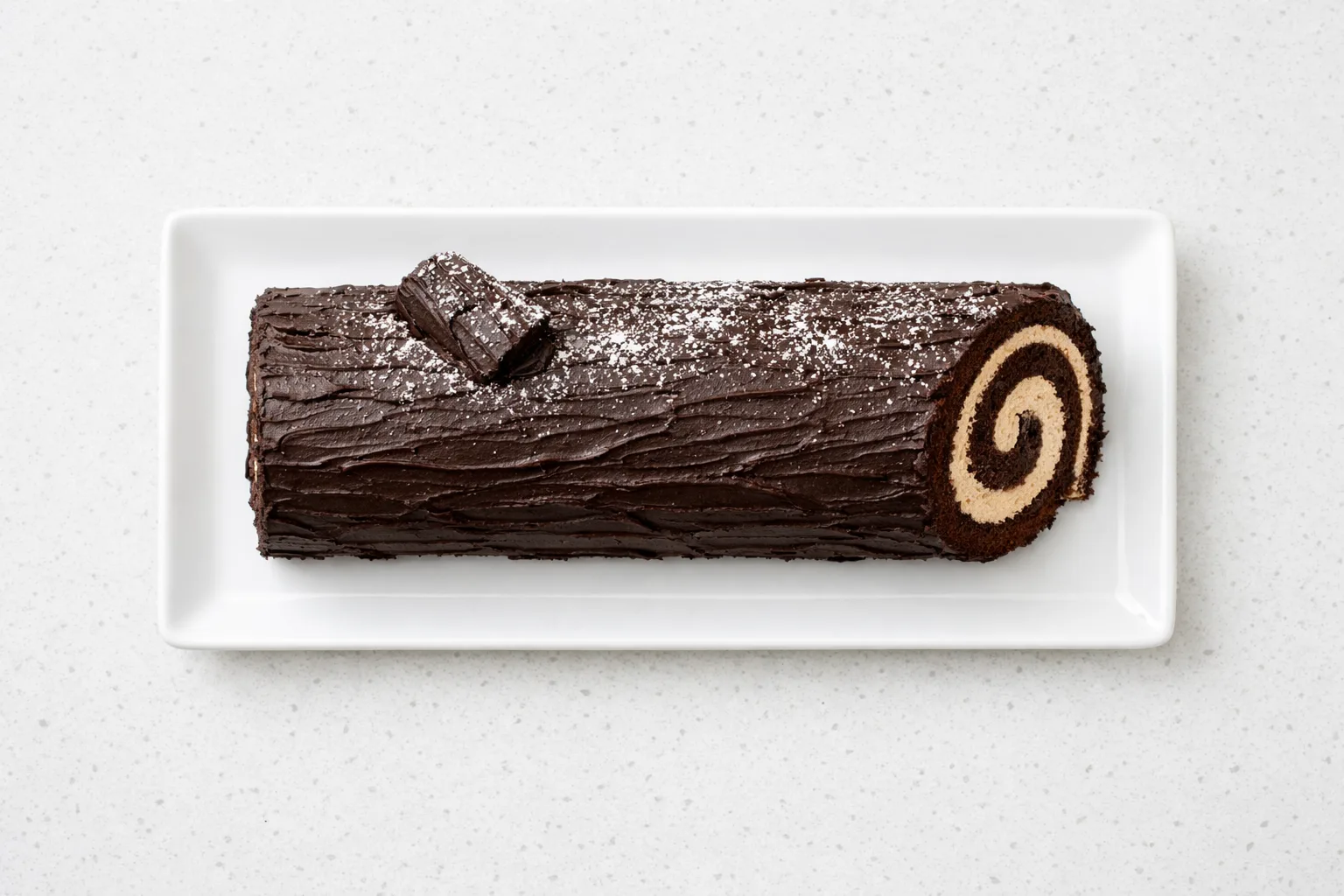
Buche de Noel is the cake that ends Christmas dinner across France, and has been doing so since at least the 19th century. The tradition echoes an older one: burning an actual log in the fireplace on Christmas Eve. When Parisian bakers translated that ritual into pastry, they created one of the most recognizable holiday desserts in the world.
This version builds a thin, flexible chocolate sponge (biscuit) that rolls without cracking, fills it with a coffee-spiked buttercream, and coats the outside in dark chocolate ganache scored with a fork to look like bark. The sponge bakes in 12 minutes. The rest is assembly. It looks like a showpiece, but it is really just a rolled cake with good textures.
Equipment
Instructions
Tap each step to track your progress
- 1
Preheat the oven to 190C (375F). Line a 18x13 inch rimmed baking sheet (half sheet pan) with parchment paper. Grease the parchment lightly and dust with cocoa powder, tapping out the excess.
- 2
Beat the egg yolks with 1/2 cup of the sugar on high speed for 4-5 minutes until the mixture is thick, pale yellow, and falls in a slow ribbon when the whisk is lifted. Beat in the vanilla. Sift the cocoa over the mixture and fold it in gently with a spatula. The batter will be very thick at this stage.
- 3
In a clean bowl with clean beaters, whip the egg whites and salt on medium speed until foamy. Gradually add the remaining 1/4 cup sugar and beat to stiff, glossy peaks. They should hold their shape but not look dry or grainy.
- 4
Fold one-third of the whites into the cocoa mixture to lighten it. Then fold in the remaining whites in two additions, using slow, deliberate strokes from bottom to top. Stop as soon as no white streaks remain. Over-folding deflates the sponge.
- 5
Spread the batter evenly across the prepared pan using an offset spatula. Work quickly; the batter deflates the longer it sits. Bake for 10-12 minutes until the sponge springs back when gently pressed in the center. It should not look wet or shiny.
- 6
While the sponge bakes, lay a clean kitchen towel on the counter and dust it generously with cocoa powder (not powdered sugar; sugar makes it stick). As soon as the sponge comes out, invert it onto the towel. Peel off the parchment. Starting from a short end, roll the warm sponge up tightly inside the towel. Let it cool completely in this rolled position, at least 30 minutes. This trains the shape.
- 7
Make the buttercream: beat the softened butter on medium-high for 2-3 minutes until creamy and pale. Add the powdered sugar one cup at a time on low speed. Add the cocoa, cooled espresso, vanilla, and cream. Beat on medium-high for 3-4 minutes until light and fluffy. Taste and adjust sweetness or coffee intensity.
- 8
Gently unroll the cooled sponge. It will hold a slight curve. Spread the buttercream evenly over the surface, leaving a 1 cm border along the far edge. Re-roll the sponge tightly without the towel. Place seam-side down on a serving platter or board. Refrigerate for 30 minutes to firm up.
- 9
Make the ganache: bring the cream to a simmer in a small saucepan. Pour over the chopped chocolate in a heatproof bowl. Let it sit for 2 minutes, then stir from the center outward until smooth and glossy. Stir in the butter. Let the ganache cool for 15-20 minutes until it thickens to a spreadable consistency, like soft peanut butter.
- 10
Cut a 5 cm (2 inch) diagonal slice from one end of the log. Attach it to the top or side of the main log with a dab of ganache to create a branch stub. Spread the ganache over the entire log and branch, then drag a fork lengthwise through the ganache to create bark texture. Leave the spiral ends exposed so the cross-section is visible.
- 11
Refrigerate the finished log for at least 1 hour to set the ganache. Before serving, dust with powdered sugar through a fine sieve to mimic snow. Bring to cool room temperature 20-30 minutes before slicing for the best texture.
Tips & Tricks
Roll the sponge while hot
This is the single most important step. A warm sponge is pliable; a cool one cracks. Have the towel ready and dusted before the sponge comes out of the oven. You have about 30 seconds of working time.
Use Dutch-process cocoa, not natural
Dutch-process cocoa is alkaline-treated, darker in color, and smoother in flavor. Natural cocoa is acidic and lighter. This recipe has no leavening that relies on acidity, so Dutch-process gives a richer chocolate flavor and a more dramatic color.
Let the ganache cool properly
Patience here is the difference between bark texture and a muddy mess. If the ganache is too warm, the fork lines melt back together. Too cold and it tears. Test on a small area first; it should hold clean ridges without flowing back.
Build it the day before
A Buche de Noel tastes better after 12-24 hours in the fridge. The sponge absorbs moisture from the buttercream and becomes tender. The flavors merge. Dust with powdered sugar just before serving since it dissolves over time.
Troubleshooting
My sponge cracked when I rolled it
The sponge was either over-baked or cooled too much before rolling. It must be rolled while still hot and flexible. If it does crack, don't panic; the ganache hides almost everything. Pressing the log gently in the towel for a few minutes can re-seal minor cracks.
The buttercream is too stiff to spread
The butter was too cold. Let the buttercream sit at room temperature for 10-15 minutes, then beat it again for 30 seconds. If it is grainy, it separated; keep beating on medium speed for 2-3 minutes and it will come back together.
The ganache is too runny to texture
It has not cooled enough. Let it sit at room temperature for another 10 minutes, stirring every few minutes, until it reaches the consistency of soft peanut butter. If you refrigerate it to speed things up, stir it frequently so it does not set unevenly.
The filling squeezes out when I roll
You used too much buttercream or spread it too close to the edges. Use about 2 cups of buttercream total and leave a 1 cm border on the far edge. The pressure of rolling pushes the filling forward, so that gap is important.
Variations
White Chocolate and Raspberry
Replace the mocha buttercream with white chocolate buttercream (melt 6 oz white chocolate, cool, and beat into the butter-sugar base). Spread a thin layer of raspberry jam over the sponge before the buttercream. Cover the outside with white chocolate ganache instead of dark. Skip the bark texture for a smooth, snowy finish.
Coffee-Free Version
Omit the espresso from the buttercream entirely and increase the vanilla to 2 tsp. Add 2 extra tbsp of cocoa to the buttercream for a pure chocolate-on-chocolate log. The mocha flavor is traditional but not essential.
Chestnut Cream Filling
Replace the mocha buttercream with sweetened chestnut cream (<em>creme de marrons</em>), available in cans at specialty stores. Mix one 250g can with 1/2 cup softened butter and 1 cup whipped cream. This is the classic Parisian filling and pairs beautifully with the dark ganache.
Gluten-Free Sponge
The sponge in this recipe is naturally very low in flour because it relies on eggs for structure. To make it fully gluten-free, ensure your cocoa powder is certified gluten-free (most are, but check the label). No flour substitutions needed since the recipe contains no flour.
Serving & Gifting
Slice with a sharp knife dipped in hot water and wiped dry between cuts for clean spirals. Serve at cool room temperature, not straight from the fridge; cold buttercream loses its silky texture. A Buche de Noel serves 10-12 as a dessert course. Pair with espresso, a glass of Sauternes, or a late-harvest Riesling.
Storage & Freezing
Store the assembled log in the refrigerator, loosely covered with plastic wrap or under a cake dome, for up to 4 days. The sponge actually improves after a day as the buttercream moisture softens it further. Do not freeze a fully assembled Buche de Noel; the ganache cracks and the sponge turns soggy when thawed. You can freeze the unfilled, rolled sponge (wrapped tightly in plastic) for up to 1 month, then thaw, fill, and finish on the day.
Common Questions
What is a Buche de Noel?
A Buche de Noel (literally "Christmas log" in French) is a rolled sponge cake filled with buttercream and coated in chocolate ganache textured to look like tree bark. It has been the traditional French Christmas dessert since the 19th century, inspired by the older custom of burning a yule log on Christmas Eve.
Can I make a yule log cake ahead of time?
Yes, and it actually improves with time. Assemble and refrigerate the finished log up to 2 days before serving. The sponge becomes more tender as it absorbs moisture from the buttercream. Dust with powdered sugar and add decorations just before bringing it to the table.
How do I keep the sponge from cracking?
Roll it while it is still hot from the oven, using a cocoa-dusted towel. Over-baking is the main cause of cracking; the sponge should spring back when pressed but still feel soft, not dry. If it does crack, the ganache coating hides imperfections completely.
What is the difference between a yule log and a Swiss roll?
Both are rolled sponge cakes, but a Buche de Noel is specifically decorated to resemble a log. The ganache coating, bark texture, branch stubs, powdered sugar snow, and optional decorations like meringue mushrooms distinguish it from a plain Swiss roll. The fillings also tend to be richer.
Can I use a different filling instead of buttercream?
Yes. Whipped cream is lighter but less stable (assemble and serve the same day). Chestnut cream (<em>creme de marrons</em>) is the classic Parisian option. Mascarpone mixed with espresso creates a tiramisu-inspired version. Avoid very wet fillings like pastry cream, which can make the sponge soggy.